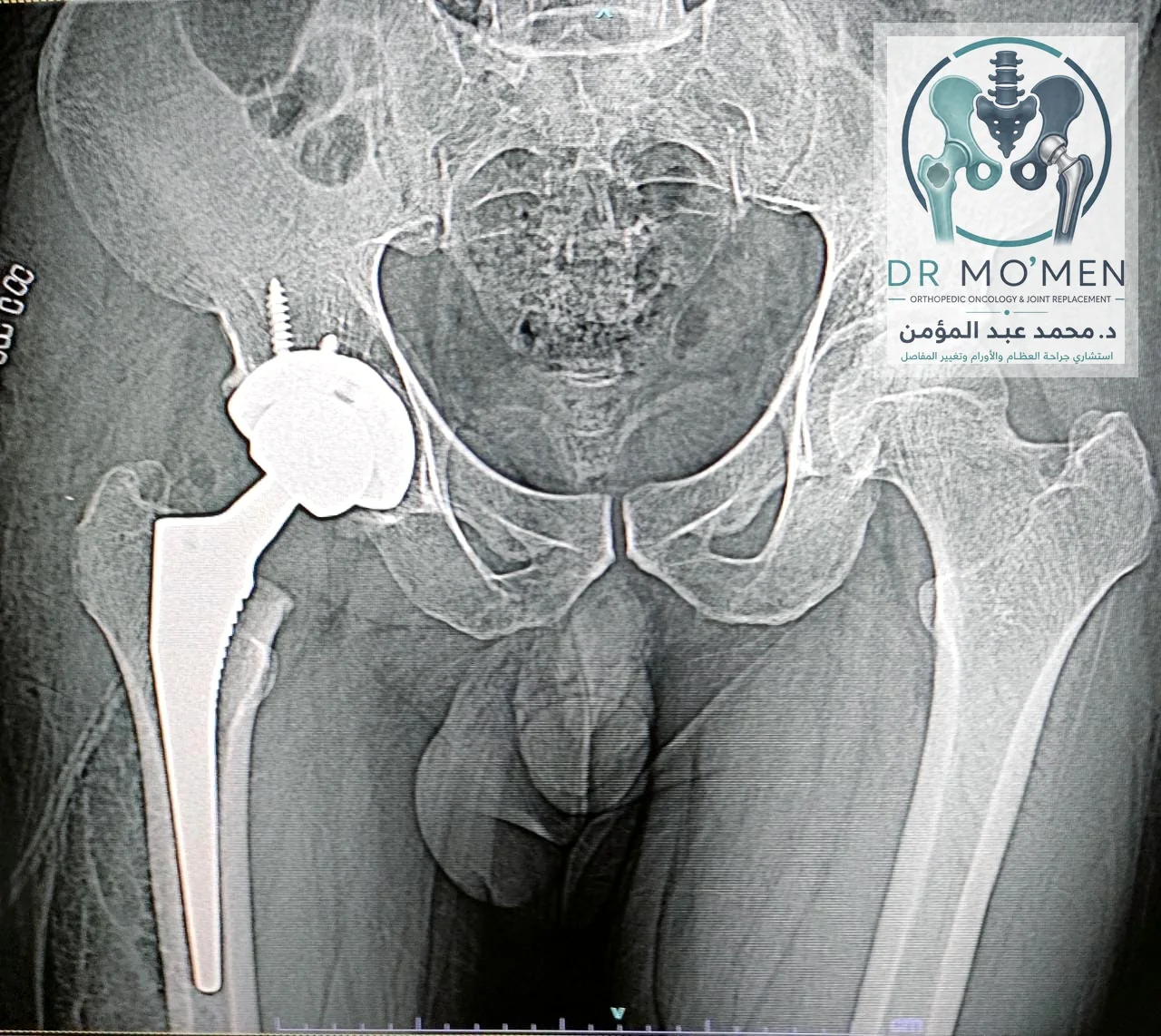
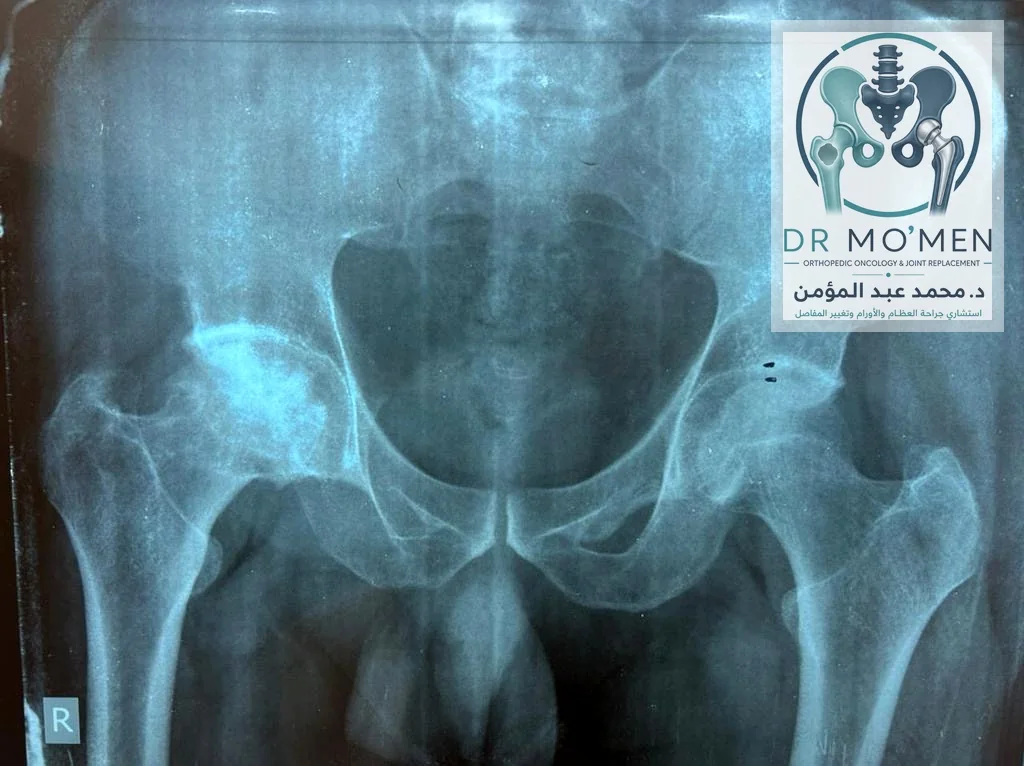
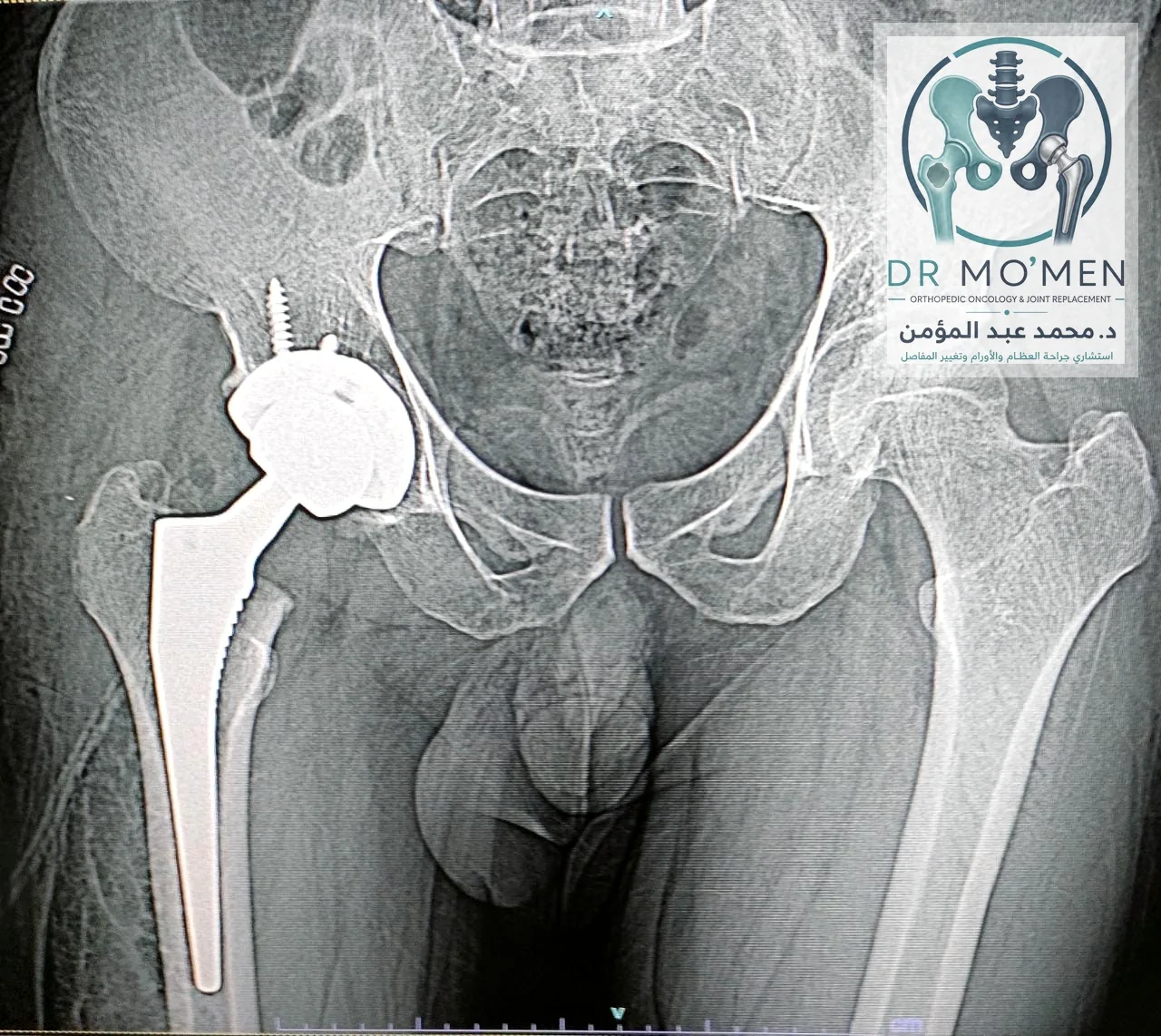
A 40-year-old male patient presented with advanced right hip avascular necrosis, with radiographic features of femoral head collapse and secondary degenerative hip changes. After clinical evaluation and radiographic assessment, cementless total hip replacement was performed.
The case in one minute
This case presents advanced avascular necrosis of the femoral head treated with cementless total hip arthroplasty. Not every AVN case requires replacement; the decision depends on stage, collapse, pain, and function.
- Clinical category
- Avascular necrosis of the femoral head
- Anatomical site
- Right hip
- Decision illustrated
- Cementless total hip arthroplasty after advanced structural damage in this case
- Published reporting scope
- The page presents imaging and the treatment principle; detailed functional outcome and follow-up duration are not published.
Related pages
Case summary
Patient-facing explanation
Avascular necrosis of the femoral head occurs when the blood supply to part of the hip ball is compromised. Early stages may be managed with joint-preserving options in selected patients. In advanced stages, when the femoral head has collapsed and the hip joint is damaged, total hip replacement can become an appropriate reconstructive option.
Why total hip replacement was selected
When femoral head collapse and joint-surface damage are advanced, joint-preserving surgery may no longer be appropriate. The objective is to replace the damaged femoral head and acetabular bearing surface while restoring hip offset, limb mechanics, and functional mobility as safely as possible.
What cementless fixation means
Cementless implants are designed to achieve biological fixation through bone ingrowth. This option may be suitable in selected younger adults with adequate bone quality, but implant choice must always be individualized.
Radiographic documentation
The following radiographs are included for educational and website case-library use. Patient-identifying details are intentionally omitted.
When hip pain needs specialist assessment
- Persistent groin pain or hip stiffness in a younger adult.
- Progressive limitation of walking or weight-bearing.
- X-ray or MRI report suggesting femoral head AVN or collapse.
- Increasing pain despite conservative treatment.
FAQ
Does every AVN case need hip replacement?
No. Early AVN may be suitable for joint-preserving options. Hip replacement is usually considered when collapse or secondary arthritis makes preservation unreliable.
Is MRI useful in avascular necrosis of the femoral head?
Yes. MRI is more sensitive in early AVN, while plain X-ray changes become clearer after femoral head collapse.
What does cementless hip replacement mean?
Cementless implants are designed for biological fixation through bone ingrowth. They are selected when patient factors and bone quality are suitable.
Does this case guarantee the same result for every patient?
No. This is an educational case only. Treatment and recovery depend on AVN stage, bone quality, activity level, general health, and clinical assessment.
Have hip pain or an AVN report?
You can send X-rays, MRI images, and reports by WhatsApp to decide whether clinic assessment or online review is more appropriate.
Book a clinic visit