Ozempic, Mounjaro and Knee Osteoarthritis: Can Weight Loss Reduce Knee Pain?
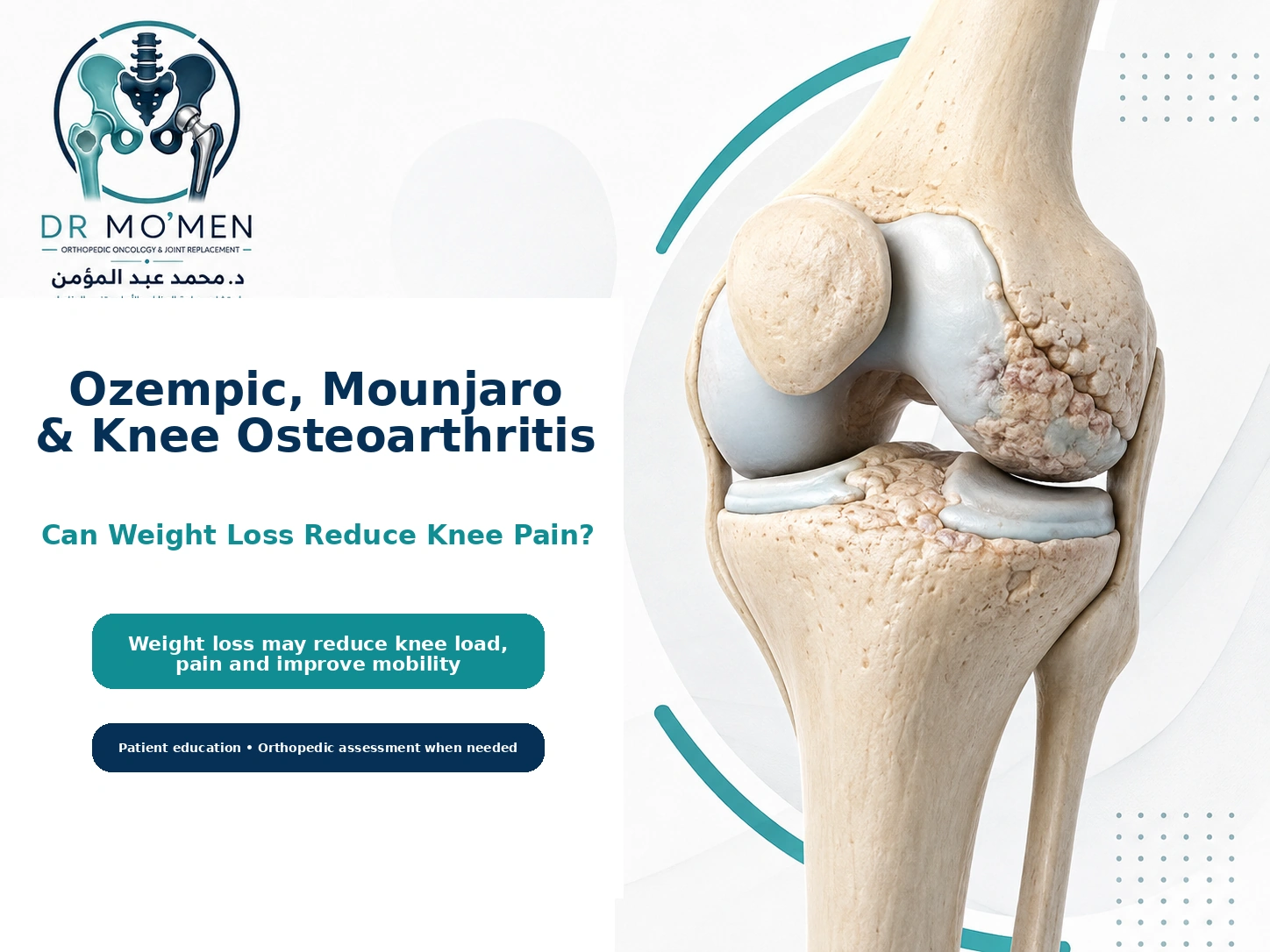
If you have obesity or significant excess weight together with knee osteoarthritis, losing weight can sometimes make walking easier and reduce knee pain.
With the increasing use of medications such as Ozempic, Wegovy and Mounjaro, a new question is becoming common in orthopedic practice: if a weight-management medication improves my knee pain, does that mean my osteoarthritis is being treated — and could I avoid knee surgery?
The answer is more nuanced than a simple yes or no. Modern obesity treatment may become an important component of knee osteoarthritis management for appropriately selected patients. However, reducing body weight is not the same as rebuilding severely damaged joint cartilage, and persistent knee symptoms still require an accurate orthopedic diagnosis.
What Is the Connection Between Obesity and Knee Osteoarthritis?
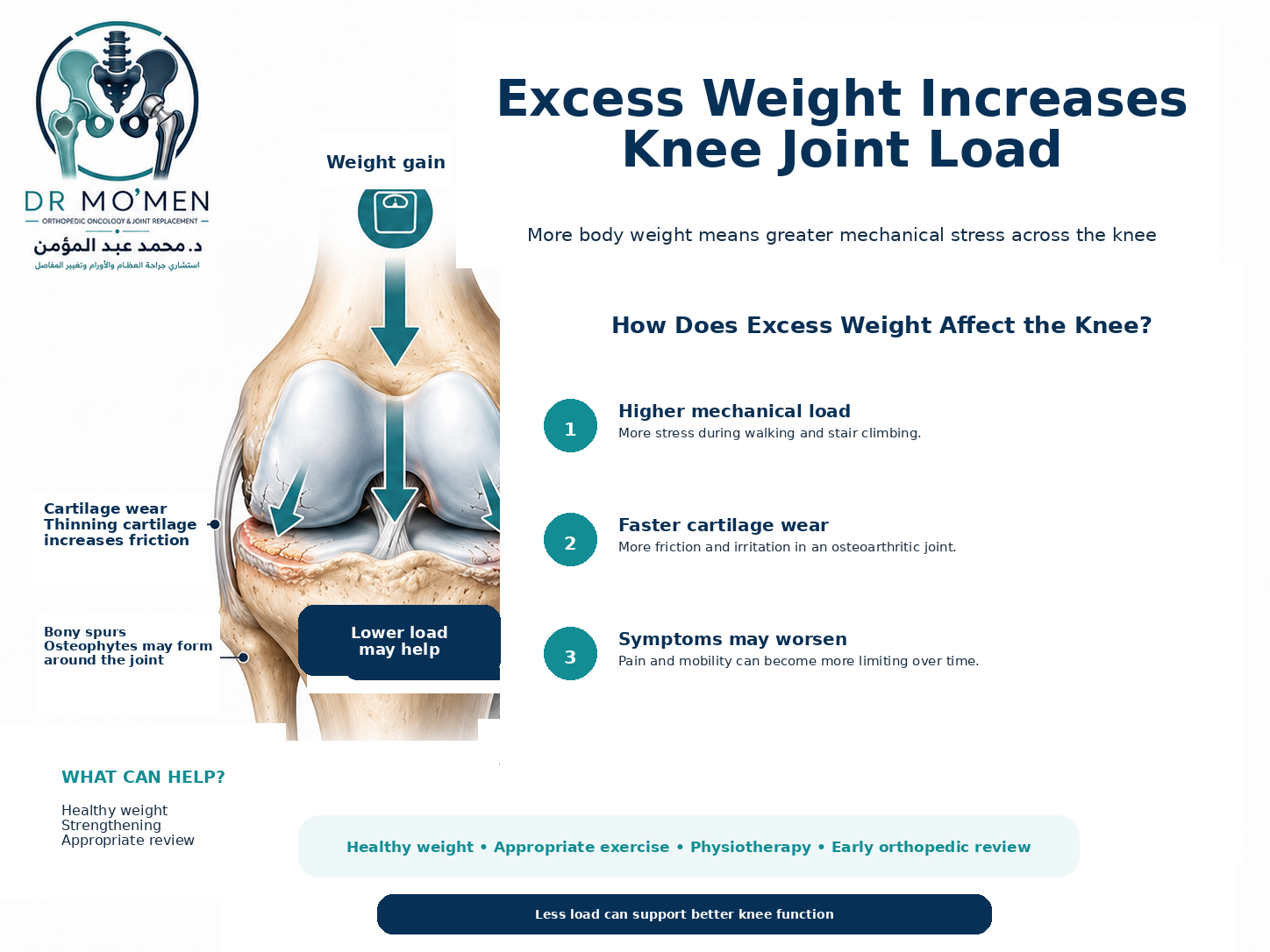
The knee is a weight-bearing joint, so increased body weight increases the mechanical demands placed across it during walking, standing, stair climbing and rising from a chair.
The relationship is not purely mechanical. Obesity is also associated with metabolic and inflammatory changes that may influence osteoarthritis.
For patients who are overweight or living with obesity, weight management is therefore an important part of conservative knee osteoarthritis care.
Does Ozempic Treat Knee Osteoarthritis?
It is important to distinguish between treating obesity in a patient who also has osteoarthritis and directly reversing osteoarthritis itself.
Ozempic contains semaglutide, a GLP-1 receptor agonist used primarily for type 2 diabetes. Semaglutide is also used at weight-management doses under the Wegovy brand.
A major randomized clinical trial — STEP 9, published in the New England Journal of Medicine — specifically studied adults with obesity and moderate-to-severe painful knee osteoarthritis. At 68 weeks, mean body-weight change was approximately −13.7% with semaglutide versus −3.2% with placebo, and knee pain improved significantly more with semaglutide.
This is clinically important evidence. It suggests that, in appropriately selected patients with obesity and symptomatic knee osteoarthritis, a semaglutide-based weight-management strategy can produce meaningful improvements in weight, pain and function. It does not prove that semaglutide regenerates lost cartilage or reverses advanced structural osteoarthritis.
What About Mounjaro and Knee Osteoarthritis?
Mounjaro contains tirzepatide, a dual GIP and GLP-1 receptor agonist.
Brand names need to be used carefully. Under current US labeling, Mounjaro is indicated for glycaemic control in type 2 diabetes, while tirzepatide is marketed as Zepbound for chronic weight management in eligible patients.
Tirzepatide can produce substantial weight loss in appropriately selected patients, so reducing excess body weight could logically reduce mechanical stress on painful weight-bearing joints. However, it would currently be inaccurate to tell patients that Mounjaro itself is a proven direct treatment for knee osteoarthritis.
A dedicated clinical trial is investigating tirzepatide in people with obesity and knee osteoarthritis, including whether treatment influences future knee-replacement requirements. Until direct outcome data are established, the distinction between weight management and osteoarthritis treatment remains important.
If My Knee Pain Improves, Has My Arthritis Gone Away?
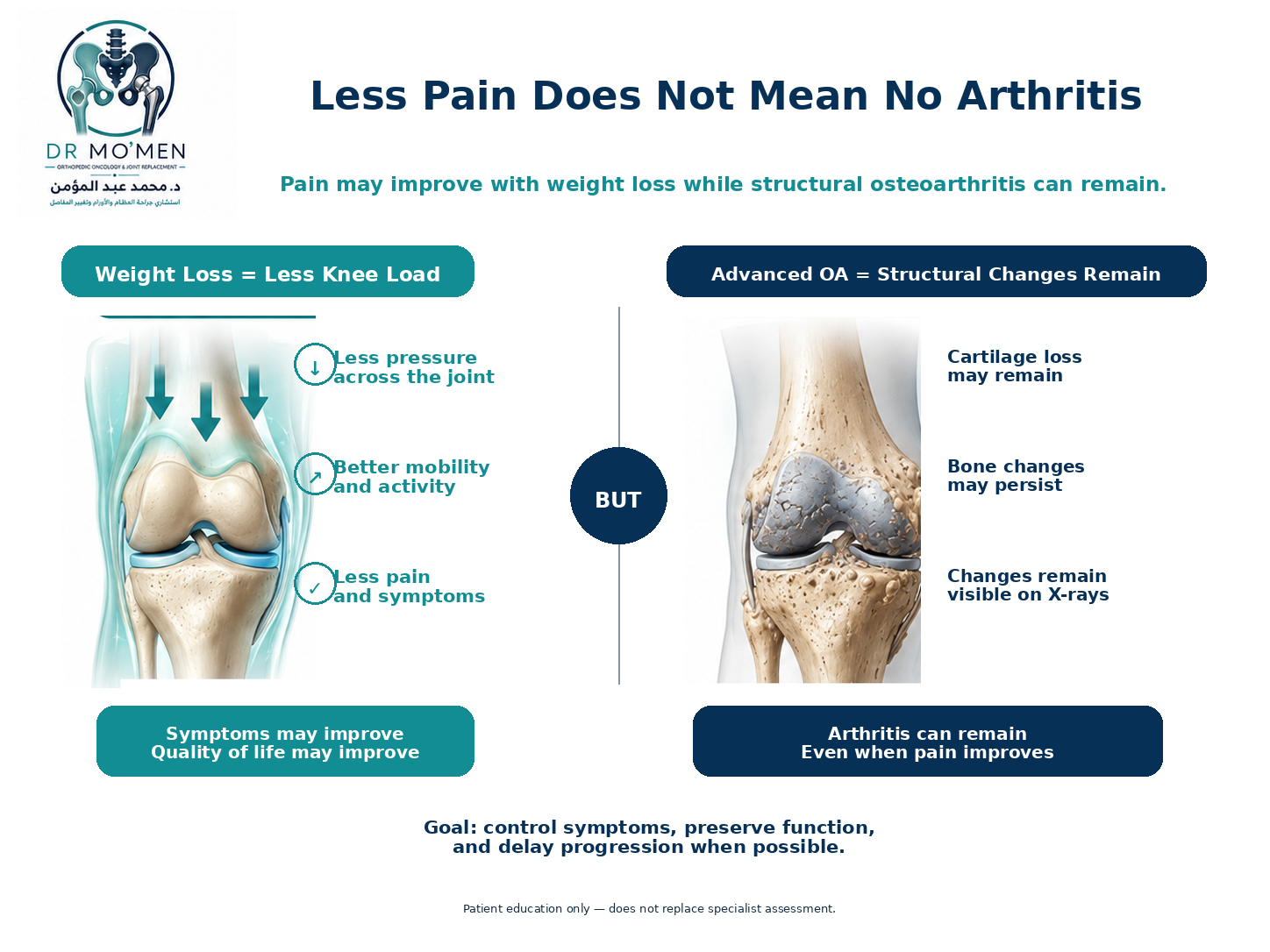
Not necessarily. Pain and structural joint damage do not always change in parallel.
A patient may lose a considerable amount of weight, walk more comfortably and report much less pain while still having osteoarthritis visible on weight-bearing radiographs.
Conversely, another patient may lose weight successfully and still experience substantial pain because the knee has advanced structural disease, major deformity or another mechanical problem.
Persistent symptoms may be related to advanced joint-space loss, varus or valgus deformity, stiffness, recurrent inflammation, meniscal disease, severe muscle weakness or even pain referred from the hip. This is why weight loss should not replace diagnosis.
When Can Weight Loss Be Particularly Helpful?
Weight reduction can be especially useful in patients with overweight or obesity and early-to-moderate symptomatic knee osteoarthritis who still have reasonable joint motion and whose symptoms remain manageable with nonoperative treatment.
Depending on the individual case, management may include medically supervised weight reduction, quadriceps and hip strengthening, low-impact exercise, physiotherapy, activity modification, appropriate analgesia and selected intra-articular treatments.
These approaches are complementary. A modern weight-management medication should not become a substitute for maintaining strength and mobility.
A Key Issue During Weight Loss: Protect Muscle, Not Just the Number on the Scale
Significant weight reduction is not composed entirely of fat loss. Some reduction in lean tissue can occur.
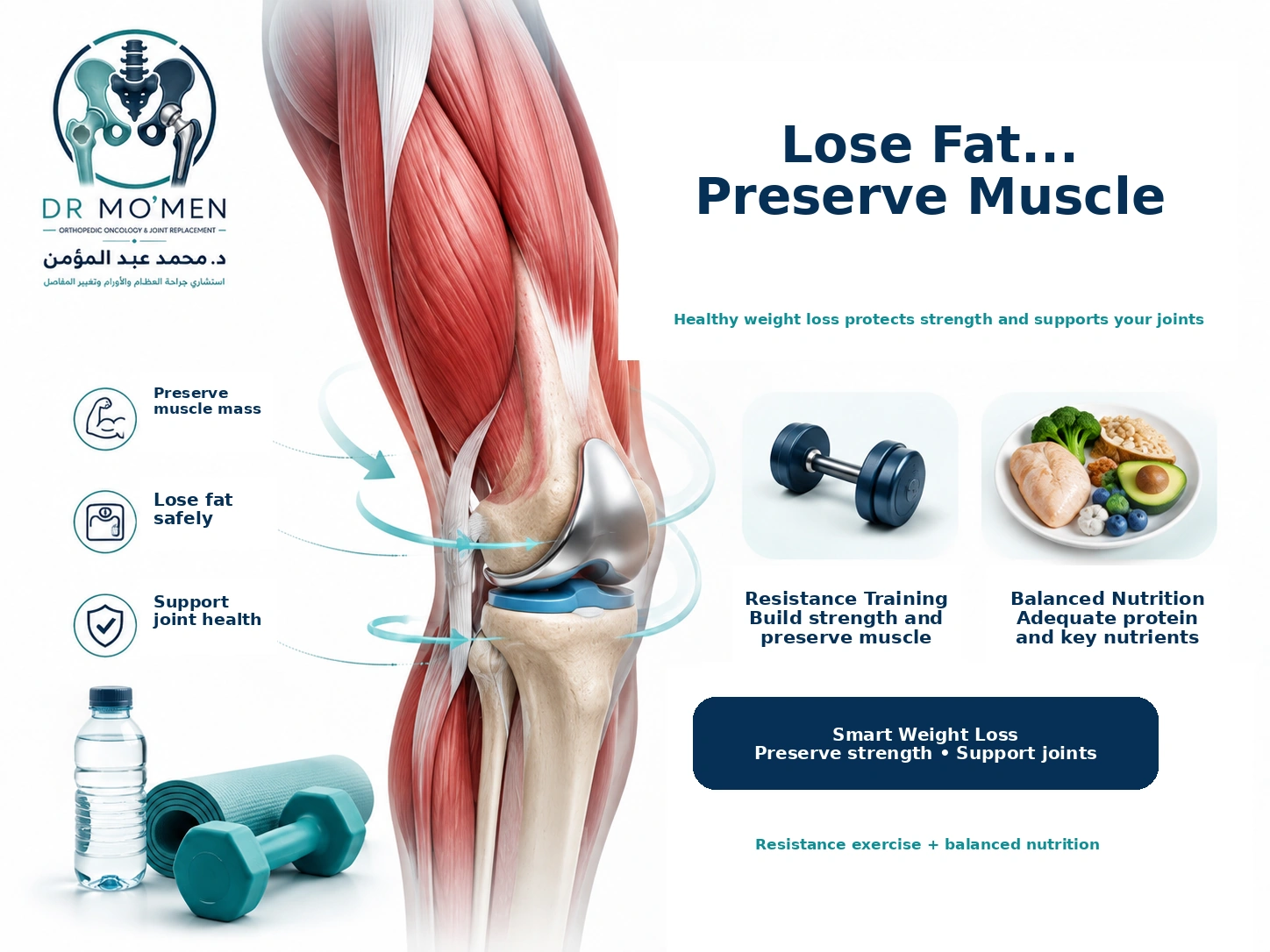
This matters in knee osteoarthritis because strong quadriceps and hip muscles are important for mobility, balance and control of the lower limb. A patient may therefore achieve an impressive weight-loss number but still lose function if muscle strength is neglected.
The practical goal is healthy weight reduction while preserving strength, muscle and bone health as much as possible. Depending on the individual, this may include appropriate resistance exercise, adequate dietary protein, regular physical activity and assessment of bone-health risks when clinically indicated.
Can I Exercise if My Knee Hurts?
Usually, complete inactivity is not the solution. The type and intensity of exercise should be matched to the severity of the arthritis.
Options may include appropriately dosed walking, stationary cycling, swimming or water exercise, quadriceps strengthening and hip-abductor strengthening. High-impact exercise, repetitive jumping or running may not be appropriate for every patient with advanced osteoarthritis.
If every attempt at exercise produces significant pain or recurrent swelling, the knee should be reassessed rather than simply abandoning physical activity.
When Should Someone Taking Ozempic or Mounjaro See an Orthopedic Surgeon?
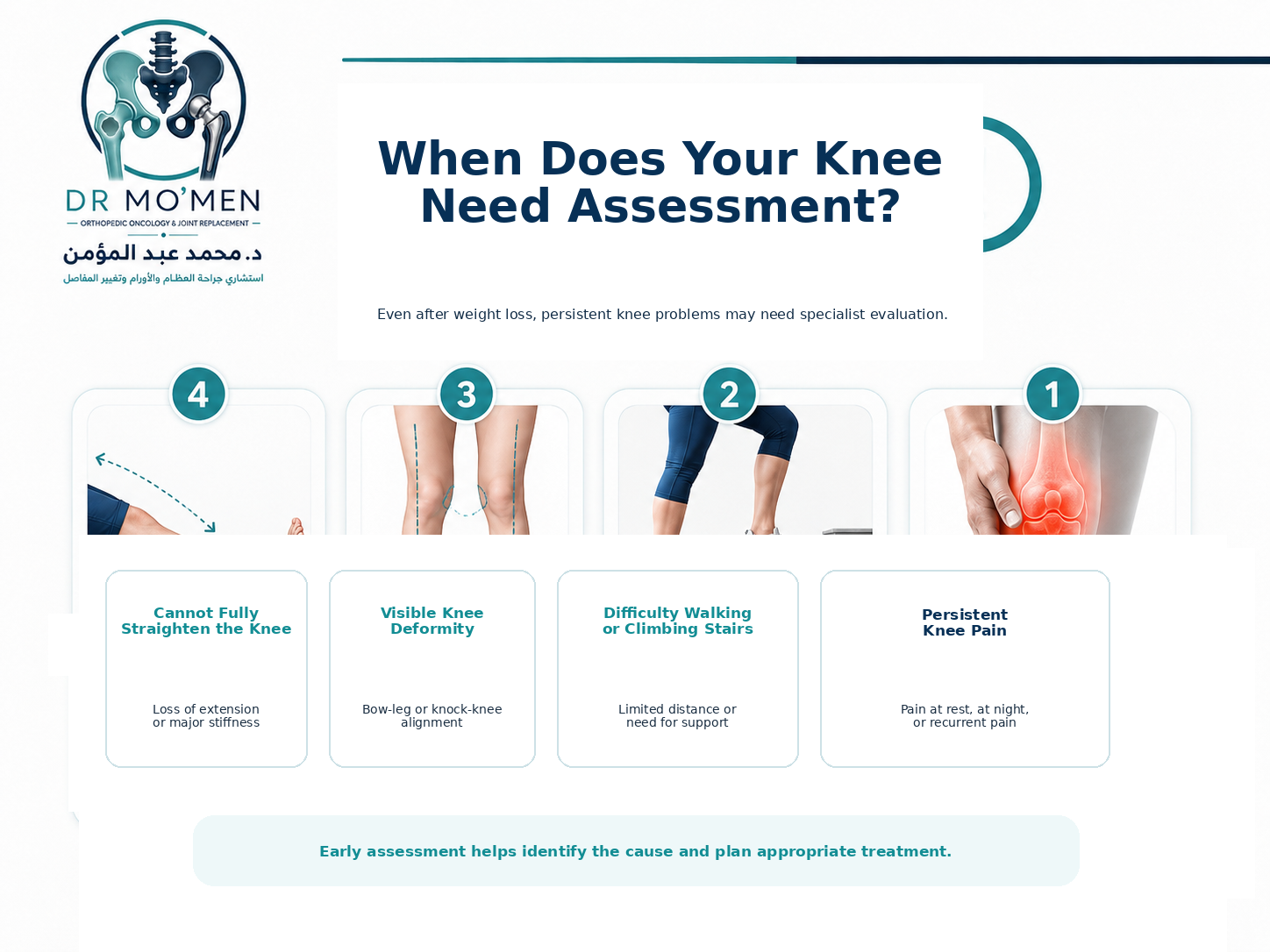
Do not wait until you reach an ideal body weight before having your knee assessed if symptoms are substantially affecting your life. Orthopedic assessment is particularly appropriate when you have:
- Persistent pain despite weight loss.
- Difficulty walking or climbing stairs.
- Pain at rest or pain that wakes you at night.
- Recurrent knee swelling.
- Visible bow-leg or knock-knee deformity.
- Loss of full knee extension or major stiffness.
- Instability or mechanical locking.
- Progressively increasing dependence on pain medication.
How Is Knee Osteoarthritis Assessed?
The most useful assessment begins with the history and clinical examination.
The surgeon evaluates the location and pattern of pain, range of motion, swelling, stability, alignment, muscle strength and walking pattern. The hip may also need examination because hip disease can sometimes present as knee pain.
Weight-bearing knee radiographs are usually very useful in assessing established osteoarthritis and limb alignment. MRI is not automatically required for every patient with typical osteoarthritis; it is more useful when another diagnosis is suspected or symptoms are not adequately explained by examination and standard radiographs.
Can Losing Weight Delay Knee Replacement?
For some patients, yes. Improving weight, muscle strength and physical function may reduce symptoms enough that knee replacement is not currently required. That is a positive outcome when symptoms remain adequately controlled.
However, delaying surgery should not become the objective regardless of symptoms. When osteoarthritis is advanced and produces persistent disabling pain, major stiffness, deformity and loss of function despite appropriate nonsurgical treatment, knee replacement may become the more reasonable option.
The decision depends on the combination of pain + function + examination + imaging + previous treatment response + overall medical condition.
What New 2026 Evidence Adds
A large 2026 retrospective database study added an important signal: GLP-1 receptor agonist use was associated with a lower long-term incidence of total knee arthroplasty in patients with knee osteoarthritis. The association was stronger with longer exposure and newer-generation agents such as semaglutide or tirzepatide. However, this was observational evidence rather than a randomized trial, so it cannot prove that these medications prevent knee replacement or directly modify osteoarthritis progression. Prospective trials are still needed to establish causality.
Do I Need to Lose Weight Before Knee Replacement?
Weight optimization may be beneficial before surgery in many patients with obesity. It can improve mobility, physical conditioning and management of associated medical conditions.
But treatment should not be reduced to telling every patient to “lose weight and come back.” Some patients with severe arthritis become trapped in a cycle: knee pain → reduced mobility → muscle weakness → increasing difficulty losing weight.
The appropriate strategy therefore needs to be individualized. For some patients, further conservative care and weight optimization are reasonable. For others with severe joint destruction and major disability, prolonged delay may produce additional deconditioning without solving the underlying mechanical problem.
Taking Ozempic, Wegovy or Mounjaro Before Surgery? Tell Your Surgical Team
This is particularly important for orthopedic patients. Semaglutide, tirzepatide and related medications can delay gastric emptying in some patients. Anyone taking these drugs should tell the surgeon, anesthesiologist and prescribing clinician before a procedure requiring anesthesia or deep sedation.
Current multi-society guidance does not recommend automatically stopping GLP-1 medications in every surgical patient. Many patients at low risk for delayed gastric emptying may be able to continue treatment, while patients with significant gastrointestinal symptoms, those undergoing dose escalation or those with additional risk factors may need a modified perioperative plan.
Do not stop or change the medication schedule independently before surgery.
Treatment Options for Knee Osteoarthritis in a Patient With Obesity
Earlier or Moderate Osteoarthritis
Depending on the individual patient, treatment may include weight management, strengthening, physiotherapy, activity modification, medication and selected knee injections.
Advanced Osteoarthritis
When pain, stiffness, deformity and loss of mobility remain substantial despite appropriate nonoperative treatment, knee-replacement assessment may become appropriate.
When Is a Specialist Opinion Useful?
Not every patient using a GLP-1 or GIP/GLP-1 medication requires orthopedic review.
But if you are using one of these medications for obesity or diabetes and also have persistent knee pain or established knee osteoarthritis, evaluation can clarify whether the joint is still suitable for conservative treatment or whether a structural problem needs more specific management.
The purpose is to determine whether the pain is really coming from the knee, how advanced the osteoarthritis is, whether significant deformity or loss of motion is present, whether strengthening and weight management remain sufficient, whether injections are appropriate, or whether the joint has reached a stage where replacement should be discussed.
Dr. Mohammed Abdelmoemen's Role in Complex Knee Cases
Dr. Mohammed Abdelmoemen Abuelhadid evaluates knee osteoarthritis by correlating the patient’s symptoms with clinical examination, functional limitation, alignment, imaging, body weight and overall medical condition.
A patient with obesity should not be judged by body weight alone, just as knee replacement should never be recommended from an X-ray alone.
When nonoperative treatment remains appropriate, the aim is to improve strength, mobility and symptom control while preserving the native joint. When osteoarthritis is advanced, the discussion can include the timing of knee replacement, alternatives, risks and postoperative rehabilitation.
For booking or imaging review: 01021690693
International patients may also send their X-rays and reports for preliminary review before arranging travel to Cairo when appropriate.
Frequently Asked Questions
Can Ozempic help knee osteoarthritis pain?
Semaglutide has randomized-trial evidence showing improved pain and function in people with obesity and symptomatic knee osteoarthritis. This does not mean it regenerates lost cartilage.
Does Mounjaro treat arthritis?
Tirzepatide can produce substantial weight loss in appropriate patients, which may reduce stress on weight-bearing joints. It should not currently be described as a proven direct treatment for knee osteoarthritis.
If my knee feels better after losing weight, do I still need surgery?
Not necessarily. If pain and function become acceptable, conservative management may remain appropriate. Surgery is based on symptoms, examination and imaging rather than the X-ray alone.
Why does my knee still hurt after significant weight loss?
Advanced cartilage loss, deformity, stiffness, muscle weakness or another source of pain may still be present. An orthopedic assessment can help identify the cause.
Should I stop Ozempic or Mounjaro before knee surgery?
Do not stop it independently. Tell your surgeon, anesthesiologist and prescribing clinician so they can determine the safest perioperative plan.
Related Reading
Scientific References
- Bliddal H, et al. Once-Weekly Semaglutide in Persons with Obesity and Knee Osteoarthritis. N Engl J Med. 2024.
- Carter V, et al. GLP-1 receptor agonist use and risk of arthroplasty for knee osteoarthritis. Reg Anesth Pain Med. 2026.
- STOP KNEE-OA trial (NCT06191848).
How this article was reviewed
This patient-education article was reviewed for clinical accuracy, patient safety, and decision-making clarity by Dr. Mohammed Abdelmoemen Abuelhadid. It is intended to support, not replace, clinical examination and review of the actual imaging and reports.
Author and medical reviewer
Dr. Mohammed Abdelmoemen Abuelhadid — Orthopedic Oncology & Joint Replacement Surgeon and Lecturer of Orthopedic Surgery at Ain Shams University.