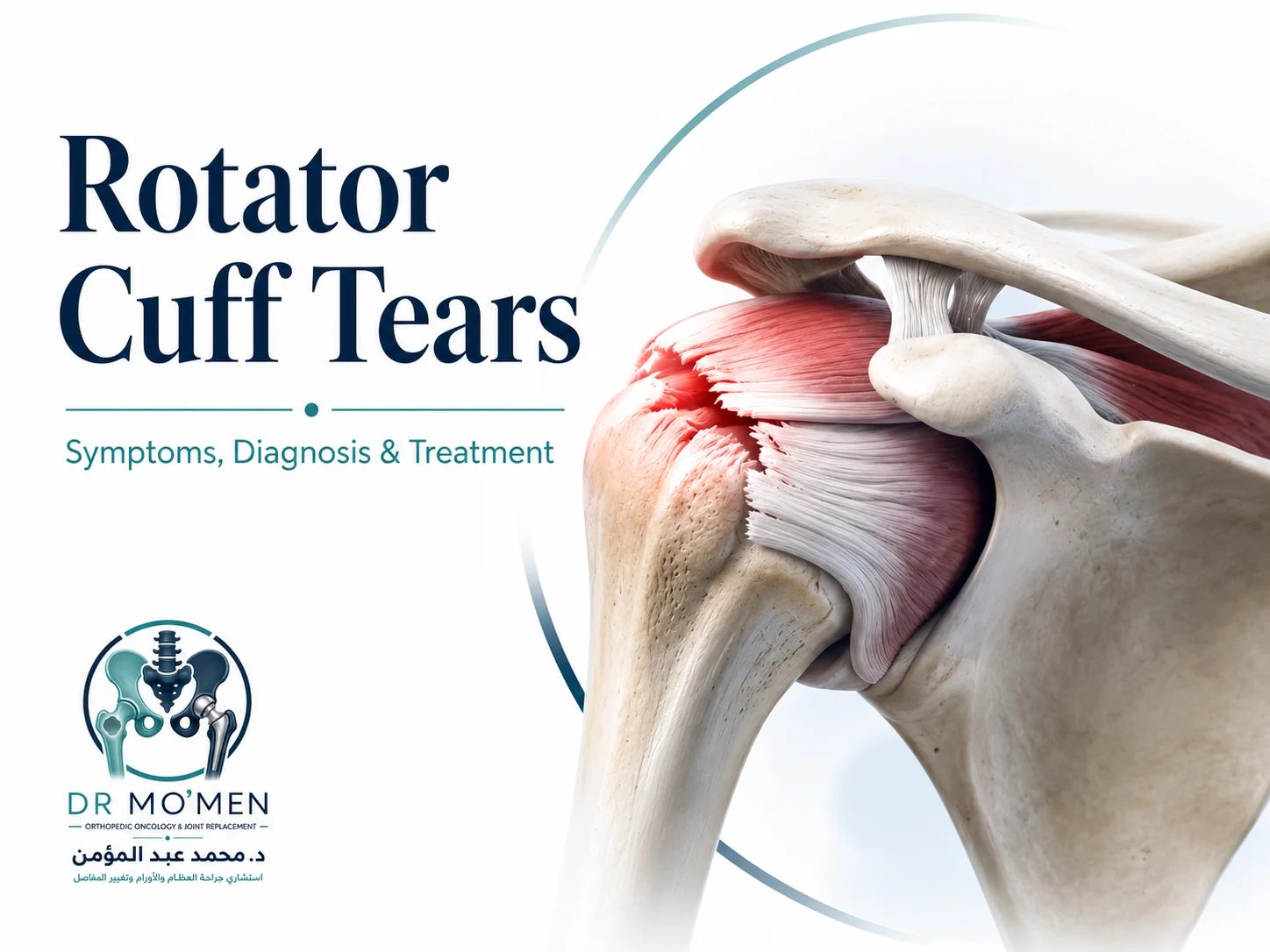
Direct answer: A rotator cuff tear can cause shoulder pain, weakness, and night pain, but it does not automatically mean surgery. Treatment should match the patient’s symptoms, examination findings, tear pattern, activity level, and goals.
The correct decision depends on whether the tear is traumatic or degenerative, partial or full-thickness, how much weakness is present, how the shoulder functions, and whether appropriate non-surgical care has helped.
What Is a Rotator Cuff Tear?
The rotator cuff is a group of four muscles and their tendons that help stabilize the shoulder and allow the arm to lift and rotate. A tear occurs when part of a rotator cuff tendon is damaged or separates from its attachment on the upper arm bone.
The shoulder is highly mobile because its socket is relatively shallow. This mobility also means that soft tissues — especially the rotator cuff — play a major role in keeping the joint centered and controlling movement.
Symptoms and Warning Signs
Night pain is common in rotator cuff disorders, but it is not specific to a tendon tear.
- Shoulder pain, especially when lifting or lowering the arm
- Night pain, particularly when lying on the affected side
- Weakness when raising the arm or rotating it outward
- Difficulty dressing, combing hair, reaching overhead, or lifting objects
- Pain during sports or repetitive overhead work
- Clicking, catching, or a grating sensation in some patients
Not every painful shoulder has a torn tendon. Impingement, bursitis, frozen shoulder, arthritis, biceps pathology, and cervical problems can produce similar symptoms. A clinical examination helps distinguish these causes.

How Does a Rotator Cuff Tear Happen?
Acute or traumatic tear
A tear can happen suddenly after a fall, shoulder dislocation, forceful lifting injury, or sports trauma. A traumatic tear may produce immediate pain and a noticeable loss of strength, especially in an active patient.
Degenerative tear
Many tears develop gradually. Tendon quality changes with age, and years of repeated loading can produce fraying and progressive tearing. Structural factors around the shoulder may contribute in some patients, but a bone spur alone does not explain every tear.
Risk factors
- Increasing age
- Repeated overhead sports or occupations
- Previous shoulder injury or dislocation
- Long-standing tendon overload or impingement-type symptoms
- Smoking and some chronic medical conditions that may affect tendon biology and healing
Partial vs Full-Thickness Tears
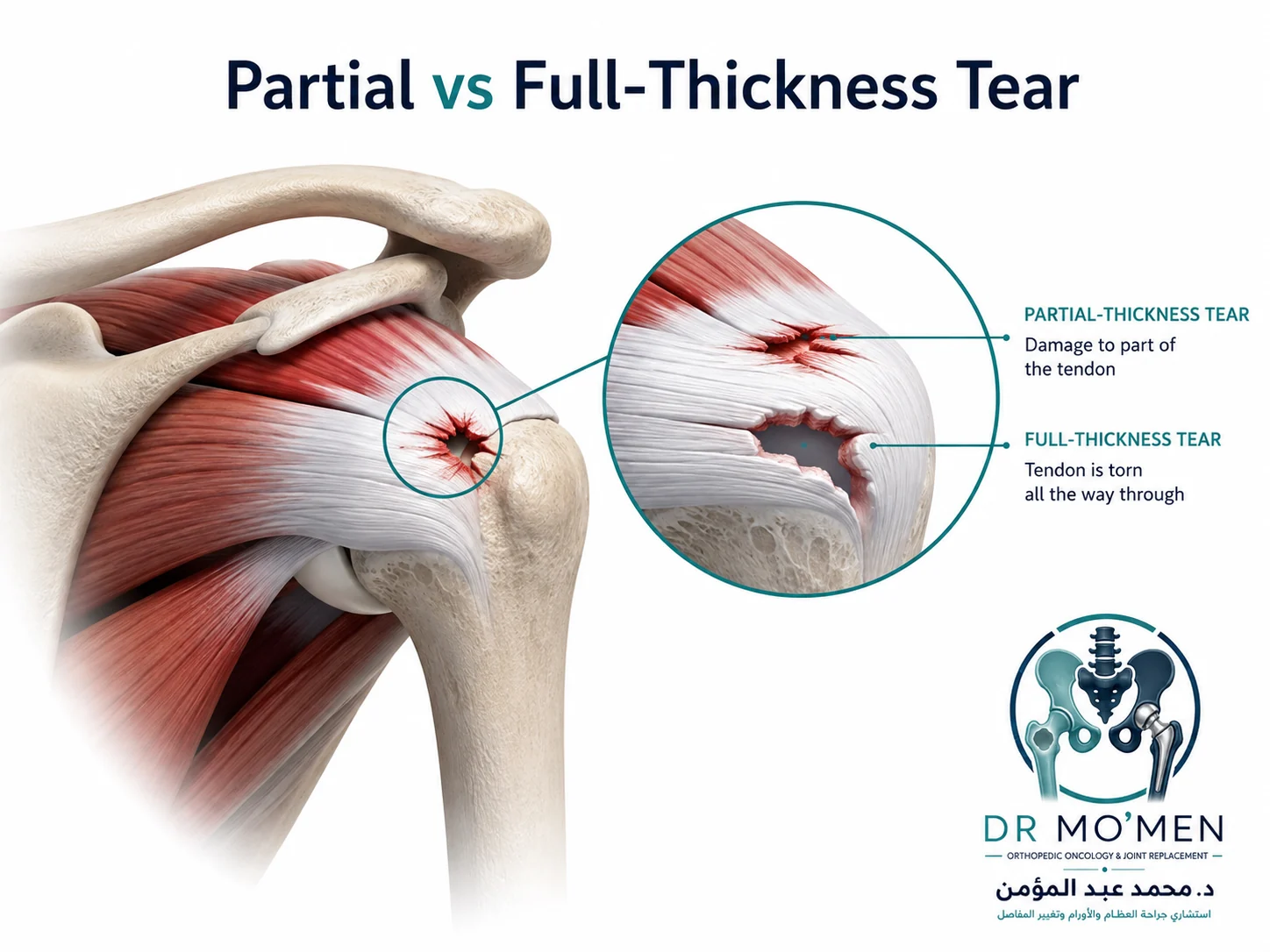
Partial-thickness tear
Part of the tendon is damaged, but some fibers remain attached to the bone. Symptoms range from mild pain to substantial pain and weakness, depending on the depth and location of the tear.
Full-thickness tear
The tendon is torn through its full depth, and part of the tendon may detach from its original footprint on the bone. A full-thickness tear does not automatically require surgery. Some patients improve with rehabilitation, while others benefit from repair because of traumatic onset, significant weakness, tear characteristics, activity demands, or persistent symptoms.
How Is the Diagnosis Made?
The scan should be interpreted together with the history and physical examination, not as an isolated surgical decision.
Medical history
The assessment starts by clarifying when the pain began, whether there was trauma, the degree of night pain and weakness, sports or occupational demands, and which treatments have already been tried.
Clinical examination
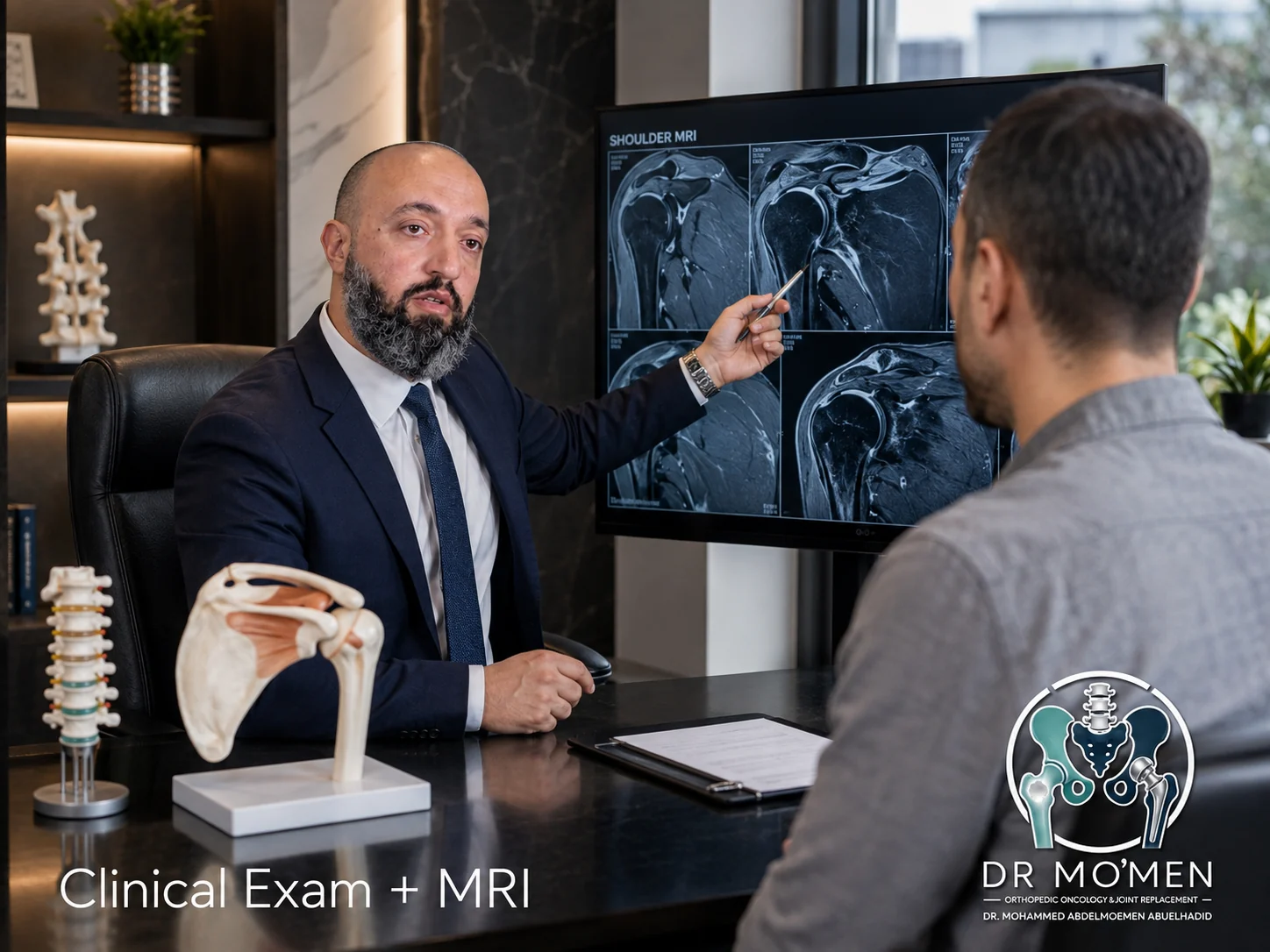
Examination assesses range of motion, rotator cuff strength, painful arcs, impingement signs, and whether apparent weakness is caused mainly by pain or by true tendon dysfunction.
Imaging
- X-rays: useful for bone alignment, arthritis, acromial morphology, and other bony abnormalities.
- Ultrasound: can evaluate rotator cuff tendons dynamically when performed by an experienced operator.
- MRI: can define tear size and location, tendon retraction, muscle condition, and associated soft-tissue pathology.
An MRI report should not decide surgery by itself. Imaging needs to be matched with symptoms, examination findings, function, and patient goals.
Treatment Options
Treatment is individualized. Important variables include age, activity level, traumatic versus degenerative onset, pain severity, objective weakness, tear size, functional limitations, comorbidities, and response to previous treatment.
Non-surgical treatment
Many patients can start with non-surgical care, especially when the tear is partial or degenerative and shoulder function remains acceptable.
- Activity modification: temporarily reduce painful overhead or heavy lifting activities.
- Pain control: simple analgesics or anti-inflammatory medication may be used when medically appropriate.
- Physical therapy: restore motion, improve scapular and shoulder mechanics, and strengthen the remaining functional musculature.
- Selected corticosteroid injection: may provide short-term improvement in pain and function for some patients. It does not repair the torn tendon, and repeated injections or injections near a planned repair should be discussed carefully with the treating surgeon.
When May Surgery Be Considered?
Arthroscopic repair may be considered when the expected benefit of restoring the tendon outweighs the disadvantages and rehabilitation burden. Factors that commonly strengthen the case for repair include:
- A recent traumatic full-thickness tear in an active patient
- Significant objective weakness or loss of shoulder function
- Persistent pain and disability despite an appropriate rehabilitation program
- A larger or retracted tear where progression could make later repair more difficult
- High functional demands, including overhead sports or physically demanding work
- Imaging features that affect repairability, interpreted together with the clinical examination
The final decision should be individualized rather than based on a single MRI phrase such as “full-thickness tear.”
Arthroscopic Rotator Cuff Repair
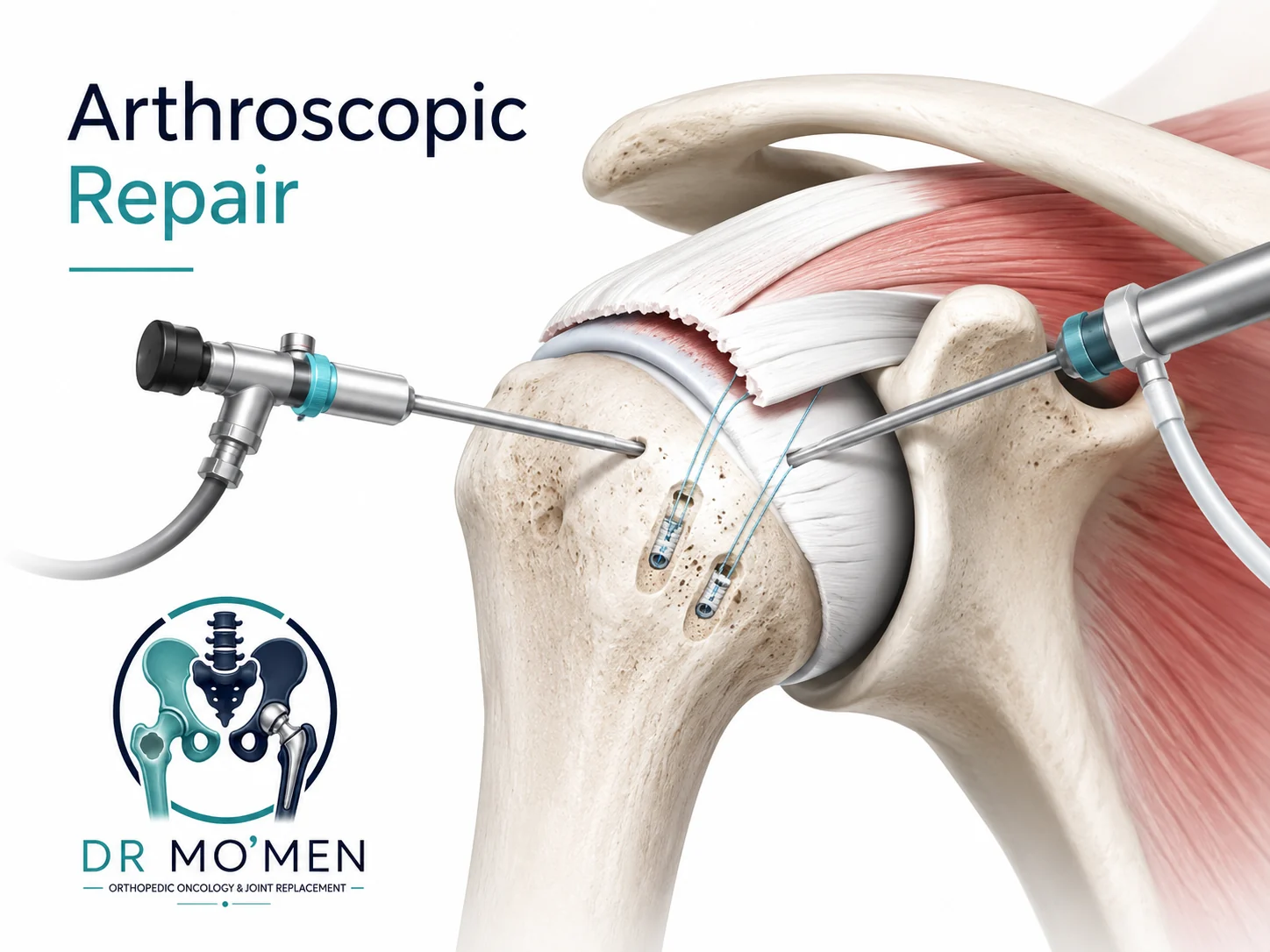
When surgery is appropriate, rotator cuff repair is commonly performed arthroscopically through several small portals. A camera allows the surgeon to inspect the joint and tear pattern. Suture anchors are placed in the humeral head, and sutures are passed through the tendon to restore tendon-to-bone contact.
Arthroscopy reduces the need for a large open approach in many cases and allows associated shoulder pathology to be assessed. However, the biological healing of tendon to bone still takes time, so recovery is not immediate.
Recovery After Rotator Cuff Repair
Rehabilitation is staged according to tear size, tendon quality, repair security, and the surgeon’s protocol. Many patients initially use a sling, then progress through protected motion, active movement, and later strengthening.
The overall recovery process commonly takes several months. Returning too early to heavy lifting, resistance training, or overhead sport can overload the repair. The timeline should therefore be individualized rather than copied from another patient.
Can a Rotator Cuff Tear Get Worse If Left Untreated?
Some patients function well with non-surgical care for a long period. In others, a tear may enlarge or become associated with increasing tendon retraction and muscle changes. This does not mean every tear will inevitably deteriorate, but persistent symptoms or progressive weakness justify reassessment.
When Should You Seek Specialized Assessment?
- Shoulder pain lasting more than a few weeks despite reasonable activity modification
- Night pain that repeatedly disturbs sleep
- Sudden weakness after a fall, dislocation, or lifting injury
- Difficulty lifting the arm or performing essential daily activities
- Persistent symptoms despite supervised physiotherapy
- Uncertainty about whether an MRI finding really requires surgery
A recent traumatic injury with a sudden loss of strength deserves earlier orthopedic assessment because the timing of treatment may matter in selected tears.
Dr. Mo’men’s Role in Complex Shoulder and Sports Injury Cases
In sports injury practice, the most important step is matching the treatment to the patient rather than treating the MRI image alone. Not every tear needs surgery, and not every persistent tear should simply be ignored.
For patients with persistent pain, weakness, reduced function, or uncertainty about the need for arthroscopic repair, a specialist review can integrate the examination, imaging, activity requirements, and previous treatment into one decision.
Need a specialist shoulder review?
Clinical examination and review of the actual MRI images can help clarify whether rehabilitation, injection, or arthroscopic repair is the most appropriate pathway.
Frequently Asked Questions
Does every full-thickness rotator cuff tear need surgery?
No. Treatment depends on symptoms, objective weakness, the tear pattern, activity level, age, medical factors, and response to rehabilitation. Some patients with complete tears improve without immediate surgery.
Can a rotator cuff tear heal by itself?
Symptoms may improve substantially with rehabilitation. A fully detached tendon does not usually reattach to its original footprint spontaneously, but the presence of a complete tear alone does not automatically mandate surgery.
Is night pain a sign of a rotator cuff tear?
Night pain is common in rotator cuff disorders, especially when lying on the affected shoulder, but it is not specific. Other shoulder conditions can also cause night pain.
Do I always need an MRI?
No. Diagnosis starts with history and clinical examination. X-rays, ultrasound, or MRI may then be selected according to the clinical question.
How long is recovery after arthroscopic repair?
Recovery varies with tear size and repair characteristics, but tendon healing and progressive rehabilitation usually take several months.
Medical Disclaimer
This article is for patient education only and does not replace a medical examination, review of imaging, and appropriate investigations.
How this article was reviewed
This patient-education article was reviewed for clinical accuracy, patient safety, and decision-making clarity by Dr. Mohammed Abdelmoemen Abuelhadid. It is intended to support, not replace, clinical examination and review of the actual imaging and reports.
Author and medical reviewer
Dr. Mohammed Abdelmoemen Abuelhadid — Orthopedic Oncology & Joint Replacement Surgeon and Lecturer of Orthopedic Surgery at Ain Shams University.