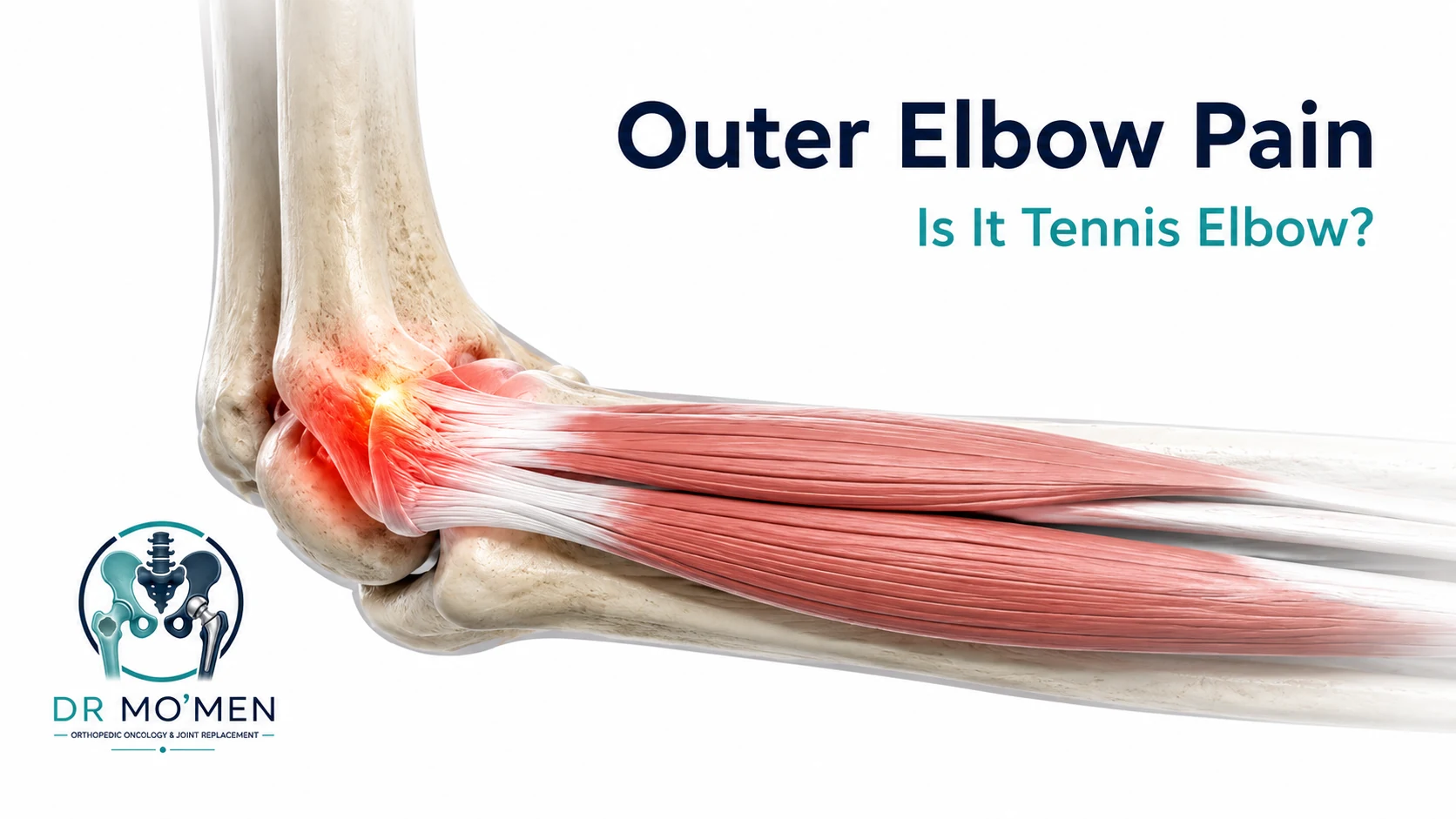
Pain on the outside of the elbow that becomes worse when gripping, lifting a cup, opening a jar, using a screwdriver, or carrying a bag may be caused by tennis elbow.
Despite its name, tennis elbow is not limited to tennis players. Repeated forearm and wrist activity at work, during exercise, or in sport can also cause the problem.
What Is Tennis Elbow?
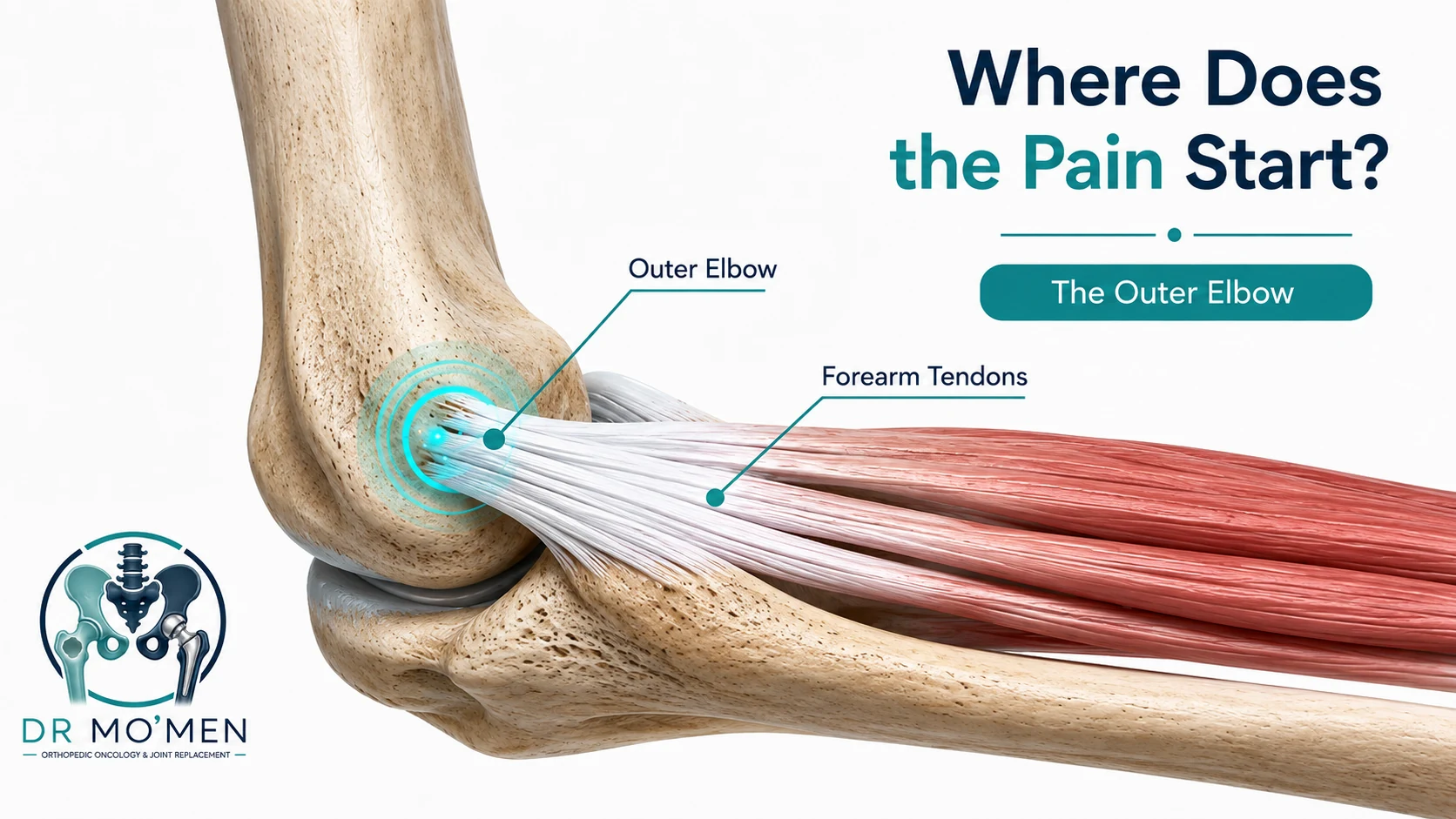
Tennis elbow is also called lateral elbow tendinopathy or lateral epicondylitis.
It affects the tendons that connect forearm muscles to the outer part of the elbow. In persistent cases, the problem is better understood as a tendon-overload disorder rather than simple inflammation alone.
What Are the Symptoms?
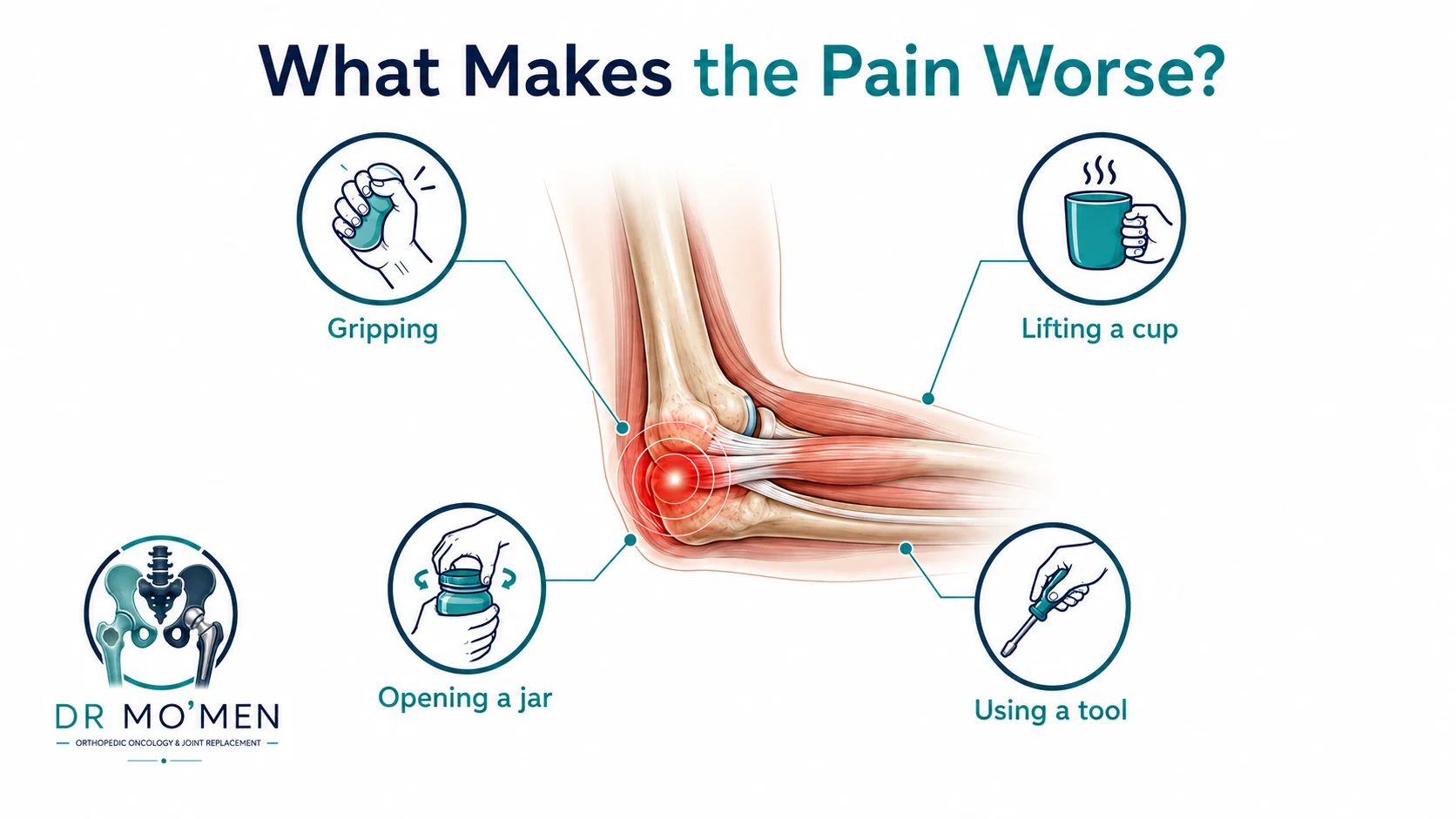
Typical symptoms include:
- Pain or burning on the outside of the elbow.
- Pain when gripping.
- Pain when lifting.
- Pain when opening jars or turning tools.
- Pain when lifting with the palm facing downward.
- Reduced grip strength.
- Forearm discomfort.
- Occasionally night pain.
What Causes Tennis Elbow?
The main issue is repeated load through the forearm muscles and their tendons.
Possible triggers include:
- Manual work.
- Painting or carpentry.
- Repetitive gripping.
- Weight training.
- Racquet sports.
- Tool use.
- A sudden increase in activity.
If symptoms are related to sport or a sudden increase in training load, see the Sports Injuries & Arthroscopy service.
Symptoms often develop gradually without one clear injury.
Can Computer or Mouse Use Cause It?
Repeated wrist and hand use may contribute to symptoms in some people, especially when combined with forceful gripping, poor setup, or a sudden increase in workload.
However, not every elbow pain problem in a computer user is tennis elbow.
Is All Outer Elbow Pain Tennis Elbow?
No.
Nerve irritation
This may cause pain with numbness, tingling, burning, or weakness.
Neck-related pain
Pain can travel from the neck to the arm and elbow. Neck pain with numbness or weakness needs a broader neurological assessment.
Trauma or fracture
Pain that begins after a fall or direct impact needs a different evaluation.
Elbow-joint problems
These are more likely when there is marked stiffness, swelling, locking, or major loss of elbow motion.
How Is Tennis Elbow Diagnosed?
Diagnosis is usually based on:
history + pain location + physical examination.
The examination may include:
- Tenderness over the outer elbow.
- Resisted wrist movements.
- Grip testing.
- Elbow range of motion.
- Neurological examination when needed.
- Neck assessment if symptoms radiate.
Do I Need an X-Ray?
Not routinely.
X-rays may be useful after trauma or when arthritis, a bone problem, or another diagnosis needs to be excluded.
Do I Need MRI or Ultrasound?
Most typical cases do not require MRI initially.
Ultrasound or MRI may be considered when:
- Symptoms persist despite appropriate treatment.
- The diagnosis remains uncertain.
- There was an acute injury.
- Weakness is unexplained.
- Another tendon or joint problem needs to be excluded.
How Is Tennis Elbow Treated?
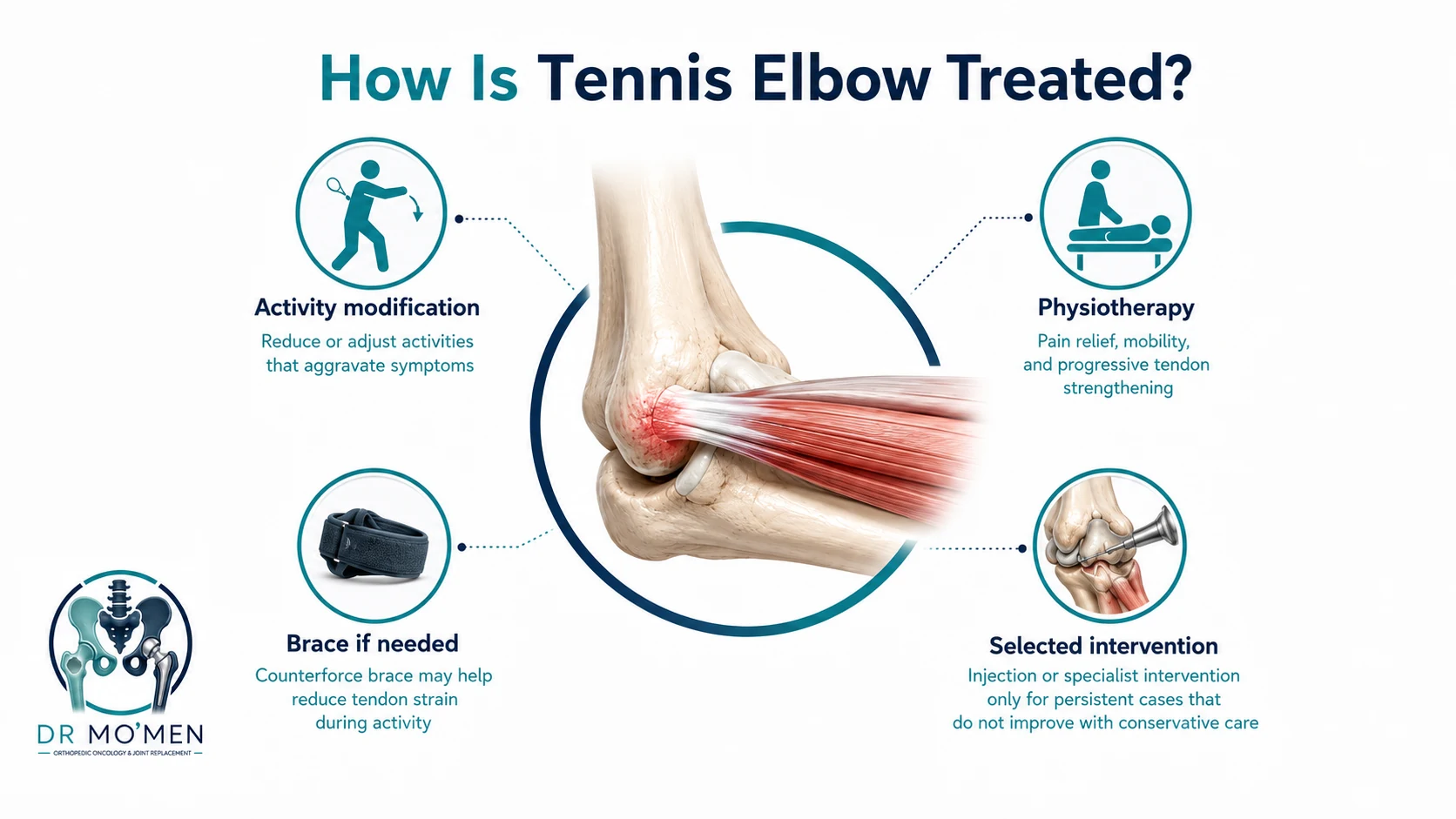
Treatment aims to:
reduce painful load → rebuild tendon capacity → return gradually to normal activity.
1. Activity Modification
Activities that clearly aggravate symptoms may need temporary reduction.
Examples include:
- Heavy gripping.
- Repetitive wrist use.
- Weight training movements that clearly reproduce pain.
- Tool use.
- High-volume racquet activity.
The goal is not permanent rest, but sensible reduction followed by progressive return.
2. Cold or Warm Packs
Cold packs may help after activity for some patients. Others prefer warmth. Avoid placing ice or a heat source directly on the skin.
3. Physiotherapy and Exercise
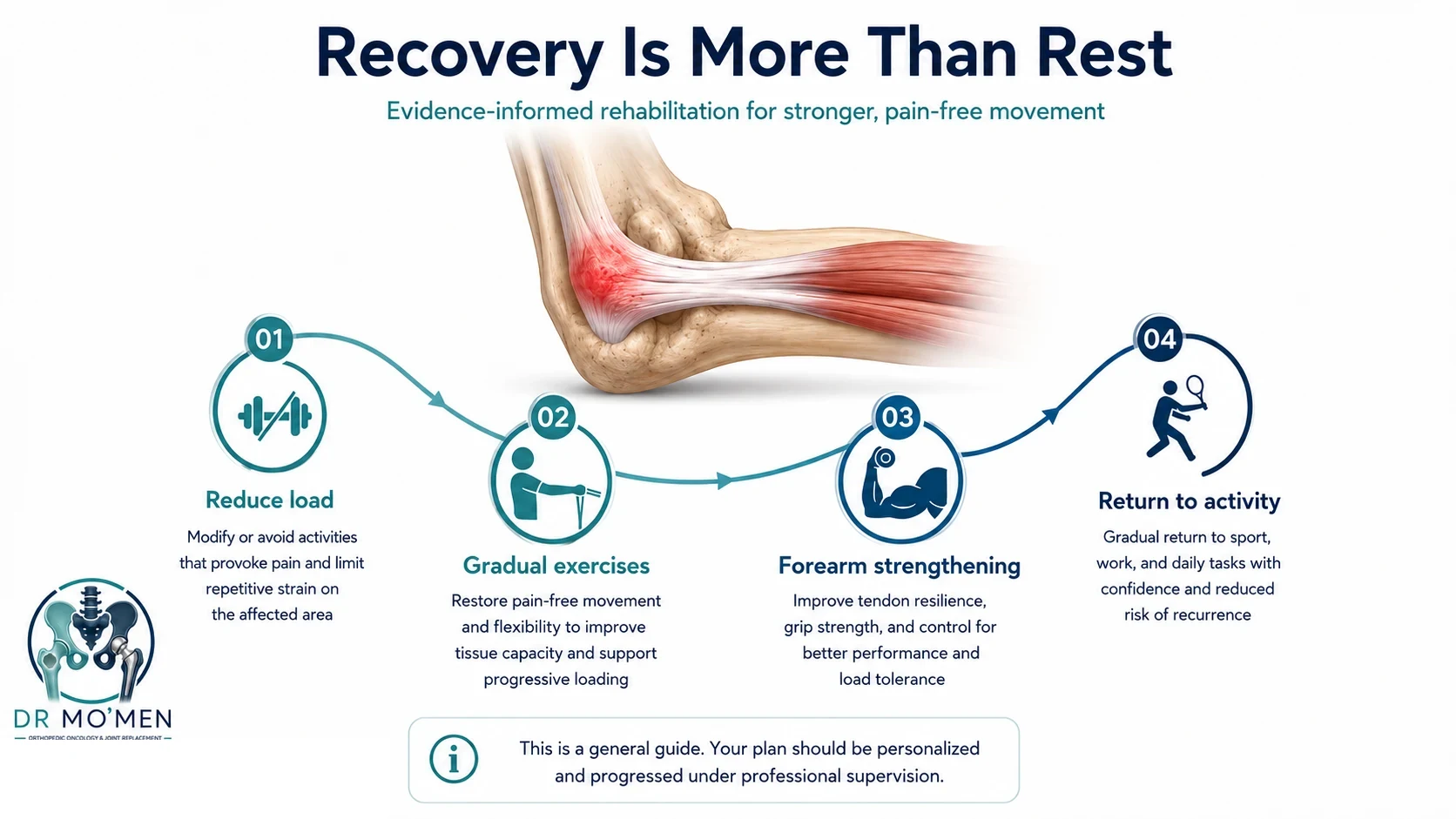
A rehabilitation program may include:
- Forearm strengthening.
- Wrist-extensor loading exercises.
- Grip-strength work.
- Stretching where appropriate.
- Gradual return to work or sport.
- Technique and workload review.
Prolonged rest alone is usually not a complete rehabilitation plan. The tendon needs graded return to load.
4. Bracing
A counterforce forearm strap may reduce symptoms during activity for some patients.
A wrist brace may also be used selectively. A brace should usually be viewed as a support rather than the whole treatment.
5. Pain Medication
Short-term analgesic or anti-inflammatory medication may be considered when medically appropriate. The choice depends on medical history and other medications.
Are Steroid Injections the Best Treatment?
Not necessarily.
A steroid injection may reduce pain in the short term for some patients, but it is not routinely preferred as a long-term solution. Repeated injections around a tendon may also have downsides.
The better question is not simply, “Should I get an injection?” but: Why is the pain still present, and is an injection likely to add meaningful benefit?
What About PRP?
Platelet-rich plasma may be discussed for selected persistent cases.
Evidence is mixed, so PRP should not be presented as a guaranteed treatment.
What About Shock-Wave Therapy?
Shock-wave therapy may be considered in some persistent cases after appropriate initial rehabilitation. Its role varies and it is not required for every patient.
Does Tennis Elbow Need Surgery?
Rarely.
Surgery may be considered for carefully selected patients with persistent symptoms despite a substantial period of appropriate nonsurgical treatment, after confirming the diagnosis and excluding other causes.
A few weeks of pain alone is not an indication for surgery.
When Should Elbow Pain Be Assessed More Urgently?
After a fall or significant direct injury, the Fracture Care service may also be relevant.
Seek earlier medical review after significant trauma or when there is:
- A snap or crack at injury.
- Marked swelling or bruising.
- Deformity.
- Inability to move the elbow normally.
- Increasing redness or warmth.
- Fever.
- Persistent numbness.
- Sudden weakness.
- A growing lump.
- Severe pain at rest.
These are not typical features of uncomplicated tennis elbow.
When Should You See an Orthopedic Specialist?
Specialist assessment is reasonable when:
- Symptoms persist despite appropriate activity modification.
- Pain prevents work or sport.
- Grip strength is worsening.
- Neurological symptoms are present.
- Diagnosis is uncertain.
- Several previous treatments have failed.
- Repeated injections have been used without lasting improvement.
- PRP or surgery is being considered.
- Symptoms do not fit the typical pattern.
Role of Dr. Mo’men in Persistent or Unclear Cases
Most tennis elbow does not require surgery.
Specialist evaluation can help confirm whether pain is truly arising from the lateral elbow tendon or whether another problem — such as nerve compression, cervical pain, or joint pathology — is contributing.
Assessment may include:
- Review of symptoms and examination findings.
- Review of previous imaging.
- Assessment of rehabilitation and workload.
- Determining whether imaging is actually needed.
- Reviewing brace use.
- Discussing injection or PRP when appropriate.
- Identifying the rare cases that may benefit from surgery.
For appointments or imaging review: 01021690693
Patients outside Egypt can begin by using the Second Opinion pathway: