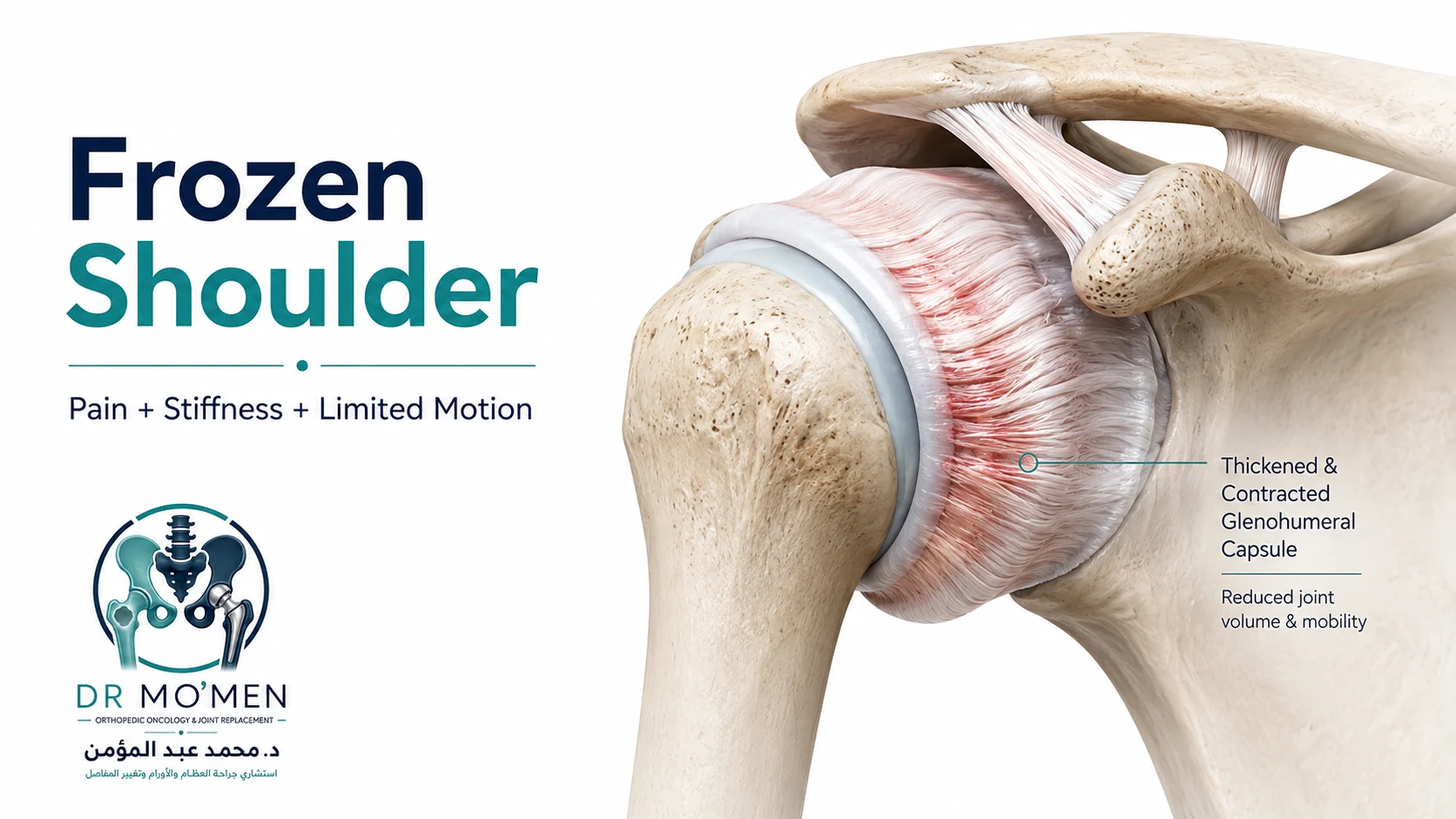
Frozen shoulder, also called adhesive capsulitis, causes progressive shoulder pain and stiffness.
A useful clinical clue is that movement becomes restricted not only when the patient tries to move the arm, but also when an examiner tries to move the relaxed shoulder.
The condition develops as the capsule around the shoulder joint becomes thickened and tight. Improvement can take many months and the time course varies from one patient to another.
What Is Frozen Shoulder?
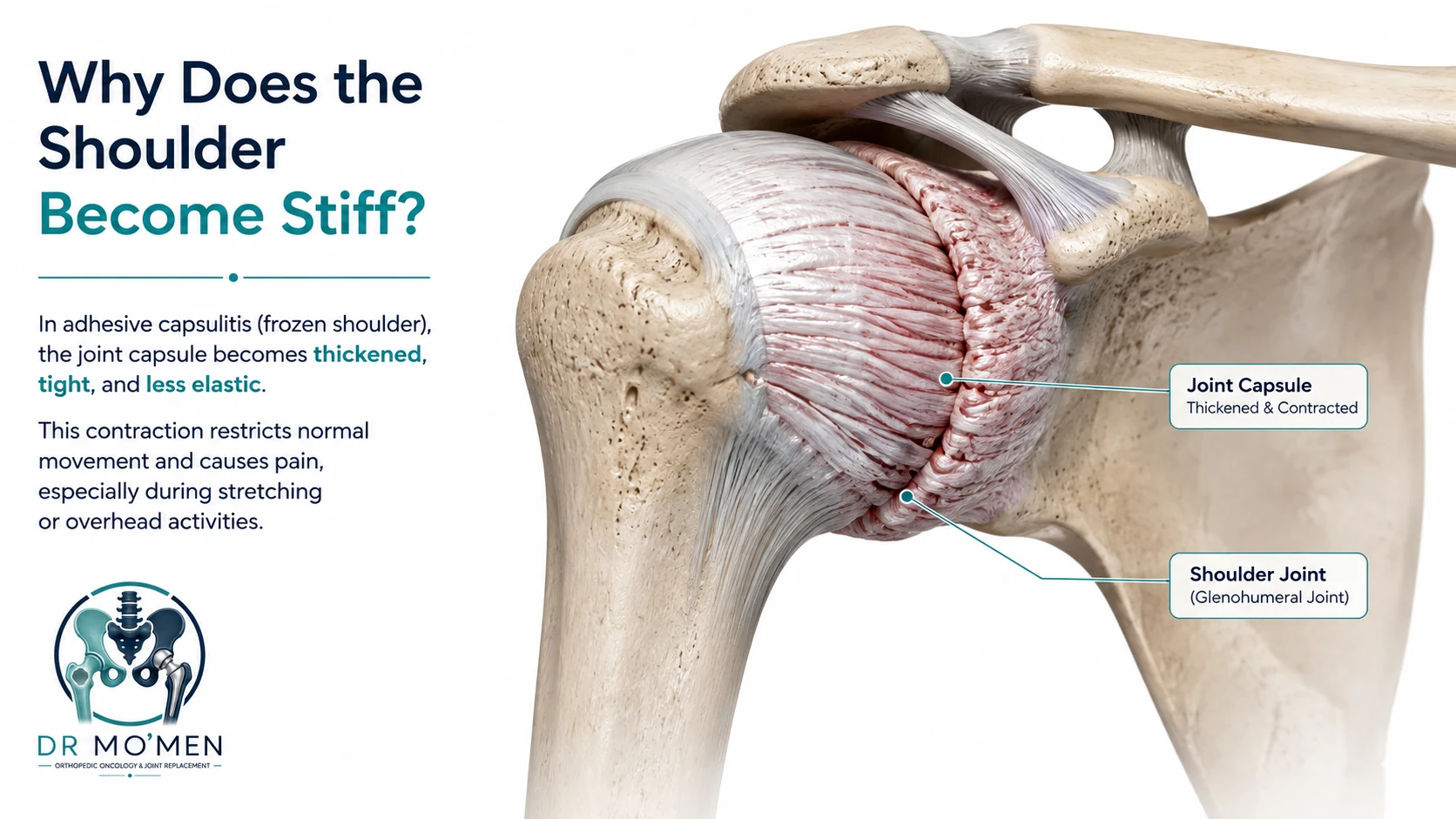
The shoulder joint allows a wide range of movement. A connective-tissue capsule surrounds the joint and helps support normal motion.
In frozen shoulder, this capsule becomes thicker, tighter, and less flexible.
The result is:
pain + stiffness + progressive loss of shoulder motion.
What Does Frozen Shoulder Feel Like?
Common symptoms include:
- Progressive shoulder pain.
- Night pain that may disturb sleep.
- Difficulty lifting the arm overhead.
- Trouble dressing.
- Difficulty reaching behind the back.
- Difficulty grooming or fastening a belt.
- Increasing stiffness.
- Difficulty rotating the arm outward.
The Important Clue: Active and Passive Motion Are Restricted
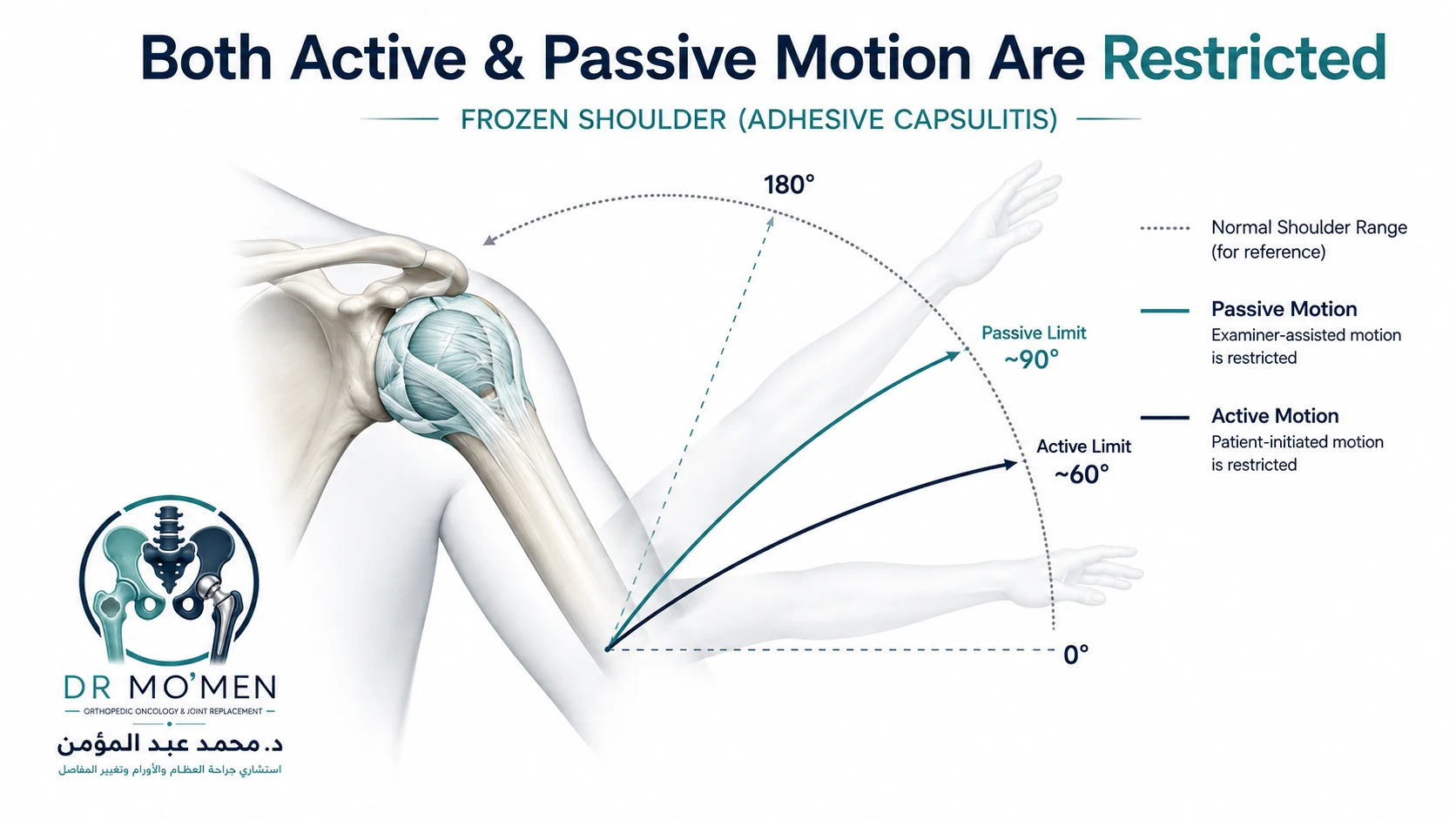
Active motion is how far you can move your shoulder yourself.
Passive motion is how far the shoulder moves when an examiner moves your relaxed arm.
Frozen shoulder typically restricts both active and passive movement. This helps distinguish it from some other shoulder problems.
Is Every Painful, Stiff Shoulder a Frozen Shoulder?
No. Other problems can cause pain and difficulty moving the shoulder.
Rotator Cuff Tear
A rotator cuff tear may cause pain, weakness, and difficulty lifting the arm. The examination pattern differs from frozen shoulder.
Shoulder arthritis
Arthritis can cause pain and stiffness. X-rays may help distinguish it from frozen shoulder.
Tendon or bursa problems
These may cause pain during certain movements without the same global stiffness pattern.
Neck-related pain
If pain starts in the neck and travels down the arm with numbness, tingling, or weakness, the source may be the cervical spine rather than the shoulder.
The Three Stages of Frozen Shoulder
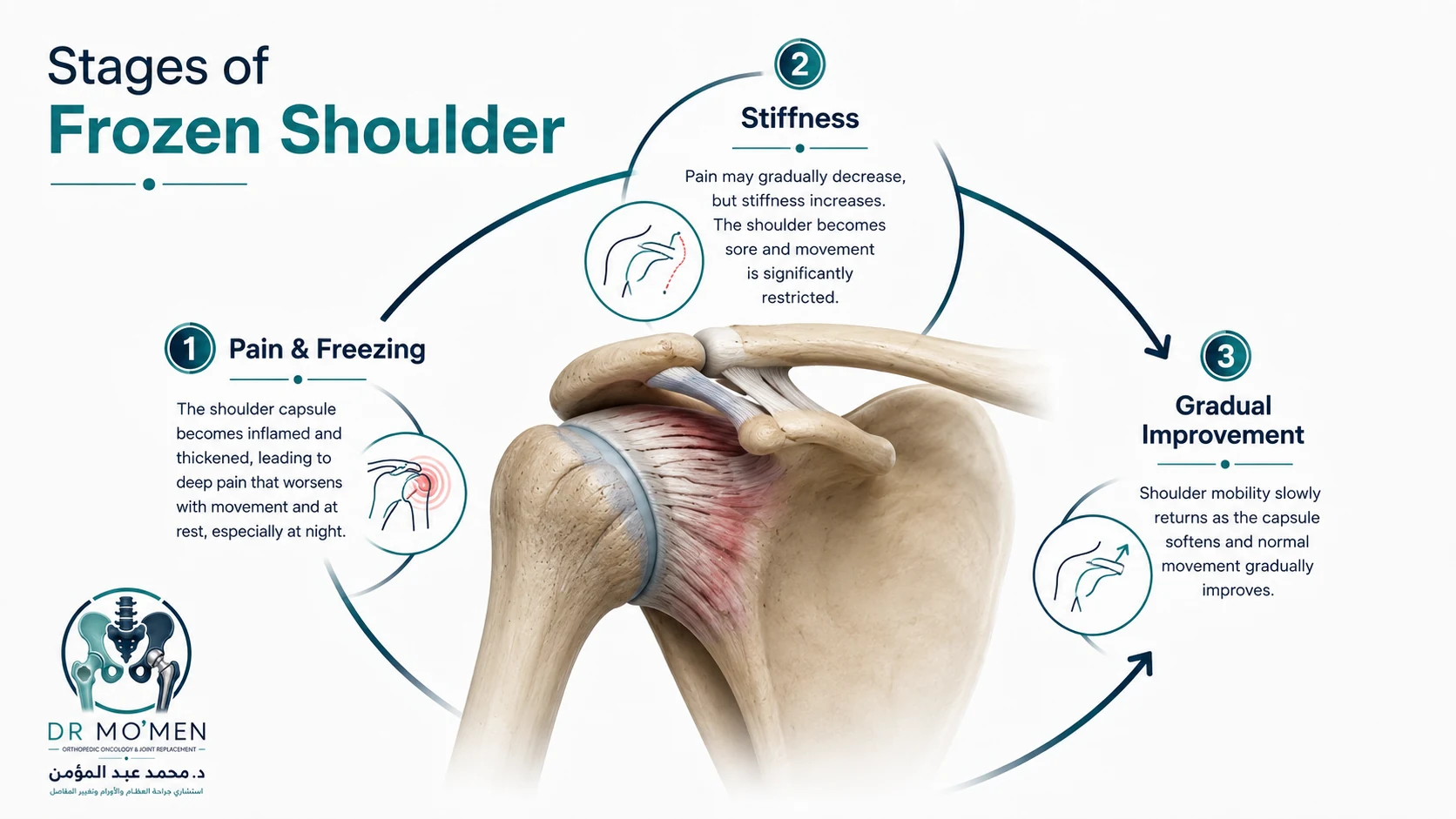
Frozen shoulder is commonly described in three overlapping stages.
1. Pain and freezing
Pain increases gradually while shoulder motion becomes more limited. Night pain may be prominent.
2. Stiffness
Pain may improve somewhat, but stiffness becomes more obvious and daily activities become harder.
3. Gradual improvement
Shoulder movement slowly begins to improve. The speed and degree of recovery vary.
There is no single recovery timeline that applies to every patient.
Why Does Frozen Shoulder Happen?
The exact cause is often unclear. Risk can be higher with:
- A period of shoulder immobilization after injury or surgery.
- Diabetes.
- Some thyroid disorders.
- Certain other medical conditions.
These associations do not prove the diagnosis; clinical assessment remains important.
Diagnosis and Investigations
Diagnosis is mainly clinical and is based on the history and examination.
The orthopedic assessment may include:
- When the pain began and how long it has lasted.
- Previous injury or surgery.
- Diabetes or other medical conditions.
- Night pain.
- Active and passive shoulder movement.
- Which directions are most restricted.
- Shoulder strength.
- Neck and neurological examination when needed.
Do I Need an X-Ray?
An X-ray may be used to rule out other causes of pain and stiffness, including arthritis or some bone-related problems.
Do I Need an MRI?
Not every patient needs an MRI.
MRI or ultrasound may be considered when:
- The diagnosis is unclear.
- There was a previous injury.
- There is unexplained weakness.
- A rotator cuff tear is suspected.
- Symptoms do not fit a typical frozen shoulder pattern.
Treatment Options
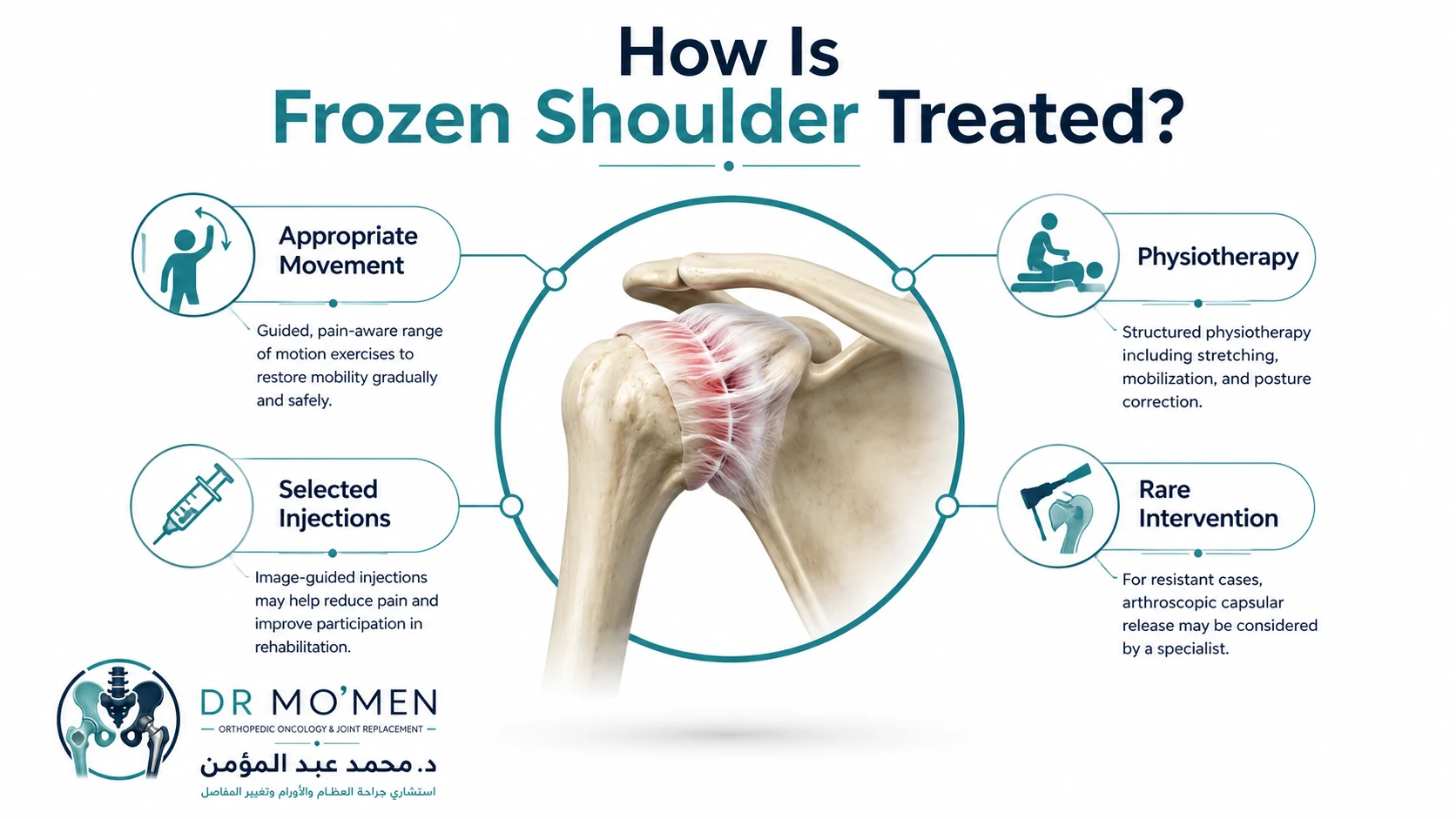
The goals of treatment are:
reduce pain + restore movement gradually + maintain shoulder function.
1. Appropriate movement
Complete shoulder immobilization is usually not the answer. However, forcing a very painful stiff shoulder aggressively may worsen symptoms.
Movement should be gradual and matched to the patient's pain and stage.
2. Physiotherapy
Physiotherapy is an important part of treatment for many patients. It may include:
- Range-of-motion exercises.
- Gradual stretching.
- Functional shoulder exercises.
- A home program matched to the current stage.
More intense exercise is not always better. The program should be adjusted to symptoms.
3. Pain medication
Appropriate pain-relieving or anti-inflammatory medication may help selected patients, but the choice depends on medical history and other medicines.
4. Corticosteroid injection
A corticosteroid injection into the shoulder joint may be considered in selected patients, particularly when pain limits movement and rehabilitation.
It is not required for every patient. People with diabetes should also know that corticosteroid injections can temporarily increase blood glucose.
5. Hydrodilatation
Hydrodilatation may be considered in selected persistent cases. Fluid is placed into the shoulder joint to stretch the tight capsule. It is not required for every patient.
Does Frozen Shoulder Need Surgery?
Usually not.
Surgery is considered only in selected patients with major persistent stiffness and functional limitation despite an appropriate nonsurgical program.
Manipulation Under Anesthesia
The shoulder is moved while the patient is under anesthesia to improve motion in selected cases.
Arthroscopic Capsular Release
Key tight parts of the capsule are released arthroscopically. This is generally reserved for resistant cases after specialist assessment.
When Should Shoulder Stiffness Be Investigated More Urgently?
Seek medical assessment sooner if there is:
- Major trauma or a recent fall.
- An obvious shoulder deformity.
- Sudden inability to raise the arm after an injury.
- Clearly progressive weakness.
- Persistent numbness or loss of feeling.
- Marked swelling, redness, or warmth.
- Fever or signs of infection.
- A growing mass around the shoulder.
- Severe constant pain at rest.
- Unusual night pain with other general symptoms.
These findings do not automatically mean a serious diagnosis, but they require a broader assessment.
Frozen Shoulder vs Rotator Cuff Tear
With frozen shoulder, stiffness is a key feature and both active and passive movement are restricted.
With a rotator cuff problem, pain or weakness may be more prominent, while passive movement can be relatively better preserved.
This is a simplified educational comparison. Overlap can occur, so examination remains important.
When Should You See an Orthopedic Specialist?
Assessment is reasonable when:
- Pain and stiffness persist.
- Movement keeps getting worse.
- You cannot raise the arm or reach behind your back.
- Pain significantly disturbs sleep.
- Previous treatment has not helped as expected.
- The diagnosis remains uncertain.
- Repeated injections or surgery are being considered.
- There was a previous injury or unusual imaging finding.
Role of Dr. Mo’men in Unclear or Complex Cases
The goal is not simply to label a painful shoulder as “frozen.” Specialist evaluation can help confirm the real cause of stiffness and rule out other conditions that would change treatment.
Assessment may include:
- Measuring active and passive motion.
- Reviewing previous imaging.
- Distinguishing frozen shoulder from rotator cuff disease and arthritis.
- Deciding whether MRI or ultrasound is actually needed.
- Planning appropriate nonsurgical treatment.
- Discussing injection or hydrodilatation when appropriate.
- Identifying the small number of cases that may need intervention.
For appointments or imaging review: 01021690693
Patients outside Egypt may use the second-opinion pathway to have reports and imaging reviewed before arranging travel:
For persistent or unclear symptoms, it may help to prepare previous imaging and relevant reports before assessment. Patients with complex or uncertain cases can also use the Second Opinion pathway when appropriate.