
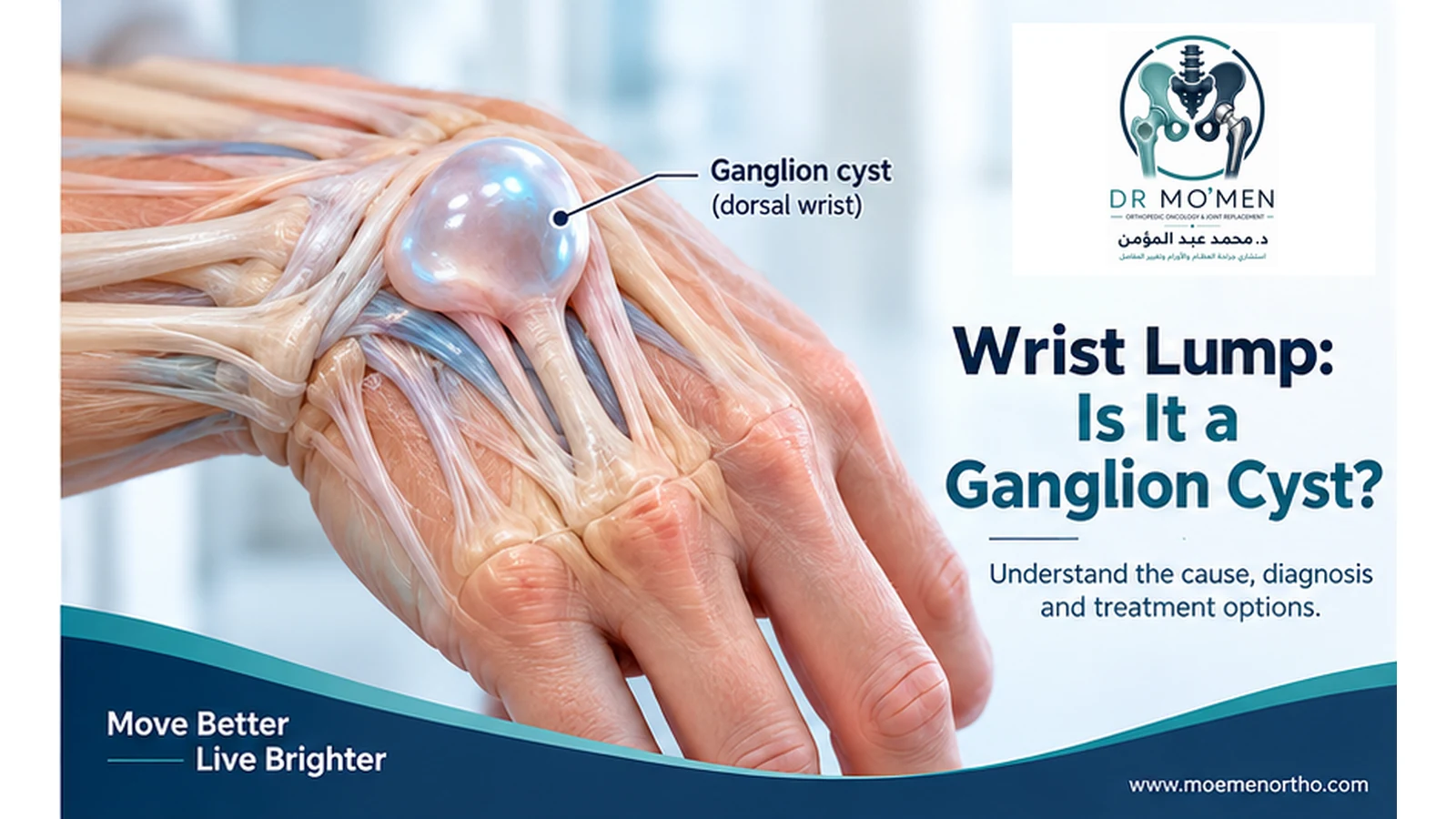
What is a ganglion cyst?
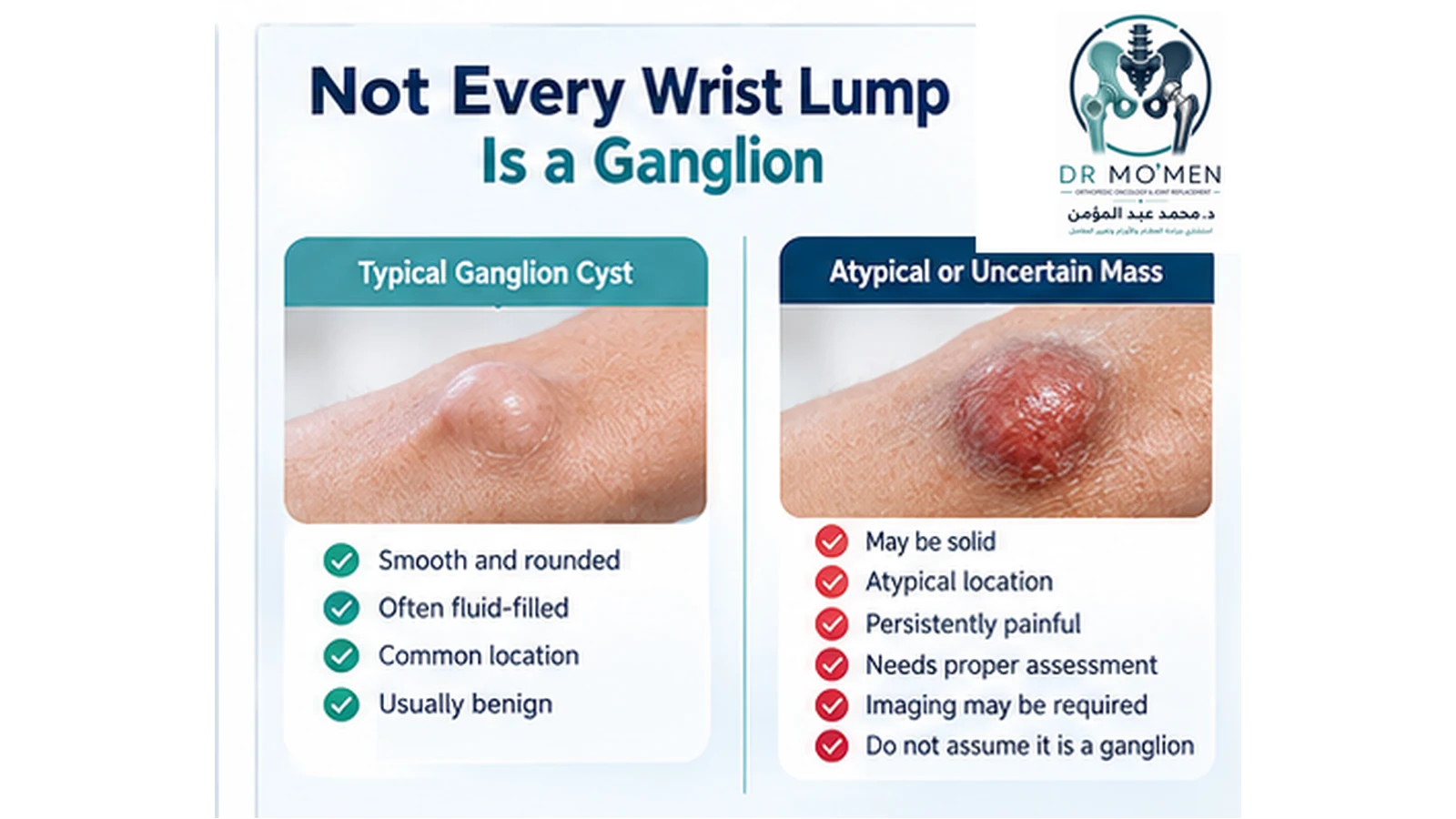
A ganglion cyst is a benign, fluid-filled mass that usually develops near a joint capsule or tendon sheath. The material inside is typically thick and gelatinous. Ganglia may appear suddenly, change in size with activity or wrist position, or temporarily disappear.
Where do ganglion cysts usually occur?
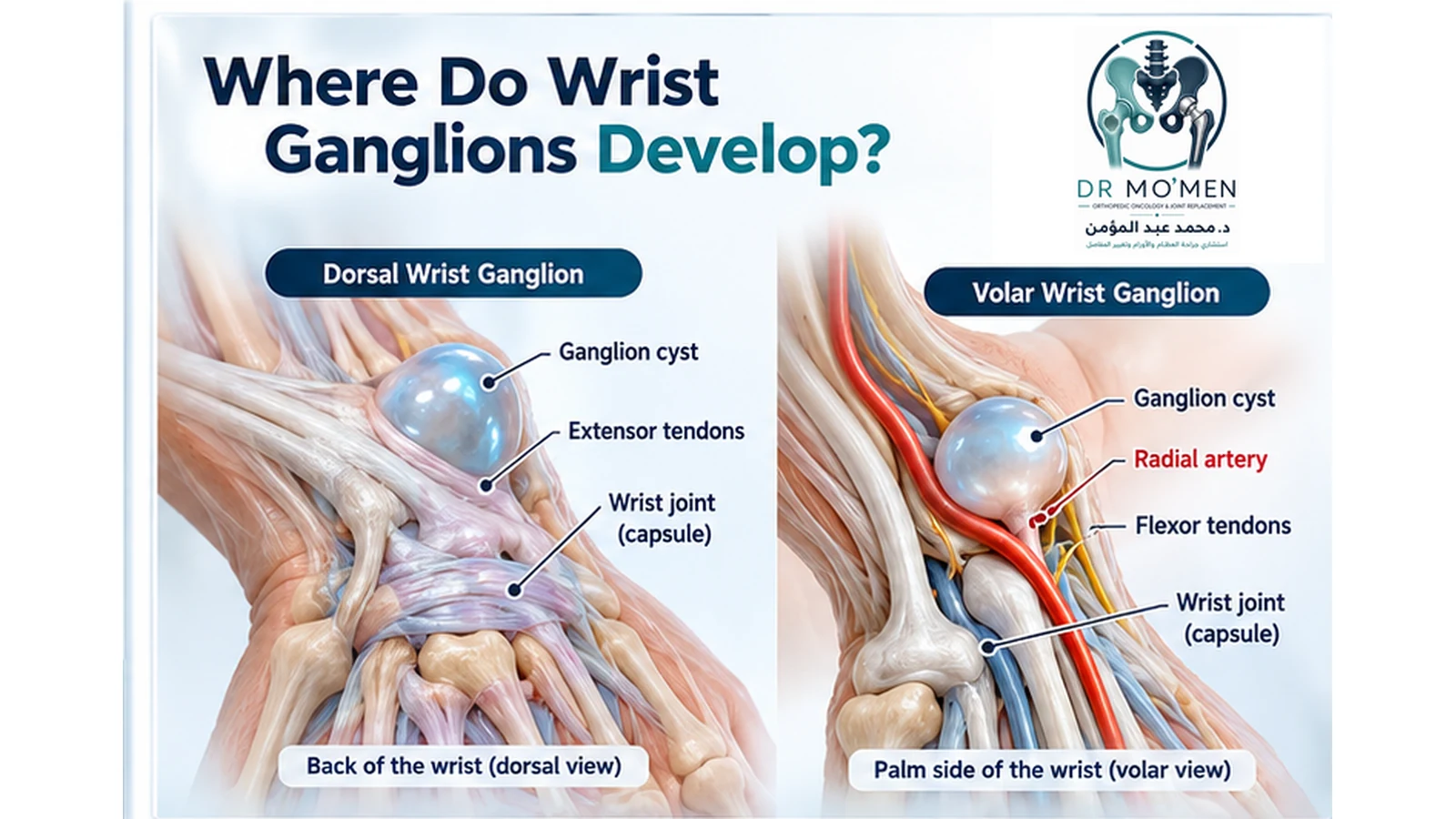
Dorsal wrist ganglion
A dorsal wrist ganglion develops on the back of the wrist and may become easier to see when the wrist is flexed.
Volar wrist ganglion
A volar wrist ganglion develops on the palm side of the wrist, often toward the thumb side. This location requires extra caution because important structures, including the radial artery, may lie close to the cyst.
Flexor tendon sheath ganglion
A small ganglion can arise near the base of a finger and may be uncomfortable during gripping.
Digital mucous-type cyst
A cyst near the end joint of a finger and close to the nail may occur with degenerative changes in the distal interphalangeal joint and is assessed somewhat differently from a typical wrist ganglion.
What does a ganglion cyst feel like?
- Smooth and rounded.
- Firm or rubbery rather than rock-hard.
- Often tethered to deeper structures rather than freely mobile in the skin.
- Variable in size.
- Painless in many patients, but sometimes aching or painful with loading or gripping.
Can a ganglion cyst cause numbness or tingling?
Yes, but this is not the usual presentation. Depending on its location, a ganglion may occasionally irritate or compress a nearby nerve. Assessment should also consider other neurological causes such as carpal tunnel syndrome, ulnar nerve compression, or cervical radiculopathy.
Is every wrist lump a ganglion cyst?
No. Other benign soft-tissue lesions can occur in the hand and wrist, including tenosynovial giant cell tumor, epidermoid or inclusion cyst, lipoma, vascular lesions, nerve-sheath tumors, inflammatory lesions, and other masses. An uncertain diagnosis should be established before an invasive procedure.
When should a hand or wrist lump be assessed more carefully?
- Rapid enlargement.
- Hard, fixed or clearly solid feel.
- An unusual location for a ganglion.
- Persistent or disproportionate pain.
- Numbness, tingling or weakness.
- Skin changes, warmth or redness.
- Recurrence with uncertain diagnosis.
- Previous imaging that did not provide a clear diagnosis.
How is a ganglion cyst diagnosed?
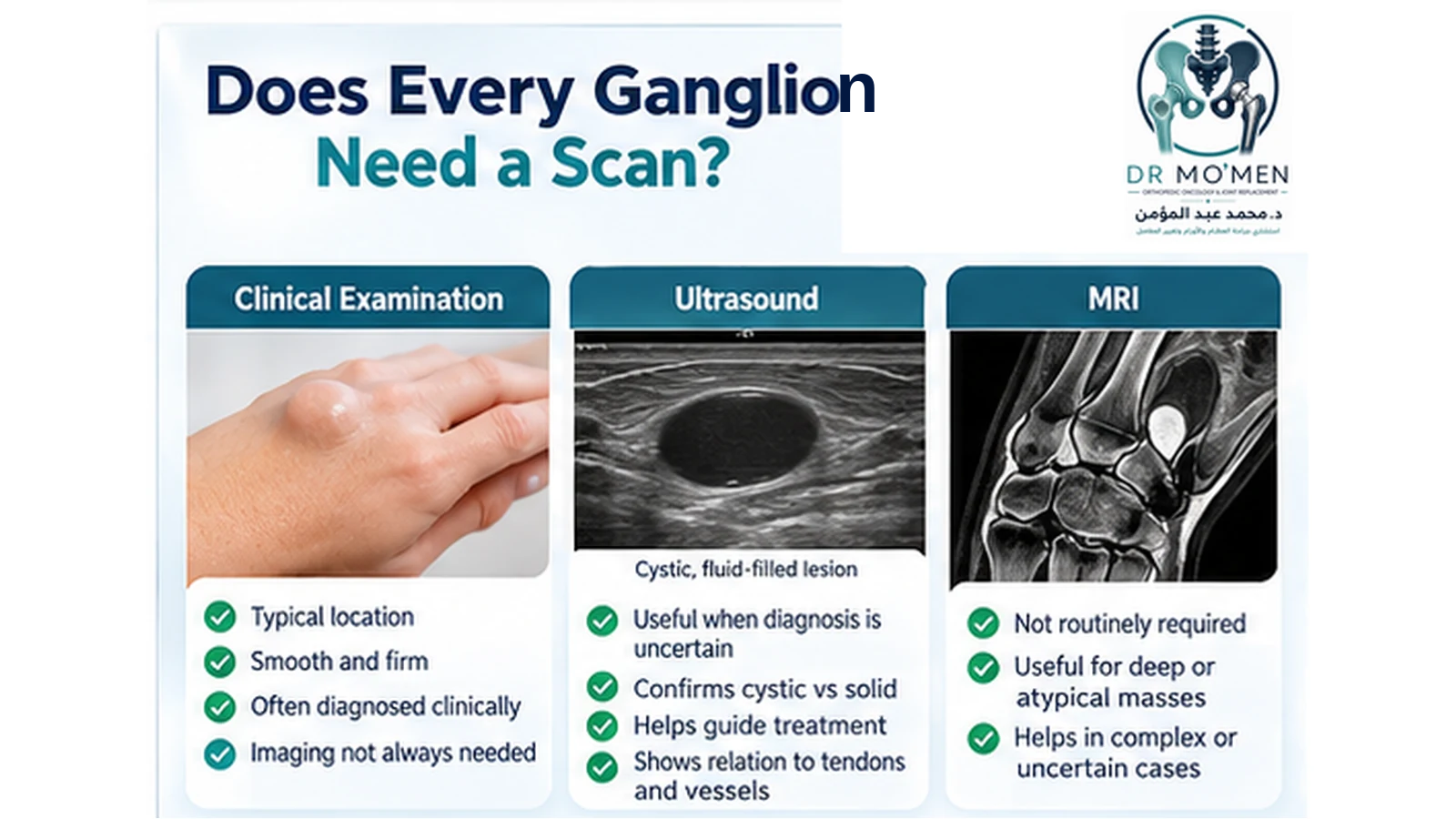
For a typical superficial ganglion, diagnosis is often primarily clinical. The clinician assesses location, consistency, mobility, relationship to wrist or finger movement, changes in size, tenderness, and nearby nerve and vascular function.
Do I need an ultrasound for a ganglion cyst?
Not always. Ultrasound is useful when the clinician needs to determine whether a lump is fluid-filled or solid, define its relationship to tendons or vessels, assess vascularity, or guide a selected intervention.
Does a ganglion cyst need an MRI?
Usually not. MRI may be useful when the lesion is deep, the diagnosis remains uncertain, the mass appears atypical, an occult ganglion is suspected, or detailed anatomy would change management.
Can a ganglion cyst disappear without treatment?
Yes. Ganglion cysts can fluctuate in size and many can be safely observed. Some disappear spontaneously. Observation is especially reasonable when the diagnosis is secure and the cyst causes little or no pain, functional limitation, or nerve symptoms.
Should I try to pop a ganglion cyst?
No. Do not hit, crush, puncture, or try to drain a wrist lump yourself. This can cause skin injury, bleeding, infection, or damage to nearby structures—and the lump may not actually be a ganglion cyst.
What are the treatment options?
Treatment depends on diagnostic certainty, anatomical location, symptom severity, functional limitation, neurological findings, previous treatment, and patient priorities.
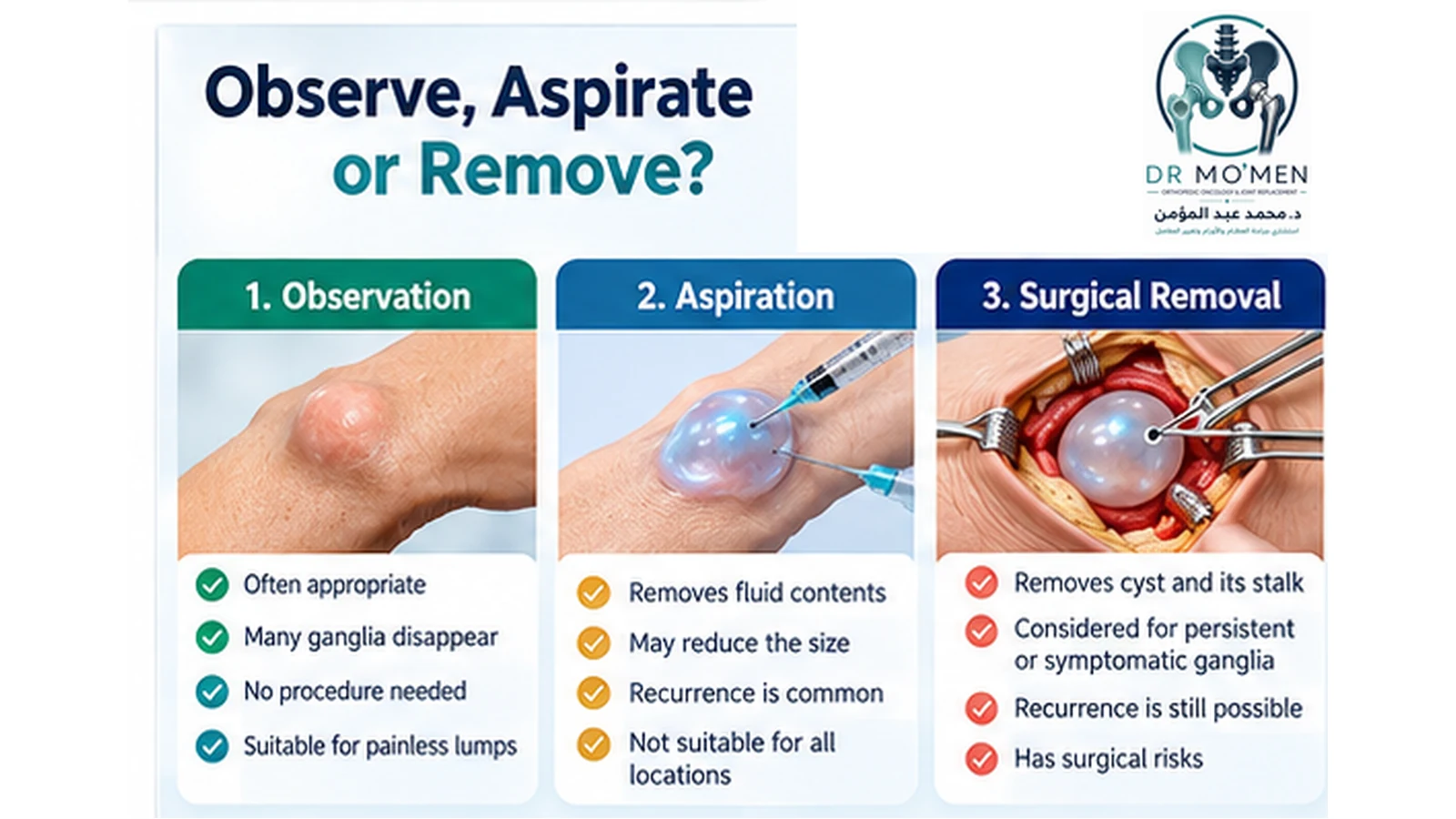
1. Observation
For a confirmed ganglion causing little or no difficulty, observation is often appropriate. A procedure is not required simply because a lump is visible.
2. Aspiration
Aspiration uses a needle to remove the gelatinous contents of the cyst. It can reduce the size of a selected symptomatic ganglion, particularly in a suitable dorsal location. Recurrence is common because the cyst wall and its connection to the joint or tendon sheath may remain.
Is aspiration safe for every wrist ganglion?
No. A volar wrist ganglion may be very close to the radial artery and other important structures, so aspiration in this region requires particular caution. In selected cases, imaging can help define the anatomy before intervention.
3. Surgical removal
Surgery may be considered when a confirmed ganglion causes persistent clinically important pain, functional limitation, recurrent troublesome symptoms, or nerve compression, and the expected benefit justifies the operative risks. Recurrence remains possible even after surgery.
What are the possible risks of surgery?
- Infection or bleeding.
- Scar sensitivity.
- Wrist or finger stiffness.
- Persistent pain.
- Irritation or injury of nearby nerve branches.
- Vascular injury depending on location.
- Recurrence of the cyst.
The exact risk profile depends strongly on the cyst location and individual anatomy.
When should you seek specialist assessment?
- You are not sure what the lump is.
- The mass is getting larger.
- It is hard, fixed or appears solid.
- It causes persistent pain or interferes with gripping or wrist movement.
- There is numbness, tingling or weakness.
- The lump repeatedly returns.
- Ultrasound or MRI has produced an uncertain diagnosis.
- Aspiration or surgery has been proposed but the diagnosis is not clear.
A lump that becomes very painful, hot or red—particularly with systemic symptoms—requires prompt medical review because infection or another acute process should be considered.
Why correct diagnosis matters before surgery
Most typical ganglion cysts are benign and straightforward. The safety issue is avoiding treatment of an atypical soft-tissue mass as though it were automatically a ganglion.
If a bone or soft-tissue tumor enters the differential diagnosis, any biopsy should be planned carefully and definitive surgery should not be performed as an unplanned excision.
Specialist evaluation of hand and wrist lumps
Dr. Mohammed Abdelmoemen Abuelhadid evaluates orthopedic conditions including complex musculoskeletal cases and bone and soft-tissue tumors. For a suspected ganglion cyst, the goal is usually to confirm that the lump behaves like a ganglion and avoid unnecessary investigations or surgery. For an atypical lesion, the priority changes to establishing the diagnosis before treatment.
Patients outside Egypt can also send existing imaging and medical reports for an online second medical opinion when the diagnosis or proposed operation is uncertain.
Frequently Asked Questions
Is a ganglion cyst cancer?
A typical, correctly diagnosed ganglion cyst is benign. However, not every hand or wrist lump is a ganglion, so an atypical or uncertain mass should be assessed rather than self-diagnosed.
Can a ganglion cyst go away by itself?
Yes. Many ganglion cysts fluctuate in size and some disappear without treatment. Observation is often reasonable for a painless, clearly diagnosed ganglion that does not affect function.
Do I need an MRI for a wrist ganglion?
Usually not. Typical ganglia can often be diagnosed clinically. Ultrasound or MRI may be useful when the diagnosis is uncertain, the lesion is deep or atypical, or an occult ganglion is suspected.
Is aspiration better than surgery?
They have different roles. Aspiration is less invasive but recurrence is common. Surgery is more invasive and also carries recurrence and operative risks. The choice depends on symptoms, location and individual anatomy.
Should a painless ganglion cyst be removed?
Usually there is no medical requirement to remove a confirmed painless ganglion that is not affecting function. Observation is often appropriate.
References
Need an assessment of a wrist or hand lump?
For clinic assessment or review of existing imaging, contact Dr. Mohammed Abdelmoemen Abuelhadid’s clinic. International patients can request a preliminary second opinion before travel.
Medical disclaimer: This article is for patient education and does not replace clinical examination, review of imaging and investigations, or individualized medical advice.