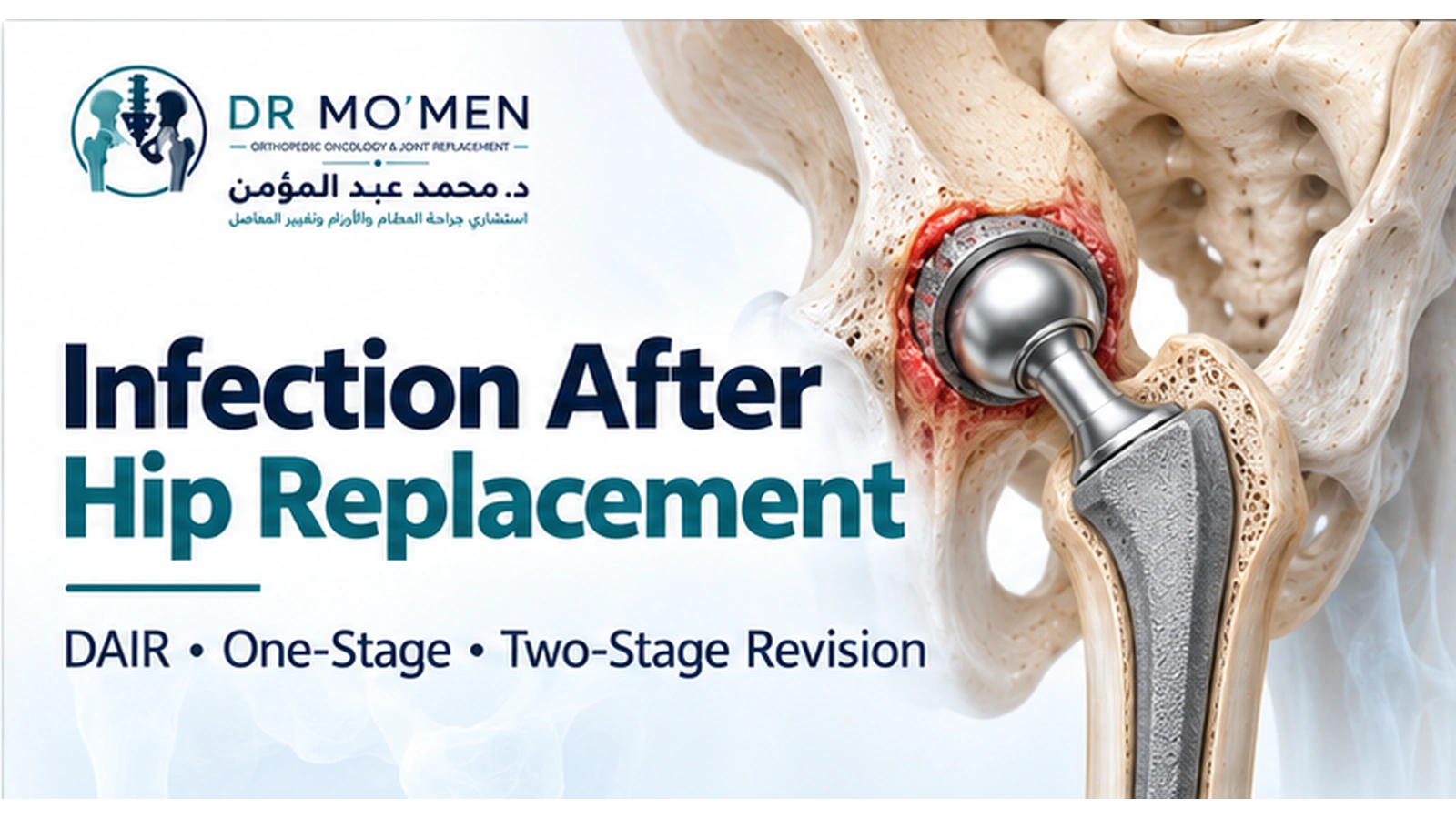
An infection around a total hip replacement is called a periprosthetic joint infection (PJI). It can occur shortly after surgery, but it may also appear months or even years after a previously well-functioning hip replacement.
When infection is suspected, one of the most important questions patients ask is: “Does the entire hip replacement have to be removed?” Not always.
Depending on the timing of infection, implant stability, microorganism, condition of the soft tissues and several patient-specific factors, treatment may include DAIR (debridement, antibiotics and implant retention), one-stage revision, or two-stage revision.
The correct operation cannot be selected from symptoms alone. The first objective is to establish the diagnosis and understand the type of infection before choosing the reconstruction strategy.
What Is a Periprosthetic Joint Infection?
A periprosthetic joint infection is an infection involving the tissues and/or implant surrounding an artificial joint.
Bacteria can attach to the implant surface and form a structure known as a biofilm. Biofilm makes prosthetic-joint infection different from many ordinary soft-tissue infections because bacteria attached to an implant may become more difficult to eradicate using antibiotics alone.
This is why established deep infection frequently requires a combination of surgery, microbiological diagnosis and targeted antimicrobial treatment.
What Are the Symptoms of an Infected Hip Replacement?
Symptoms vary considerably. Possible features include persistent or increasing hip pain, groin or thigh pain, increasing difficulty walking, swelling, warmth, redness, wound drainage, delayed wound healing, fever or chills, a sinus or persistent opening communicating with the joint, or a previously comfortable hip replacement becoming painful.
A chronic hip PJI may not cause obvious fever. Some patients with chronic infection mainly complain of persistent pain or progressive loss of function. There may be no dramatic redness or fever.
Therefore, a painful hip replacement should not be labelled ‘aseptic loosening’ until infection has been appropriately considered.
Can Infection Occur Years After Hip Replacement?
Yes. PJI can develop around the time of the original operation, during the early postoperative period, months later, or years after surgery.
Late infection may sometimes occur when microorganisms reach the prosthetic joint through the bloodstream from another infection elsewhere in the body.
The timing and duration of symptoms are clinically important because they can influence whether implant retention is a realistic option.
How Is Hip Replacement Infection Diagnosed?
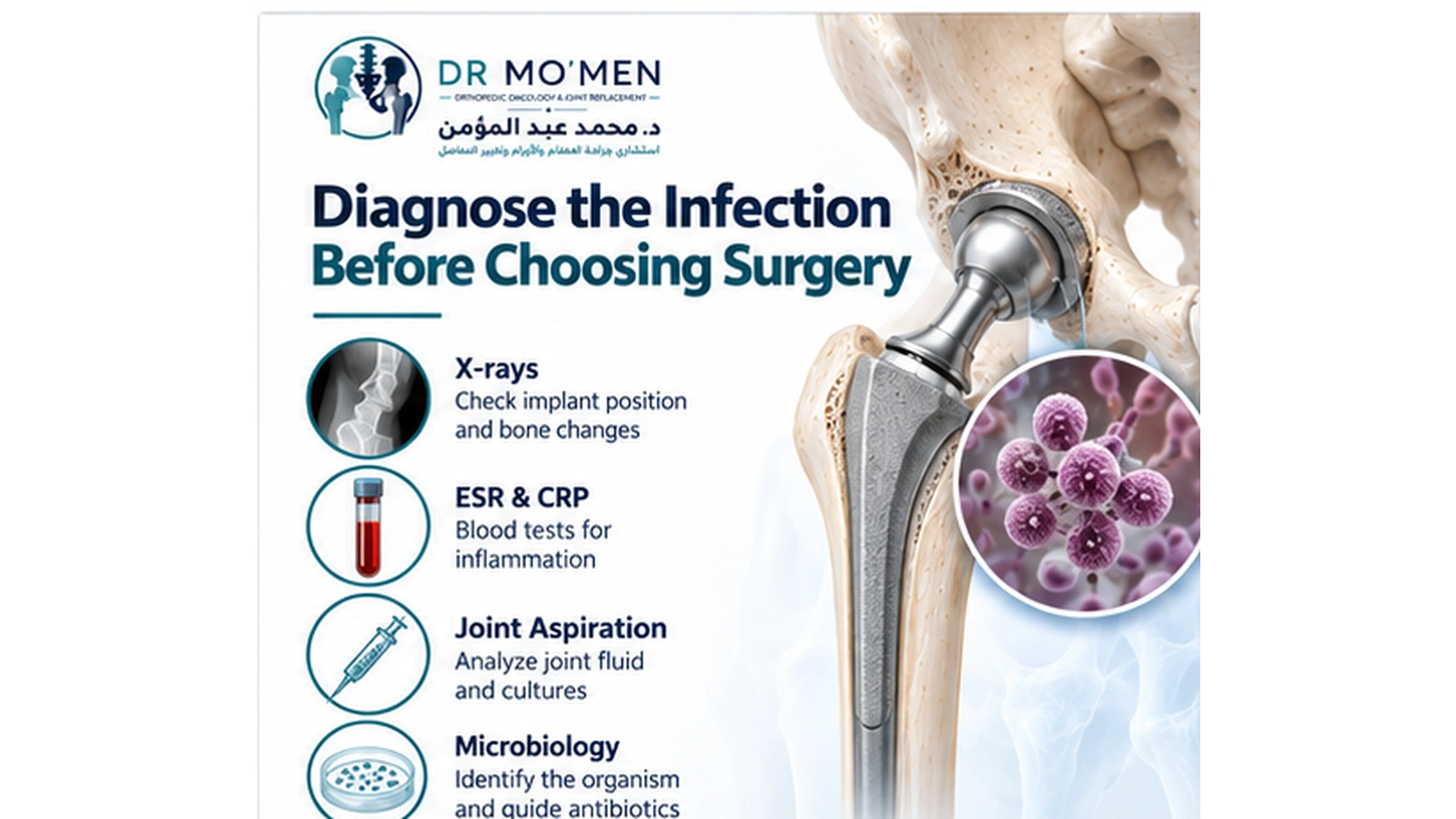
There is no single test that answers every case. Diagnosis usually combines history, physical examination, radiographs, blood investigations, synovial-fluid analysis, microbiological cultures and sometimes additional investigations.
AAOS guidance supports a structured diagnostic approach rather than relying on a single test.
X-rays
X-rays may demonstrate component loosening, migration, osteolysis, bone loss, fracture or other mechanical abnormalities. However, normal-looking radiographs do not necessarily exclude infection.
Previous radiographs are particularly useful for identifying progressive changes.
ESR and CRP
Inflammatory markers such as ESR and CRP are commonly used during the evaluation of possible PJI. Abnormal results may increase suspicion, but they should be interpreted in the context of the overall clinical picture.
Normal inflammatory markers do not resolve every difficult case.
Hip Joint Aspiration
If infection remains a concern, aspiration may be performed. The aspirated fluid may be assessed for white-cell parameters, differential count, microbiological culture and additional synovial markers where appropriate.
The aim is not merely to decide whether inflammation exists. An important objective is to identify the responsible microorganism whenever possible because this can affect both the surgical strategy and antibiotic plan.
Should Antibiotics Be Started Before Aspiration?
This depends on the patient’s clinical condition. In a stable patient, starting antibiotics before appropriate microbiological sampling can sometimes reduce the chance of identifying the organism.
Therefore, when clinically safe, diagnostic sampling is usually coordinated before antimicrobial treatment. However, a patient who is systemically unwell or septic may require urgent treatment. Antibiotics should not be delayed in a critically ill patient merely to improve culture yield.
Why Does Biofilm Matter?
When microorganisms adhere to an implant surface, they may form biofilm. This protected environment makes established infection substantially more difficult to eradicate with antibiotics alone.
A recently infected, stable prosthesis may sometimes be retained, whereas a chronic infected prosthesis may need removal because the implant itself has become part of the infection problem.
The precise boundary is not determined by one arbitrary number of days alone. Timing, implant fixation, symptom duration, organism, soft-tissue condition and patient factors all matter.
What Is DAIR?
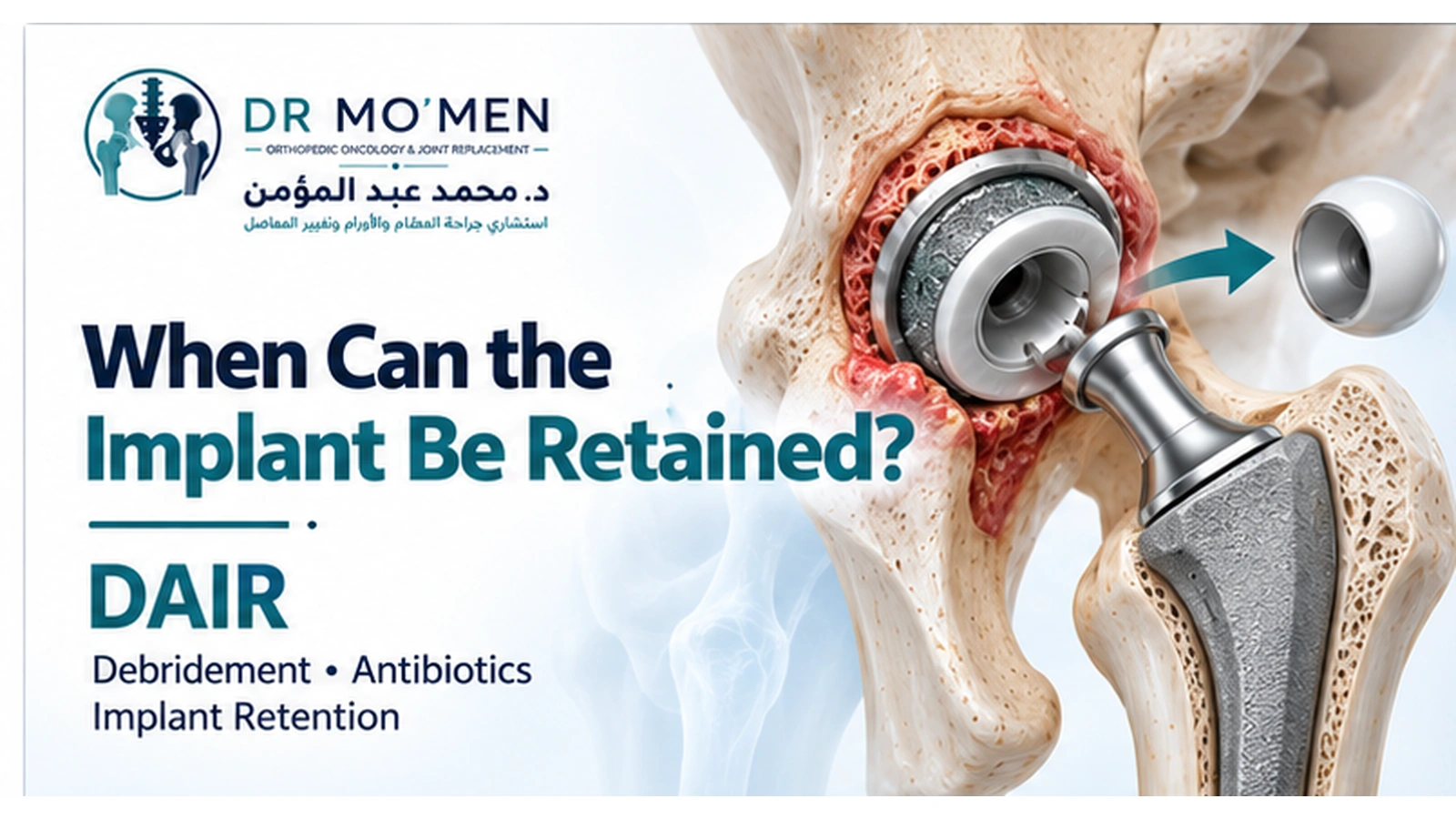
DAIR stands for Debridement, Antibiotics and Implant Retention.
During DAIR, the surgeon opens the joint, obtains multiple tissue samples, performs extensive debridement of infected or unhealthy tissue, irrigates the joint, usually exchanges accessible modular components such as the femoral head and acetabular liner when appropriate, retains well-fixed major components, and coordinates postoperative antimicrobial treatment according to microbiological findings.
The objective is to control the infection without removing well-fixed major implants. DAIR is not simply ‘washing the joint’.
When Can DAIR Be Considered?
DAIR is most relevant when the clinical situation suggests a relatively acute infection and the prosthesis remains mechanically stable.
Favorable considerations can include short duration of symptoms, well-fixed implants, absence of major bone loss, acceptable soft-tissue condition, ability to perform thorough debridement, and a microorganism that can be appropriately treated.
Selection is individualized; timing thresholds in patient information sources are useful orientation points but should not be treated as universal decision rules.
When Is DAIR Less Suitable?
DAIR may be less attractive when there is long-standing infection, loose components, substantial osteolysis, major bone loss, poor soft-tissue condition, a chronic sinus tract, repeated previous failed infection surgery, or other features making implant retention unlikely to control infection.
In these situations, revision surgery may offer a more appropriate strategy.
What Is a One-Stage Revision?
In a one-stage exchange, the infected prosthesis is removed and a new prosthesis is implanted during the same surgical episode.
Broadly, the operation involves removal of infected components, radical debridement, microbiological sampling and definitive reconstruction during the same operation.
Potential advantages in selected patients may include one major reconstructive operation rather than two and avoidance of an interval with a temporary spacer. However, this approach is not suitable for every infected hip replacement.
Who May Be Considered for One-Stage Revision?
Patient selection is important. Considerations can include the ability to identify or appropriately characterize the infection, adequate soft tissues, ability to perform radical debridement, suitable bone stock for reconstruction, patient health, microbiological factors and experience of the treating multidisciplinary team.
One-stage revision should not be presented as automatically superior simply because it requires fewer operations. It is a selected reconstructive strategy.
What Is a Two-Stage Revision?
Two-stage revision has traditionally been widely used for chronic PJI, particularly in North American practice.
At the first stage, the surgeon usually removes the infected prosthesis, removes cement and infected material where appropriate, performs extensive debridement, obtains multiple cultures and often inserts an antibiotic-loaded temporary spacer. The patient then receives an individualized antimicrobial treatment plan.
At the second stage, after reassessment, another operation may be performed to remove the temporary spacer, reassess and debride the joint if necessary, and implant the definitive revision prosthesis.
What Is an Antibiotic Spacer?
A spacer is a temporary construct commonly used during staged treatment. Depending on the case, it may occupy the joint space, deliver locally incorporated antimicrobial agents, help preserve soft-tissue tension and sometimes allow limited joint movement.
A spacer is not the final hip replacement and has potential complications including dislocation, fracture, mechanical failure, bone loss or difficulty during subsequent reconstruction.
Is Two-Stage Revision Always Better Than One-Stage Revision?
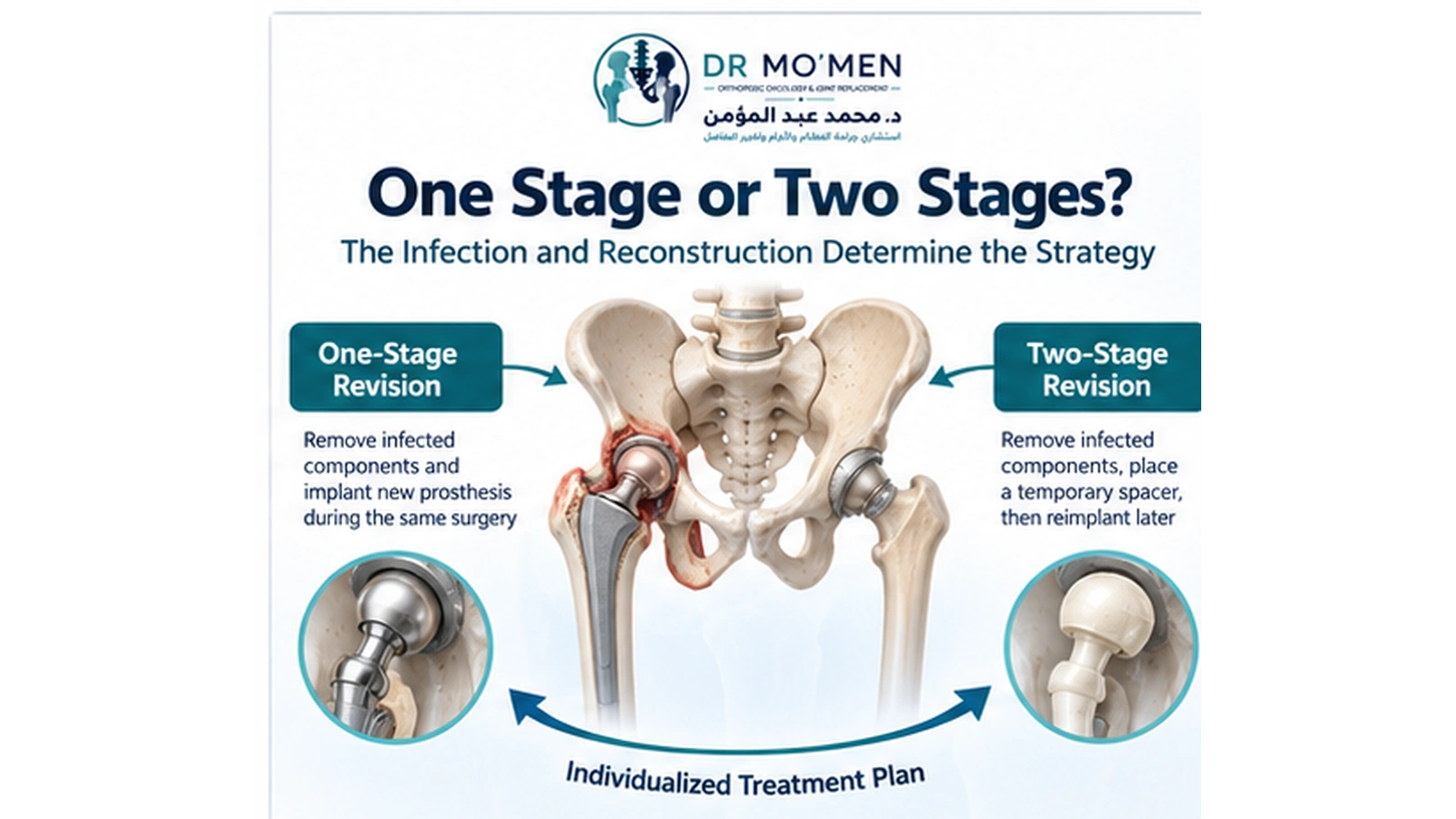
No. The modern question is not ‘Which operation is universally best?’ but ‘Which strategy is most appropriate for this particular infection and reconstruction?’
Management remains individualized. Publication should avoid absolute claims that two-stage revision is always the gold standard or that one-stage revision is always better.
DAIR vs One-Stage vs Two-Stage Revision
DAIR usually retains well-fixed major implants and is most relevant to selected acute infections. One-stage revision removes infected components and performs definitive reconstruction in the same operation. Two-stage revision separates implant removal/infection treatment from later definitive reconstruction.
Microbiology, implant stability, soft tissues, bone loss, symptom duration, previous surgery and patient health all influence the choice.
| Strategy | Core concept | Typical decision context | Important limitations |
|---|---|---|---|
| DAIR | Debridement, antimicrobial treatment, and retention of well-fixed major components; accessible modular parts are commonly exchanged when appropriate. | Selected acute postoperative or acute hematogenous infections when components are stable and adequate source control appears achievable. | Usually less suitable for chronic infection, loose implants, major bone loss, poor soft tissues, or situations in which reliable debridement and infection control cannot be achieved. |
| One-stage revision | Removal of infected components, thorough debridement, and definitive reconstruction during the same operation. | Selected patients in whom host factors, soft tissues, microbiology, bone loss, and reconstructive requirements support a single-stage strategy. | Not automatically preferable because it avoids a second operation; careful patient selection and experienced multidisciplinary planning remain important. |
| Two-stage revision | Removal of infected components and debridement, usually followed by an interval spacer/antimicrobial phase and later reimplantation after reassessment. | Often considered for chronic or complex infection when staged source control and reconstruction are judged more appropriate. | Requires at least two major procedures when reimplantation proceeds; spacer-related complications, bone loss, function between stages, and reimplantation timing must be considered. |
No strategy is universally superior. Comparative studies of one-stage and two-stage revision are strongly influenced by patient selection, organism, host condition, bone loss, soft tissues, and reconstructive complexity; the table is a decision framework, not a treatment rule.
What Determines the Right Operation?
| Decision factor | Why it matters | How it can change the strategy |
|---|---|---|
| Timing and symptom duration | Acute and chronic infection behave differently because mature biofilm is harder to eradicate while retaining implants. | Selected acute infections may be considered for DAIR; established chronic infection more often requires component exchange. |
| Implant stability | A loose component is already a failed reconstruction. | Retention is generally inappropriate when major components are loose; revision must address fixation as well as infection. |
| Microbiology | Organism identification and antimicrobial susceptibility influence source control and antibiotic planning. | Uncertain, difficult-to-treat or resistant organisms may change whether a single-stage strategy is appropriate. |
| Soft tissues / sinus | Wound quality determines whether reliable debridement and closure can be achieved. | Poor soft tissues or a draining sinus increase reconstructive complexity and may favor a staged pathway. |
| Bone loss | Removing implants may expose substantial acetabular or femoral defects. | Complex bone loss may require augments, revision stems/cups or other reconstruction and can influence staging. |
| Host factors and previous surgery | Physiological reserve, comorbidity and prior procedures affect tolerance of repeated major operations. | The best theoretical infection strategy must still be feasible and safe for the individual patient. |
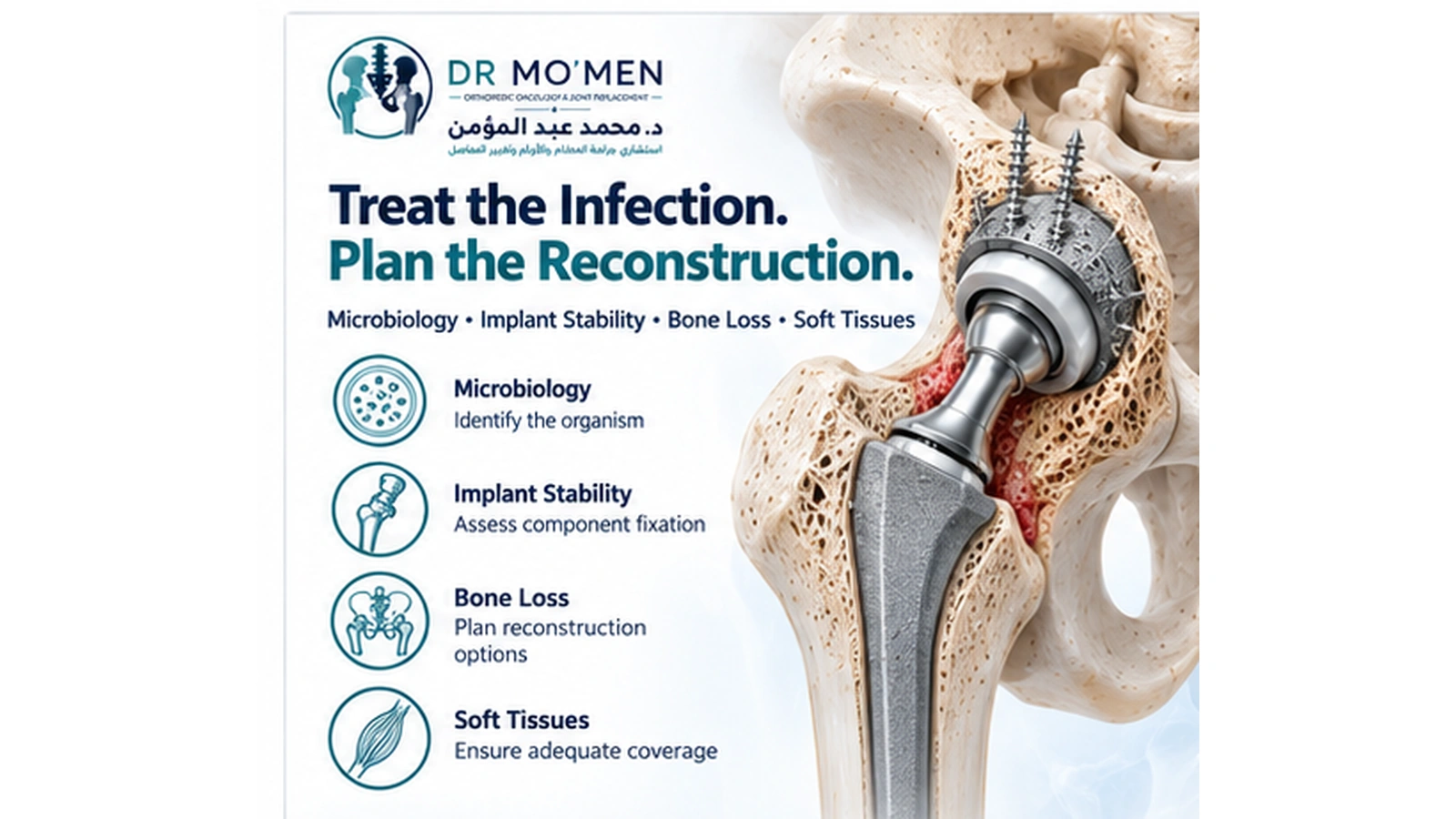
The surgical strategy should integrate duration and timing of infection, implant stability, microbiology, soft-tissue condition, bone loss, previous operations and overall patient health.
The optimal theoretical reconstruction may not be the safest treatment for every patient. Planning should account for comorbidities, physiological reserve, renal and hepatic function, nutritional status, mobility, ability to tolerate multiple procedures and rehabilitation requirements.
What If DAIR Has Already Failed?
A failed DAIR does not automatically determine one universal next operation. The case should be reassessed.
Important questions include whether the original diagnosis was correct, what organism was identified, whether modular components were exchanged, whether the implants remain stable, how long symptoms have persisted, whether a sinus or new bone loss has developed, and whether antimicrobial resistance is relevant.
The next procedure may require component removal and revision rather than repeating an ineffective strategy.
What If a Two-Stage Revision Has Failed?
Recurrent infection after previous revision is one of the more difficult situations in reconstructive arthroplasty.
The evaluation should reconsider microbiological diagnosis, previous culture results, implant stability, bone defects, soft tissues, previous antimicrobial treatment and the feasibility of further reconstruction.
Some patients require complex re-revision surgery, whereas others may need alternative salvage strategies depending on their clinical condition.
Is Every Painful Hip Replacement an Infection?
No. Pain can also result from aseptic loosening, instability, fracture, iliopsoas pathology, trochanteric pain, spinal disease, adverse local tissue reaction or other mechanical and non-mechanical causes.
Recurrent dislocation or instability is another important cause of failure. See Hip Replacement Dislocation: When Is Revision Surgery Needed? for a focused instability work-up and revision discussion.
That is why infection must be investigated, not assumed.
For a broader differential and reconstruction overview, see Revision Hip Replacement: When Does a Hip Replacement Need Revision?.
When Is Urgent Medical Assessment Needed?
Seek prompt medical evaluation if a hip replacement is associated with persistent wound drainage, spreading redness, significant swelling, fever or rigors, rapidly increasing hip pain, inability to walk, systemic illness, confusion or marked weakness, or concern for sepsis.
An acutely unwell patient should not wait for routine outpatient review.
Can Antibiotics Alone Treat an Infected Hip Replacement?
Antimicrobial therapy is an essential part of PJI management, but an established deep infection around a prosthetic joint often requires surgical source control as well.
There are selected circumstances in which long-term suppressive antimicrobial treatment may be considered, particularly when definitive surgery is not feasible. Suppressive treatment is not the same as eradication of an established implant-associated infection.
Who Should Manage an Infected Hip Replacement?
Complex PJI often benefits from multidisciplinary management involving, as appropriate, revision arthroplasty surgery, microbiology, infectious-disease expertise, radiology, anaesthesia/perioperative medicine and, in selected complex wounds, plastic surgery.
The key principle is to treat the infection and plan the reconstruction together.
Getting a Second Opinion Before Infection Revision Surgery
A specialist second opinion is particularly useful when the PJI diagnosis remains uncertain, different strategies have been proposed, DAIR has failed, one-stage versus two-stage revision is being considered, there is major bone loss, several previous revisions have been performed, culture results are unclear or inconsistent, or the proposed reconstruction is complex.
A useful second opinion should answer two separate questions: Is this genuinely a prosthetic joint infection? If it is infected, what surgical strategy best matches this specific case?
For International Patients Considering Treatment in Egypt
Patients travelling for infected hip revision should ideally send their records before arranging treatment or travel.
Useful documents include current pelvis and hip X-rays, previous postoperative X-rays, CT scans when available, operative reports, implant details, ESR and CRP results, joint aspiration results, microbiology and culture reports, antibiotic history, previous revision or DAIR reports and relevant medical history.
This information can help determine whether the case appears to require additional investigation, DAIR assessment, revision planning or urgent in-person evaluation. A preliminary review does not replace examination or definitive microbiological work-up.
For travel and pre-arrival review information, see International Patients.
Role of Dr. Mohammed Abdelmoemen Abuelhadid in Complex Hip PJI and Revision Cases
Evaluation of an infected hip replacement should begin by defining whether infection is present, how long symptoms have been present, implant stability, microbiological information, soft-tissue condition, acetabular and femoral bone loss, and previous surgery.
The goal is to integrate infection management with the reconstructive plan rather than treating them as separate problems.
For patients outside Egypt, available imaging, operative reports, laboratory results and microbiology can be reviewed initially before travel when appropriate.
For appointments or X-ray/report review: 01021690693
Medical References
- American Academy of Orthopaedic Surgeons (AAOS). Diagnosis and Prevention of Periprosthetic Joint Infections: Evidence-Based Clinical Practice Guideline. 2019. https://www.aaos.org/quality/quality-programs/diagnosis-and-prevention-of-periprosthetic-joint-infections/
- American Association of Hip and Knee Surgeons (AAHKS). Infection and Your Hip Replacement. https://www.hipkneeinfo.org/hip-care/infection-and-your-joint-replacement/
- Lamo-Espinosa JM, et al. One-Stage Versus Two-Stage Revision Surgery for Periprosthetic Hip Infection: An Updated Systematic Review and Meta-Analysis of Clinical Outcomes. J Am Acad Orthop Surg. 2025;33(7):e367-e379. PMID 39303283. https://pubmed.ncbi.nlm.nih.gov/39303283/
- Infectious Diseases Society of America (IDSA). Diagnosis and Management of Prosthetic Joint Infection. Archived clinical practice guideline; 2013. https://www.idsociety.org/practice-guideline/prosthetic-joint-infection/