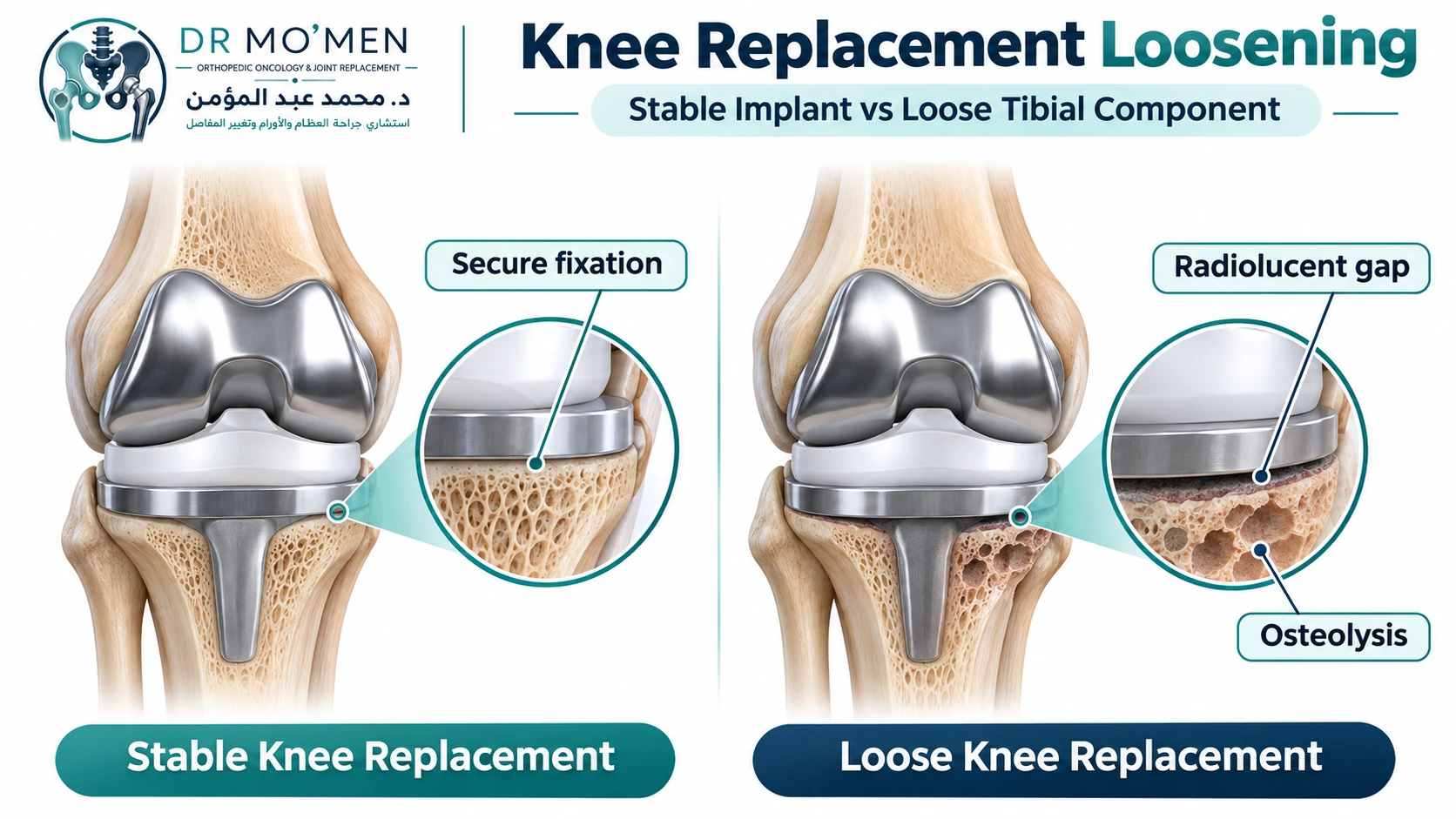
Revision Knee / Loosening
Knee Replacement Loosening: Symptoms, Diagnosis & Revision
Learn the symptoms of knee replacement loosening, how it is diagnosed, how infection is ruled out, and when revision knee replacement may be needed.
Read article →
English patient education articles on hip and knee replacement, avascular necrosis, knee osteoarthritis, costs, travel planning, recovery and revision reconstruction.
Direct answer: Joint replacement is usually considered when hip or knee disease causes persistent pain, stiffness, deformity or loss of function that substantially affects daily life and appropriate non-surgical care is no longer effective or suitable. The decision should combine symptoms, examination, imaging, medical fitness and the patient’s goals rather than rely on one X-ray finding, age cutoff or numerical score.
Guideline context: NICE recommends considering referral for joint replacement when osteoarthritis symptoms substantially affect quality of life and non-surgical management is ineffective or unsuitable, using clinical assessment rather than a numerical severity score. NICE NG226.
| Clinical situation | Typical first approach | When specialist surgical assessment becomes reasonable |
|---|---|---|
| Early or moderate osteoarthritis with manageable symptoms | Education, targeted exercise, activity modification, weight management when relevant, and appropriate pain-relief strategies. | Joint replacement is usually not first-line while symptoms and function remain acceptably controlled. |
| Advanced hip or knee arthritis with major impact on quality of life | Review whether appropriate non-surgical options remain effective or suitable. | Referral or surgical discussion is reasonable when pain, stiffness or functional limitation remain substantial despite appropriate management. Imaging supports the decision but does not determine it alone. |
| Avascular necrosis with structural collapse or secondary arthritis | Management depends on stage, symptoms and remaining joint surface; selected earlier disease may have joint-preserving options. | Replacement may be discussed when collapse or secondary arthritis causes clinically important pain and functional loss. |
| Failed previous joint replacement | Identify the failure mechanism: infection, loosening, instability, fracture, wear, stiffness or bone loss. | Revision planning follows a cause-specific work-up and is not based on the same thresholds used for primary osteoarthritis. |
18 articles available
English patient education articles on joint replacement, osteoarthritis, AVN, international planning, implants, costs, recovery and revision reconstruction.
Learn the symptoms of knee replacement loosening, how it is diagnosed, how infection is ruled out, and when revision knee replacement may be needed.
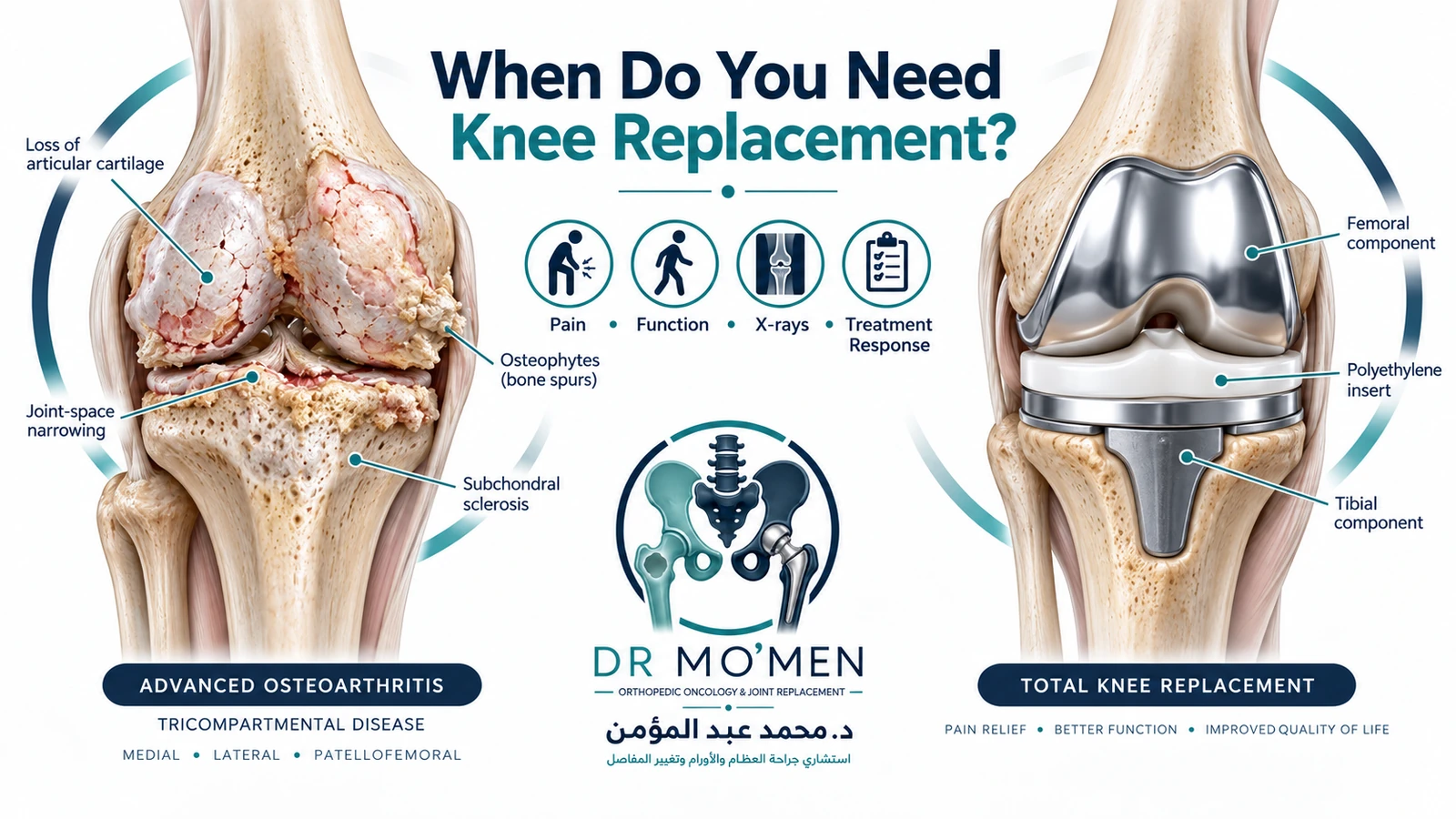
Learn when knee replacement may be appropriate, which symptoms matter, what weight-bearing X-rays show, and when non-surgical treatment may no longer be enough.
Read article →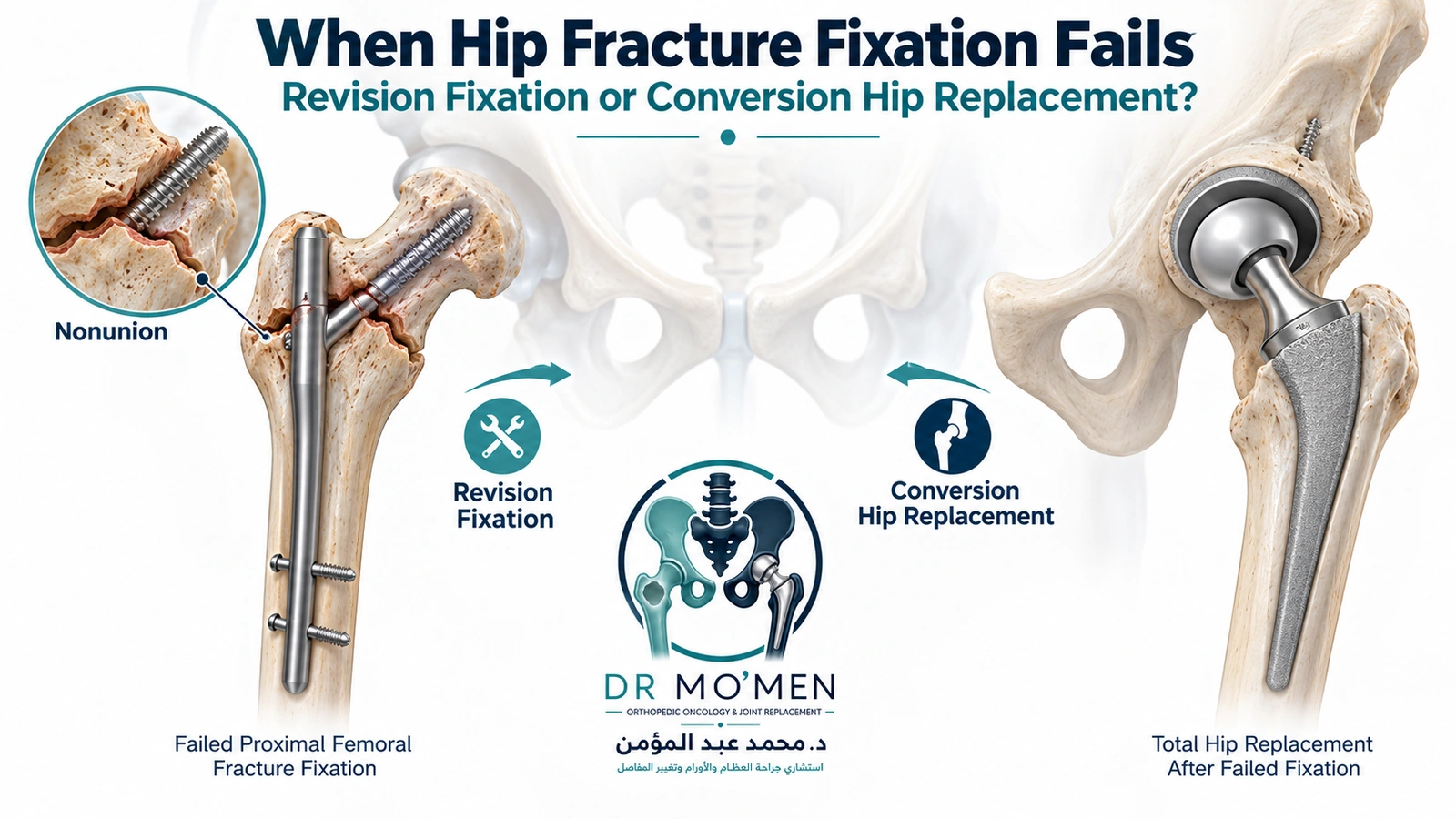
Why failed fracture fixation sometimes needs revision fixation and sometimes conversion hip replacement, with special attention to nonunion, AVN, bone loss, hardware removal and occult infection.
Read article →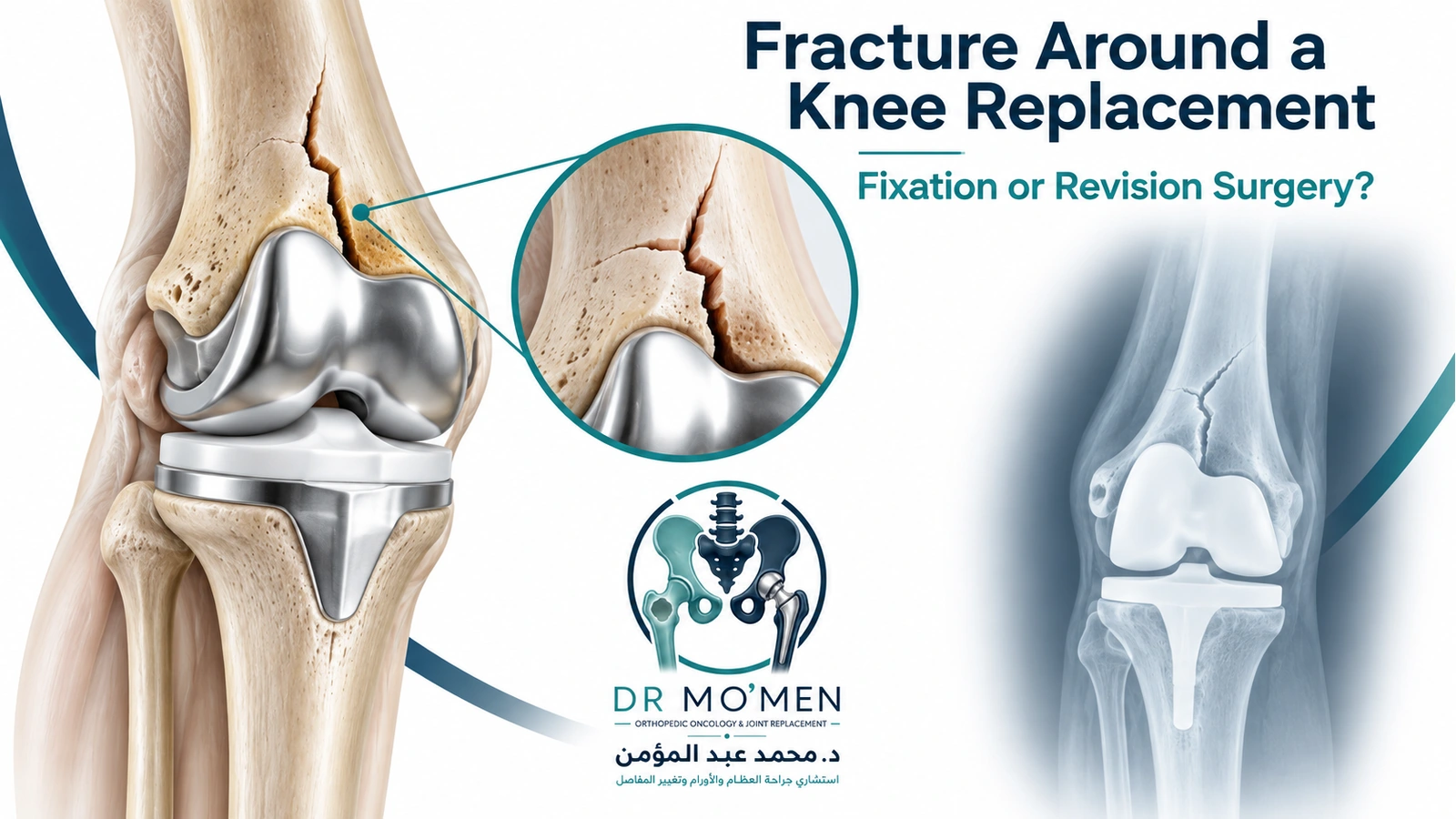
How implant stability, fracture pattern and bone stock determine plate fixation, retrograde nailing, revision knee replacement or distal femoral replacement.
Read article →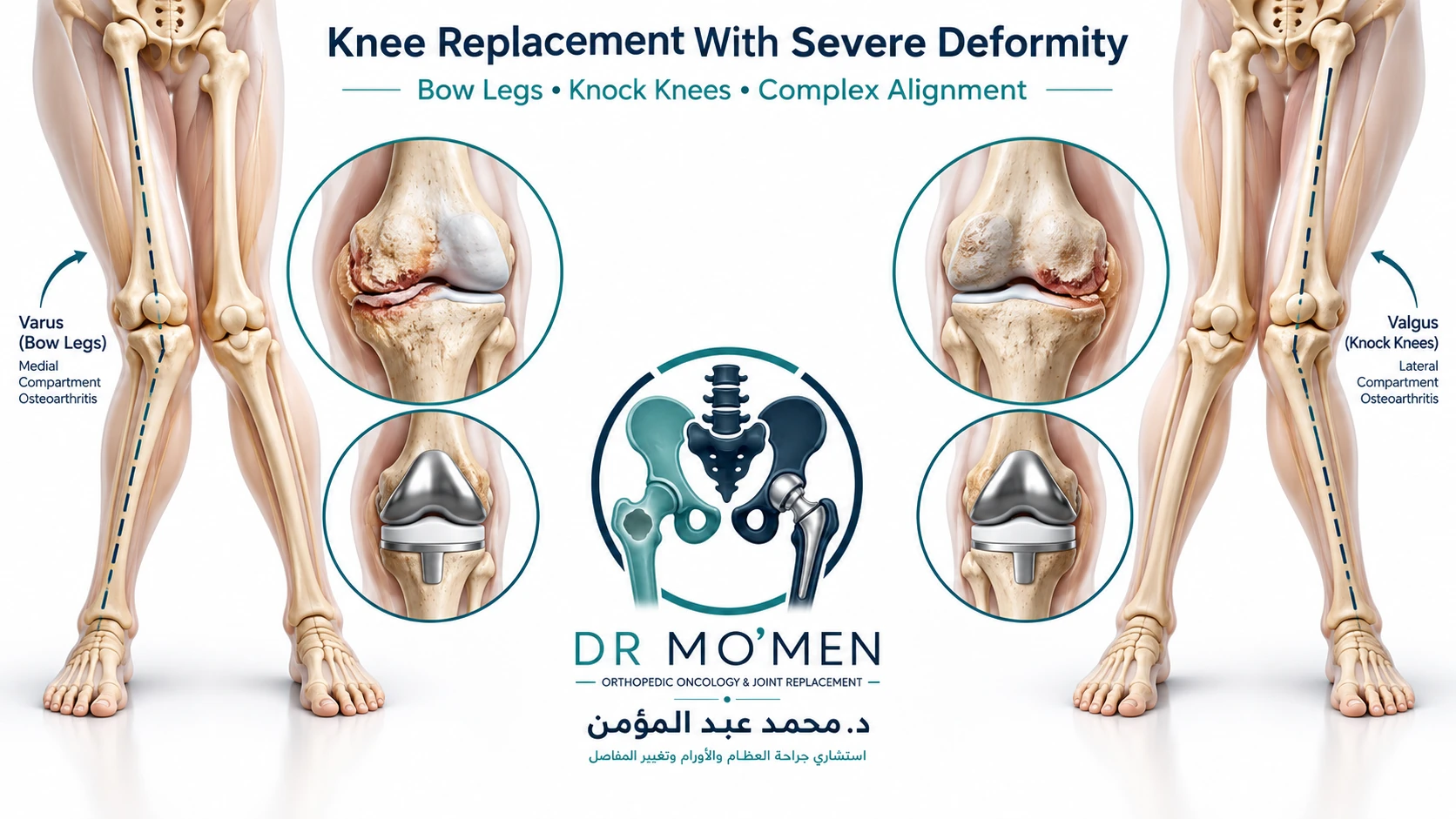
How severe varus or valgus deformity changes alignment planning, ligament balancing, bone-loss reconstruction and implant constraint in total knee replacement.
Read article →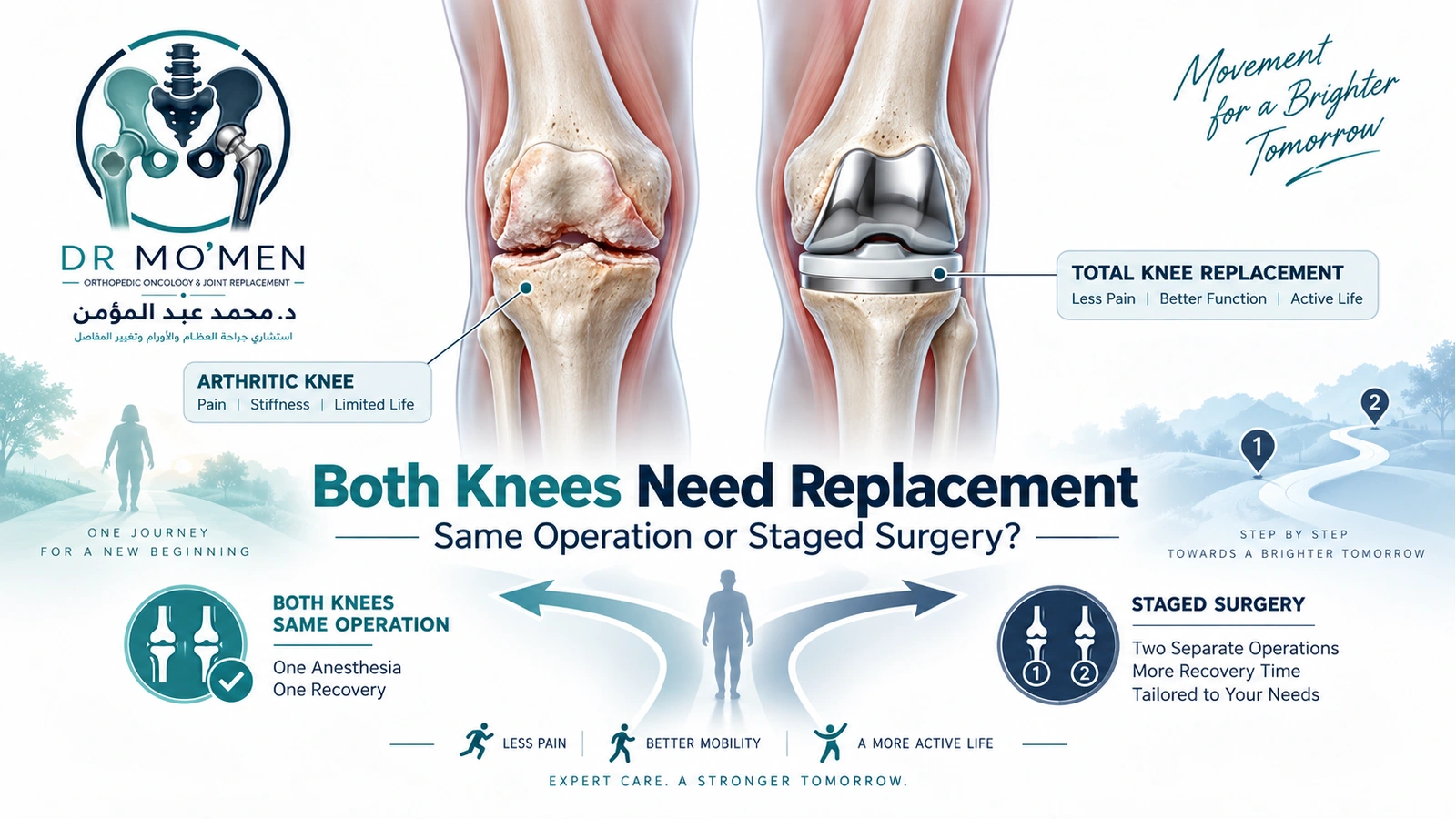
How medical fitness, perioperative risk, blood loss and rehabilitation influence the choice between simultaneous and staged bilateral knee replacement.
Read article →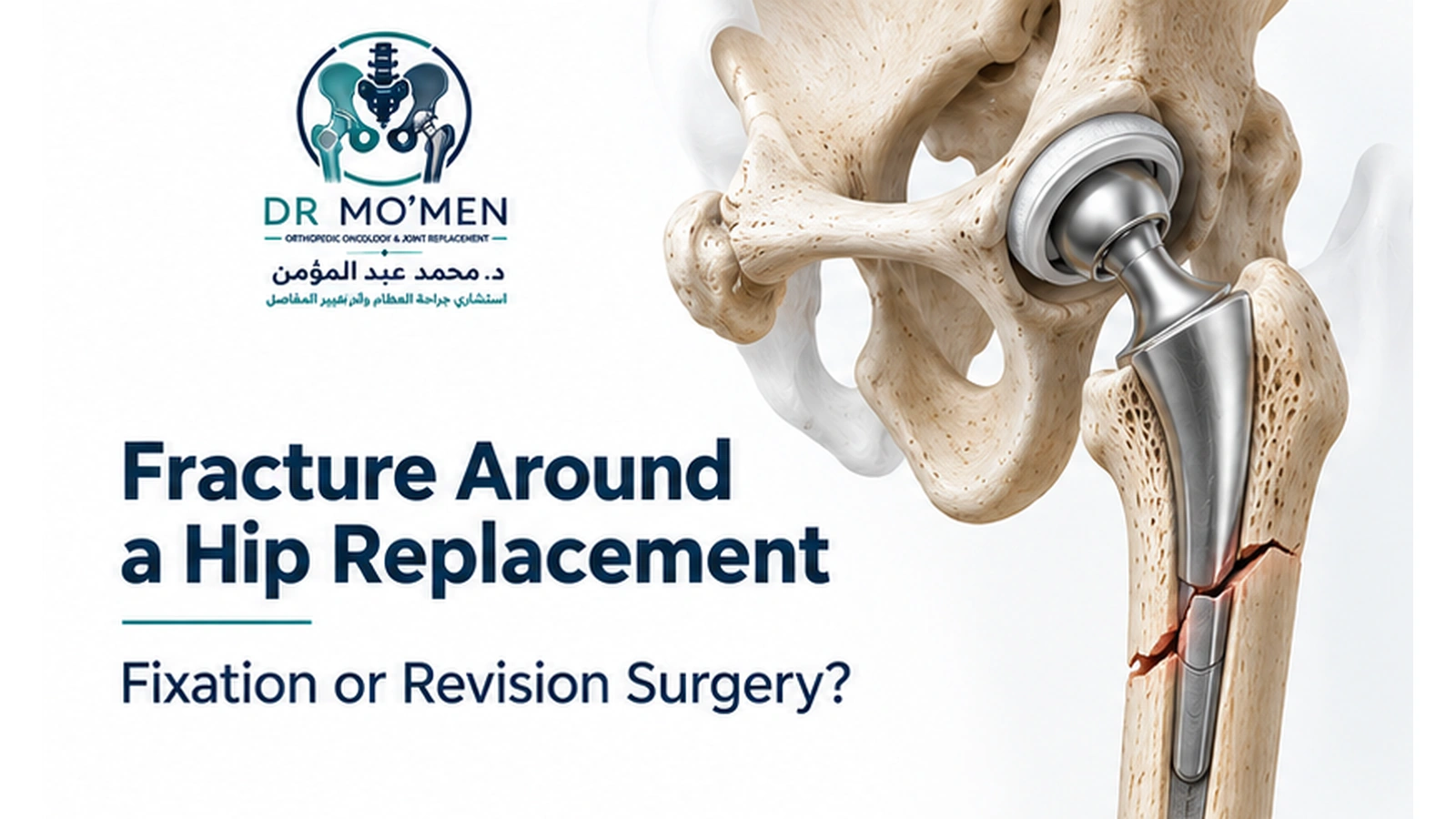
How stem stability, Vancouver classification, fracture pattern and bone stock determine fixation versus revision after a fracture around a hip replacement.
Read article →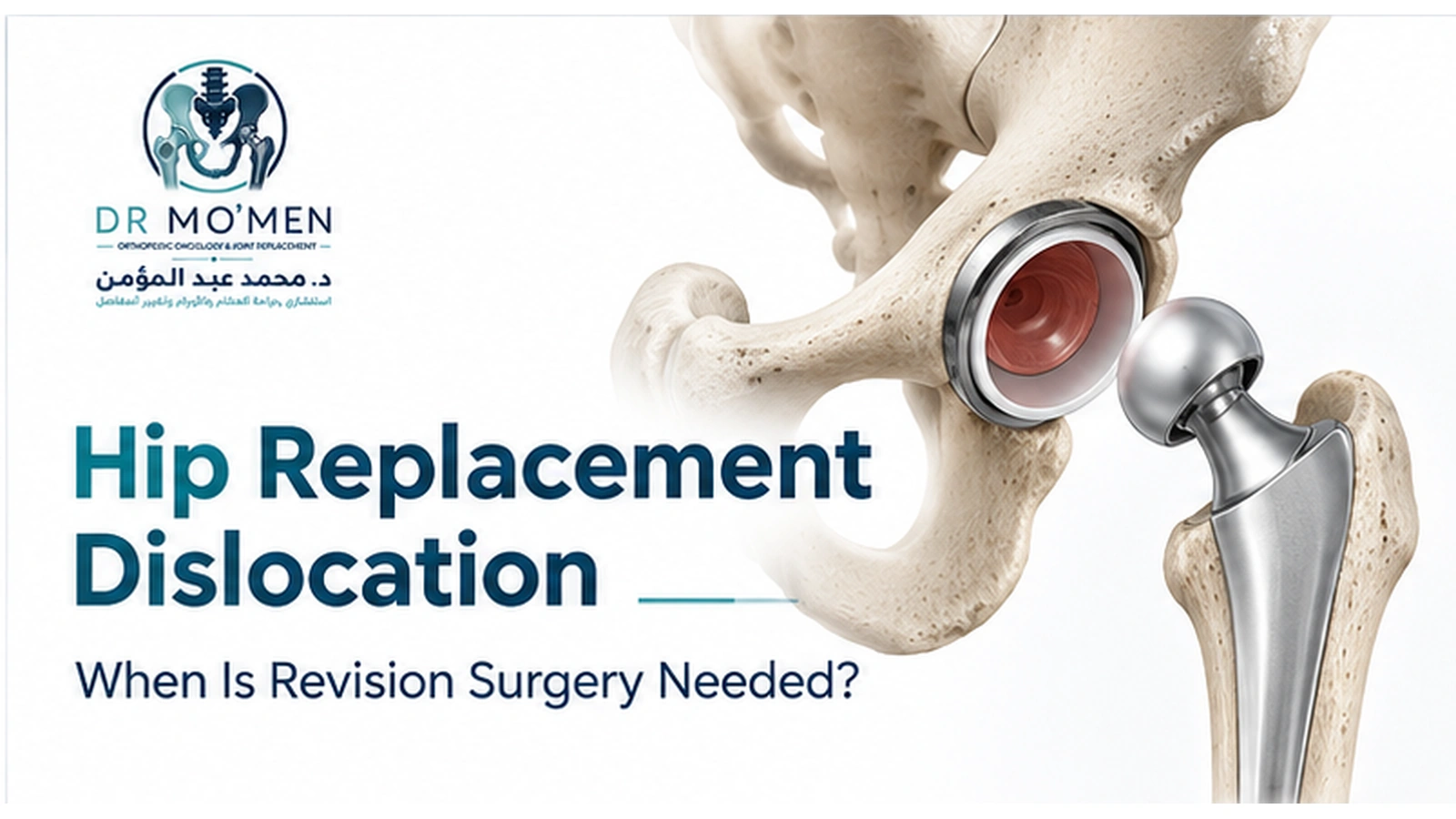
Why hip replacements dislocate, how recurrent instability is investigated, and when revision, dual mobility or other reconstruction may be considered.
Read article →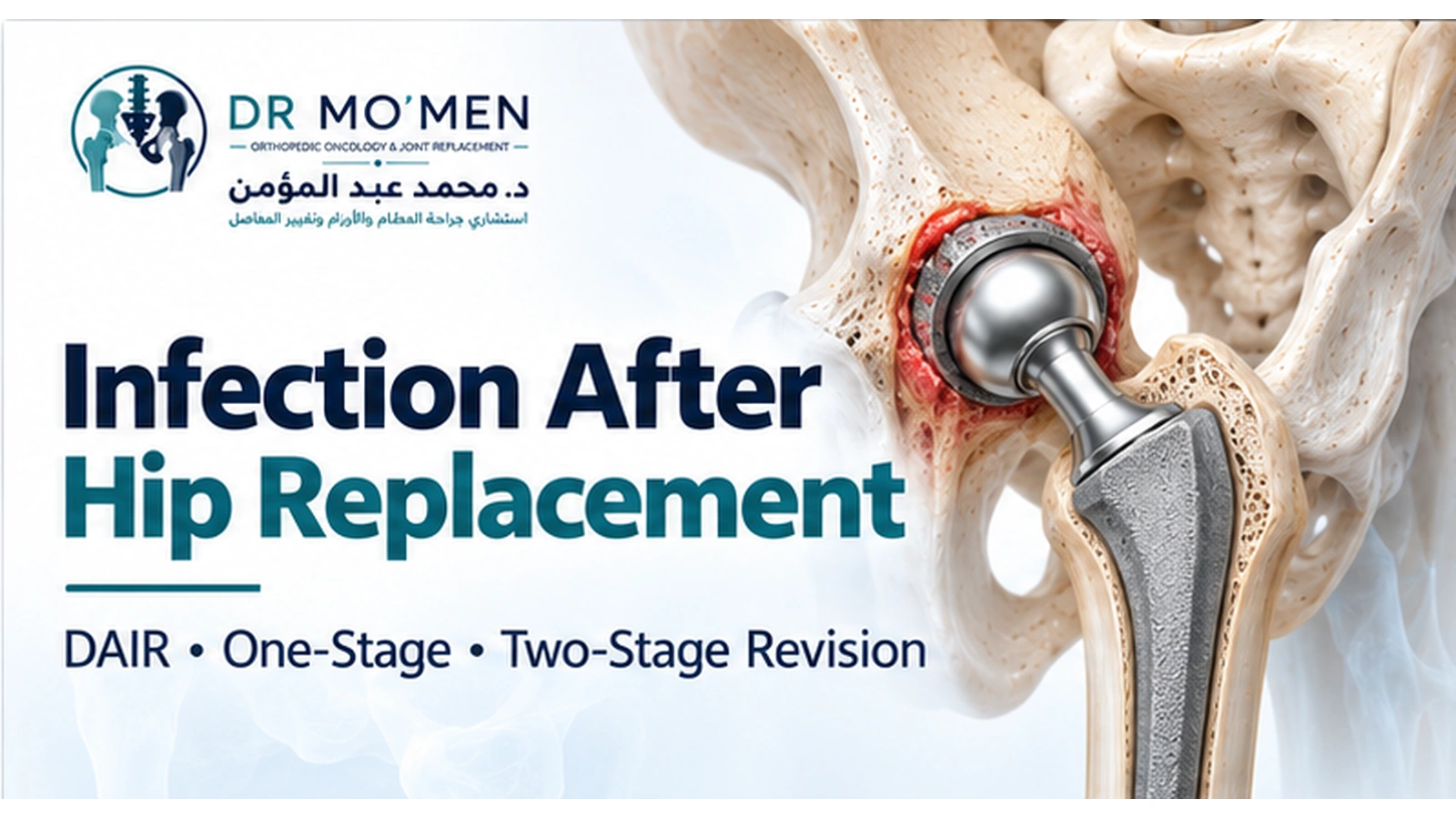
How hip PJI is diagnosed and when treatment may involve DAIR, one-stage revision or two-stage revision.
Read article →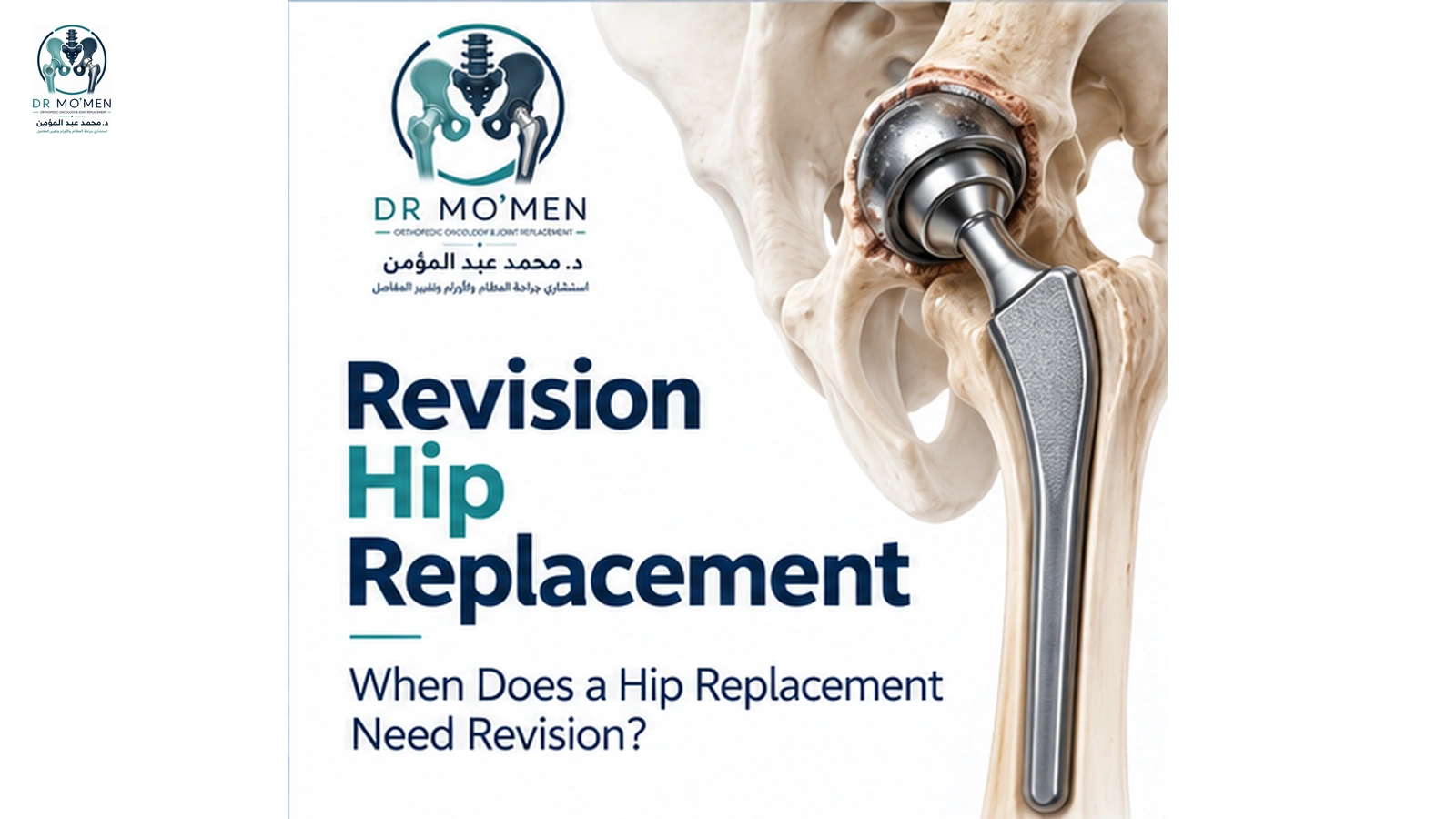
Why a hip replacement may need revision, how loosening, infection, instability, fracture and bone loss are assessed, and how complex reconstruction is planned.
Read article →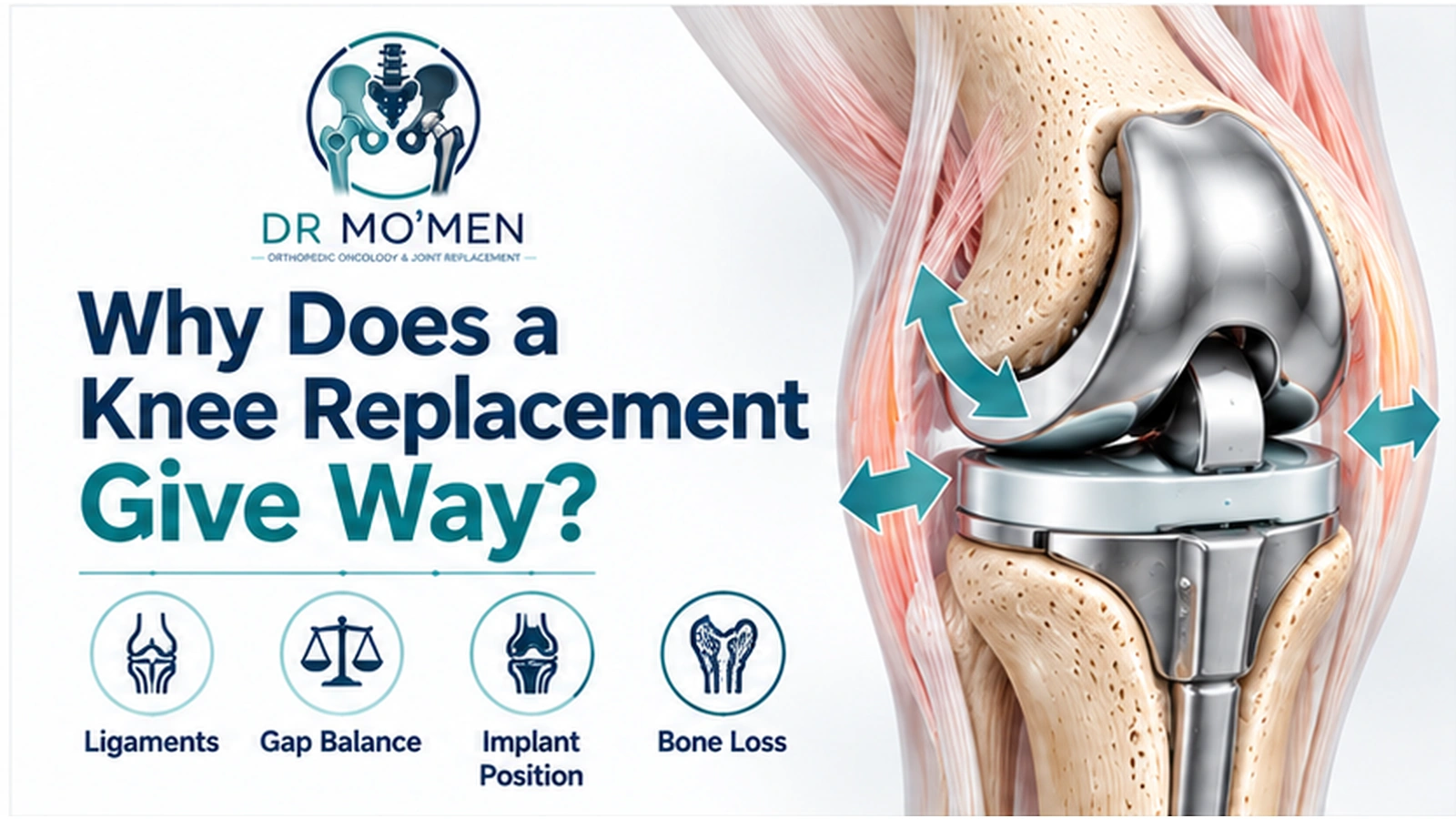
Why a knee replacement may give way, how instability is diagnosed, and when treatment may involve rehabilitation, polyethylene exchange or revision.
Read article →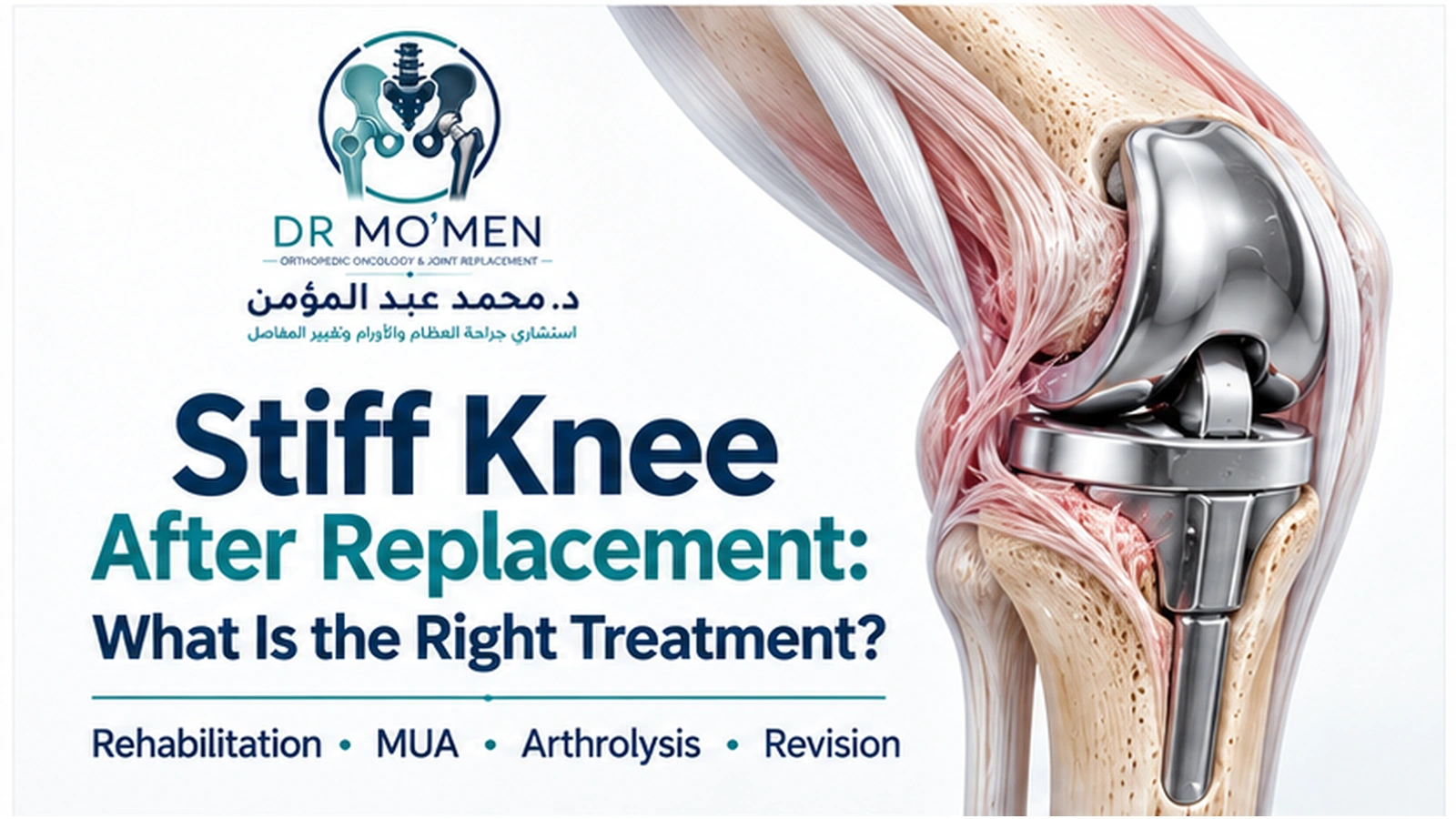
Why stiffness persists after knee replacement and when treatment may involve rehabilitation, MUA, arthrolysis or revision.
Read article →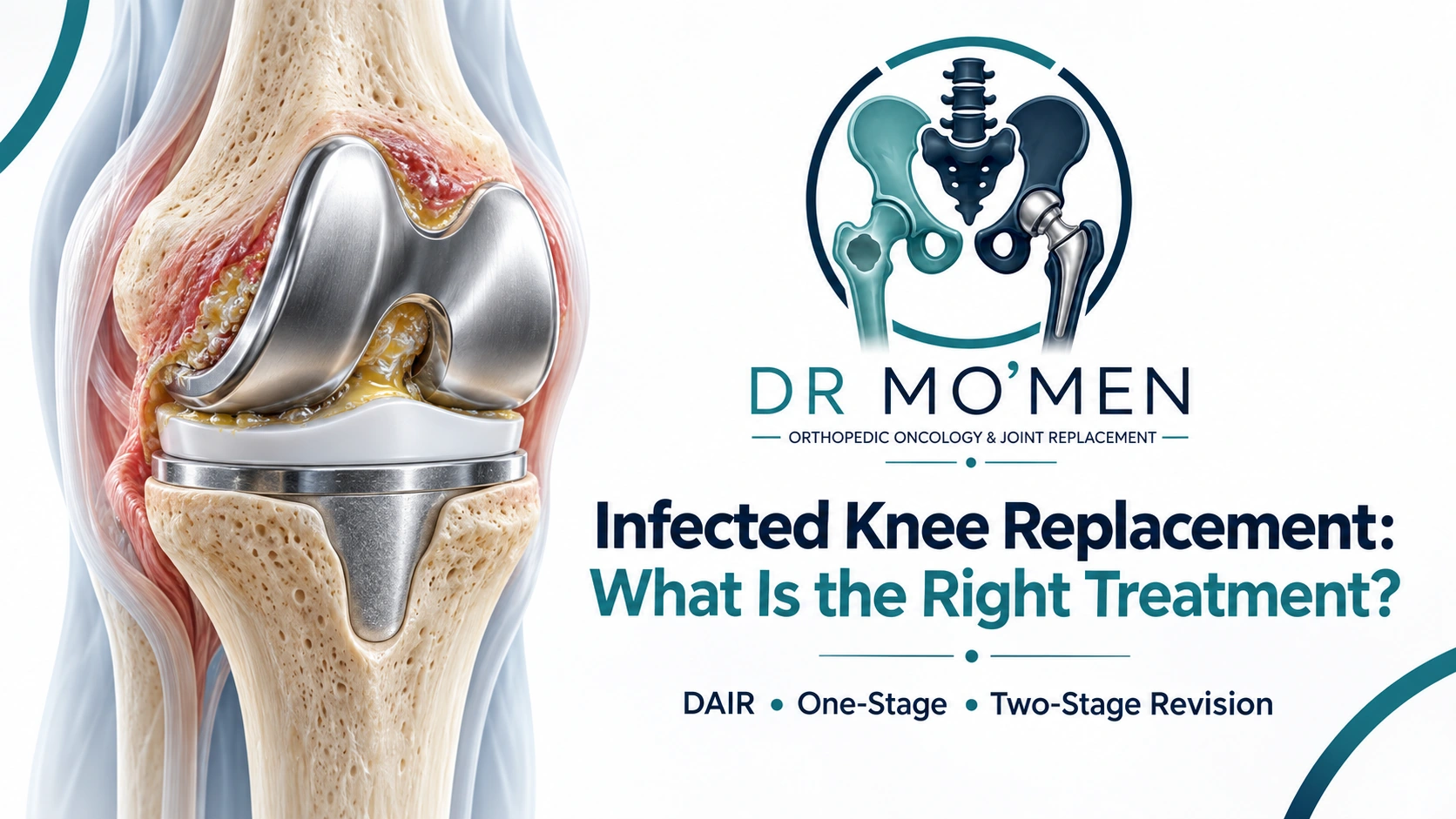
How knee PJI is diagnosed and when treatment may involve DAIR, one-stage exchange or two-stage revision.
Read article →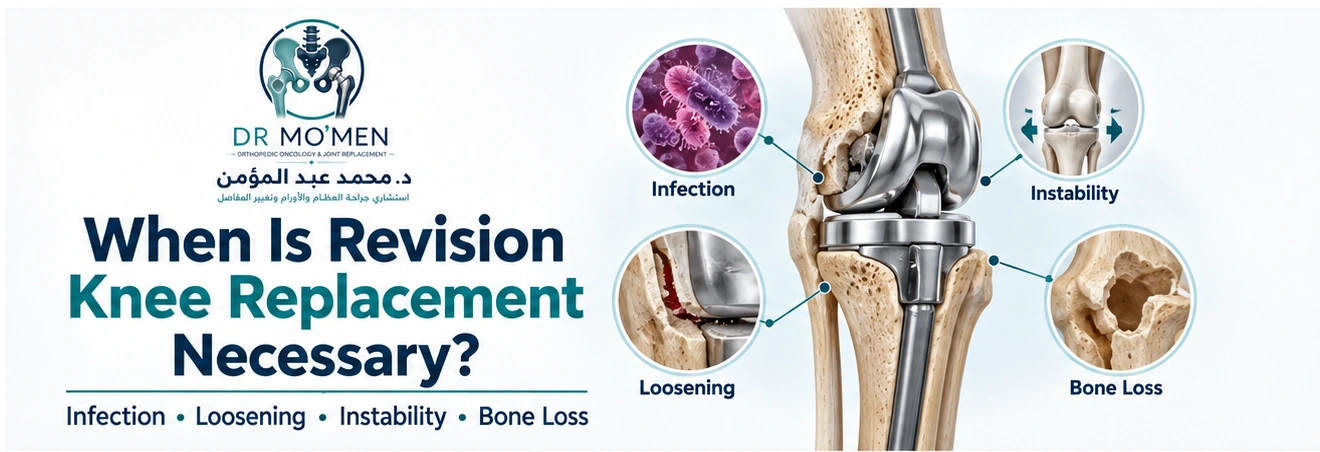
When revision TKA is appropriate, how failed implants are assessed, and how bone loss, ligament stability and infection influence reconstruction.
Read article →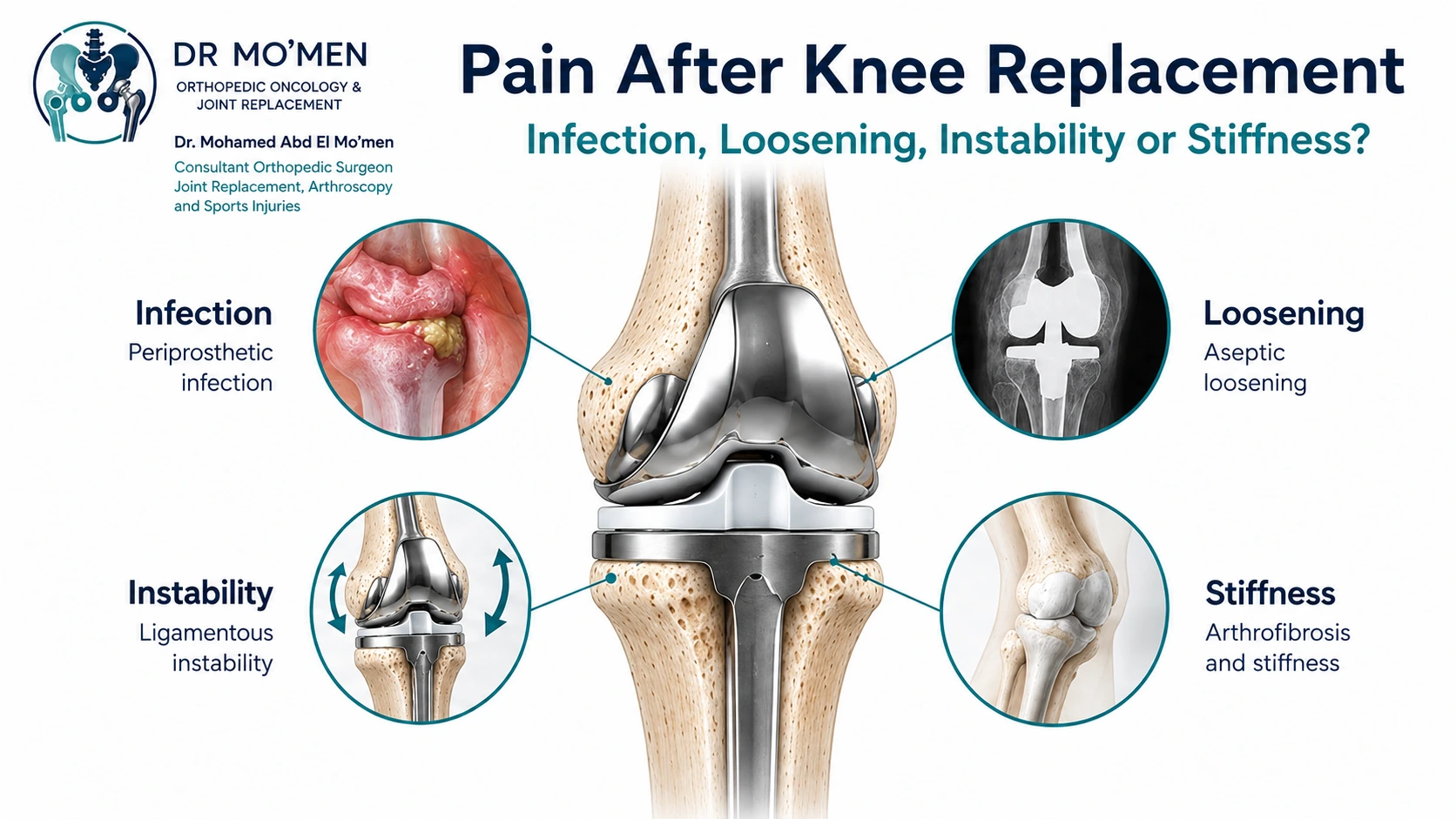
How a painful knee replacement is assessed, including infection, loosening, instability and stiffness, before revision is considered.
Read article →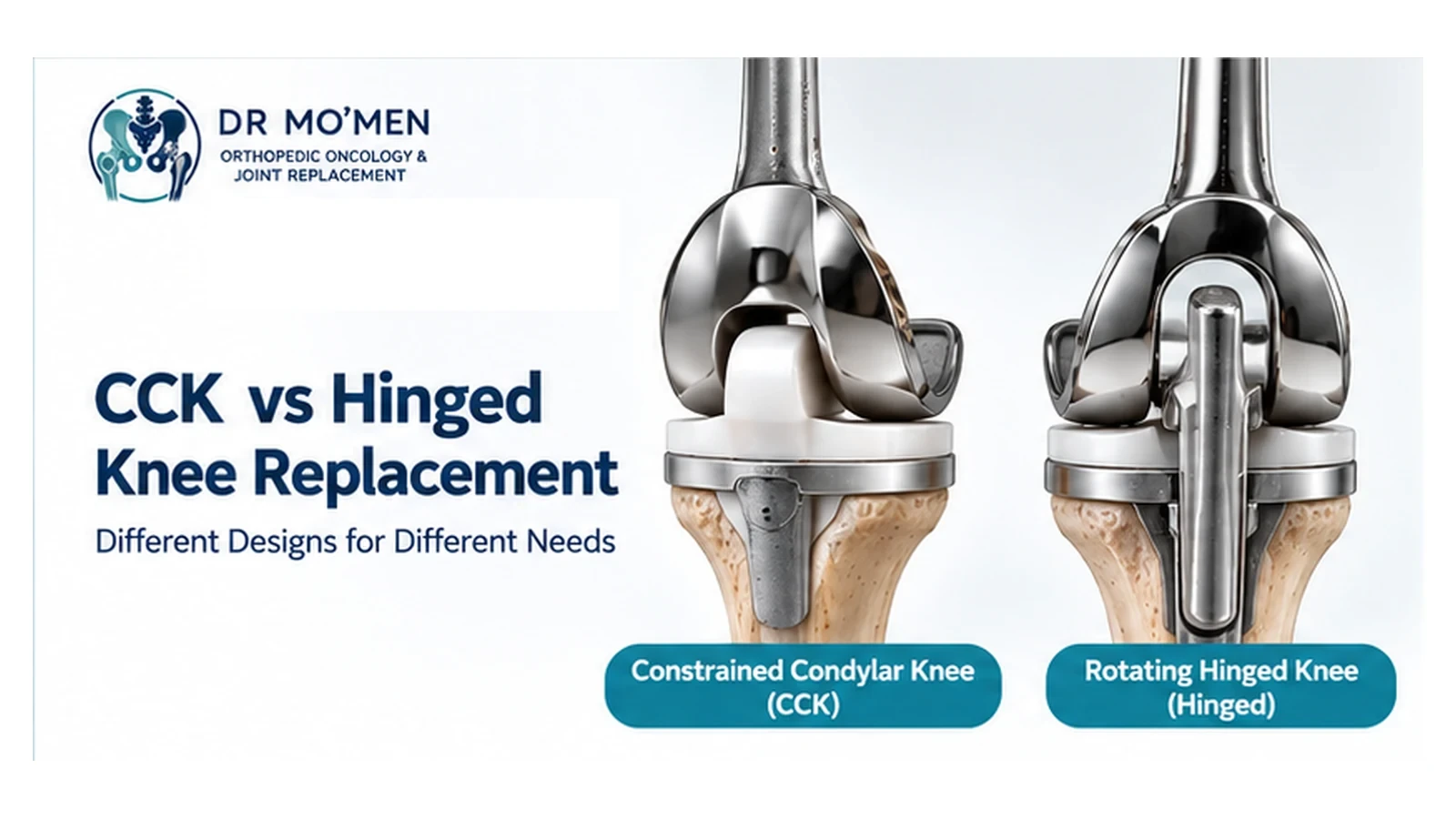
How ligament failure, instability and bone loss influence the choice between CCK and rotating-hinge designs in complex primary and revision knee replacement.
Read article →
Costs, implant choices, travel planning, recovery and specialist review before you fly.
Read article →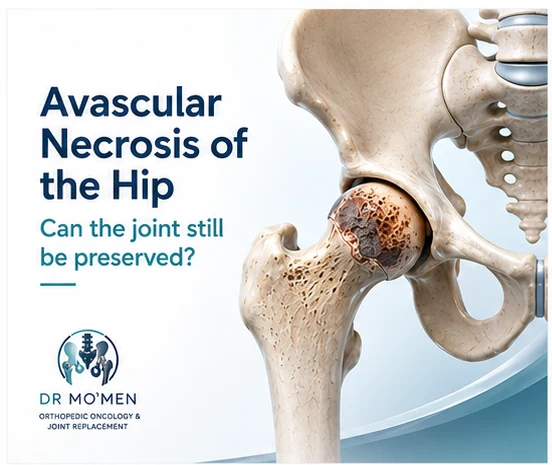
Why MRI stage, femoral-head collapse and cartilage condition guide the choice between core decompression and hip replacement.
Read article →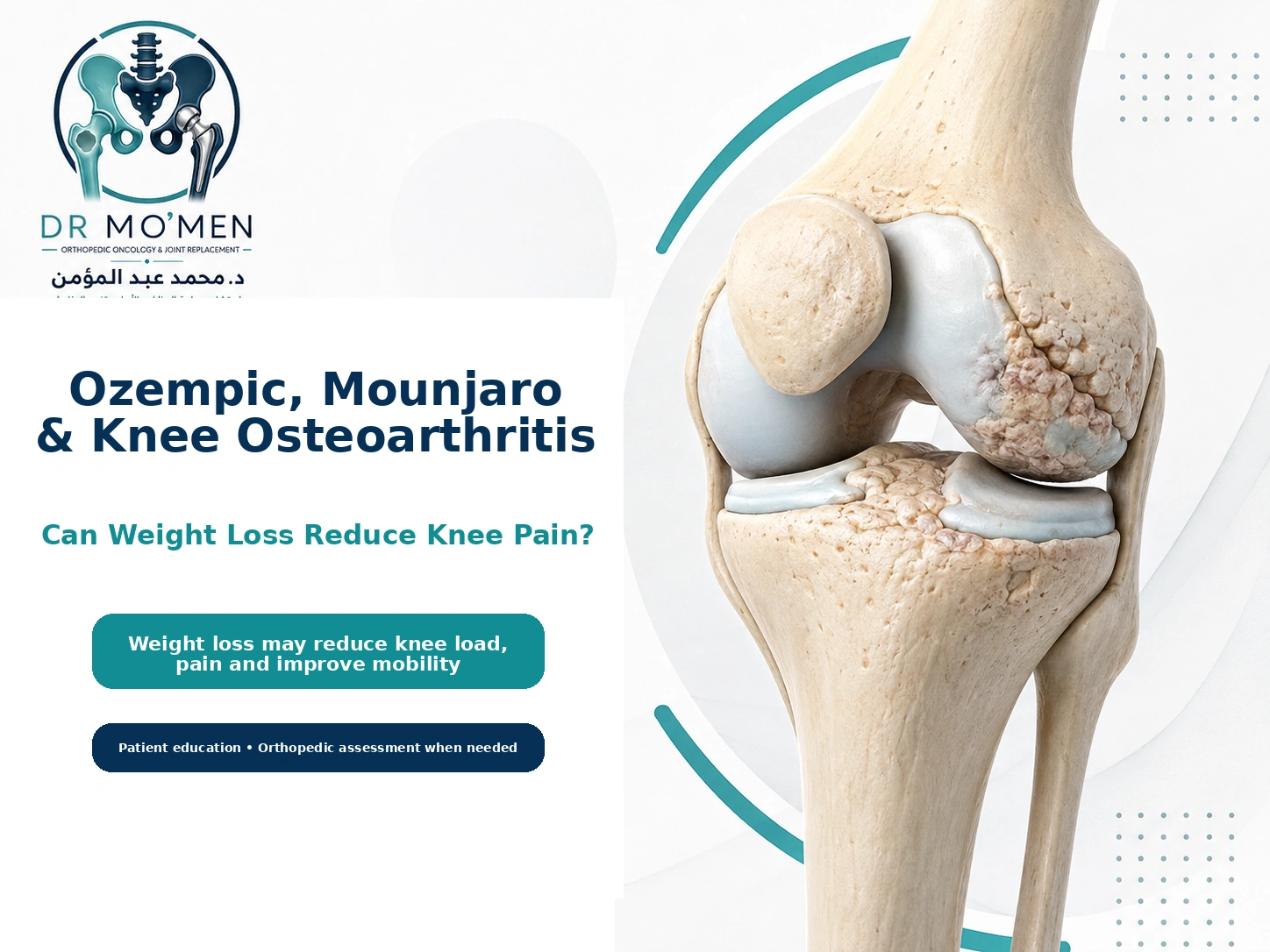
What current evidence says about weight loss, knee pain, GLP-1 therapy and when orthopedic assessment is still needed.
Read article →Editorial approach: Articles are written for patient education, medically reviewed, and kept separate from the anonymized Case Library. They do not replace individual clinical assessment.