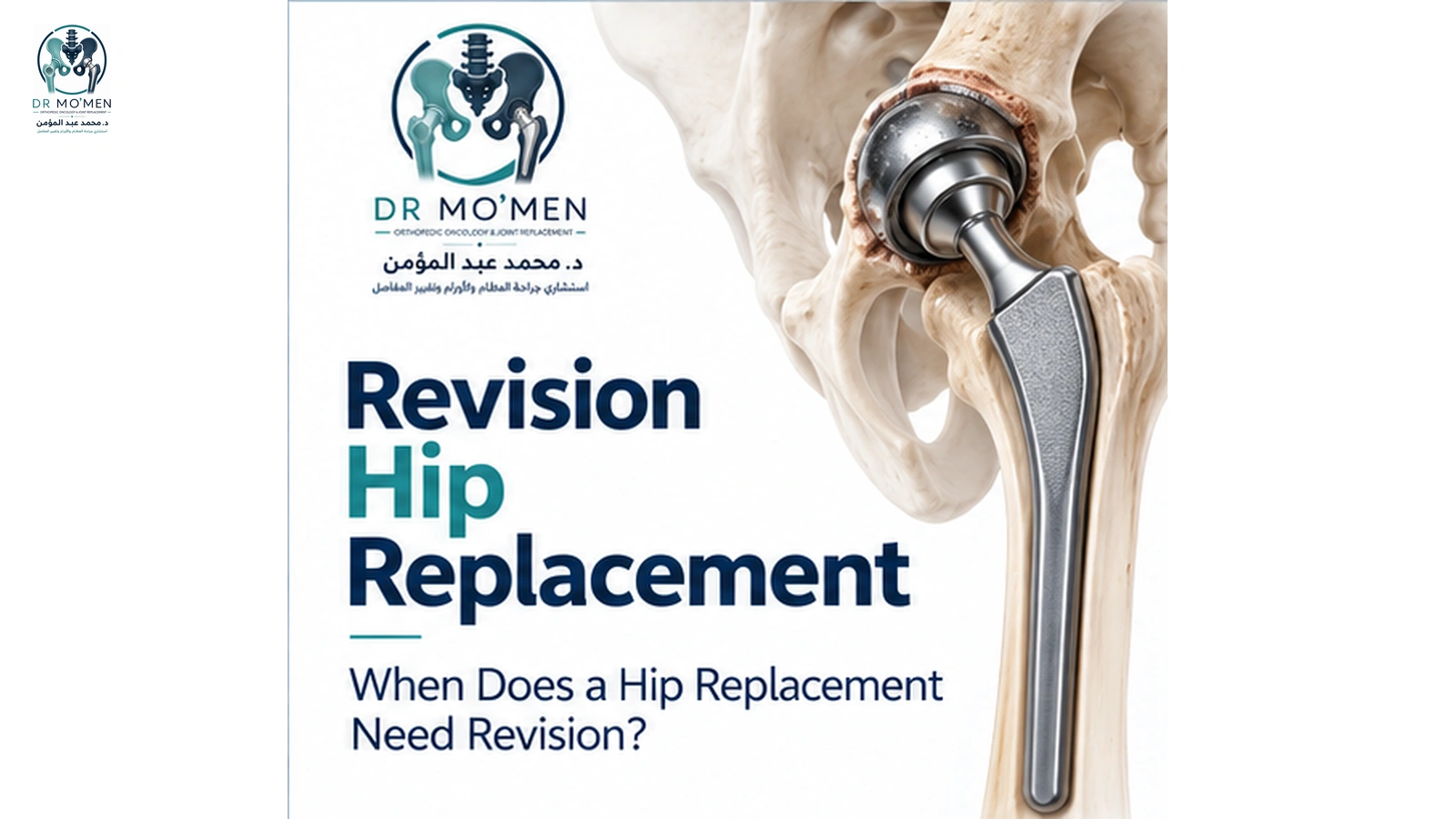
A total hip replacement can provide reliable pain relief and improved mobility for many years. However, an artificial hip is not immune to complications or mechanical failure. Some patients develop pain, loosening, recurrent dislocation, infection, bone loss, or a fracture around the implant and may eventually need another operation.
This second operation is known as revision hip replacement or revision total hip arthroplasty.
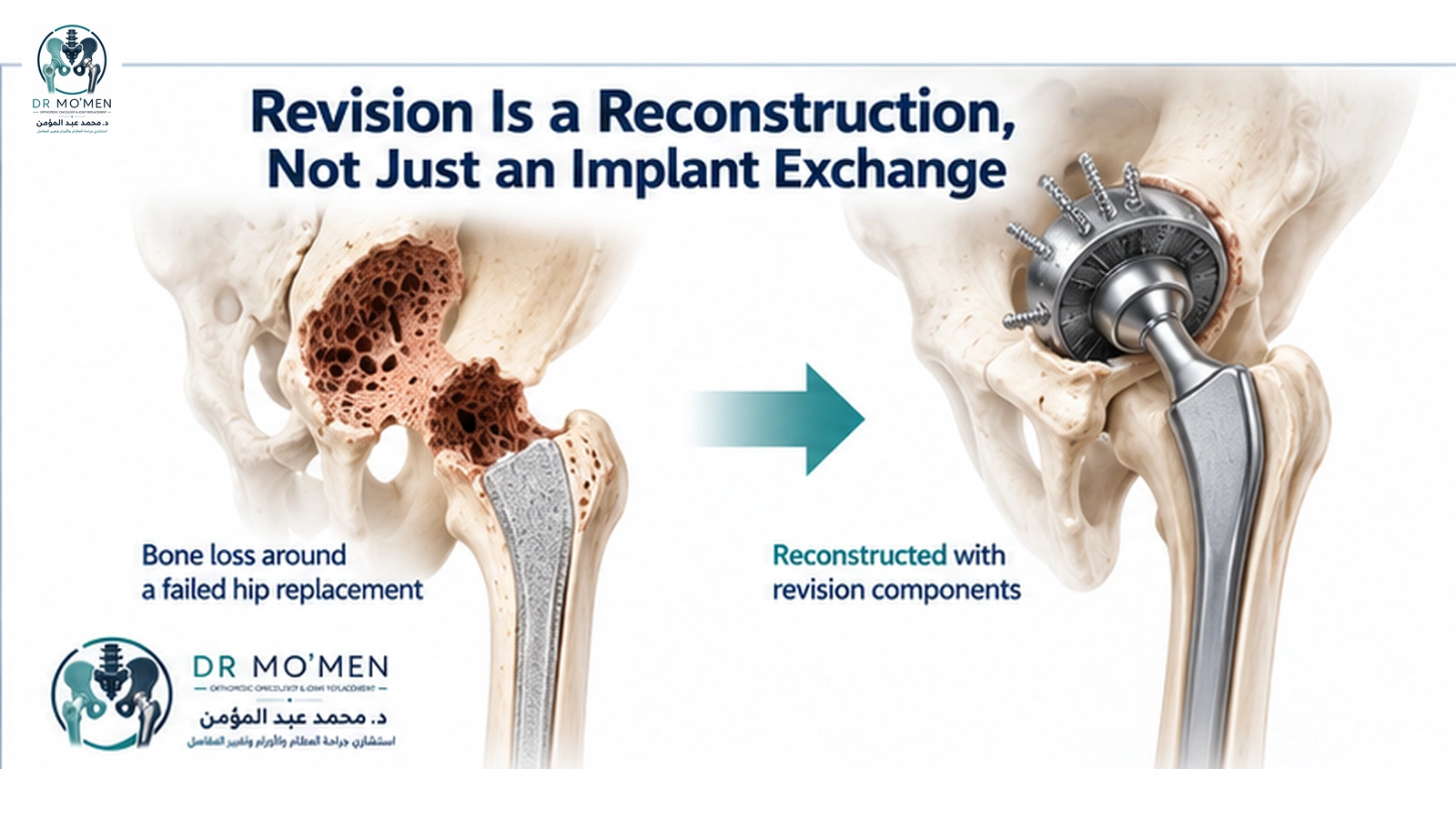
Revision surgery is not simply a repeat of the first hip replacement. It may require removal of one or more existing components, reconstruction of damaged bone, longer or specialized implants, and careful planning around previous scars and altered anatomy.
If you have been told that your hip replacement has failed, the first question should therefore not be simply: “When should the implant be changed?” The more important question is: “Why has the hip replacement failed, and what reconstruction is actually required?” That distinction determines the operation.
What Is Revision Hip Replacement?
Revision hip replacement is surgery performed on a hip that has already undergone partial or total joint replacement.
Depending on the problem, revision surgery may involve replacing only the femoral head or liner; revising the acetabular cup; revising the femoral stem; replacing both the cup and stem; treating infection before inserting a new permanent implant; reconstructing areas of bone loss; fixing a fracture around the prosthesis; or using specialized revision implants when ordinary primary components cannot achieve adequate fixation.
Some revision procedures are relatively limited. Others are major reconstructive operations. This is why the phrase “revision hip replacement” covers a wide spectrum of surgery.
Why Does a Hip Replacement Need Revision?
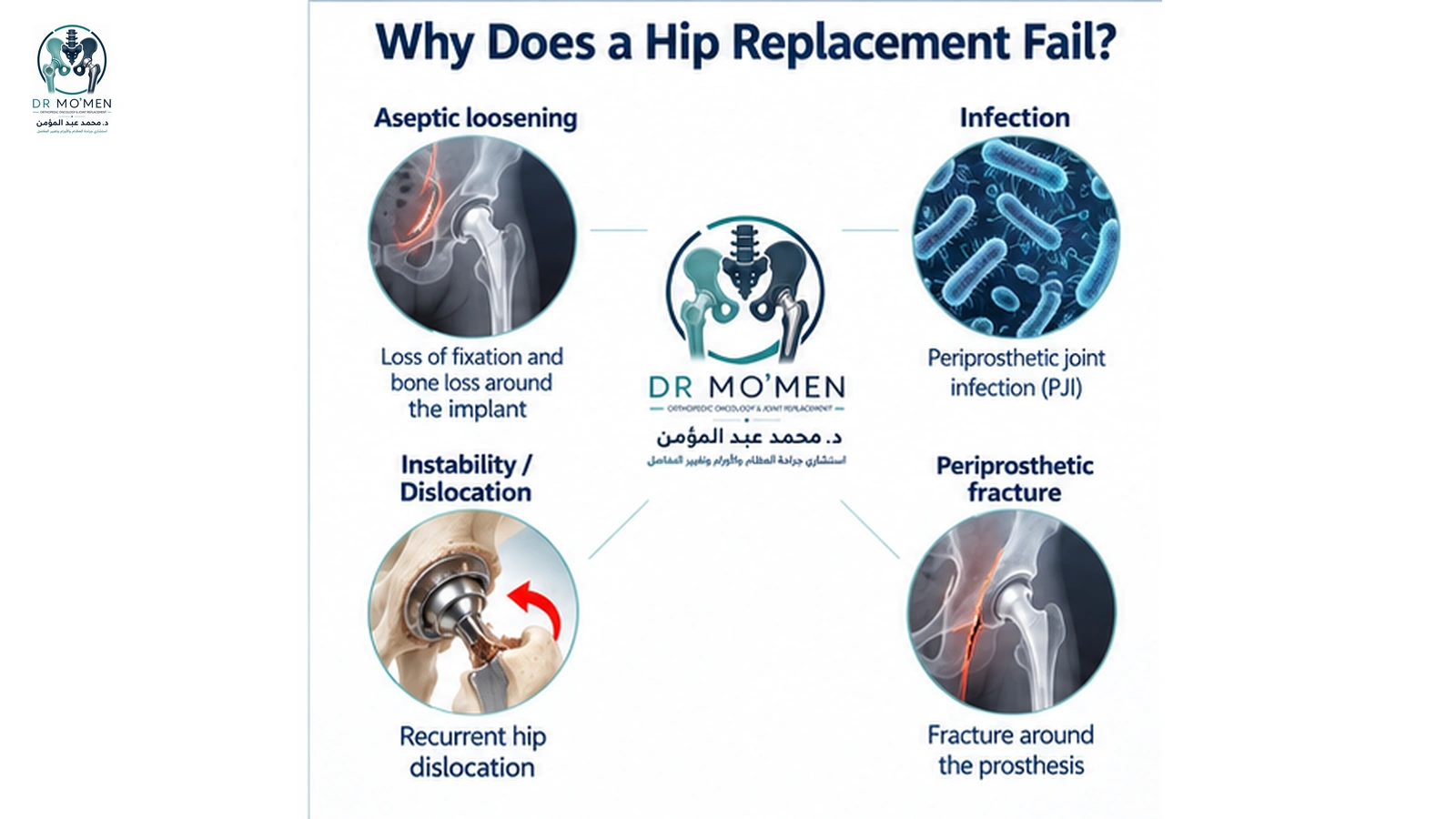
1. Aseptic loosening
An implant may gradually lose fixation to the surrounding bone without infection. Patients may develop increasing groin or thigh pain, pain when standing or walking, reduced walking distance, reduced confidence in the affected leg, or progressive changes on X-rays.
Wear particles can also contribute to osteolysis, in which bone is gradually lost around the prosthesis. A loose implant usually cannot be corrected with medication or physiotherapy alone if it is producing progressive symptoms or significant bone damage.
Can an X-ray Alone Prove That a Hip Replacement Is Loose?
Not always. Progressive implant migration, radiolucent lines or osteolysis on serial X-rays can strongly support loosening, but symptoms and imaging must be interpreted together, and infection should be considered before a revision is labelled aseptic. CT or other investigations may be useful when fixation or the extent of bone loss remains uncertain.
2. Infection around the hip replacement
A periprosthetic joint infection (PJI) may occur soon after surgery or present months or years later. Possible warning signs include persistent or increasing pain, wound drainage, redness or warmth, swelling, fever or chills, or a previously functioning replacement becoming painful without an obvious mechanical explanation.
Some chronic infections cause pain without dramatic fever or redness. The presence or absence of infection has a major effect on surgical planning. A presumed “loose implant” should therefore not automatically proceed to revision without considering infection.
Treatment can range from surgical debridement with retention of appropriate implants in selected acute cases to one-stage or two-stage revision strategies, depending on the clinical circumstances. For a dedicated discussion of diagnosis and surgical options, see Infection After Hip Replacement: DAIR, One-Stage or Two-Stage Revision?.
3. Recurrent hip dislocation or instability
A hip replacement dislocates when the artificial femoral head comes out of the socket. A first dislocation can sometimes be treated by closed reduction without changing the prosthesis.
Revision becomes more relevant when dislocations repeatedly recur, an implant is malpositioned, the hip remains mechanically unstable, there is significant soft-tissue deficiency, or the prosthetic components themselves contribute to instability.
The reconstruction may involve changing implant position, head size, liner configuration or other components. In selected patients, constructs such as dual-mobility components may be considered to improve stability. The appropriate strategy depends on why the hip is unstable, rather than simply how many dislocations have occurred.
For a dedicated guide to recurrent instability, component position, hip-spine mechanics, and revision options, see Hip Replacement Dislocation: When Is Revision Surgery Needed?.
4. Fracture around the prosthesis
A fracture around a total hip replacement is called a periprosthetic fracture. These fractures may occur after a fall or trauma, but occasionally weakened bone can fracture with relatively modest force.
The critical question is whether the femoral implant remains securely fixed. If the stem is stable, the fracture may sometimes be treated with fixation using plates, cables or other techniques. If the stem is loose, simply fixing the broken bone may be insufficient, and revision to a longer stem or another reconstructive implant may be required. For a dedicated explanation of fixation versus stem revision after fracture, see Periprosthetic Hip Fracture: Fixation or Revision Hip Replacement?.
5. Implant wear and osteolysis
Artificial bearing surfaces can wear over time. Wear particles may stimulate a biological reaction that causes progressive bone loss around the prosthesis.
Some patients remain relatively comfortable despite substantial osteolysis. This is important because waiting until severe pain develops may allow further loss of bone, making eventual reconstruction more difficult. Regular imaging follow-up may therefore be appropriate in selected patients with older hip replacements even if symptoms are limited.
6. Implant breakage or other mechanical failure
Less commonly, revision may be required because of damaged or fractured components, liner problems, implant migration, severe impingement, mechanical failure at modular junctions, or failure of a previous revision construct. The exact failure mechanism needs to be established before choosing replacement components.
Does Every Painful Hip Replacement Need Revision Surgery?
No. Pain after hip replacement does not automatically mean the implant has failed.
If the original hip replacement was performed for femoral-head collapse, you may also find this guide useful: Avascular Necrosis of the Hip.
Other causes can include lumbar spine disease, trochanteric pain, tendon pathology, muscle weakness, referred pain, occult infection, fracture, or other conditions unrelated to mechanical implant failure.
Revision surgery should therefore be based on a defined diagnosis, not pain alone. A useful principle is: Diagnose the reason for failure first. Plan the revision second.
Painful Hip Replacement: Identify the Failure Mechanism Before Revision
| Possible cause | What the evaluation looks for | Why it changes treatment |
|---|---|---|
| Periprosthetic joint infection | Symptoms, wound history, inflammatory markers and joint aspiration or microbiology when indicated. | Infection requires an infection-specific strategy rather than routine mechanical revision. |
| Aseptic loosening | Serial X-rays, migration, radiolucent lines, osteolysis and component fixation. | Revision may be component-specific and must account for remaining bone stock. |
| Instability or recurrent dislocation | Component orientation, impingement, abductor function, soft tissues and hip-spine mechanics. | The correct operation depends on the cause; recurrent instability is not solved by the same implant change in every patient. |
| Periprosthetic fracture | Fracture pattern, stem stability and bone stock. | A stable stem may permit fixation, whereas a loose stem may require revision reconstruction. |
| Wear or osteolysis | Bearing wear, progressive bone loss and component fixation on current and previous imaging. | The goal may be to address the bearing surface, components and bone defects before further structural loss occurs. |
| Extra-articular pain | Lumbar spine, trochanteric pain, tendon pathology, muscle weakness and other referred pain sources. | If the implant is not the cause of symptoms, revision may not address the patient’s pain. |
Clinical principle: a revision operation should have a diagnosis and a mechanical or biological objective. The age of the implant alone is not an indication for surgery.
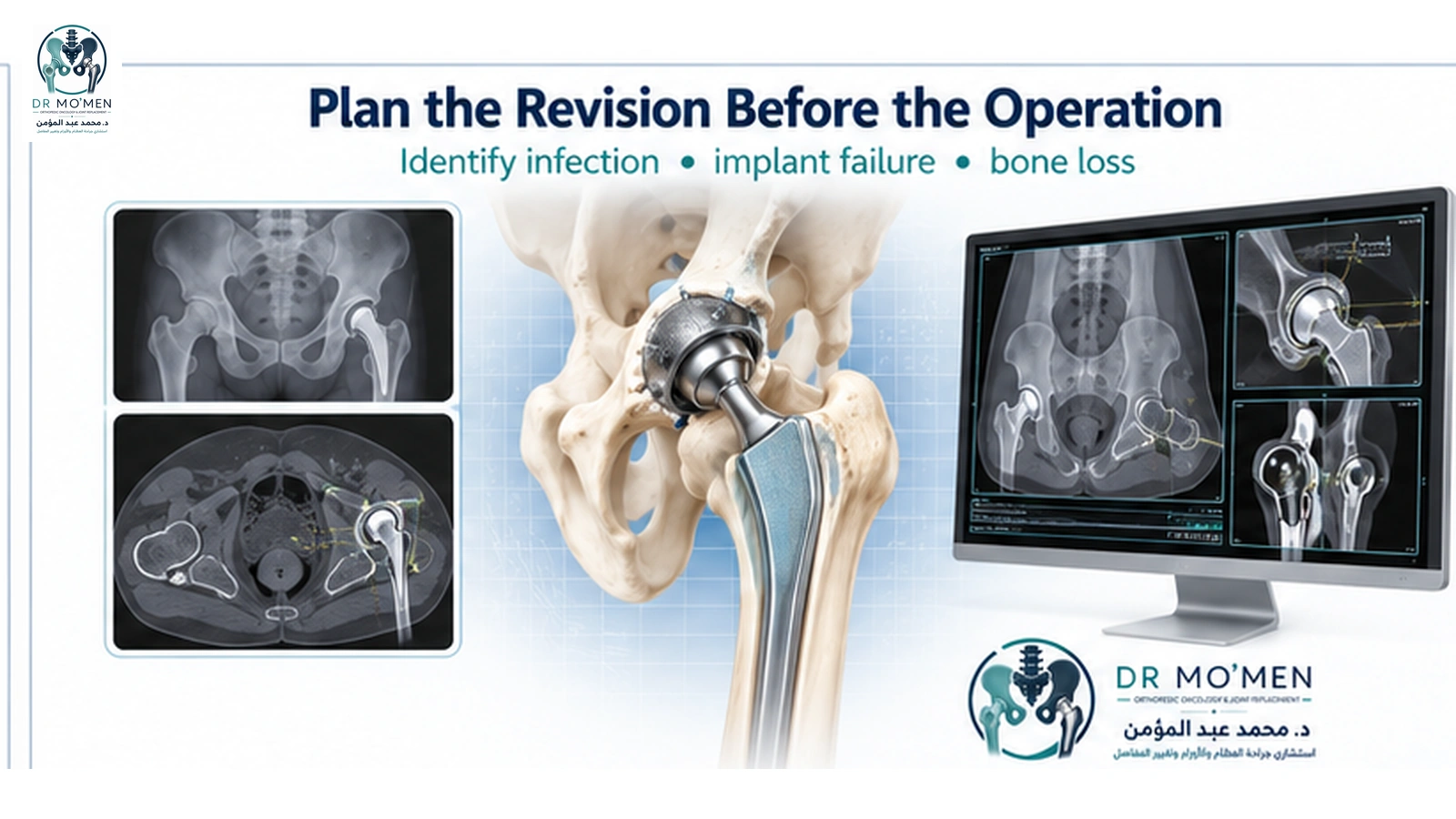
What Tests Are Needed Before Revision Hip Replacement?
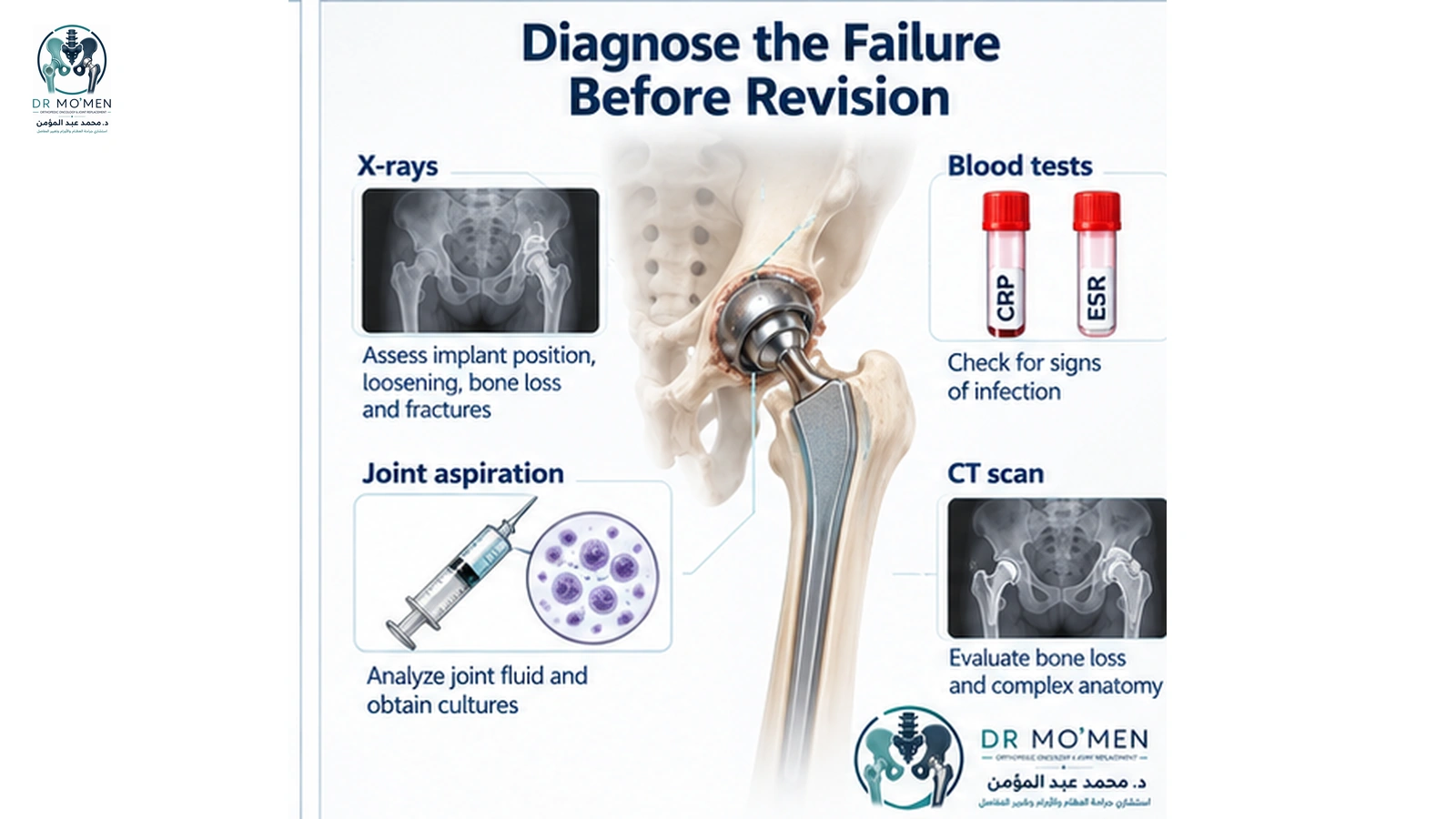
X-rays
Plain radiographs remain fundamental. They can help assess implant position, migration, radiolucent lines, osteolysis, fractures, bone loss, leg length, and changes compared with previous films.
Old X-rays can be particularly useful because progression over time may be more informative than one isolated image.
Blood tests
If infection is suspected, inflammatory markers such as CRP and ESR may be requested as part of the assessment. They cannot diagnose or exclude every infection by themselves.
Joint aspiration
When infection remains a concern, aspiration of the hip may be needed to examine synovial fluid and obtain microbiological samples.
Antibiotics taken before appropriate cultures can occasionally complicate microbiological diagnosis, so investigation should be coordinated with the treating team whenever clinically safe.
CT scanning
CT can be helpful in selected cases to assess acetabular bone loss, component position, fractures, complex anatomy, or planning for reconstruction.
The diagnostic questions
The work-up should answer three major questions: Is the prosthesis infected? Which component is failing? How much usable bone remains for reconstruction?
Why Is Revision Hip Replacement More Complex Than Primary Hip Replacement?
During the original hip replacement, the surgeon usually works with relatively preserved anatomy. During revision surgery, there may instead be scar tissue, distorted anatomy, bone defects, old cement, a well-fixed implant that must be removed, previous fractures, muscle or soft-tissue damage, previous surgical approaches, and reduced remaining bone for fixation.
The operation may therefore require specialized instruments and implants. In some cases, removing a well-fixed femoral stem requires a controlled opening of part of the femur, known as an extended trochanteric osteotomy, followed by repair.
Revision hip arthroplasty should consequently be planned as reconstructive surgery, rather than simply “taking out an old joint and putting in a new one.”
Partial Revision or Complete Revision?
Partial revision
A well-fixed component may sometimes be retained while another component is revised. Examples might include selected cases involving liner or head exchange, isolated acetabular failure, or isolated femoral component failure.
Complete revision
Both major components may need replacement when there is extensive mechanical failure, severe malposition, substantial bone loss, certain infections, or failure involving multiple components.
Retaining a component merely because it is difficult to remove is not always appropriate. Equally, removing a well-fixed component unnecessarily may sacrifice valuable bone. The decision requires careful preoperative planning.
What Happens When There Is Major Bone Loss?
Bone loss is one of the defining challenges of complex revision hip replacement. The surgeon first needs to determine where the bone defect is located, how extensive it is, whether the remaining bone can provide stable fixation, and whether the defect is primarily on the acetabular or femoral side.
Options may include longer revision stems, porous metal components, augments, specialized revision cups, bone graft, plates or cables, or other reconstructive systems.
Severe defects require a strategy that restores both implant stability and mechanical load transfer. The operation should therefore be planned around the patient’s actual bone stock rather than selecting an implant in isolation.
What Are the Risks of Revision Hip Replacement?
Revision hip surgery is generally more complex than primary hip replacement. Potential complications include infection, dislocation, fracture, blood loss, blood clots, nerve injury, vascular injury, leg-length discrepancy, failure of bone or implant fixation, persistent pain, further bone loss, and the possibility of future re-revision.
The patient’s individual risk depends on factors such as the reason for revision, previous operations, bone quality, infection status, medical comorbidities, and the extent of reconstruction required. These risks should be discussed specifically for the planned operation rather than quoted as one generic revision risk.
What Is Recovery Like After Revision Hip Replacement?
Recovery varies substantially between patients. A limited component revision is very different from a reconstruction involving extensive bone loss, fracture fixation, bone graft, osteotomy, infection treatment, or major femoral or acetabular reconstruction.
Some patients may be allowed to bear weight relatively early. Others need restricted or protected weight bearing while bone and implants achieve sufficient stability.
Rehabilitation may involve walking aids, thrombosis prevention, wound monitoring, muscle strengthening, gait rehabilitation, and serial imaging. Recovery after revision is often longer and less predictable than after an uncomplicated primary hip replacement.
When Should You Seek an Urgent Orthopedic Assessment?
Seek prompt medical evaluation if a hip replacement is associated with a new inability to stand or walk, sudden severe pain after a fall, obvious shortening or deformity of the leg, suspected dislocation, wound drainage, increasing redness or swelling, fever with significant hip pain, or rapidly worsening function.
These symptoms may represent fracture, dislocation, infection or another complication requiring urgent investigation.
Getting a Second Opinion Before Revision Surgery
Revision surgery can vary considerably from one patient to another. A second specialist review can be particularly useful when the cause of pain is unclear, infection has not been definitively assessed, significant bone loss is present, multiple previous operations have been performed, complex revision implants have been proposed, there has been recurrent dislocation, a fracture exists around the prosthesis, or different treatment strategies have been suggested.
A second opinion is not necessarily a recommendation to operate. In some patients, the most useful conclusion is that revision is not yet indicated or that additional investigations are required before any operation.
For Patients Travelling to Egypt for Revision Hip Surgery
Patients outside Egypt considering revision surgery should ideally send their available records before arranging travel. Useful documents include current X-rays, older postoperative X-rays, CT or MRI when available, previous operative reports, implant information if available, laboratory results, previous culture reports, and details of previous infections or revision procedures.
A preliminary specialist review can help classify the case as: revision likely; further investigations required; another treatment may be appropriate; or urgent in-person assessment. This does not replace physical examination, but it may reduce unnecessary travel and help determine what additional investigations should be arranged.
For practical planning, see Joint Replacement in Egypt for International Patients and the International Patients pathway.
The Role of Dr. Mohammed Abdelmoemen Abuelhadid in Complex Hip Revision Cases
Dr. Mohammed Abdelmoemen Abuelhadid evaluates complex orthopedic reconstruction cases including joint replacement, revision arthroplasty, orthopedic oncology and major bone reconstruction.
In a patient with a painful or failed hip replacement, the assessment focuses first on identifying the failure mechanism: infection, loosening, instability, fracture, wear, bone loss, or another source of pain. The revision strategy can then be planned according to the condition of the implants, available bone stock and the patient’s overall clinical situation.
Patients outside Egypt may also request an initial review of available imaging and reports before travelling.