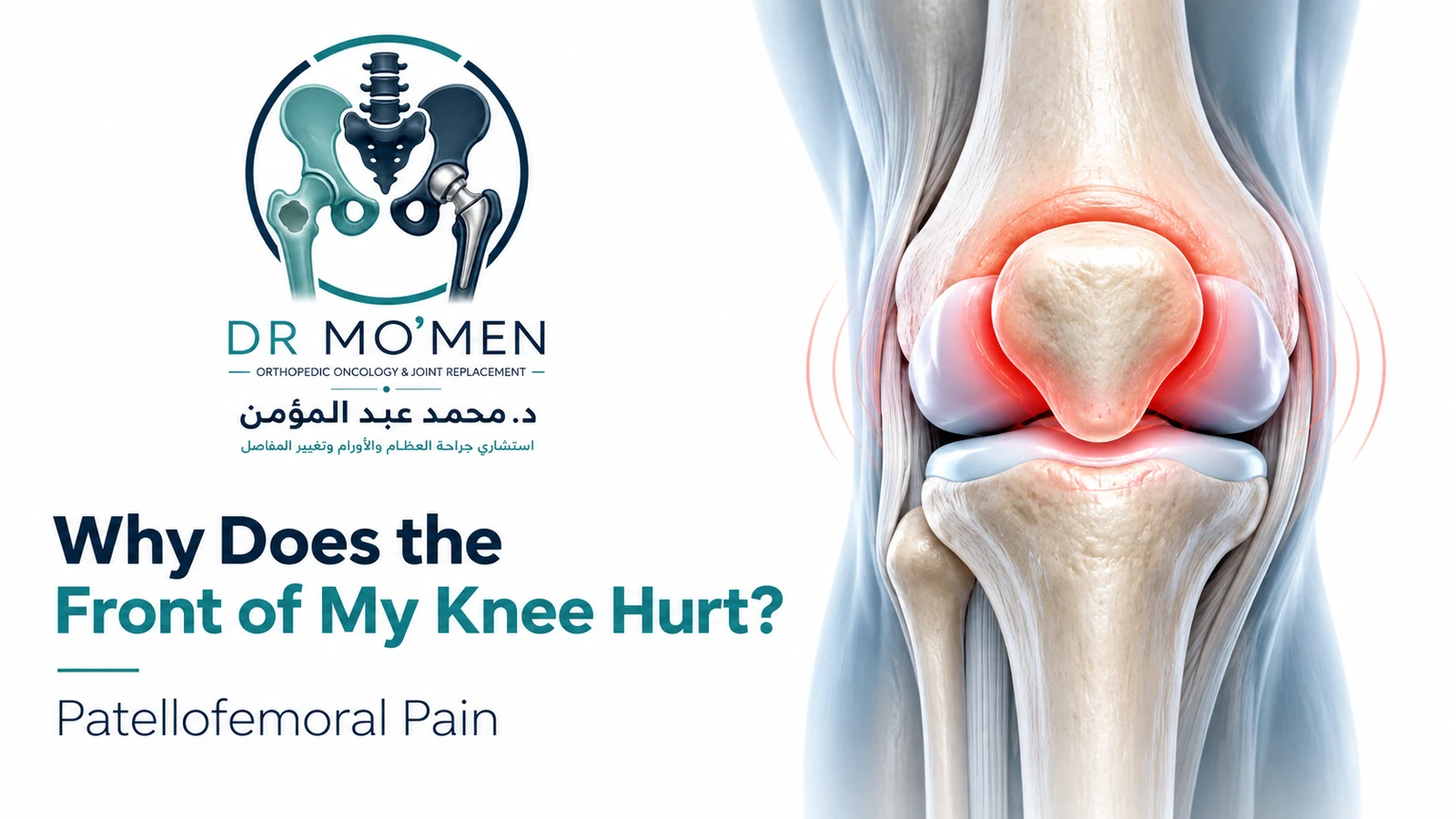
Pain around the front of the knee is common in runners, active adults, adolescents, and people who have recently increased their training or gym load. One common cause is patellofemoral pain, which usually produces discomfort around or behind the kneecap during activities that load the knee while it is bent.
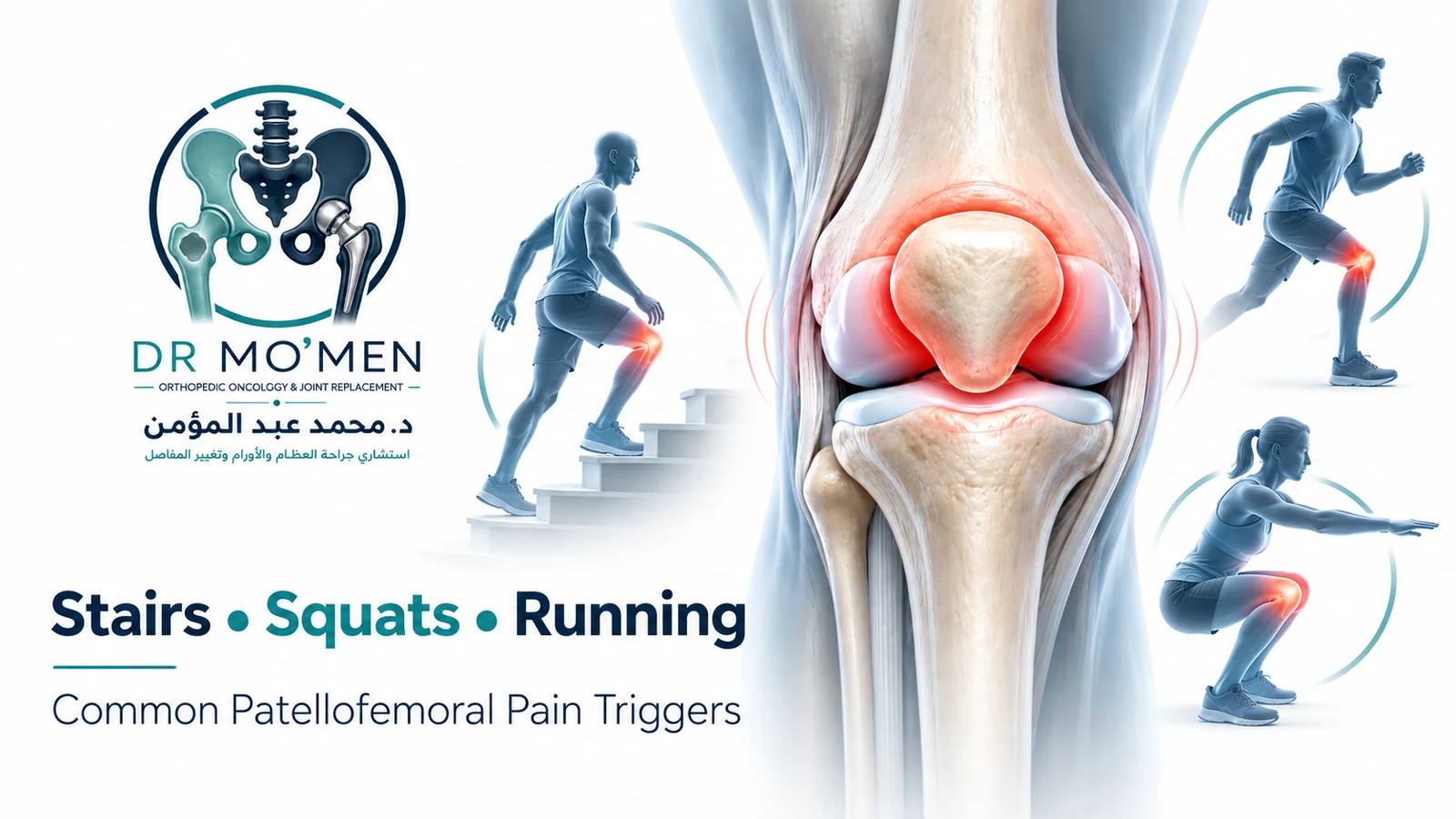
Typical triggers include stairs, squats, running, jumping, hills, lunges, and sitting for a long time with the knee flexed.
Not every pain at the front of the knee is patellofemoral pain. Patellar tendon problems, patellar instability, arthritis, cartilage or osteochondral injuries, and other conditions can produce pain in the same region.
The useful question is not only “Where does my knee hurt?” but “Which structure and loading pattern are producing the pain?”
What Is Patellofemoral Pain?

The patellofemoral joint is the articulation between the kneecap (patella) and the trochlear groove at the front of the femur. As the knee bends and straightens, the patella moves within this groove.
Patellofemoral joint forces change with knee angle, body weight, activity, muscle forces, movement strategy and training load. Patellofemoral pain is therefore usually considered a multifactorial load-related condition rather than the result of one single abnormality.
Is Patellofemoral Pain the Same as Chondromalacia Patella?
No. Patellofemoral pain describes a clinical pain condition. Chondromalacia patellae refers specifically to cartilage changes involving the patella. A patient can have patellofemoral pain without proven cartilage damage.
Why Does My Knee Hurt Going Downstairs or When Squatting?
Stairs and squats increase demand across the patellofemoral joint while the knee is flexed. Symptoms may be particularly noticeable when going downstairs, walking downhill, lowering into a squat or standing up from a low chair.
Why Does My Knee Hurt After Sitting for a Long Time?
Some patients notice anterior knee pain after sitting in a cinema, travelling in a car or working at a desk with the knee bent for an extended period. This is a recognized symptom pattern in patellofemoral pain.
What Causes Patellofemoral Pain?
There is rarely one single cause. Current best-practice guidance recommends assessing the person’s loading history, symptoms, physical impairments and goals before choosing treatment.
Recent changes in training load
Symptoms may start after increasing running distance or speed, hills, jumping, gym volume, squats, lunges or sports sessions. In many cases the problem reflects a mismatch between the load being applied and the knee’s current capacity.
Knee and hip capacity
Strength and movement deficits around the knee and hip can influence how a person tolerates activity. Current evidence places knee-targeted exercise at the center of treatment, with hip-targeted exercise added according to the individual’s presentation.
Running and movement strategy
Some runners may benefit from changes in cadence, stride, training volume or task-specific mechanics. Movement retraining should be individualized rather than applied automatically to every patient.
Foot and lower-limb factors
Prefabricated foot orthoses can be a useful supporting intervention for selected patients when they produce a meaningful improvement during functional testing. They are not a universal treatment.
Is Patellar Maltracking Always the Cause?
No. Patellofemoral pain is influenced by multiple interacting factors, including load, muscle capacity, movement strategy, training history, pain sensitivity and individual anatomy. Rehabilitation should not be based only on a static alignment measurement.
How Is Patellofemoral Pain Diagnosed?
Diagnosis is primarily clinical. Assessment should consider the pain location, activities that reproduce symptoms, recent changes in activity, swelling, locking, giving way, previous injury or dislocation, knee and hip strength, squat or step mechanics, and patellar stability.
Pain around or behind the patella reproduced during loaded knee flexion—particularly squatting—strongly supports the diagnosis when other causes have been considered.
Do I Need an X-ray?
Not necessarily. A typical presentation can often be diagnosed clinically. X-rays become more useful when another diagnosis needs to be excluded, such as osteoarthritis, previous fracture, osteochondral pathology or a structural patellar abnormality.
Do I Need an MRI for Front Knee Pain?
Usually not as the first step in a typical case. MRI may be considered when the diagnosis is uncertain, symptoms persist despite appropriate rehabilitation, true mechanical locking or recurrent significant swelling occurs, patellar instability is suspected, or cartilage or osteochondral injury needs evaluation.
What Else Can Cause Front Knee Pain?
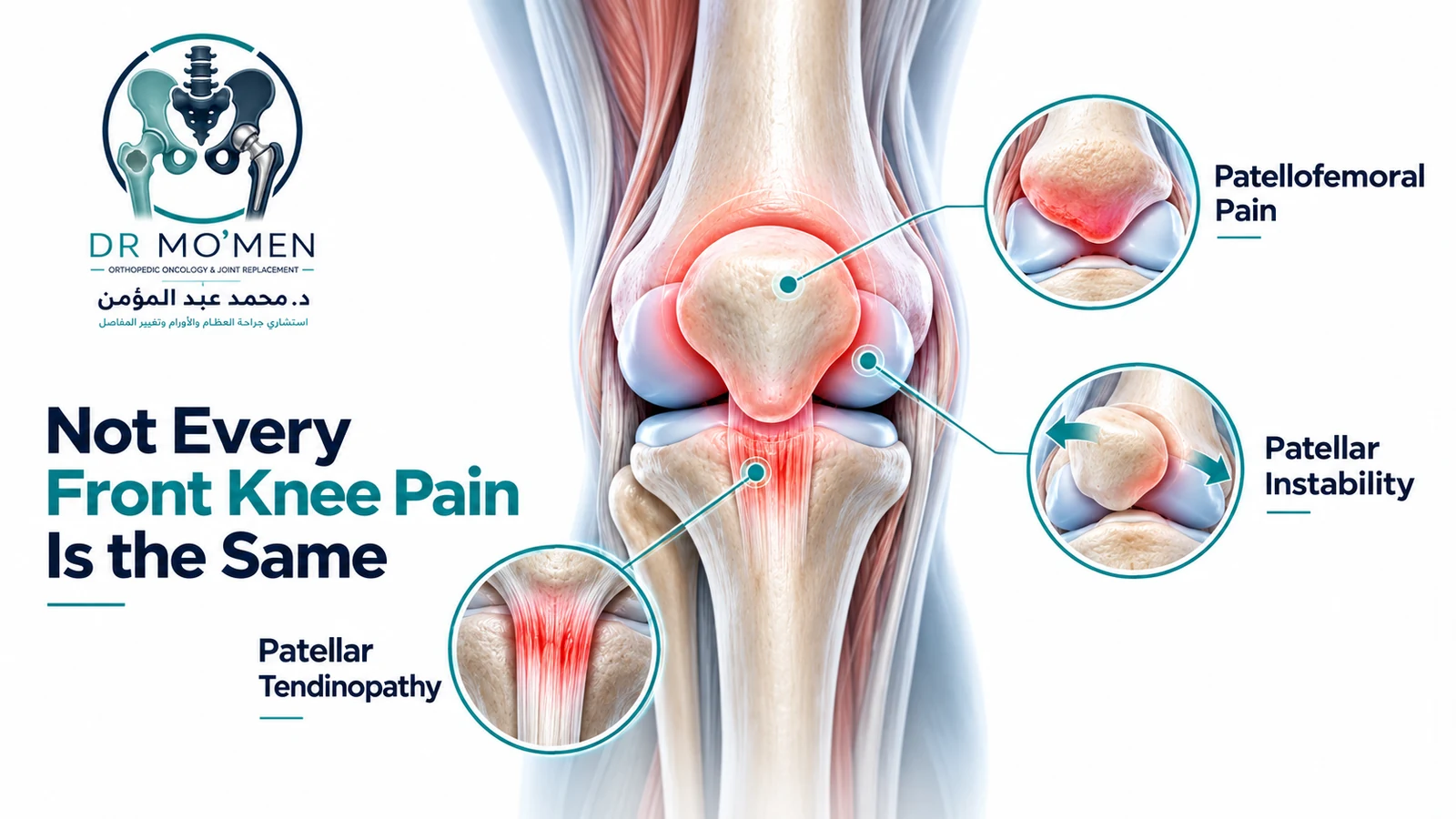
Patellar tendinopathy
Pain is usually more localized to the patellar tendon, often near the lower pole of the patella, and is particularly relevant in jumping or explosive sports.
Patellar instability
Patients may report the kneecap moving out of position, recurrent subluxation or dislocation, or apprehension during lateral patellar movement. This represents a different clinical pathway from ordinary patellofemoral pain.
Patellofemoral osteoarthritis
Degenerative patellofemoral disease becomes increasingly relevant with age, stiffness, reduced motion, recurrent swelling and radiographic changes.
Meniscal or osteochondral pathology
Joint-line pain, twisting trauma, recurrent effusion, true locking, or an acute patellar dislocation with persistent symptoms should prompt consideration of other structural diagnoses.
Is Clicking or Cracking Around the Kneecap Dangerous?
Not necessarily. Knees commonly make sounds during squatting, stairs and standing from a chair. Noise alone does not establish important cartilage damage. Pain, recurrent swelling, instability, true locking and loss of function are more clinically meaningful.
What Is the Best Treatment for Patellofemoral Pain?
Treatment should be individualized. Current best-practice guidance supports education together with knee-targeted exercise as the primary approach, with hip-targeted exercise and selected supporting treatments added according to the patient’s needs and preferences.
Education and load management
Complete rest is usually not the long-term solution. Activities may temporarily need to be modified so the knee receives a tolerable amount of load while rehabilitation builds capacity.
Knee-targeted exercise
Progressive strengthening of the quadriceps and other knee-related musculature is a core component of treatment. Exercises may include sit-to-stand, squats, step-downs, leg press or knee-extension work, selected and progressed according to symptoms and capacity.
Hip-targeted exercise
Hip strengthening can be combined with knee-targeted exercise when clinically appropriate. The exact balance between knee and hip work should reflect the person’s impairments and tolerance to loaded knee flexion.
Supporting interventions
Patellar taping, prefabricated foot orthoses, manual therapy or movement/running retraining can be useful adjuncts for selected patients. They should support a progressive rehabilitation programme rather than replace it.
Can I Continue Running?
Often yes, but training may need to be adjusted. Decisions depend on symptom severity, pain response during and after running, weekly volume, current strength and sport goals.
Do I Need Injections?
Injections are not a routine first-line treatment for uncomplicated patellofemoral pain. The diagnosis should be clear before an injection is considered because anterior knee pain can arise from several different conditions.
Does Patellofemoral Pain Need Surgery?
Usually not. Routine patellofemoral pain is primarily managed nonoperatively. A surgical discussion becomes more relevant only when a specific structural problem—such as recurrent patellar instability, a significant osteochondral lesion or another surgically treatable abnormality—has been identified.
Persistent pain alone, a minor MRI cartilage finding or a slightly tilted patella should not automatically lead to surgery.
When Should Front Knee Pain Be Assessed More Urgently?
- Major trauma or inability to bear weight.
- A visibly deformed knee.
- Recurrent patellar dislocation.
- True mechanical locking.
- Rapidly developing significant swelling.
- A hot, swollen knee with fever or systemic illness.
- Progressive inability to straighten the knee.
- Persistent night pain that is unusual for a load-related problem.
- An unusual or enlarging mass.
When Should You See an Orthopedic Specialist?
- The diagnosis remains uncertain.
- Pain continues despite an appropriate progressive rehabilitation programme.
- The knee repeatedly swells.
- True locking or instability occurs.
- Symptoms followed significant trauma or patellar dislocation.
- Returning to sport remains difficult.
- MRI or X-ray findings do not clearly match the symptoms.
- Surgery has been proposed without a clear structural diagnosis.
Specialist Assessment for Persistent Front Knee Pain
Persistent anterior knee pain should not automatically lead to MRI or surgery. A useful sequence is: clinical diagnosis → identify loading and functional factors → structured rehabilitation → reassessment → selective imaging when indicated.
Dr. Mohammed Abdelmoemen Abuelhadid evaluates orthopedic and sports-related knee conditions, including cases where persistent symptoms, imaging findings and the clinical diagnosis do not appear to match.
Patients outside Egypt can also send existing X-rays, MRI images and reports for an online second medical opinion before arranging travel when appropriate.
For appointments or imaging review: 01021690693
Evidence base
- Neal BS, Lack SD, Bartholomew C, Morrissey D. Best practice guide for patellofemoral pain. British Journal of Sports Medicine. 2024;58:1486–1495.
- Willy RW, Hoglund LT, Barton CJ, et al. Patellofemoral Pain: Clinical Practice Guidelines. J Orthop Sports Phys Ther. 2019;49(9):CPG1–CPG95.
- Gaitonde DY, Ericksen A, Robbins RC. Patellofemoral Pain Syndrome. American Family Physician. 2019;99(2):88–94.