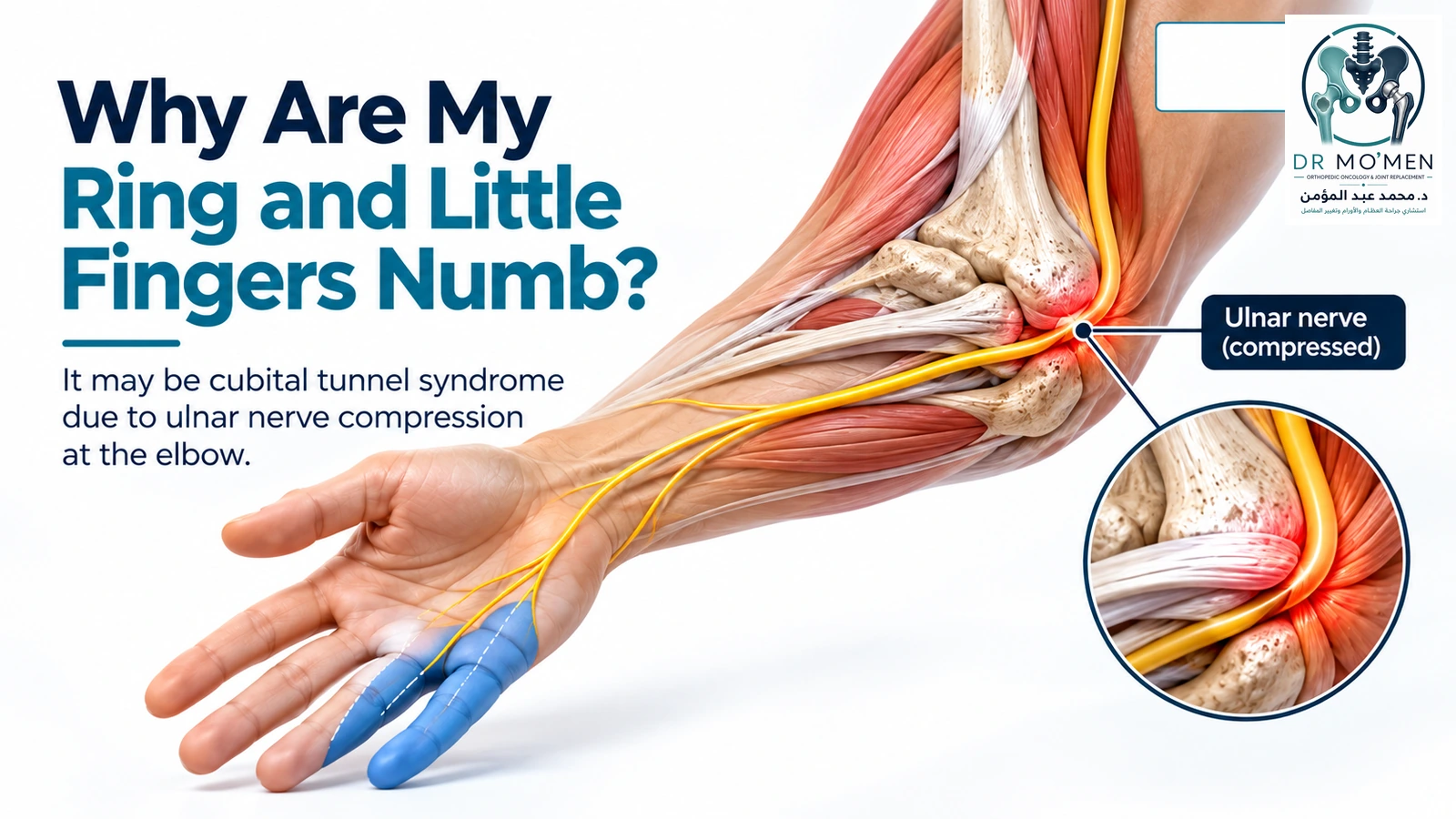
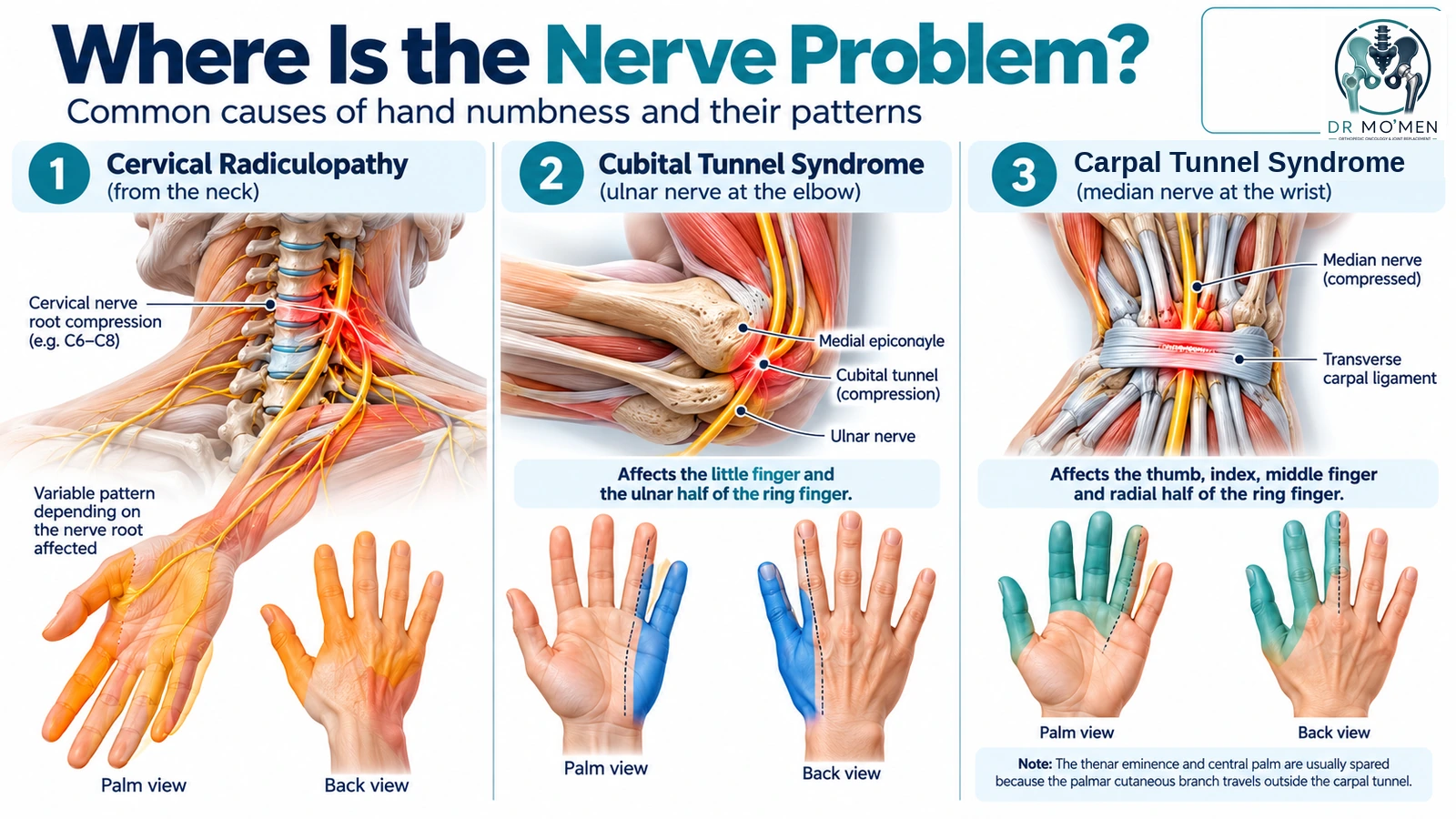
Numbness or tingling in the little finger and the ulnar half of the ring finger often points toward the ulnar nerve rather than the median nerve.
One of the most common places for the ulnar nerve to become irritated or compressed is around the inside of the elbow. This condition is called cubital tunnel syndrome.
Patients often notice symptoms while sleeping with the elbow bent, holding a phone, leaning on the elbow, driving, or keeping the elbow flexed for a prolonged period. But not every patient with numbness in these fingers has cubital tunnel syndrome. The key question is: Where along the nerve is the problem actually occurring?
Quick Answer: Which Fingers Does Cubital Tunnel Syndrome Affect?
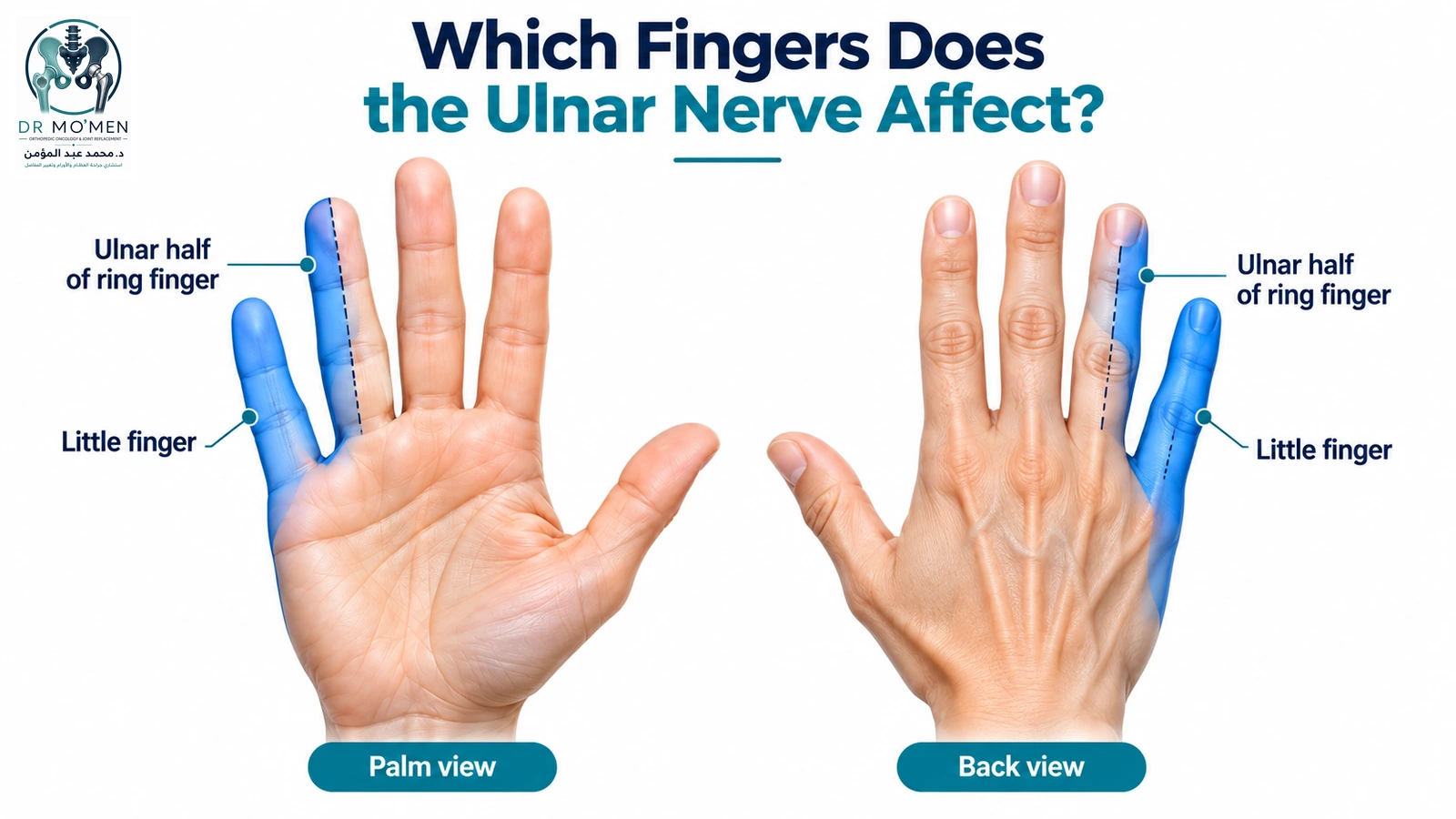
The characteristic sensory pattern involves the little finger and the ulnar half of the ring finger. The thumb, index finger and middle finger are not the typical sensory territory of the ulnar nerve.
This distribution helps distinguish cubital tunnel syndrome from carpal tunnel syndrome, which more typically affects the thumb, index finger, middle finger and radial half of the ring finger.
What Is Cubital Tunnel Syndrome?
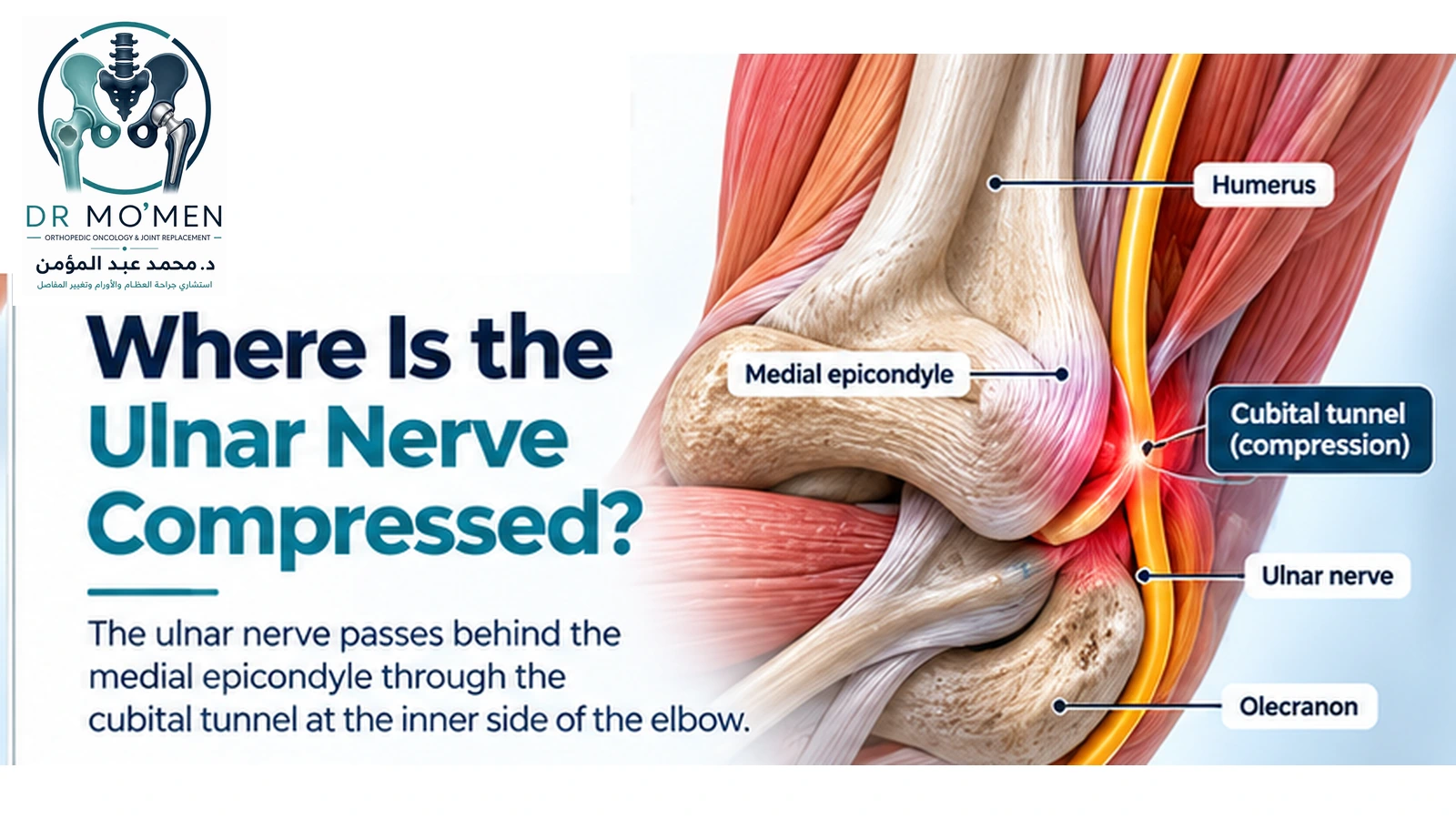
The ulnar nerve travels from the neck down the arm, passes behind the medial epicondyle on the inner side of the elbow—the region commonly called the “funny bone”—and continues into the forearm and hand.
At the elbow, the nerve passes through the cubital tunnel. Cubital tunnel syndrome occurs when the ulnar nerve is compressed, irritated, or repeatedly stretched in this region.
Why Does Bending the Elbow Make Symptoms Worse?
Elbow position changes the mechanical environment around the ulnar nerve. Prolonged flexion can increase tension on the nerve and reduce the available space around it, which helps explain why symptoms may become more noticeable during sleep, while holding a phone, driving, or maintaining a bent elbow for a long time.
What Are the Symptoms of Cubital Tunnel Syndrome?
- Tingling or numbness in the little finger.
- Tingling or numbness in the ulnar half of the ring finger.
- Aching or sensitivity around the inner elbow.
- Symptoms triggered by prolonged elbow flexion.
- Symptoms after leaning directly on the medial elbow.
- Reduced grip or pinch strength in more advanced cases.
- Difficulty spreading or coordinating the fingers.
- Frequent dropping of objects when motor dysfunction becomes more significant.
With more advanced nerve dysfunction, wasting of the small intrinsic hand muscles can become visible. Persistent or progressive weakness should therefore not be treated as ordinary intermittent tingling.
What Muscle Weakness Can the Ulnar Nerve Cause?
The ulnar nerve supplies many of the intrinsic muscles that contribute to fine hand control. More significant dysfunction can affect finger spreading and closing, key pinch, grip, and precision tasks. Muscle wasting may become visible between the metacarpal bones, particularly around the first dorsal interosseous region.
Is Numbness in the Ring and Little Fingers Always Cubital Tunnel Syndrome?
No. Similar symptoms can occur when the ulnar nerve is affected elsewhere or when the neurological problem originates from the cervical spine.
Ulnar Nerve Compression at the Wrist
The ulnar nerve can also be compressed at Guyon’s canal in the wrist. Both wrist-level ulnar compression and cubital tunnel syndrome can produce sensory symptoms in the little finger and ulnar side of the ring finger, so examination is used to localize the lesion.
Cervical Radiculopathy
A cervical nerve root can cause pain, numbness or weakness extending down the arm into the hand. Neck pain, radiating arm pain, broader sensory abnormalities, reflex changes or weakness outside an isolated ulnar-nerve pattern may suggest a cervical source.
Carpal Tunnel Syndrome
Carpal tunnel syndrome affects the median nerve at the wrist rather than the ulnar nerve. The typical sensory pattern is therefore different: the little finger is usually affected in cubital tunnel syndrome but usually spared in carpal tunnel syndrome.
Why Does Cubital Tunnel Syndrome Develop?
In some patients there is no single identifiable cause. Factors that may contribute include prolonged elbow flexion, repeated pressure on the medial elbow, repetitive elbow movement, previous elbow injury or fracture, arthritic or structural changes, local swelling, and an ulnar nerve that subluxates over the medial epicondyle during elbow motion.
How Is Cubital Tunnel Syndrome Diagnosed?
Diagnosis begins with the history and physical examination. The clinician evaluates the exact fingers affected, whether symptoms are intermittent or constant, whether elbow flexion provokes symptoms, tenderness around the medial elbow, ulnar nerve stability, sensation, grip and pinch strength, finger abduction and adduction, and evidence of muscle wasting.
The cervical spine and other possible compression sites may also need assessment when the pattern is atypical. The goal is not only to identify ulnar nerve dysfunction, but also to determine where the nerve is being affected.
Do I Need EMG or Nerve-Conduction Studies?
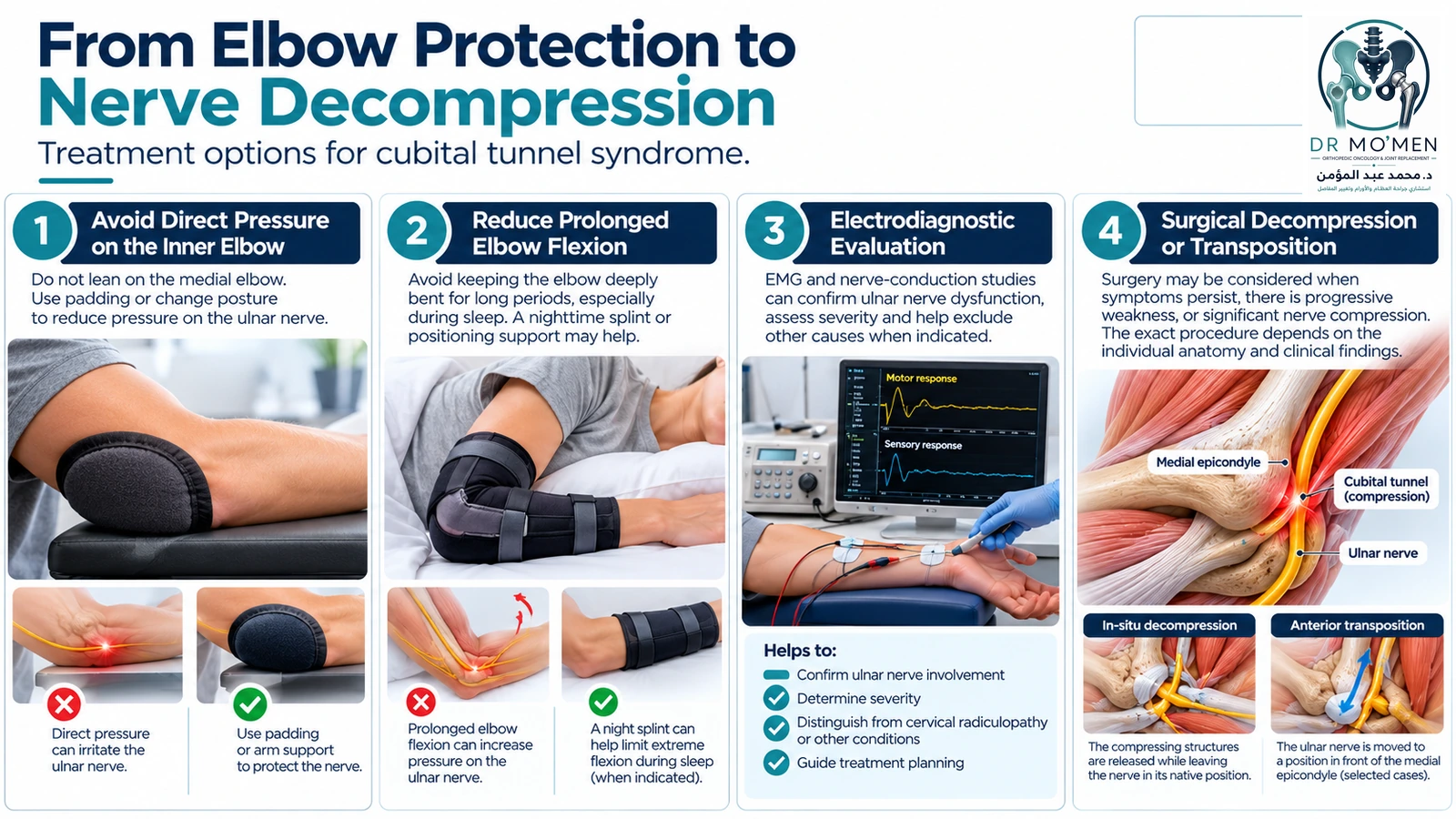
Not every patient requires the same investigation. Electrodiagnostic testing can be useful when the diagnosis is uncertain, symptoms are persistent, there is objective weakness or suspected muscle wasting, the severity of nerve dysfunction needs to be assessed, or another condition such as Cervical radiculopathy must be distinguished.
Do I Need an MRI?
Usually not for a straightforward presentation. MRI or other imaging may be considered when there is concern about previous fracture or deformity, arthritis, a mass or space-occupying lesion, unusual anatomy, recurrent symptoms, or another structural cause of nerve compression. Imaging should be directed by the suspected pathology rather than by finger numbness alone.
When a structural hand or wrist mass is part of the differential, see the related guide on ganglion cysts and other wrist lumps.
How Is Cubital Tunnel Syndrome Treated?
Treatment depends on symptom duration, whether numbness is intermittent or constant, examination findings, weakness or muscle wasting, electrodiagnostic findings when obtained, and the patient’s occupational and functional requirements.
1. Avoid Direct Pressure on the Elbow
Repeatedly leaning on the inner elbow can directly compress the ulnar nerve. Padding the elbow, changing arm-rest position, and avoiding sustained pressure may reduce irritation.
2. Reduce Prolonged Elbow Flexion
Patients whose symptoms worsen during sleep may benefit from changing sleep position or using a simple night strategy that limits prolonged deep elbow flexion. The goal is not rigid immobilization, but avoiding positions that repeatedly reproduce symptoms.
3. Activity Modification
If a particular activity reliably triggers symptoms, modifying posture or technique can help. Examples include changing phone position, improving desk ergonomics, avoiding prolonged elbow pressure and taking breaks from sustained flexion.
When Is Surgery Considered?
Surgery may be considered when there is persistent clinically significant numbness, progressive weakness, objective muscle wasting, functional deterioration, significant nerve dysfunction, or insufficient improvement with an appropriate non-operative strategy.
The objective is to reduce mechanical stress on the ulnar nerve and limit further neurological deterioration where possible. Severe long-standing nerve dysfunction may not recover completely, so progressive motor deficit deserves timely specialist assessment.
What Operations Are Used for Cubital Tunnel Syndrome?
In-Situ Decompression
The structures compressing the ulnar nerve are released while the nerve is left largely in its native anatomical position.
Ulnar Nerve Transposition
The nerve is moved from behind the medial epicondyle to a position in front of it. Transposition may be selected when nerve instability, scarring, deformity, previous surgery or other anatomical factors influence the surgical plan.
Medial Epicondylectomy
In selected cases, part of the medial epicondyle may be addressed to reduce tension or compression around the ulnar nerve. The appropriate procedure depends on the anatomy and clinical situation.
Is Simple Decompression Better Than Ulnar Nerve Transposition?
There is no single operation that is best for every patient. A 2024 systematic review and network meta-analysis of randomized prospective studies did not establish a universally superior technique, and a 2025 update likewise found no clear overall clinical superiority of simple decompression or subcutaneous anterior transposition.
The operative choice should therefore be individualized according to nerve stability, previous surgery, local scarring, elbow deformity, anatomy, and surgeon assessment.
Does Surgery Make the Numbness Disappear Immediately?
Not always. Sensory recovery depends partly on how long and how severely the ulnar nerve has been compressed. Tingling may improve earlier in some patients, whereas constant numbness, weakness and muscle wasting can take longer to recover and may be only partly reversible in severe long-standing disease.
When Should You Seek Specialist Assessment?
- Numbness keeps recurring or becomes constant.
- Symptoms persist despite avoiding provocative positions.
- Grip or pinch is becoming weaker.
- Finger coordination is deteriorating.
- Objects are frequently dropped.
- Visible hand muscle wasting develops.
- Symptoms extend beyond a typical ulnar distribution.
- Neck pain accompanies the hand symptoms.
- The diagnosis is uncertain or surgery has been proposed.
Rapidly progressive weakness or substantial loss of hand function warrants prompt assessment. Sudden arm weakness accompanied by facial weakness, speech difficulty or other acute neurological symptoms should not be attributed to cubital tunnel syndrome and requires urgent medical evaluation.
Cubital Tunnel vs Carpal Tunnel: Quick Comparison
| Feature | Cubital Tunnel | Carpal Tunnel |
|---|---|---|
| Main nerve | Ulnar nerve | Median nerve |
| Common compression site | Inner elbow | Wrist |
| Little finger | Usually affected | Usually spared |
| Ring finger | Ulnar half | Radial half |
| Index finger | Usually spared | Commonly affected |
| Middle finger | Usually spared | Commonly affected |
| Symptoms with elbow bending | Common | Less characteristic |
| Night symptoms | Can occur | Very common |
| Advanced weakness | Intrinsic hand muscles / pinch / finger spreading | Thenar motor weakness |
Specialist Assessment for Ulnar Nerve Symptoms
Dr. Mohammed Abdelmoemen Abuelhadid evaluates orthopedic and complex upper-limb conditions in which the source of numbness or weakness needs to be localized before treatment is selected.
Assessment may need to distinguish cubital tunnel at the elbow, Guyon’s canal at the wrist, cervical nerve-root pathology, or other neurological causes. Existing EMG/NCS, imaging and reports can also be reviewed through the orthopedic second-opinion pathway, particularly for patients outside Egypt who are considering surgery or travelling for further assessment.
Related Hand and Nerve Topics
- Carpal tunnel syndrome and hand numbness
- Ganglion cyst of the hand and wrist
- Fractures & General Orthopedics patient-education hub
Selected Evidence Sources
- American Society for Surgery of the Hand — Cubital Tunnel Syndrome
- Abourisha E, et al. Surgical management of cubital tunnel syndrome: systematic review and meta-analysis of randomized trials. J Orthop. 2024;53:41–48.
- Simple decompression vs subcutaneous anterior transposition of the ulnar nerve: 2025 update.
Frequently Asked Questions
Which fingers are affected by cubital tunnel syndrome?
The characteristic sensory pattern is the little finger and the ulnar half of the ring finger because these digits are supplied by the ulnar nerve.
Why do my little and ring fingers go numb when I sleep?
Keeping the elbow deeply bent for prolonged periods during sleep can increase tension and pressure around the ulnar nerve at the cubital tunnel.
Is cubital tunnel syndrome the same as carpal tunnel syndrome?
No. Cubital tunnel syndrome affects the ulnar nerve at the elbow, while carpal tunnel syndrome affects the median nerve at the wrist.
Can symptoms that look like cubital tunnel come from the neck?
Yes. Cervical radiculopathy can produce similar numbness or weakness, so the neck may need evaluation when symptoms are atypical or extend beyond a typical ulnar pattern.
Do I need surgery for cubital tunnel syndrome?
Not necessarily. Mild or intermittent symptoms can often initially be managed by reducing pressure and prolonged elbow flexion. Surgery becomes more relevant when symptoms persist, neurological function deteriorates, or significant nerve dysfunction is present.
Need assessment for ring- or little-finger numbness?
For appointments or imaging/nerve-study review, contact the clinic on 01021690693.