
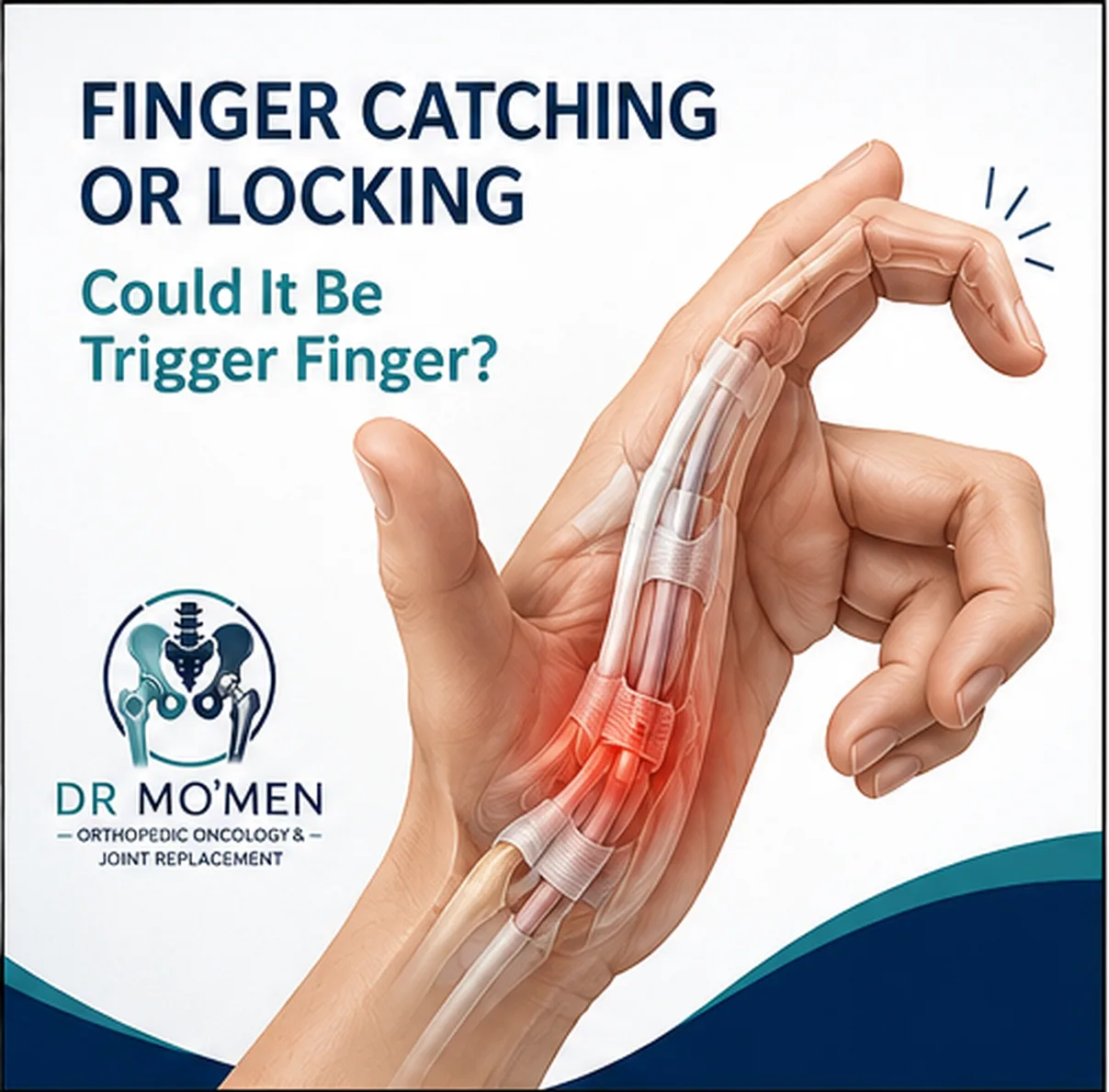
A finger that catches, clicks, or becomes stuck during bending and straightening may have trigger finger. Some patients need the other hand to straighten the finger; others mainly notice morning stiffness, a painful click, or tenderness at the base of the finger in the palm.
Any finger can be affected, including the thumb.
What Is Trigger Finger?
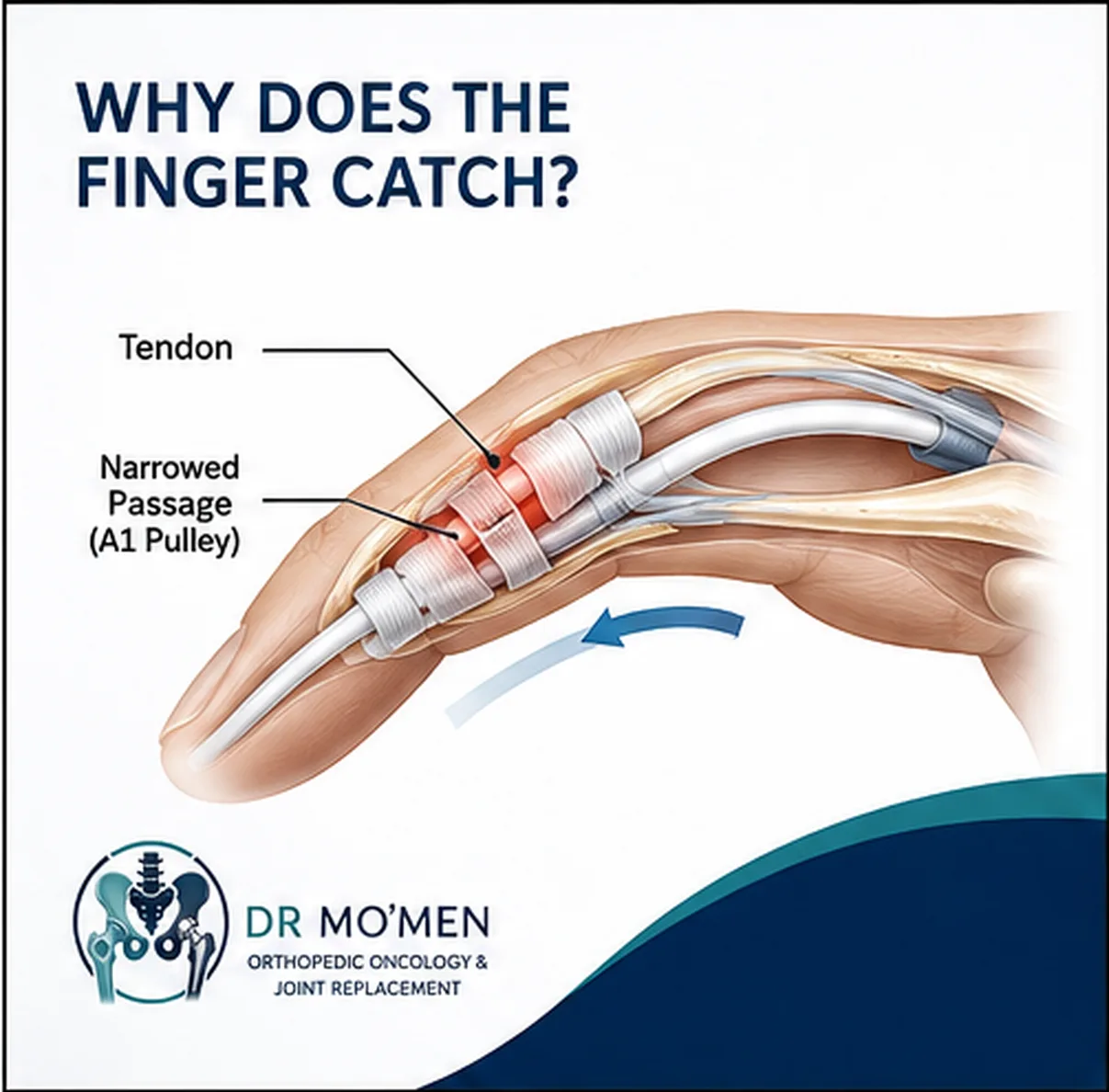
Finger tendons normally glide through a smooth tunnel-like sheath. In trigger finger, part of this passage becomes narrowed or swollen, so the tendon no longer glides smoothly. A thickened area can also develop in the tendon.
The medical term is stenosing tenosynovitis.
What Are the Symptoms?
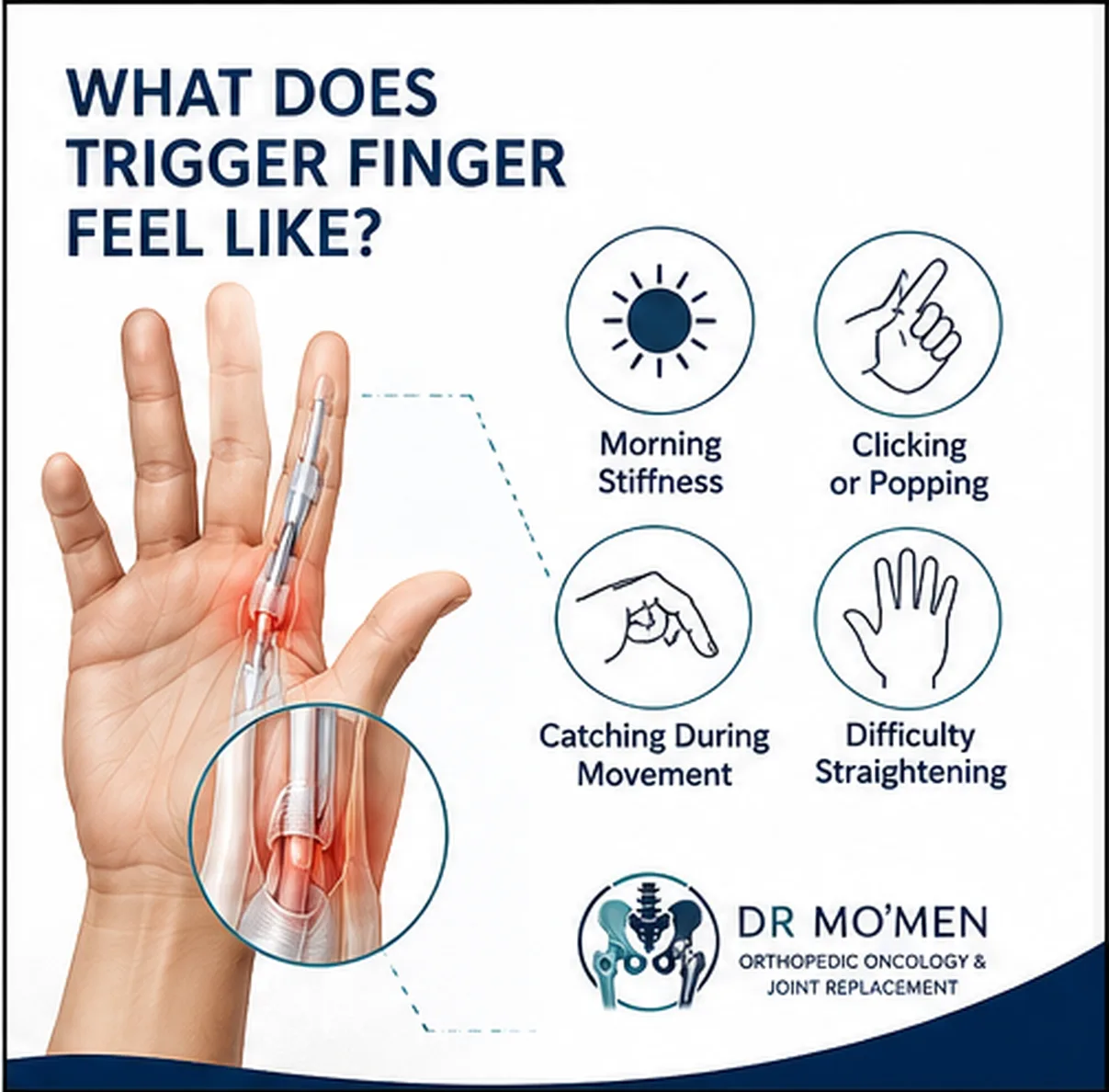
Typical symptoms include:
- Morning finger stiffness.
- Clicking or popping with movement.
- Pain or tenderness at the base of the finger.
- A small tender bump in the palm.
- Catching during bending or straightening.
- A finger that locks in a bent position.
- In severe cases, a finger that cannot straighten normally.
Why Does the Finger Catch?
The tendon has difficulty passing through a narrowed part of its sheath. The sheath can become irritated or swollen, and a small thickened area may develop in the tendon, making smooth movement more difficult.
Who Is More Likely to Develop Trigger Finger?
Risk is associated with repetitive or forceful gripping, diabetes, rheumatoid arthritis, some other medical conditions, and female sex. These are risk factors, not proof of the diagnosis.
If pain is centered at the outer elbow rather than the finger or palm, see Tennis Elbow for a different tendon-overload pattern.
Can the Thumb Be Affected?
Yes. Triggering of the thumb is commonly called trigger thumb.
Is Every Locking Finger a Trigger Finger?
No. Other conditions can produce pain, stiffness, or abnormal finger movement, including finger-joint arthritis, tendon injury after trauma, joint or ligament injury, Dupuytren contracture, significant swelling after injury, or neurological disorders in selected cases.
How Is Trigger Finger Diagnosed?
Diagnosis is usually clinical. The clinician may ask you to open and close the hand while assessing the smoothness of movement, pain location, clicking or locking, a tender nodule, and whether the finger can fully straighten.
Do I Need an X-Ray?
Usually not in a typical case. X-rays may be useful after trauma, with significant joint stiffness or deformity, or when arthritis or another bone or joint problem is suspected.
Do I Need MRI or Ultrasound?
MRI is rarely required for a typical trigger finger. Ultrasound may occasionally help when the diagnosis is uncertain or when image guidance is being used for a procedure.
How Is Trigger Finger Treated?
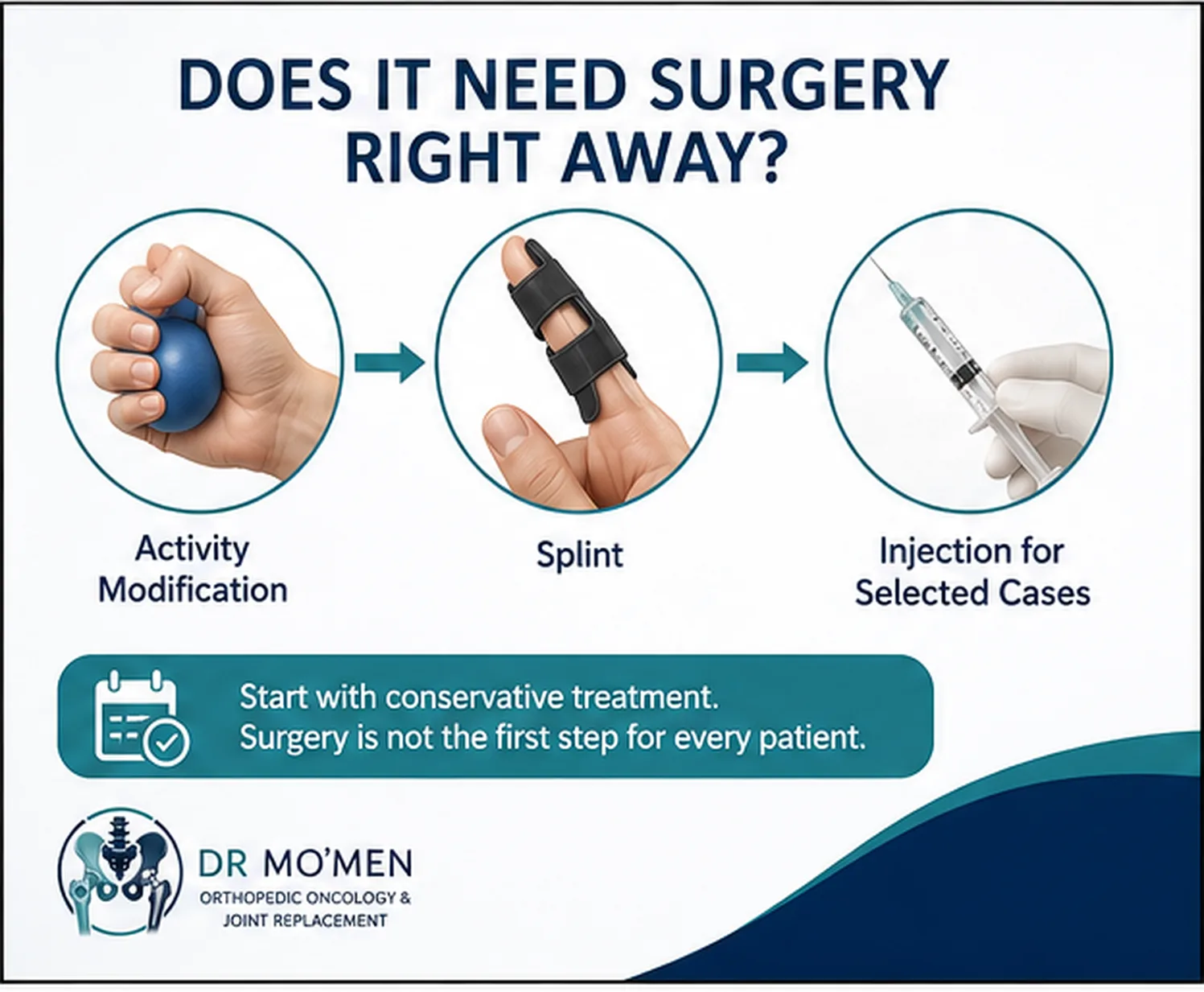
Treatment depends on symptom severity, duration, whether the finger locks, and how much the problem affects hand function.
1. Activity Modification
Reducing repeated forceful gripping or prolonged use of vibrating tools can help some patients. The goal is to reduce activities that clearly trigger symptoms, not to stop using the hand completely.
2. Splinting
A splint can help keep the affected finger in a comfortable position and reduce repeated triggering. It is a recognized nonsurgical option and may be particularly useful at night for some patients.
3. Gentle Movement
Gentle finger movement can help maintain mobility. Repeatedly forcing a painful locked finger is not the goal.
4. Pain Medication
Pain relievers or anti-inflammatory medication may help appropriate patients with pain, but medication does not always correct the mechanical catching itself.
Are Steroid Injections Useful?
A corticosteroid injection can be helpful for selected patients. It is placed near or into the tendon sheath to reduce swelling and improve tendon gliding. Not every patient needs an injection, and diabetes, previous injections, symptom severity, and skin infection should be considered.
What If the Finger Is Locked?
A finger that becomes persistently locked or cannot straighten should be assessed rather than repeatedly forced. Severe or fixed locking can make intervention more appropriate.
What Is Percutaneous Release?
In selected patients, the tight tissue around the tendon can be released through the skin with a needle or small specialized instrument. Ultrasound can be used to guide the procedure in some settings.
When Is Surgery Considered?
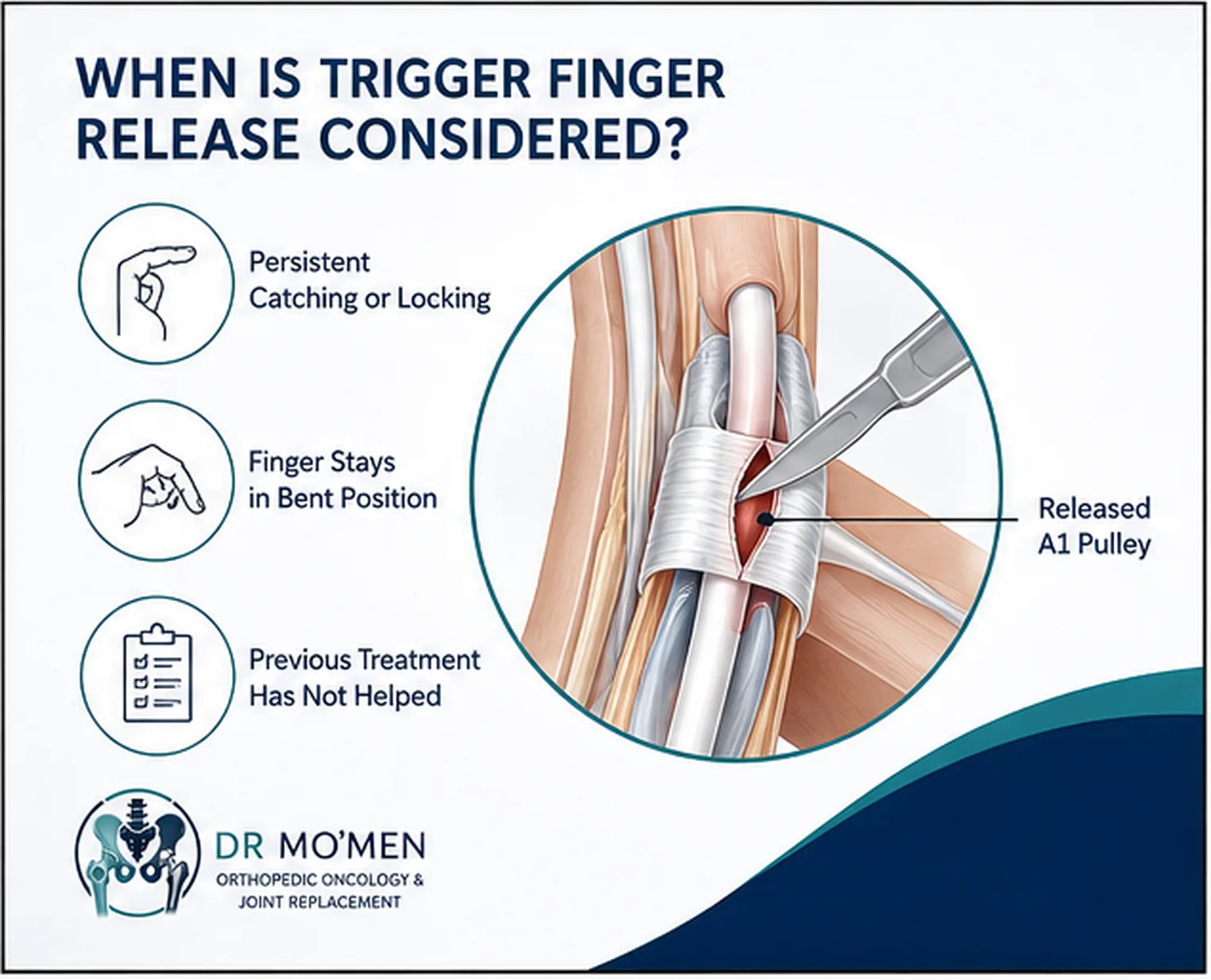
Surgery is not required for every trigger finger. Release may be considered when triggering persists despite appropriate nonsurgical care, symptoms repeatedly return, the finger becomes persistently locked, hand function is significantly affected, or symptoms are severe.
What Is Trigger Finger Release?
A small incision is made near the base of the affected finger and the narrowed part of the tendon sheath is released so the tendon can glide more freely. The tendon itself is not intentionally cut.
What Happens After Surgery?
The exact plan varies, but common goals include early appropriate finger movement, wound care, swelling control, avoiding heavy gripping initially, and restoring motion.
When Does a Finger Problem Need Faster Assessment?
Trigger finger is not usually an emergency. Seek earlier assessment after significant trauma or an open wound, new deformity, severe sudden swelling, increasing redness or warmth, fever or chills, rapidly worsening pain, loss of feeling, a pale or blue finger, or inability to move the finger after injury. After a significant hand injury, the Fracture Care service may also be relevant.
When Should You See an Orthopedic Specialist?
Assessment is reasonable when catching or locking continues, the finger begins to stay bent, symptoms interfere with work or daily activity, splinting and activity modification have not helped, an injection is being considered, symptoms returned after an injection, several fingers are affected, or the diagnosis remains unclear.
Role of Dr. Mo’men in Persistent or Unclear Cases
Assessment can determine whether the catching is truly caused by trigger finger or whether a joint, tendon, or other problem is contributing. Evaluation may include examining tendon motion, deciding whether imaging is needed, reviewing splinting, discussing corticosteroid injection, identifying cases appropriate for trigger finger release, and reviewing recurrent symptoms after previous treatment.
For appointments or imaging review: 01021690693
Patients outside Egypt or with an unclear diagnosis can use the Second Opinion pathway.
Related hand and nerve symptoms
If numbness or tingling is part of the problem, see Carpal tunnel syndrome and hand numbness for the median-nerve pattern and differential diagnosis.