
When a suspicious bone lesion appears on an X-ray, MRI, CT scan, or PET-CT, patients understandably ask whether it is cancer. A second question is equally important: who should plan the biopsy, and through which route should the sample be taken?
In orthopedic oncology, biopsy is part of the treatment strategy. A random route, an unplanned excision, or sampling before the required imaging can create avoidable problems for later tumor removal and reconstruction.
What Is a Bone Biopsy?
A bone biopsy removes a small tissue sample from a suspicious lesion so that a pathologist can examine it. Depending on the case, pathology may help distinguish a benign lesion, a primary malignant bone tumor, metastatic disease, infection, a marrow-related malignancy, or another condition.
Before biopsy or travel: request specialist review
For a suspected bone or soft-tissue tumor, international patients should avoid unplanned biopsy when specialist review can reasonably be obtained first.
The result is interpreted together with the patient’s age, symptoms, X-rays, MRI or CT findings, and any relevant cancer history. Pathology should not be interpreted in isolation when the imaging and clinical picture do not match.
When Is a Bone Biopsy Needed?
Not every bone lesion requires biopsy. Some lesions have typical benign features and can be monitored. Biopsy may be considered when the diagnosis remains uncertain or when the result will change management, particularly with:
- A suspicious or aggressive-appearing lesion on imaging.
- Persistent bone pain with an abnormal X-ray or MRI.
- Bone destruction, cortical breakthrough, or a soft-tissue component.
- An unexplained pathological fracture.
- A new bone lesion in a patient with cancer when the diagnosis is not secure.
- A possible infection or another condition that can mimic a tumor.
Symptoms such as persistent pain, night pain, swelling, or fracture after minor trauma are discussed in early warning signs of bone tumors.
Why the Biopsy Route Matters
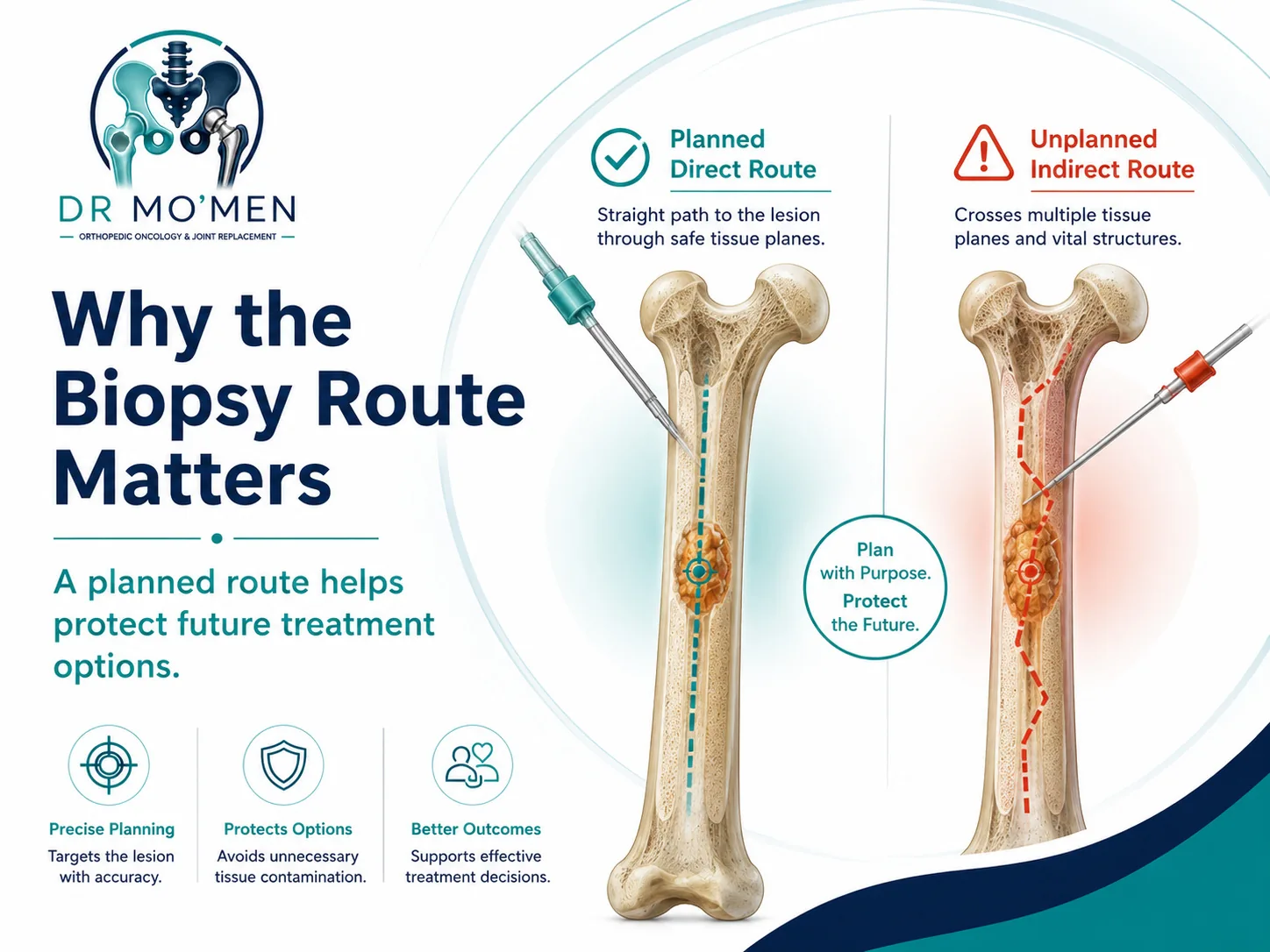
The biopsy tract—the pathway through the skin and deeper tissues—is treated as potentially contaminated by tumor cells. If definitive tumor surgery is required, the tract may need to be removed with the specimen.
A poorly positioned route may cross tissue planes that would otherwise be preserved, pass close to important nerves or vessels, enter an uninvolved compartment, or complicate the future incision and reconstruction. For this reason, biopsy should ideally be coordinated with the orthopedic oncology team responsible for definitive treatment.
What Should Happen Before Biopsy?
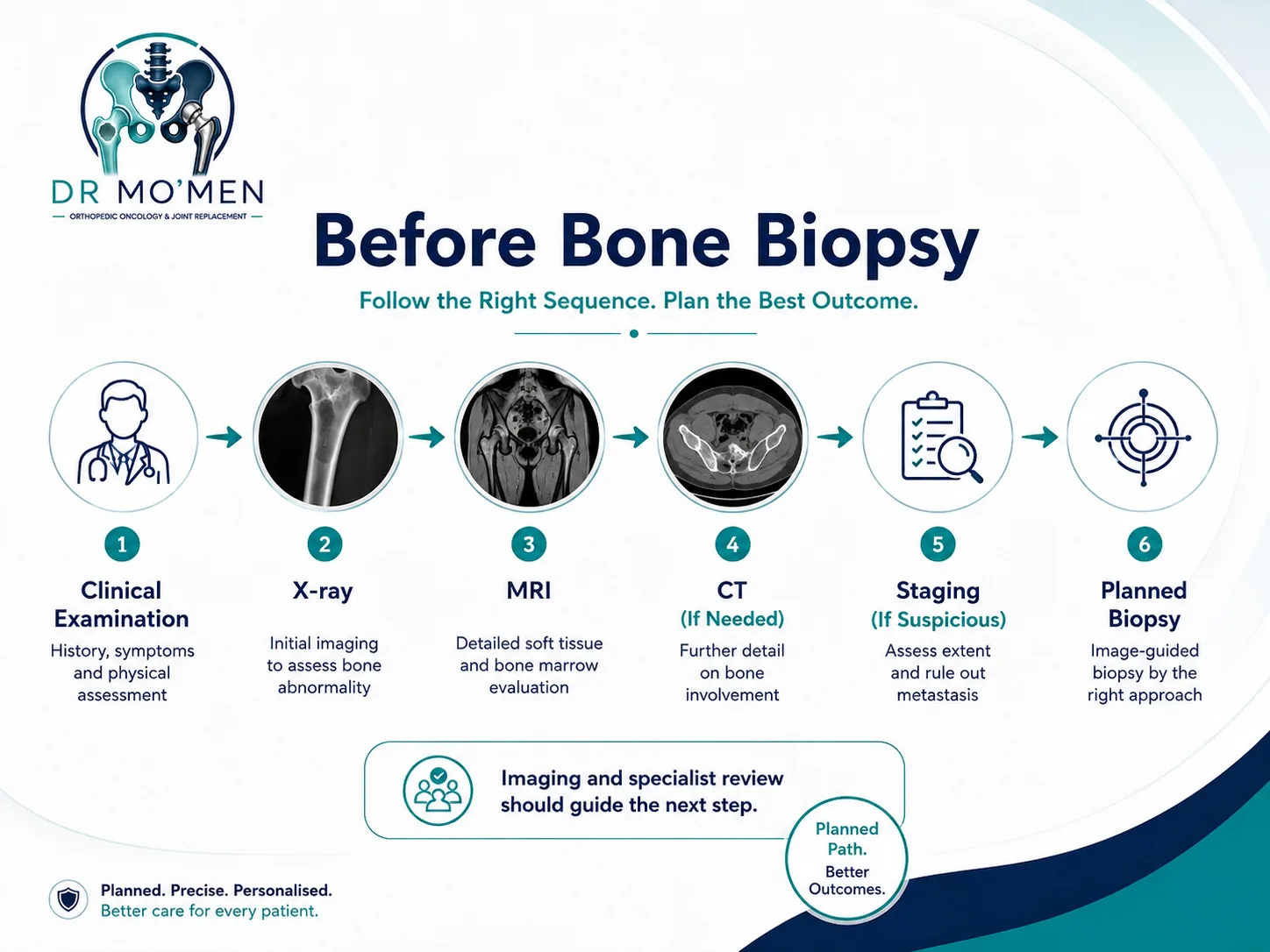
- Clinical review: age, symptom pattern, previous cancer, infection risk, trauma, medicines, and general health.
- Physical examination: swelling, mass, tenderness, limb function, joint movement, and neurological or vascular findings.
- Plain X-rays: lesion location, margins, matrix, periosteal reaction, cortical damage, and fracture risk.
- MRI: marrow and soft-tissue extent, relation to neurovascular structures, and selection of viable tissue for sampling.
- CT: cortical detail, mineralization, complex anatomy, or image-guided targeting when appropriate.
- Staging or laboratory tests: selected according to the suspected diagnosis.
In many suspected bone tumors, MRI should be obtained before biopsy because post-biopsy bleeding and tissue change can make interpretation more difficult. The imaging pattern also helps distinguish benign and malignant bone tumors.
Image-Guided Needle Biopsy vs Open Biopsy
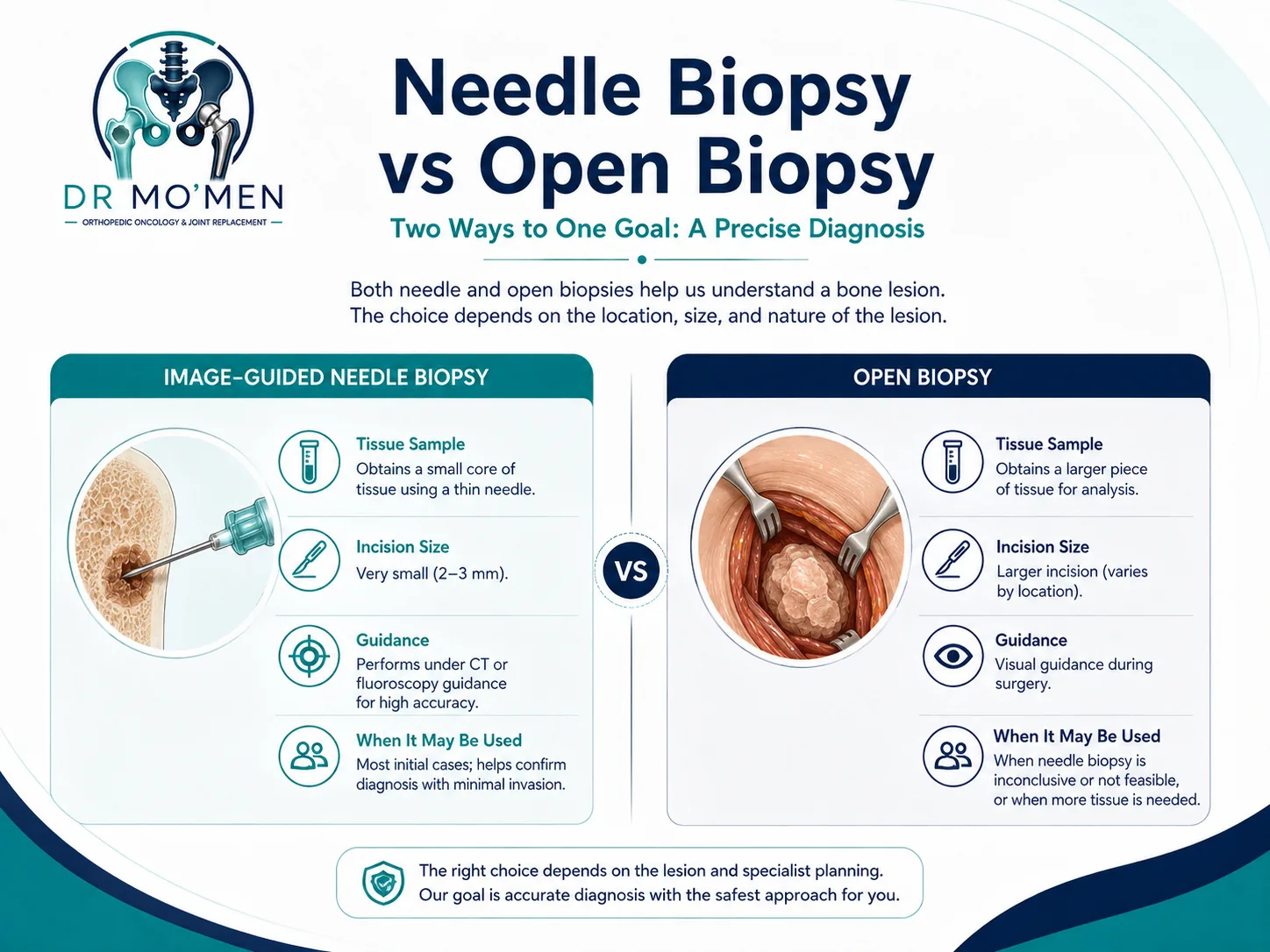
| Point | Image-guided core needle biopsy | Open biopsy |
|---|---|---|
| Access | Small skin entry under CT or ultrasound guidance when suitable | Planned surgical incision |
| Tissue | Core samples preserving tissue architecture | Larger tissue sample |
| Typical role | Appropriate for many bone and soft-tissue lesions | Selected cases, including some non-diagnostic or technically unsuitable needle biopsies |
| Planning | Critical | Critical |
Neither method is automatically superior for every patient. The choice depends on the lesion, expected diagnosis, required tissue, access route, and local expertise.
Common Mistakes to Avoid
- Unplanned removal of the mass: excising a suspicious lesion without diagnosis can contaminate tissues and change the definitive operation.
- Biopsy before adequate imaging: the full lesion extent and safest route may not yet be known.
- A route crossing unnecessary compartments: this can enlarge the tissues requiring later resection.
- Sampling necrotic or unrepresentative tissue: this may produce a non-diagnostic result and require repeat biopsy.
- Assuming infection, trauma, or metastasis without correlation: these conditions can mimic one another.
What Happens After the Biopsy?
The sample is reviewed by pathology. Additional tests may include immunohistochemistry, molecular testing, microbiology, or cytogenetic studies depending on the suspected diagnosis. If the pathology result does not fit the imaging and clinical findings, multidisciplinary review or repeat sampling may be required before treatment.
Treatment may range from observation to curettage, wide resection, systemic oncology treatment, or limb salvage surgery and reconstruction. The correct pathway depends on the final diagnosis rather than the scan alone.
When to Seek an Orthopedic Oncology Opinion
Specialist review is particularly important when imaging uses terms such as “aggressive bone lesion,” “cortical destruction,” “soft-tissue mass,” or “suspected malignancy”; when a previous biopsy was inconclusive; when surgery has been proposed without a secure diagnosis; or when a lesion lies near the pelvis, hip, knee, shoulder, spine, or major nerves and vessels.

Dr. Mo’men’s Role in Bone Biopsy Planning
Dr. Mohammed Abdelmoemen Abuelhadid focuses on orthopedic oncology, bone and soft-tissue tumors, limb salvage, metastatic bone disease, and complex orthopedic second opinions. Review may help determine whether biopsy is necessary, identify the appropriate route, coordinate pathology, and plan reconstruction when needed.
Patients outside Egypt can request an online orthopedic second opinion using available scans, reports, and previous treatment records before deciding whether travel or in-person assessment is required.
Medically reviewed by Dr. Mohammed Abdelmoemen Abuelhadid
Lecturer of Orthopedic Surgery at Ain Shams University, with clinical focus on orthopedic oncology, limb salvage, metastatic bone disease, and complex reconstruction. About the doctor · ORCID profile
Authoritative medical sources
Request an appointment or imaging review
For specialist evaluation, a clinic appointment, or preliminary review of available scans and reports, contact the clinic using the appropriate option.