For a focused guide on pain that repeatedly wakes a patient from sleep, see Night Bone Pain: Causes and Red Flags.
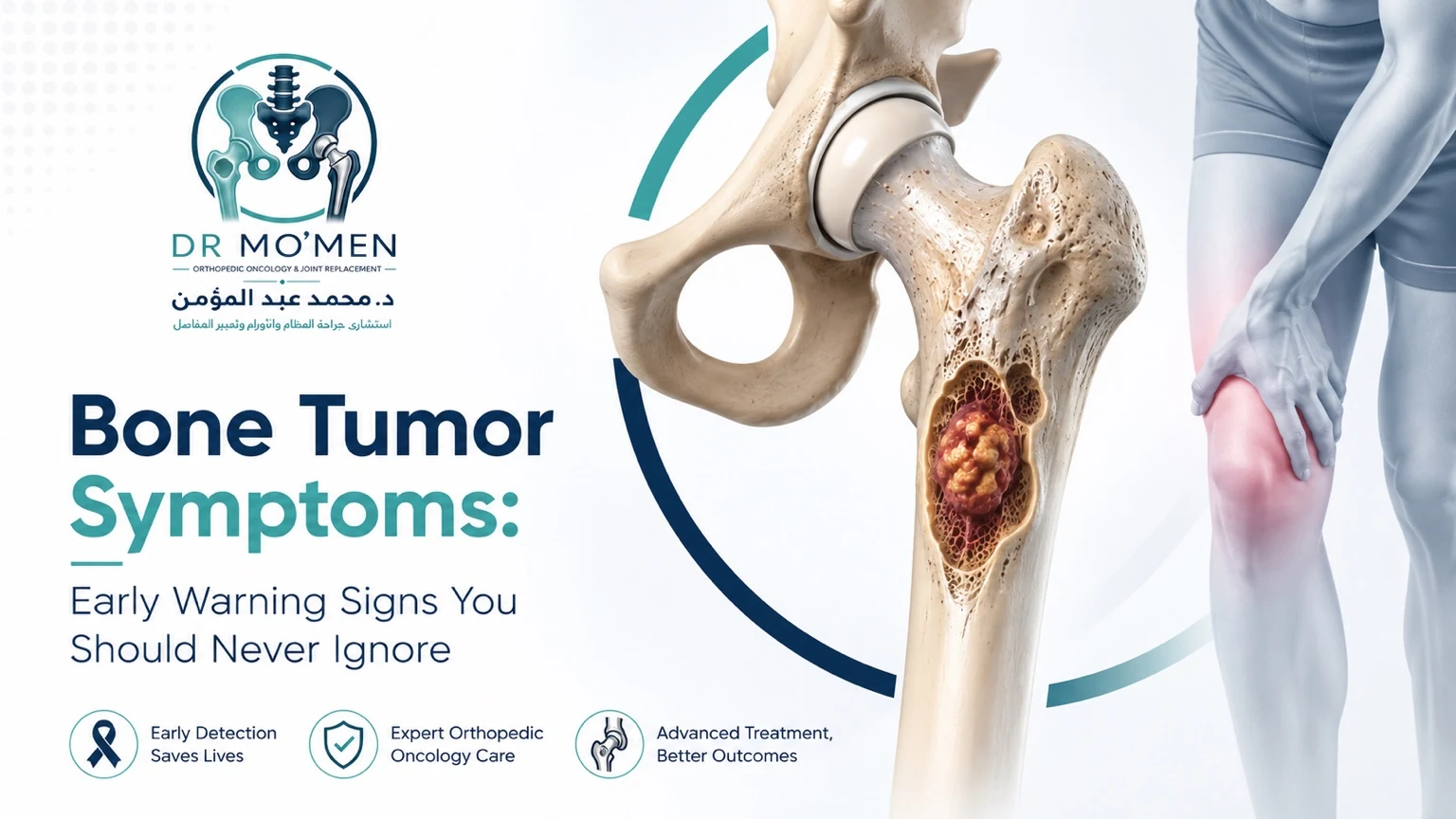
Bone pain is common and is usually caused by muscle strain, arthritis, sports injuries, or minor trauma. In a smaller group of patients, persistent or unexplained pain may be associated with a bone tumor or another condition that needs specialist assessment.
Many bone tumors are benign. However, symptoms alone cannot reliably distinguish a harmless lesion from an aggressive tumor. Diagnosis depends on clinical examination, plain X-rays, MRI or CT when indicated, and a carefully planned biopsy in selected cases.
What Is a Bone Tumor?
A bone tumor is an abnormal growth of cells within or involving bone. Bone lesions are commonly grouped as:
- Benign bone tumors: non-cancerous lesions that do not spread to distant organs, although some can grow locally, weaken bone, or cause pain.
- Primary malignant bone tumors: cancers that originate in bone or related tissues.
- Metastatic bone disease: cancer that started in another organ and later spread to bone.
Not every abnormal X-ray finding is cancer. Some lesions are incidental and need observation only; others require planned surgery, biopsy, or oncology treatment. Patients with a suspicious lesion should be evaluated through an orthopedic oncology pathway before an unplanned procedure.
Common Symptoms and Warning Signs
Symptoms vary according to tumor type, location, size, fracture risk, and involvement of nearby joints, muscles, nerves, or soft tissues. The following features do not automatically mean cancer, but they should prompt appropriate evaluation.
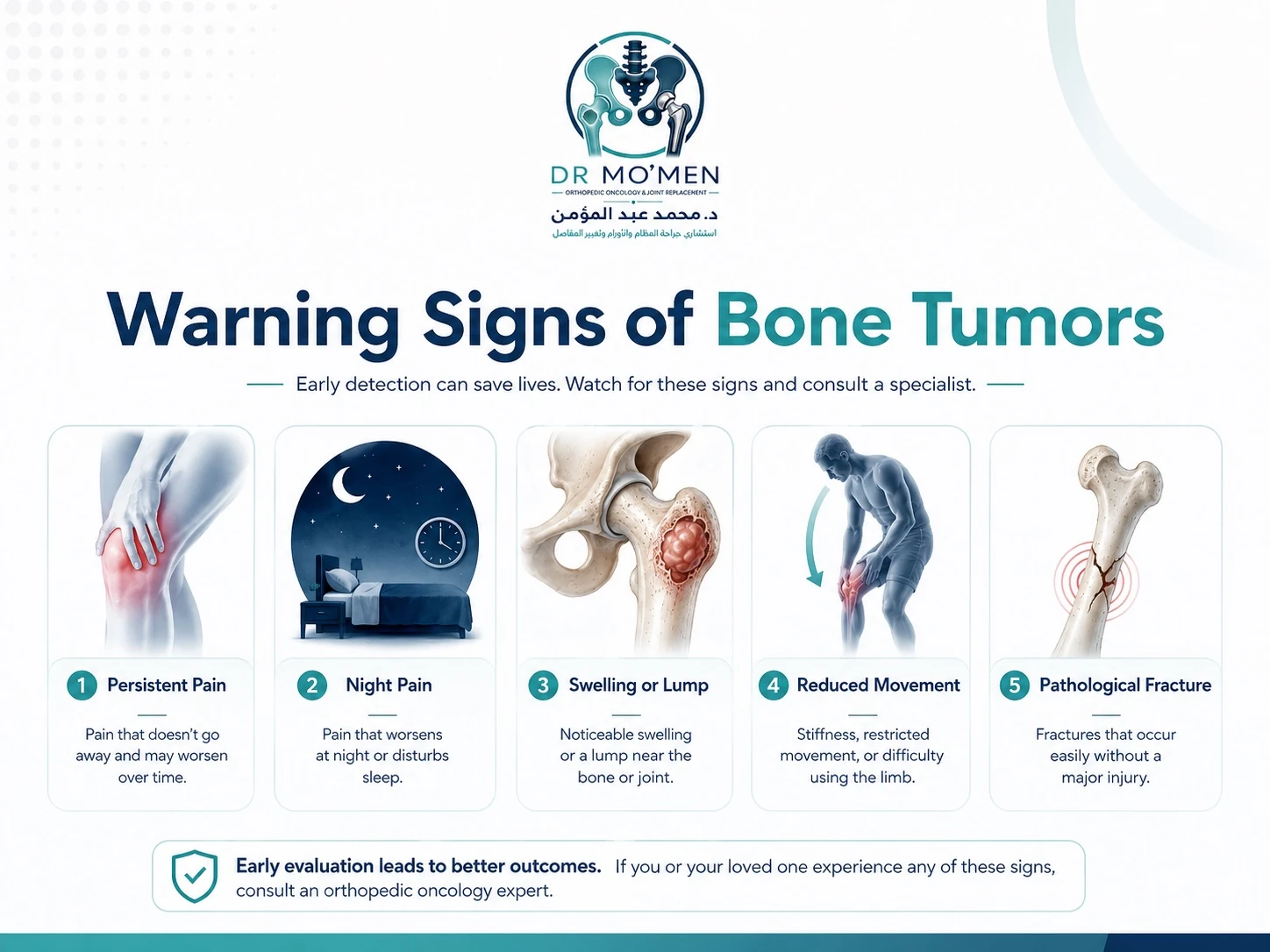
Persistent or Progressive Bone Pain
A concerning pattern is pain that continues, gradually becomes stronger, recurs despite rest and simple treatment, or repeatedly wakes the patient from sleep. The pain may feel deep and localized rather than like a superficial muscle ache.

Swelling or a Growing Lump
Some tumors cause visible swelling or a firm mass near a bone or joint. A lump that is enlarging, painful, deep, or associated with reduced function should be examined rather than observed for months without imaging.
Reduced Movement or Limping
Lesions close to a joint can produce stiffness, difficulty bending or straightening a limb, limping, or reduced walking tolerance. These symptoms are common in many orthopedic conditions, so clinical examination remains essential.
Pathological Fracture
A pathological fracture occurs when bone breaks through an area weakened by disease. It may follow a simple fall, twisting injury, or trauma that would not usually fracture healthy bone. Assessment should consider an underlying lesion, particularly in older adults or people with a previous cancer diagnosis. Related care may involve metastatic bone disease assessment or limb-salvage reconstruction, depending on the diagnosis.
Neurological Symptoms
A spinal lesion or pressure on nearby nerves may cause numbness, tingling, weakness, difficulty walking, or severe back pain. New loss of bladder or bowel control, rapidly progressive weakness, or significant neurological change requires emergency medical assessment.
When Should You See a Specialist?
Arrange specialist evaluation when there is:
- Persistent bone pain that is not improving over several weeks.
- Progressively worsening pain or pain that repeatedly wakes the patient.
- A growing lump or unexplained swelling.
- A fracture after minimal trauma.
- Persistent symptoms despite routine treatment.
- New bone pain in a patient with a previous cancer diagnosis.
- An imaging report describing an aggressive lesion, cortical destruction, or a soft-tissue mass.
Early evaluation does not mean that cancer is present. It means the symptoms deserve an organized assessment to avoid delay or inappropriate treatment. Patients outside Egypt or those considering major surgery can use the orthopedic second-opinion service for preliminary review of available scans and reports.
How Are Bone Tumors Diagnosed?
Assessment should follow a logical sequence. Surgery should not precede proper characterization of the lesion when a tumor is suspected.
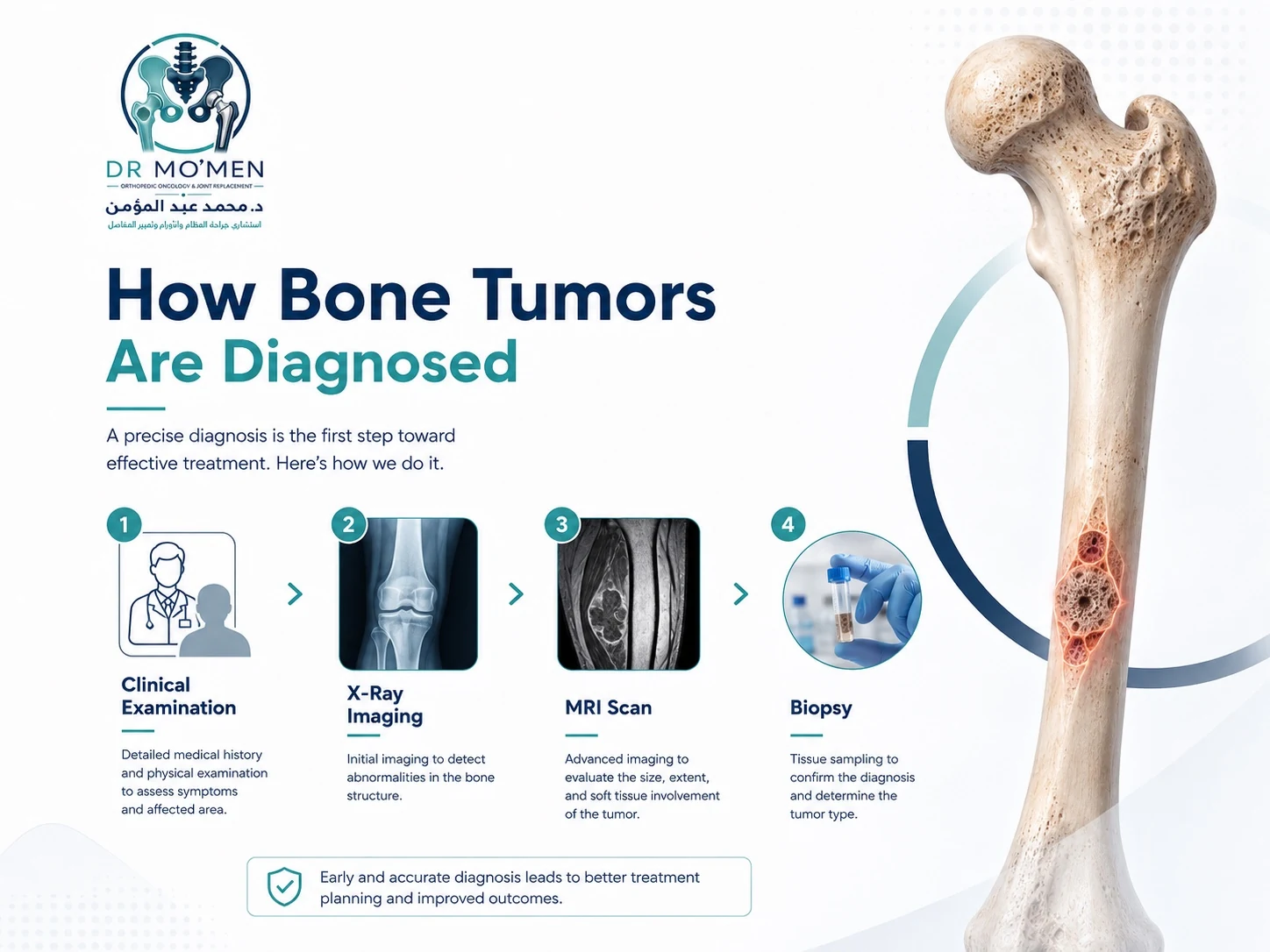
Clinical Examination
The clinician reviews the pain pattern, duration, swelling, joint movement, limb function, neurological findings, previous cancer history, and prior treatment.
Plain X-rays
Plain X-rays are usually the first imaging step. They help assess lesion location, margins, bone destruction, periosteal reaction, mineralized matrix, and fracture risk.
MRI or CT
MRI is useful for defining marrow and soft-tissue extent and the relationship to joints, muscles, nerves, and blood vessels. CT can clarify cortical detail, mineralization, and complex anatomy such as the pelvis.
Carefully Planned Biopsy
When tissue diagnosis is required, the biopsy track should be placed so it can be removed during definitive surgery if necessary. A poorly planned biopsy or unplanned excision can contaminate tissue planes and complicate later reconstruction. Learn more about carefully planned bone biopsy.
Treatment Options
There is no single treatment for every bone tumor. Management may include observation, planned curettage, bone graft or cement, internal fixation, wide resection, limb-salvage reconstruction, joint replacement reconstruction, chemotherapy, radiotherapy, or treatment directed at a cancer that has spread to bone.
A benign lesion may need follow-up only. A locally aggressive benign tumor may require surgery to reduce recurrence risk and protect the bone. A malignant tumor requires multidisciplinary staging and treatment planning. A metastatic lesion may need stabilization, reconstruction, systemic therapy, radiotherapy, or a combination based on pain, fracture risk, and the patient’s general condition.
Why Timely Diagnosis Matters
Timely diagnosis helps the team plan the correct biopsy, preserve uninvolved tissue, assess fracture risk, and choose an appropriate reconstruction. In orthopedic oncology, the first procedure can influence later limb-salvage options and surgical margins.
The Importance of Multidisciplinary Care
Bone tumor management often involves orthopedic oncology surgeons, musculoskeletal radiologists, pathologists, medical oncologists, radiation oncologists, and rehabilitation specialists. Coordination helps confirm the diagnosis, choose the safest biopsy route, stage the disease, and sequence treatment appropriately.

Dr. Mo’men’s Role in Complex Bone Tumor Cases
Dr. Mohammed Abdelmoemen Abuelhadid focuses on orthopedic oncology, limb-salvage surgery, bone and soft-tissue tumors, metastatic bone disease, biopsy planning, reconstruction after tumor removal, and complex orthopedic second opinions.
Patients from Egypt and other countries can request a preliminary review of X-rays, MRI scans, CT scans, pathology reports, and previous operative notes before travelling. This is particularly relevant when the diagnosis is uncertain, biopsy is being considered, or a major operation has been proposed.
Medically reviewed by Dr. Mohammed Abdelmoemen Abuelhadid
Lecturer of Orthopedic Surgery at Ain Shams University, with clinical focus on orthopedic oncology, limb salvage, and complex reconstruction. About the doctor · ORCID profile
How this article was reviewed
This patient-education article was reviewed for clinical accuracy, patient safety, and decision-making clarity by Dr. Mohammed Abdelmoemen Abuelhadid. It is intended to support, not replace, clinical examination and review of the actual imaging and reports.
Authoritative medical sources
Request an appointment or imaging review
For a clinic visit or preliminary review of available scans and reports, contact the clinic using the appropriate option.