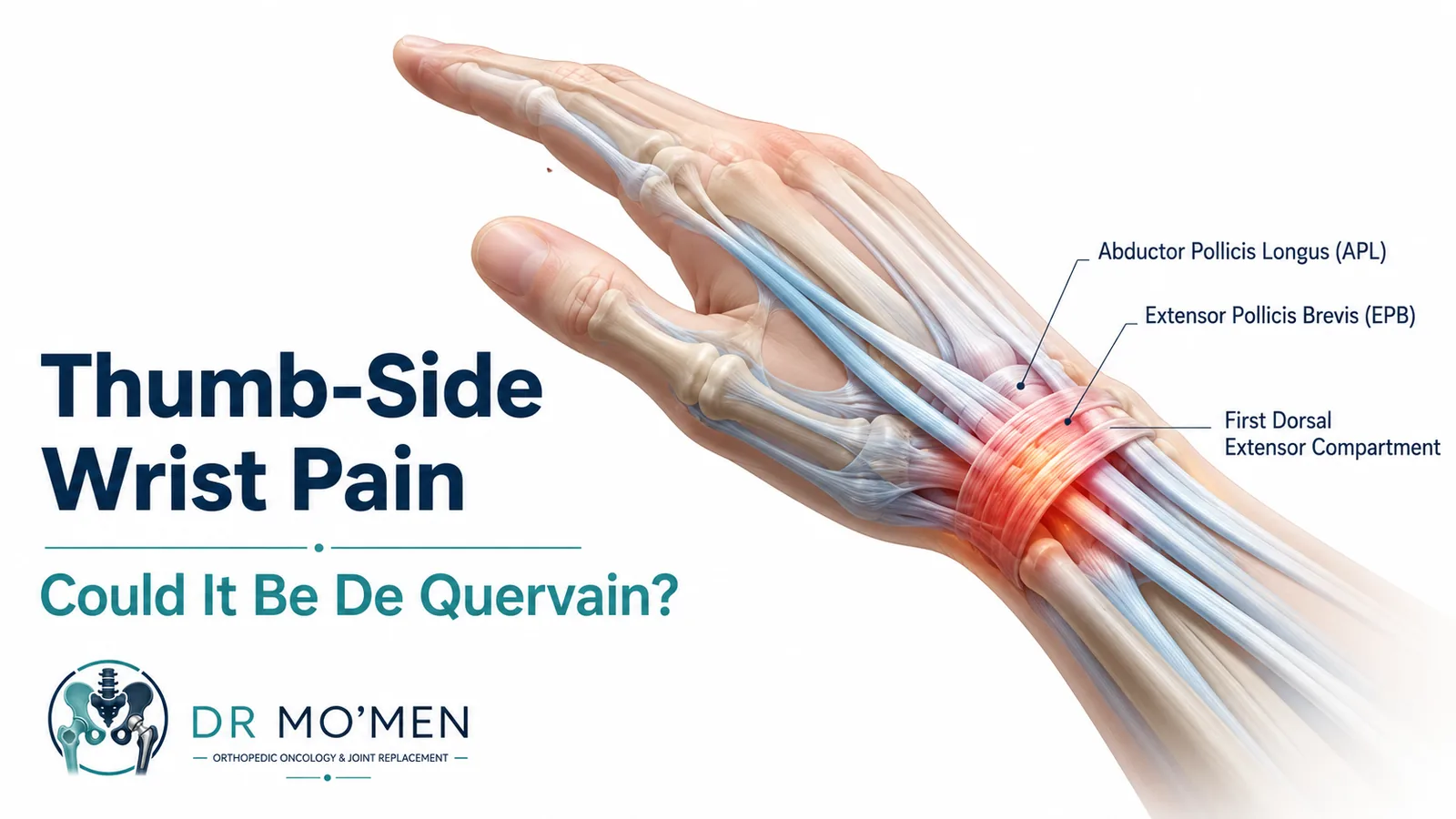
Pain on the thumb side of the wrist that becomes worse when gripping, lifting, twisting the wrist, moving the thumb, or carrying a baby may be caused by De Quervain tenosynovitis.
What Is De Quervain Tenosynovitis?
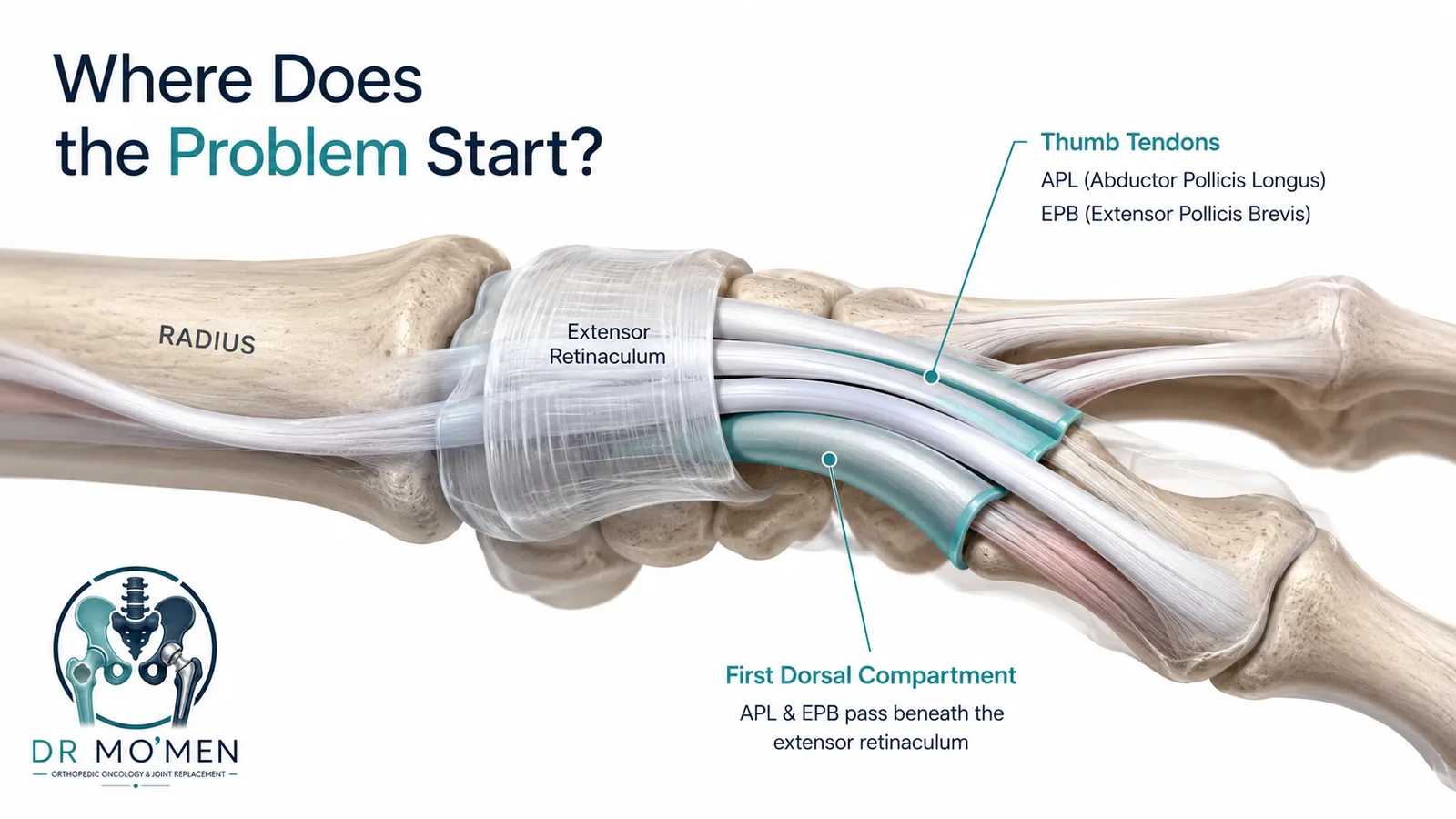
Two tendons travel together through the first extensor compartment on the thumb side of the wrist: abductor pollicis longus (APL) and extensor pollicis brevis (EPB). In De Quervain disease, the tunnel and surrounding tissues can become thickened, making tendon gliding more difficult. Although the term “tenosynovitis” suggests inflammation, persistent disease can involve thickening and chronic tissue change as well as irritation.
What Does It Feel Like?
Typical symptoms include thumb-side wrist pain or tenderness, pain with gripping or lifting, pain with thumb or wrist movement, local swelling, difficulty using the thumb, and occasionally catching or snapping. Pain can extend a short distance into the forearm.
Why Does It Hurt When Carrying a Baby?
De Quervain disease has a recognized association with pregnancy and the postpartum period. Repeatedly lifting an infant with the wrist bent and the thumb spread away from the hand can add load to these tendons. Hormonal and fluid changes may also contribute. Patients who are pregnant or breastfeeding should tell their clinician before medication or injection treatment is selected.
Is Phone Use the Cause?
Not necessarily. Frequent thumb and wrist activity may aggravate symptoms in some patients, but De Quervain disease does not have one single proven cause.
Is Every Pain at the Base of the Thumb De Quervain Disease?
No. Thumb CMC arthritis, trigger thumb, scaphoid fracture after trauma, and nerve irritation can produce pain or abnormal movement in the same general region. If the main problem is thumb clicking or locking during bending and straightening, see the Trigger Finger article. Thumb-side wrist pain after a fall should not automatically be labelled tendon inflammation; the Scaphoid Fracture article explains why fracture assessment may be needed.
How Is De Quervain Tenosynovitis Diagnosed?
Diagnosis is usually clinical. Assessment can include the exact site of tenderness, swelling, thumb and wrist movement, grip, nearby joints, and neurological examination when appropriate. Clinicians may use a provocative maneuver such as a Finkelstein or Eichhoff test, but repeatedly forcing a painful self-test at home does not replace examination.
Do I Need an X-Ray?
Not usually to confirm De Quervain disease itself. X-rays can be useful after trauma, when fracture or thumb-base arthritis is suspected, or when unusual stiffness, deformity, or an uncertain diagnosis needs broader assessment.
Do I Need Ultrasound or MRI?
Most typical cases do not require MRI. Ultrasound can be useful when the diagnosis is uncertain, symptoms persist despite treatment, tendon anatomy needs closer assessment, or image-guided injection is being considered.
How Is De Quervain Tenosynovitis Treated?
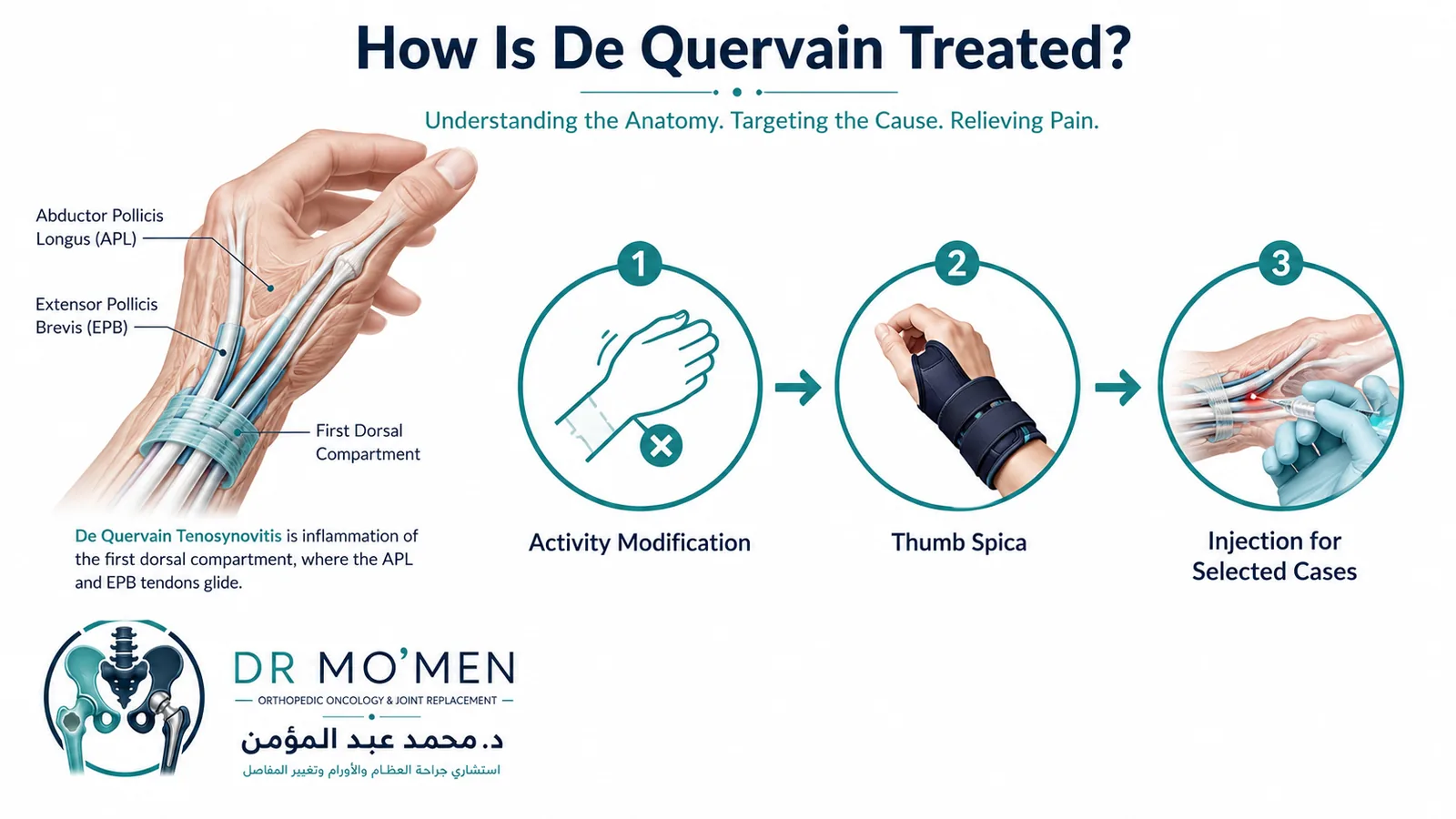
1. Activity Modification
Temporarily modify activities that clearly provoke pain, such as repeated gripping, lifting with the wrist sharply bent, or painful exercise. The goal is load reduction, not complete long-term immobilization.
2. Thumb Spica Splint
A thumb-spica splint supports the wrist and thumb and can reduce painful tendon movement during a symptomatic period.
3. Cold Packs and Medication
Cold packs may provide short-term symptom relief. Appropriate pain-relieving or anti-inflammatory medication depends on the patient’s medical history, pregnancy or breastfeeding status, kidney and stomach problems, cardiovascular disease, and other medications.
Are Corticosteroid Injections Effective?
Corticosteroid injection is an established option for selected patients. Higher-level evidence cited in the source package supports injection, often combined with a short period of thumb-spica immobilization, when clinically appropriate. This does not mean every patient automatically needs an injection.
Does the Injection Need Ultrasound Guidance?
Not in every patient. Anatomical variation within the first extensor compartment can make ultrasound useful in selected cases, particularly after a previous injection has failed or when anatomy is unclear.
What About Physiotherapy, PRP or Shock-Wave Therapy?
Rehabilitation can help with ergonomic modification, gentle restoration of movement, and gradual return to activity. PRP, shock-wave therapy and other treatments have been studied, but the source package describes their evidence as less consistent than established approaches; they should not be presented as guaranteed or necessary treatment.
Does De Quervain Disease Need Surgery?
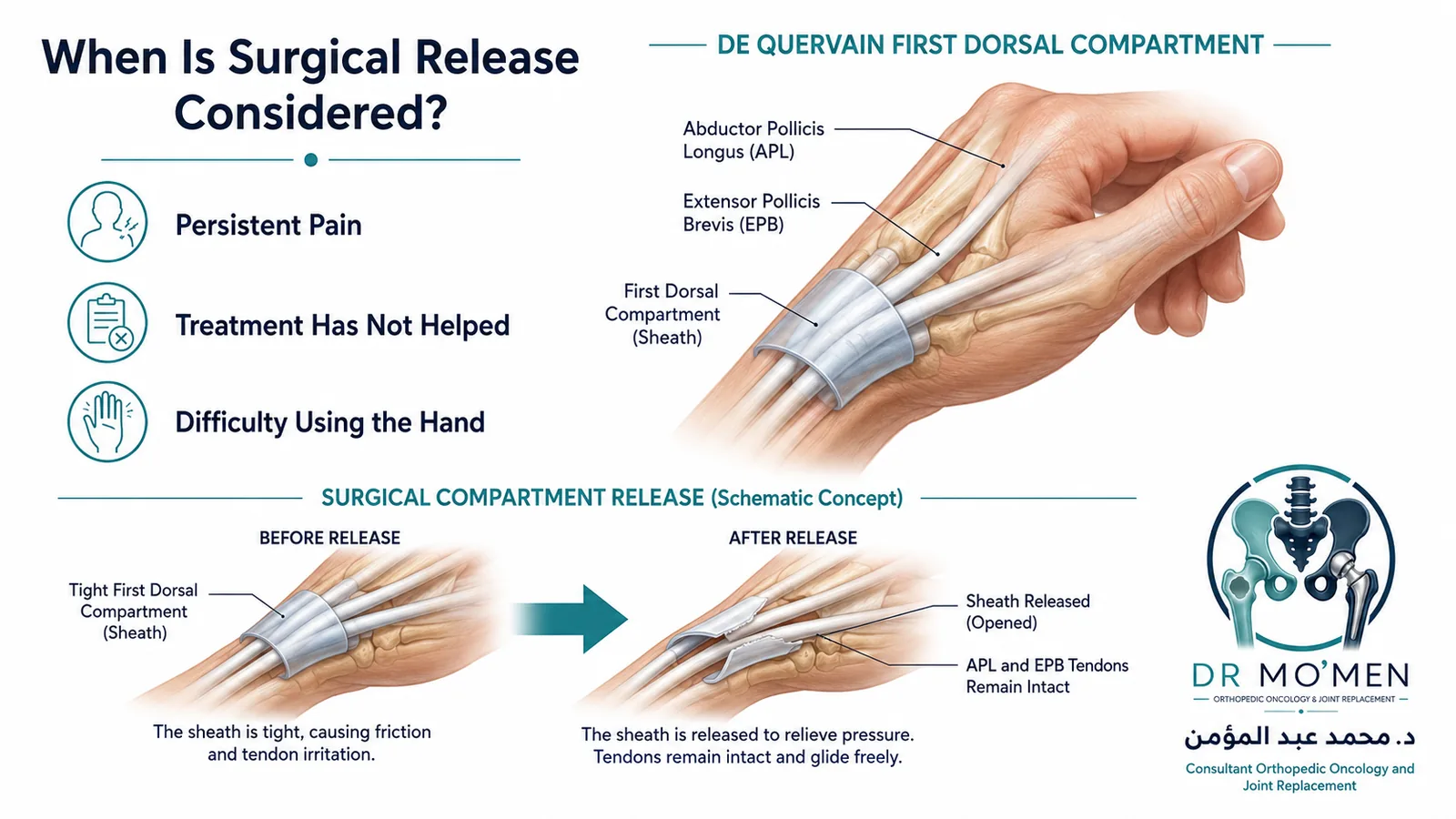
Usually not as the first treatment. Surgical release may be discussed when symptoms remain substantial, appropriate nonsurgical treatment has not helped enough, hand function is significantly limited, and the diagnosis is clear.
What Is De Quervain Release?
The surgeon opens the tight tendon compartment so the tendons have more room to glide. The tendons themselves are not cut. Nearby superficial sensory nerves and any separate tendon subcompartment need to be recognized.
What Are the Risks of Surgery?
- Scar tenderness.
- Wound problems or infection.
- Stiffness.
- Persistent or recurrent symptoms.
- Irritation or injury to a nearby superficial sensory nerve.
- Tendon instability in uncommon situations.
When Does Thumb-Side Wrist Pain Need Faster Assessment?
Seek broader assessment after significant trauma or a fall, visible deformity, marked swelling, inability to use the hand, progressive numbness or weakness, a pale or blue hand or finger, marked redness and warmth, fever or chills, an open wound, a growing mass, or unusual persistent rest or night pain. These findings are not typical of uncomplicated De Quervain disease.
When Should You See an Orthopedic Specialist?
Assessment is reasonable when pain persists despite activity modification, lifting or caring for a child becomes difficult, work is affected, a splint has not helped sufficiently, an injection is being considered, symptoms continue after a previous injection, symptoms followed an injury, the diagnosis remains uncertain, or surgery is being considered.
Role of Dr. Mo’men in Persistent or Unclear Cases
The important step is confirming whether pain is truly coming from the first extensor compartment rather than the thumb joint, a fracture, or another wrist condition. Assessment can include review of previous imaging, deciding whether ultrasound is useful, selecting an appropriate splint, discussing corticosteroid injection, and reviewing cases that did not respond to previous treatment.
For appointments or imaging review: 01021690693
Patients outside Egypt or with an unclear or complex case can use the Second Opinion pathway.
Related hand and nerve symptoms
If numbness or tingling is part of the problem, see Carpal tunnel syndrome and hand numbness for the median-nerve pattern and differential diagnosis.