Introduction
A swollen, painful ankle after a fall or twisting injury may be a sprain, a fracture, or a combination of bone and ligament damage. Some people can still walk despite having a fracture, while others develop immediate deformity and are unable to place any weight on the foot.
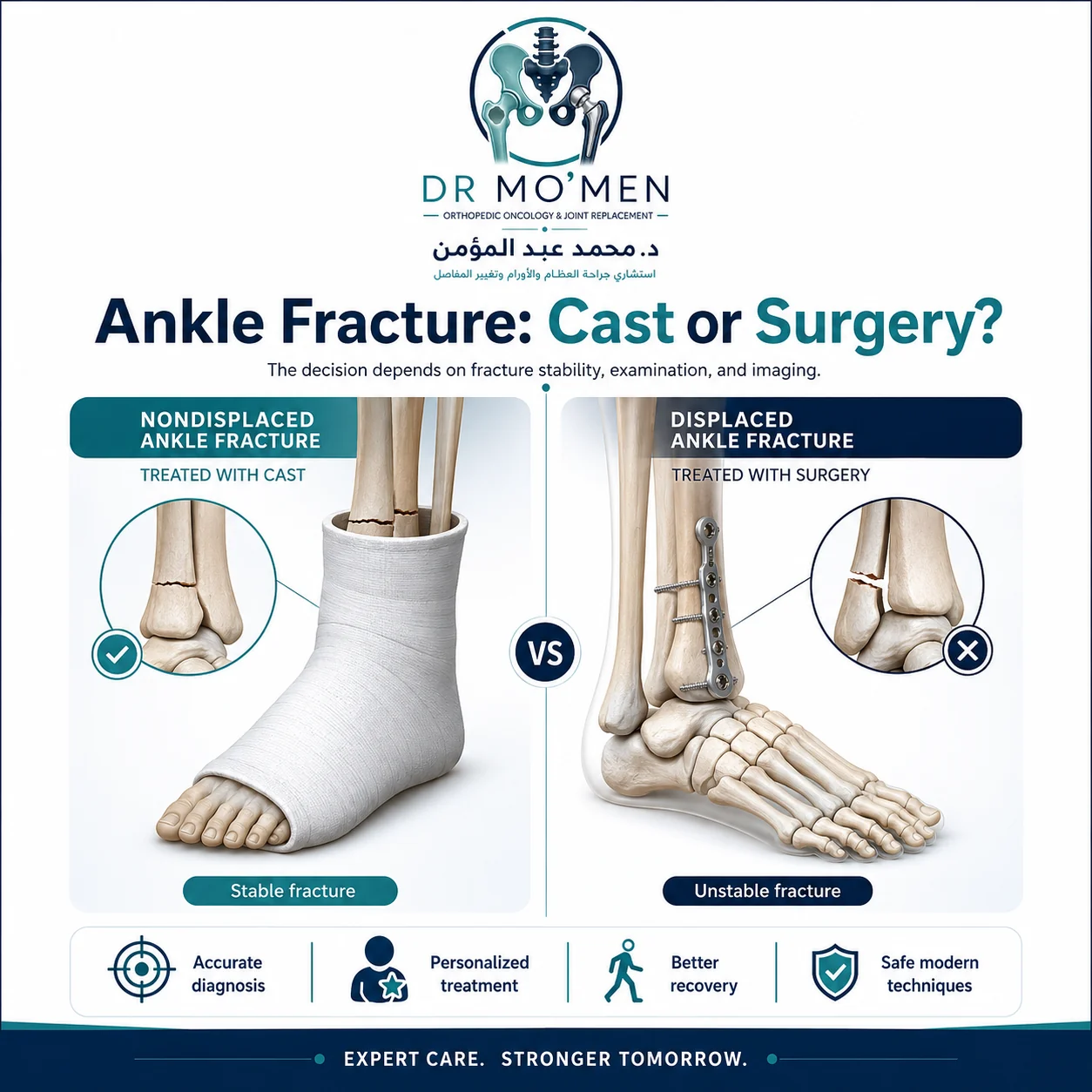
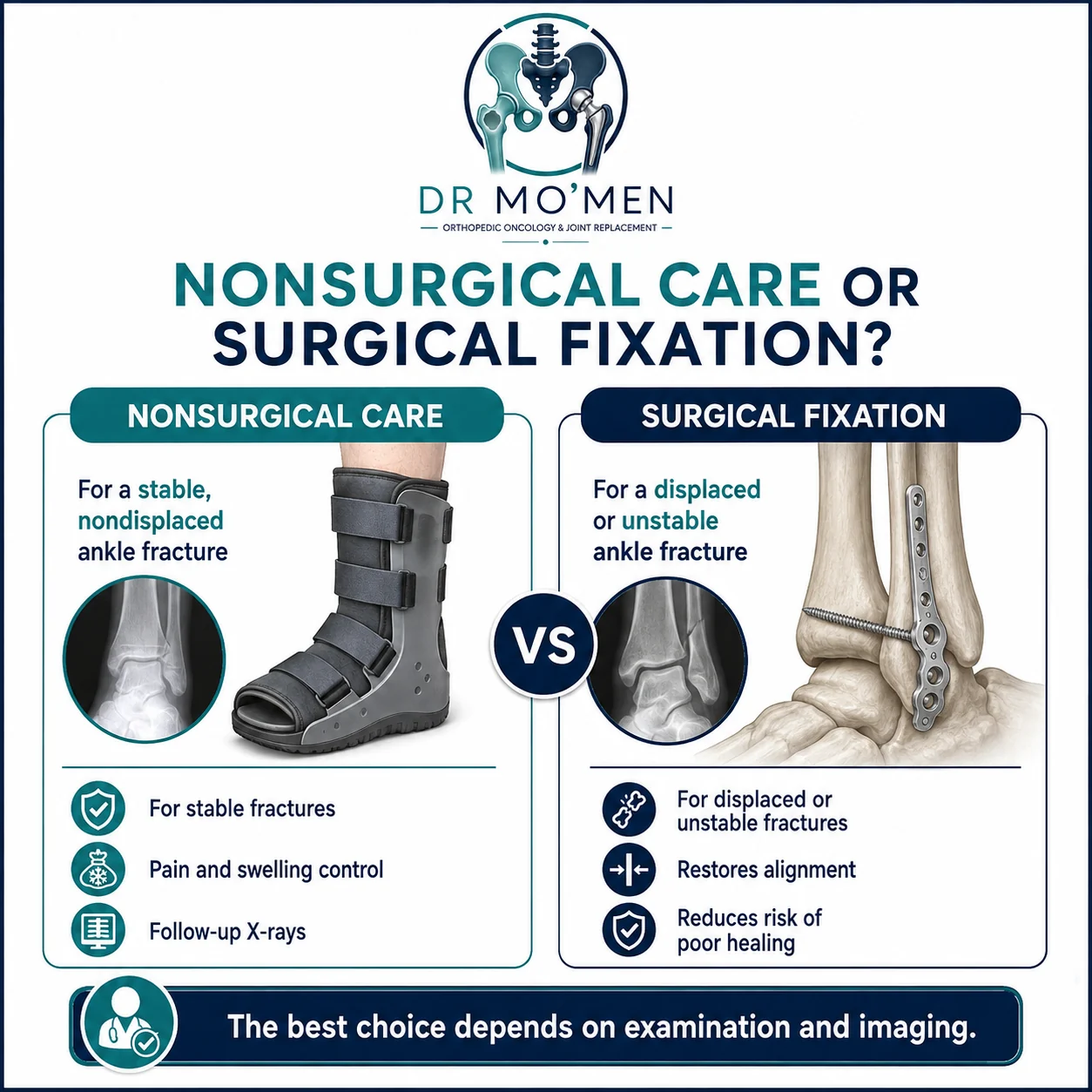
The central question is whether the ankle joint remains stable and correctly aligned. Stable, nondisplaced fractures may be treated in a cast or walking boot. Displaced or unstable injuries may require reduction and surgical fixation to restore the alignment of the ankle joint.
What Is an Ankle Fracture?
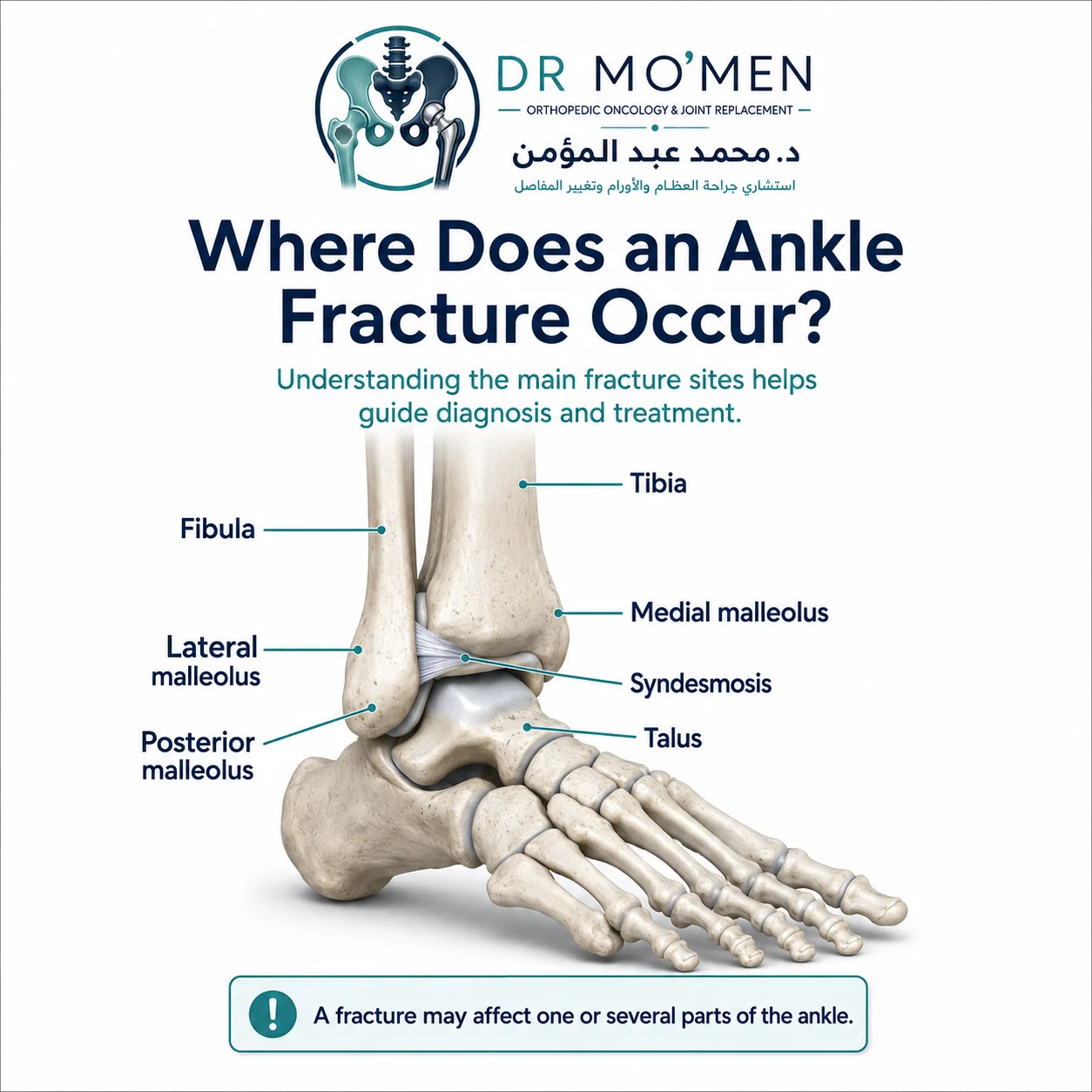
The ankle joint is formed by the tibia, fibula, and talus. The lower tibia forms the medial and posterior malleoli, while the lower fibula forms the lateral malleolus.
An ankle fracture may affect one, two, or three of these regions and may also involve the ligaments that stabilise the tibia and fibula.
Common Fracture Patterns
- Lateral malleolus fracture: a fracture of the lower fibula on the outer side of the ankle.
- Medial malleolus fracture: a fracture involving the inner side of the lower tibia.
- Bimalleolar fracture: a fracture involving both sides of the ankle and often associated with instability.
- Trimalleolar fracture: a fracture involving the medial, lateral, and posterior malleoli.
- Syndesmotic injury: damage to the ligaments connecting the lower tibia and fibula.
Symptoms of a Broken Ankle
Possible symptoms include immediate pain after twisting or falling, swelling and bruising, tenderness over the inner or outer ankle, difficulty bearing weight, reduced ankle movement, visible deformity, and numbness or coolness in the foot in more severe injuries.
Being able to walk does not exclude a fracture. Some stable fractures cause less dramatic symptoms and may initially be mistaken for a sprain.
When Is Urgent Assessment Needed?
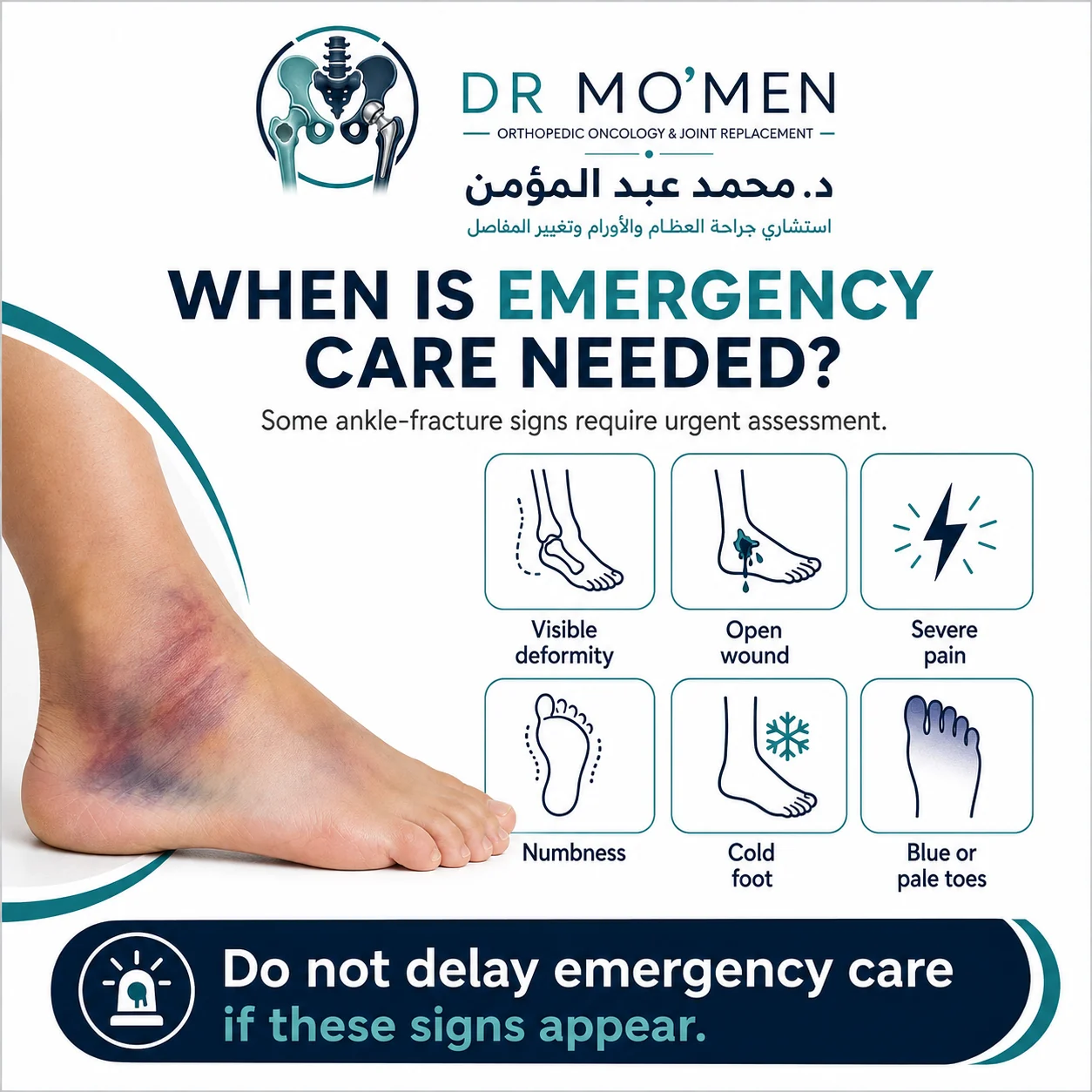
- The ankle is visibly deformed.
- A bone is exposed or there is a deep wound over the fracture.
- The toes become pale, blue, cold, or numb.
- Pain is severe or rapidly worsening.
How Is an Ankle Fracture Diagnosed?
Clinical examination assesses the mechanism of injury, skin condition and swelling, tenderness, circulation and sensation, deformity or dislocation, and associated injuries.
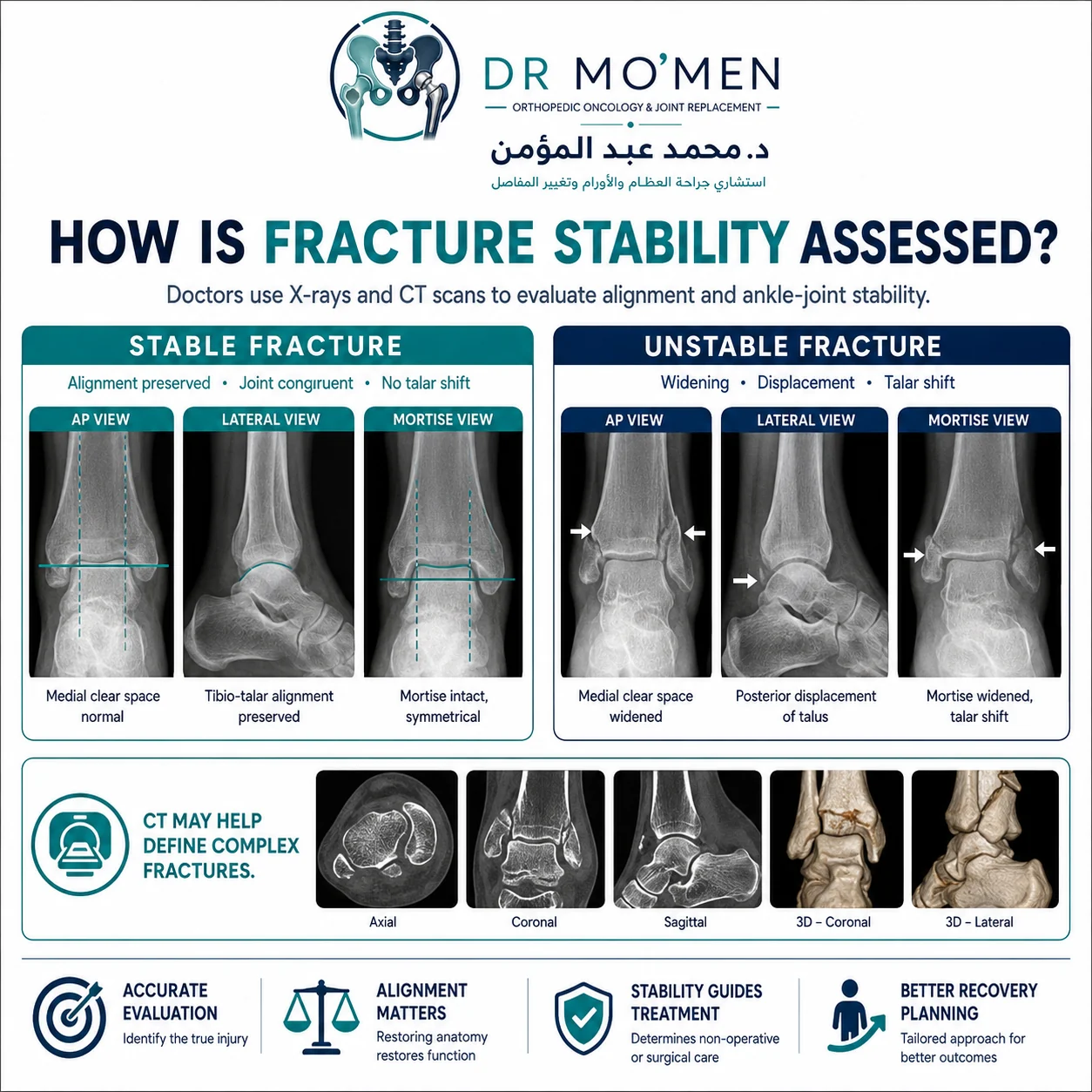
Plain X-rays are the main initial investigation. CT provides more detail in complex fractures, particularly posterior malleolar injuries and preoperative planning. MRI is not routinely required for a straightforward ankle fracture, but may be considered in selected cases.
What Makes an Ankle Fracture Stable or Unstable?
- A fracture is considered stable when the talus remains properly aligned beneath the tibia and the ankle mortise is maintained.
- Features suggesting instability include displacement, widening of the ankle mortise, abnormal talar shift, fractures affecting both sides of the ankle, posterior malleolar involvement, syndesmotic disruption, fracture-dislocation, or failure to maintain reduction in a cast.
Treatment Options
Nonsurgical treatment may be appropriate for stable, nondisplaced fractures and selected isolated lateral malleolus fractures. Care may include an initial splint, a below-knee cast, a removable walking boot, crutches, and follow-up X-rays.
Surgical treatment may be recommended for displaced, mechanically unstable, open, or fracture-dislocation injuries, as well as unstable bimalleolar or trimalleolar fractures. The common procedure is open reduction and internal fixation (ORIF).
Risks of Surgery
Potential risks include infection, wound-healing problems, nerve or blood-vessel injury, venous thrombosis, stiffness, implant irritation, delayed union or nonunion, loss of reduction, and post-traumatic arthritis.
Recovery After an Ankle Fracture
Many ankle fractures begin healing over several weeks, but the timeline varies with the fracture pattern, stability, treatment, age, and general health. Regaining movement, strength, balance, and sporting ability often takes additional time.
Recovery commonly includes elevation to control swelling, cast or wound care, follow-up imaging, gradual weight bearing, range-of-motion exercises, muscle strengthening, and gait rehabilitation.
Related reading: Foot Swelling After a Cast: What Is Normal and What Is Dangerous?
Related upper-limb fracture guide: Scaphoid Fracture: Why It May Be Missed on X-rays.
When Should You Seek a Specialist Opinion?
Specialist review is particularly important when the fracture is displaced or involves several fragments, stability is uncertain, both sides of the ankle are injured, syndesmotic injury is suspected, or a second opinion is needed before surgery.
Ankle-fracture management requires evaluation of the actual imaging, not only the written report. The assessment considers joint alignment, fracture stability, soft-tissue condition, and associated ligament injury.
For booking or X-ray review: 01021690693