Why Does the Foot Swell After a Cast Is Applied?
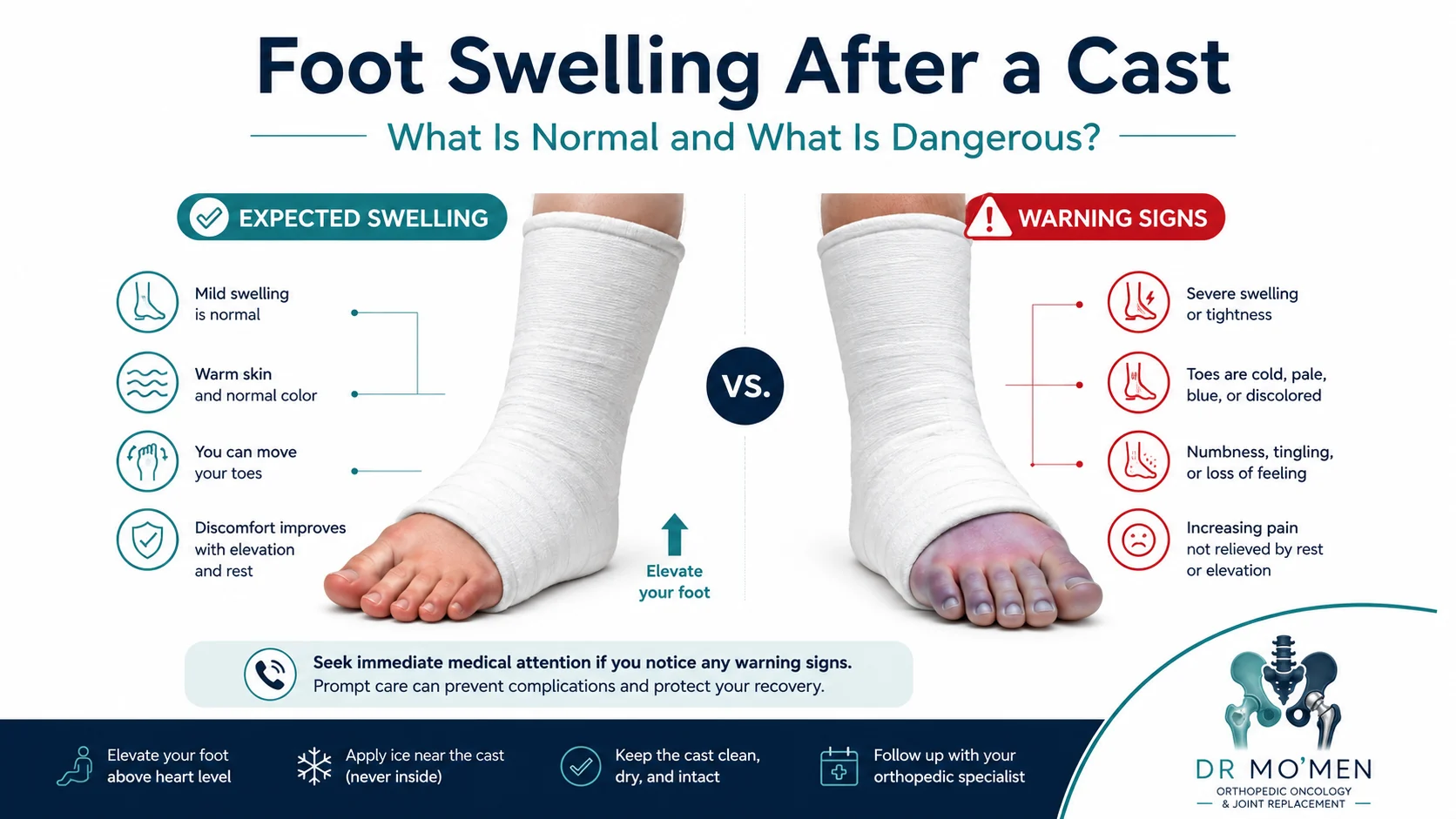
Swelling is part of the body’s response to an injury. It may result from inflammation, tissue damage, and minor bleeding around the injured bone or soft tissues.
If the cast was applied for an ankle fracture, also read Ankle Fracture: When Is a Cast Enough or Surgery Needed?.
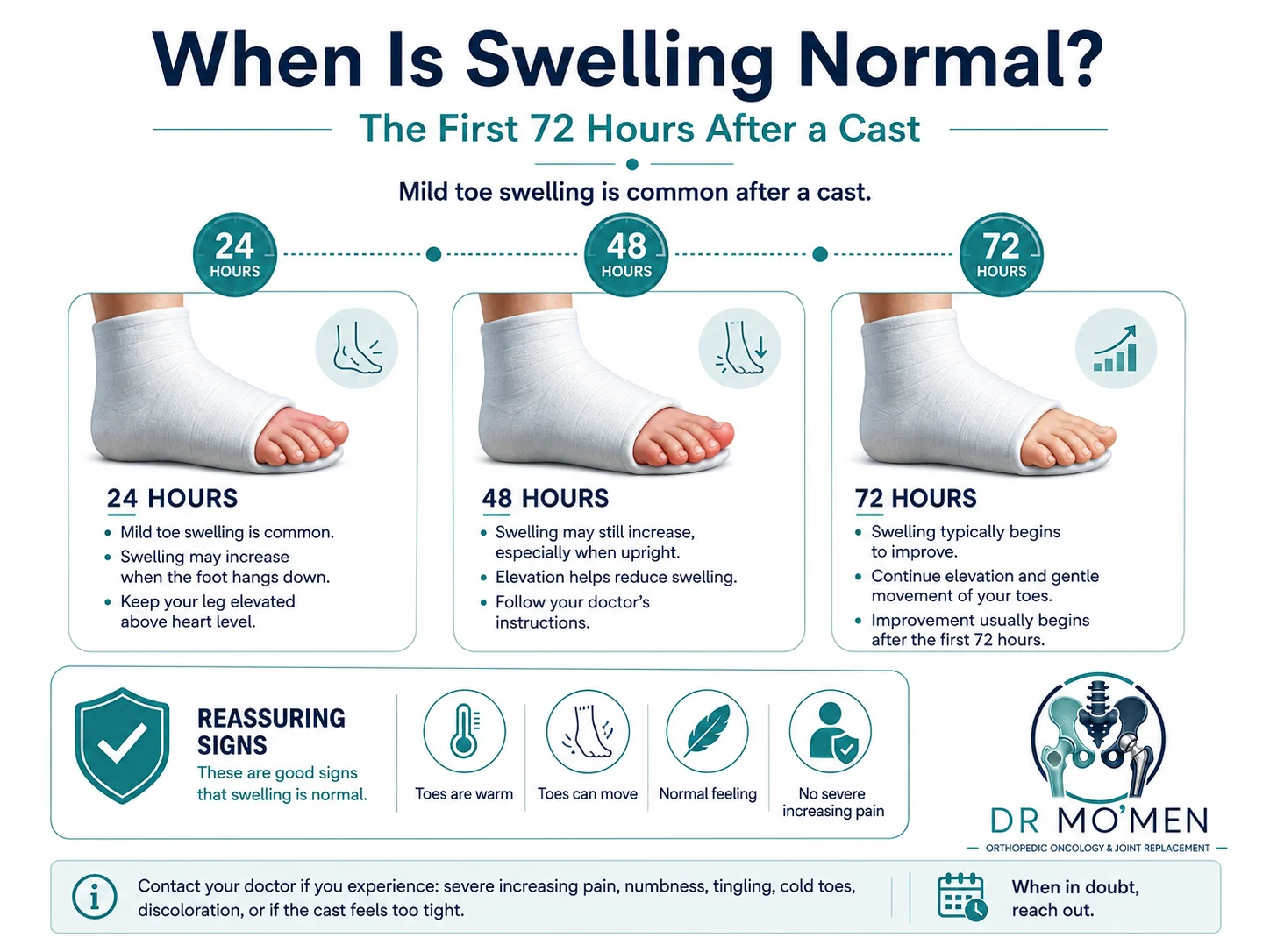
Swelling is often most noticeable during the first 48 to 72 hours. This is one reason a temporary splint or partially opened cast may initially be used when substantial swelling is expected. A complete cast may later be applied or replaced once the swelling has settled.
Suggested related reading: Cast or Physiotherapy for an Ankle Sprain?
What Does Normal Swelling Usually Look Like?
Swelling may be within the expected range when:
- The toes are mildly or moderately swollen.
- Swelling becomes more noticeable when the foot is hanging down.
- Elevating the leg produces a clear improvement.
- The toes remain warm and close to their normal colour.
- The patient can move the toes actively.
- There is no persistent numbness, tingling, or burning.
- Pain is manageable and gradually improving.
- The cast does not feel progressively tighter.
The acceptable amount of swelling differs between patients. It depends on the injury, the initial level of swelling, the type of cast, and the patient’s circulation and nerve function.
Which Symptoms Are Warning Signs?
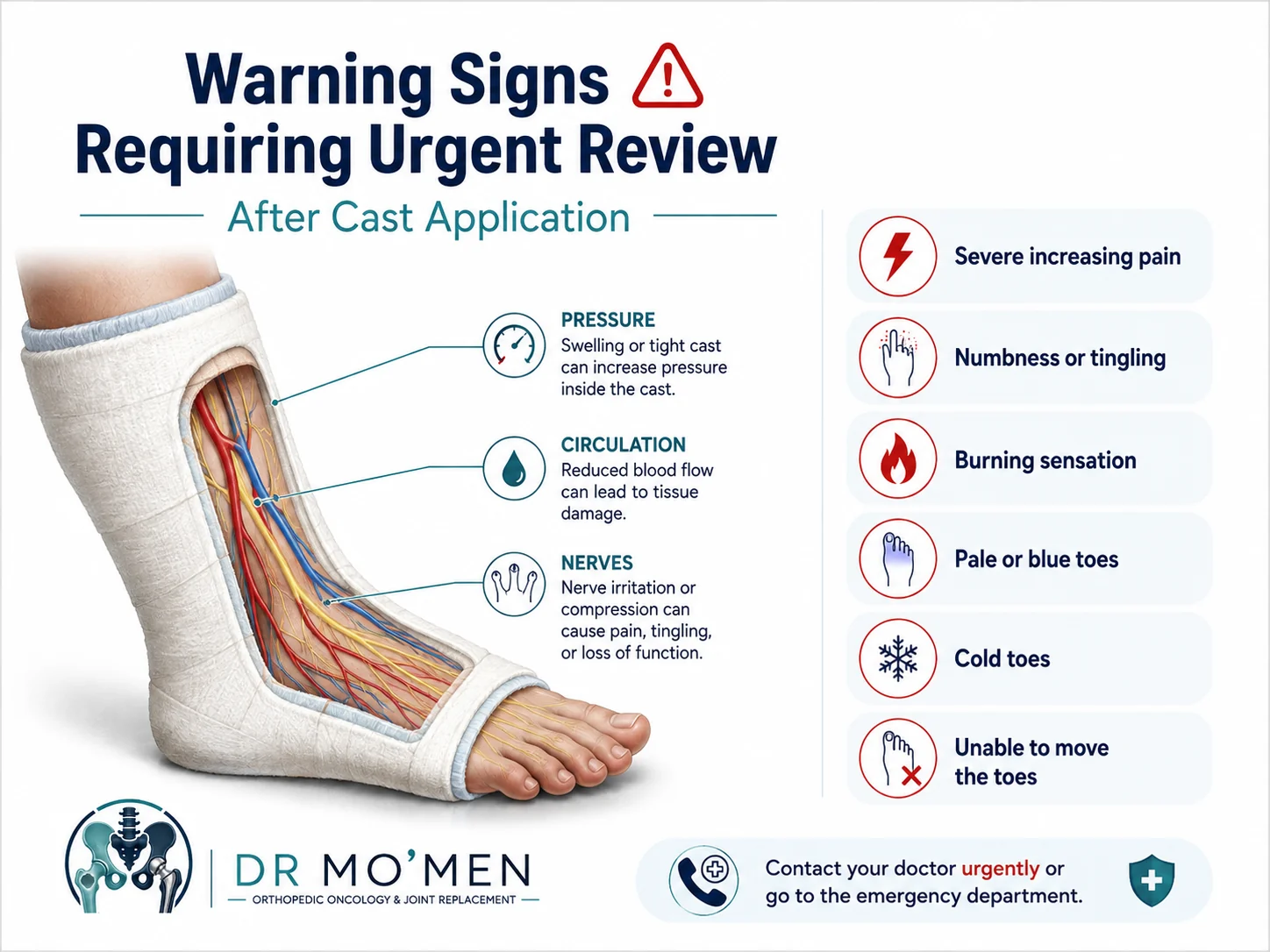
Contact the treating team urgently or attend an emergency department if any of the following occurs.
Severe or Increasing Pain
Pain that continues to worsen, appears disproportionate to the injury, or does not improve with prescribed pain relief and elevation should be assessed promptly. Severe pain may result from excessive cast pressure, skin compression, or, in rare cases, acute compartment syndrome.
A Cast That Feels Extremely Tight
A snug sensation may occur during the early swelling phase. However, a cast that remains severely tight despite proper elevation may not be safely accommodating the swelling.
Numbness, Tingling, Burning, or Pins and Needles
New numbness or tingling may indicate pressure on a nerve. Burning or stinging pain can also result from pressure on the skin or the development of a pressure sore beneath the cast.
Pale, Blue, Dark, or Cold Toes
Toes that become white, blue, unusually dark, or cold may indicate reduced blood flow. This requires urgent assessment rather than waiting for the next routine appointment.
Inability to Move the Toes
A new inability to move the toes actively is an important warning sign requiring urgent assessment of the nerves, circulation, and pressure beneath the cast.
Marked Swelling Below the Cast
Large or progressively increasing swelling of the exposed toes—particularly when associated with tight skin, pain, numbness, or colour change—may indicate that the cast is restricting circulation.
Localised Burning or Blister-Like Pain
Pain in one specific location beneath the cast can be caused by rubbing or excessive pressure on the skin. The cast should be reviewed rather than attempting to insert cotton, padding, or another object beneath it.
Discharge, Bad Smell, or Fever
A foul smell, fluid or blood leaking from the cast, fever, or chills may indicate a wound or infection and requires medical review.
How Can Swelling Be Reduced Safely?
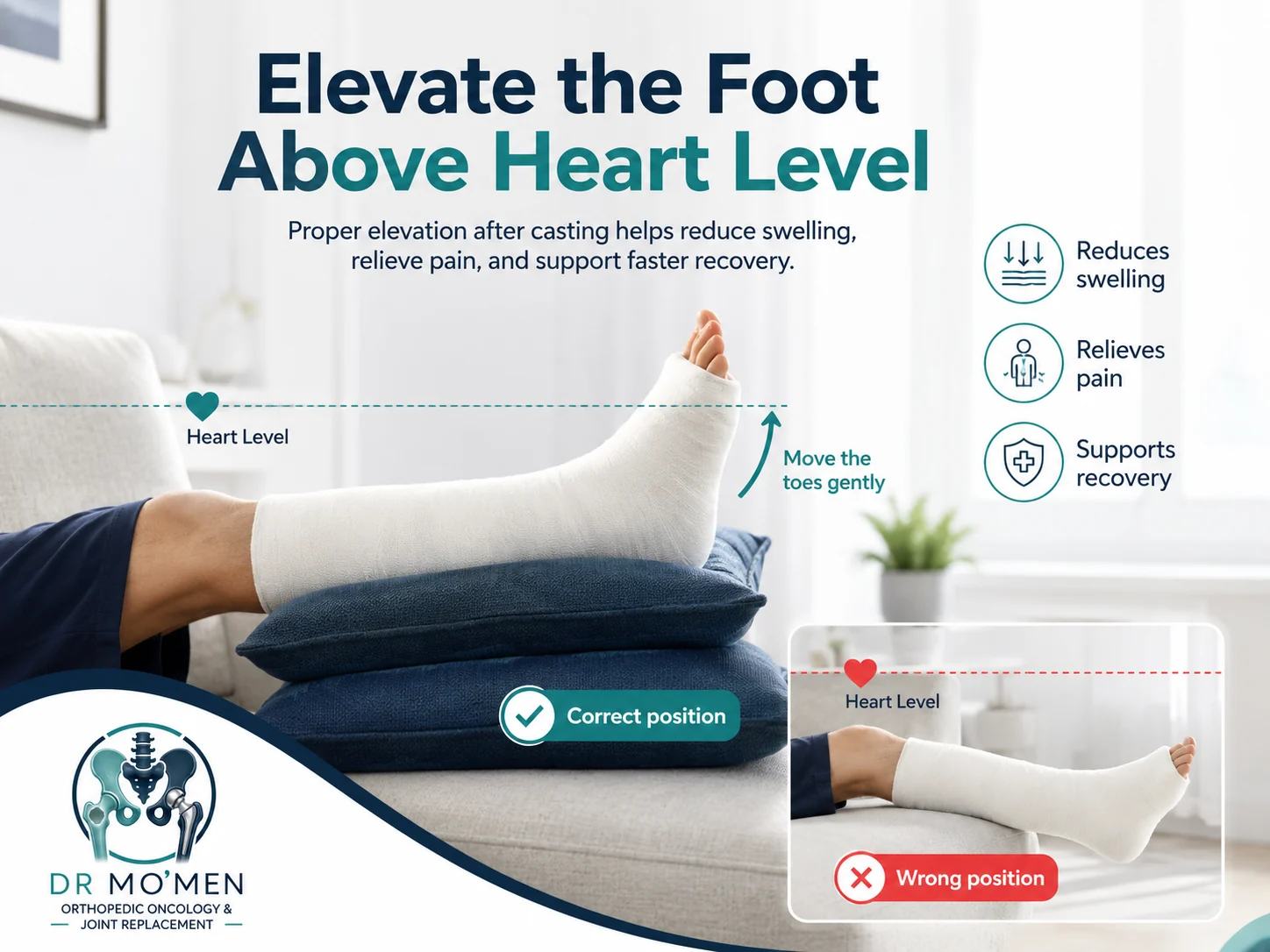
Elevate the Leg
During the first two to three days, support the leg on pillows so the foot is above the level of the heart. Simply placing the foot slightly above the knee may be insufficient if the ankle remains below heart level.
Move the Toes Regularly
Gently move the exposed toes and any joints that have not been immobilised, unless the treating surgeon has given different instructions. Movement can help reduce stiffness and promote circulation.
Follow Weight-Bearing Instructions
Do not walk or place weight through the cast unless the treating clinician has specifically allowed it. Premature weight-bearing may damage the cast or disturb the fracture position.
Use Cold Therapy Carefully
When permitted, a dry ice pack may be wrapped around the outside of the cast at the level of the injury. The cast must remain dry, and ice should never be pushed inside the cast or placed directly against the skin.
Check the Toes
Regularly examine the exposed toes for changes in colour, temperature, sensation, swelling, and active movement—particularly during the first few days.
What Should You Avoid?
- Do not cut, split, or remove the cast yourself.
- Do not insert pens, wires, or other objects to scratch the skin.
- Do not place powder, cream, or lotion inside the cast.
- Do not wet the cast unless it has specifically been confirmed as waterproof.
- Do not ignore increasing pain because some pain is expected after a fracture.
- Do not delay assessment when numbness, coldness, colour change, or loss of movement develops.
Objects inserted beneath a cast can injure the skin and cause ulcers. Moisture can weaken a conventional cast and damage the skin or padding underneath it.
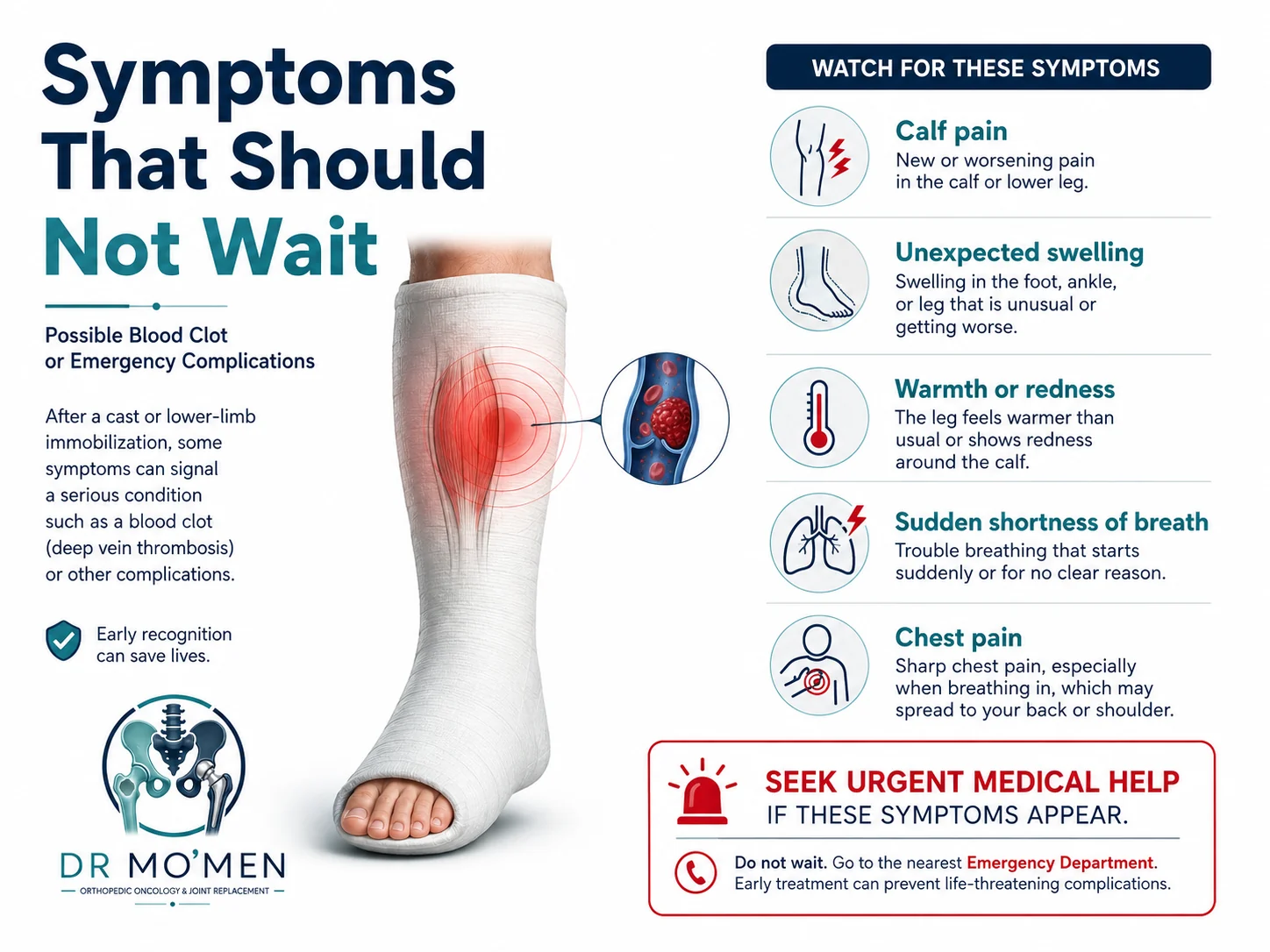
Could the Swelling Be Caused by a Blood Clot?
Lower-limb immobilisation and reduced mobility can increase the risk of deep-vein thrombosis in some patients, particularly when additional risk factors are present.
Urgent assessment is appropriate for new calf or thigh pain, unexpected or increasing swelling of the leg, redness or unusual warmth, sudden shortness of breath, chest pain, or a sudden cough, particularly if blood is present.
When Should You Seek Specialist Assessment?
Urgent assessment is recommended when the cast remains tight despite elevation, pain is severe or progressively worsening, the toes become pale, blue, dark, or cold, toe movement becomes difficult or impossible, persistent numbness or burning develops, the cast becomes wet or damaged, discharge or an unpleasant smell appears, or symptoms suggest a possible blood clot or breathing complication.
The clinician may need to inspect or adjust the cast, assess circulation and nerve function, repeat X-rays, or investigate other possible complications. This decision requires a clinical examination and cannot be made reliably from a photograph alone.
Dr Mo’men’s Role in Complex Cast-Related Problems
A specialist orthopaedic assessment may include checking the cast for excessive tightness and pressure points, examining toe colour, temperature and blood flow, testing sensation and nerve function, reviewing fracture alignment on X-rays, and assessing for infection, venous thrombosis, or dangerous tissue pressure.
International patients may send their radiographs and reports for an initial online second opinion. Acute warning signs, however, require immediate in-person assessment at the nearest emergency facility and should not be delayed while awaiting a remote consultation.
Medically reviewed by Dr. Mohammed Abdelmoemen Abuelhadid
Orthopedic oncology, joint replacement, sports injuries, and complex orthopedic care. About the doctor · ORCID profile
How this article was reviewed
This patient-education article was reviewed for clinical accuracy, patient safety, and decision-making clarity by Dr. Mohammed Abdelmoemen Abuelhadid. It is intended to support, not replace, clinical examination and review of the actual imaging and reports.
General medical sources
- American Academy of Orthopaedic Surgeons: Care of Casts and Splints.
- American Academy of Orthopaedic Surgeons: Compartment Syndrome.
- University Hospitals Sussex NHS: Taking Care of Your Plaster Cast.
- Dorset County Hospital NHS: Advice for Patients with a Plaster Cast.
Request an appointment or radiograph review
For appointments or preliminary review of available X-rays and reports, contact the clinic.