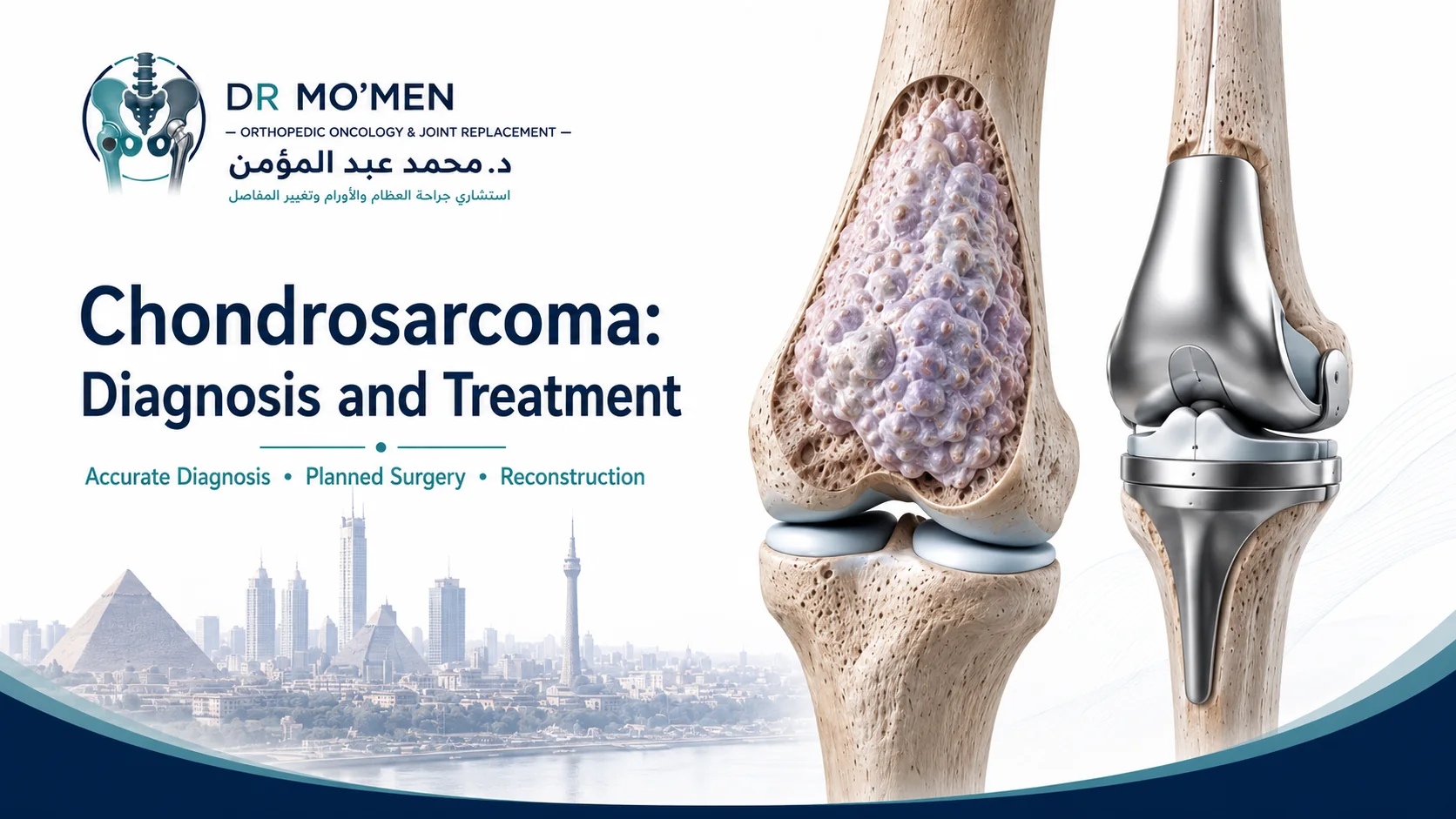
What Is Chondrosarcoma?
Chondrosarcoma is a malignant bone tumor in which the tumor cells produce cartilage-like material. It is different from benign cartilage tumors such as enchondroma, although the distinction can sometimes require careful correlation between symptoms, X-rays, CT, MRI, anatomical location, growth pattern, histopathology and multidisciplinary review.
Chondrosarcoma is not one single disease with one standard treatment. Its behavior varies according to histological subtype, grade, anatomical location, extent of disease, and whether the tumor is primary or recurrent.
Is Chondrosarcoma a Form of Bone Cancer?
Yes. Chondrosarcoma is a primary malignant bone tumor. However, the word cancer alone does not describe how aggressive an individual tumor will be. Some tumors behave relatively slowly, whereas others can be highly aggressive.
Where Does Chondrosarcoma Commonly Occur?
- Pelvis
- Proximal femur
- Distal femur
- Proximal humerus
- Shoulder girdle
- Ribs
- Other long bones
The anatomical location has a major effect on treatment. A distal femoral tumor may sometimes be treated by wide resection and megaprosthetic reconstruction, while a pelvic tumor may need a very different strategy because of nearby organs, nerves, vessels and the hip joint.
Related article: Megaprosthesis after bone tumor resection.
What Symptoms Can Chondrosarcoma Cause?
- Persistent deep bone pain
- Progressive pain over weeks or months
- Pain at night
- Increasing swelling or a palpable mass
- Reduced joint movement or limping
- Functional limitation
- Pathological fracture in selected cases
Some low-grade cartilage tumors are discovered incidentally during imaging performed for another reason. Not every cartilage lesion on an X-ray is malignant; symptoms, imaging pattern, size, location and aggressive features all influence assessment.
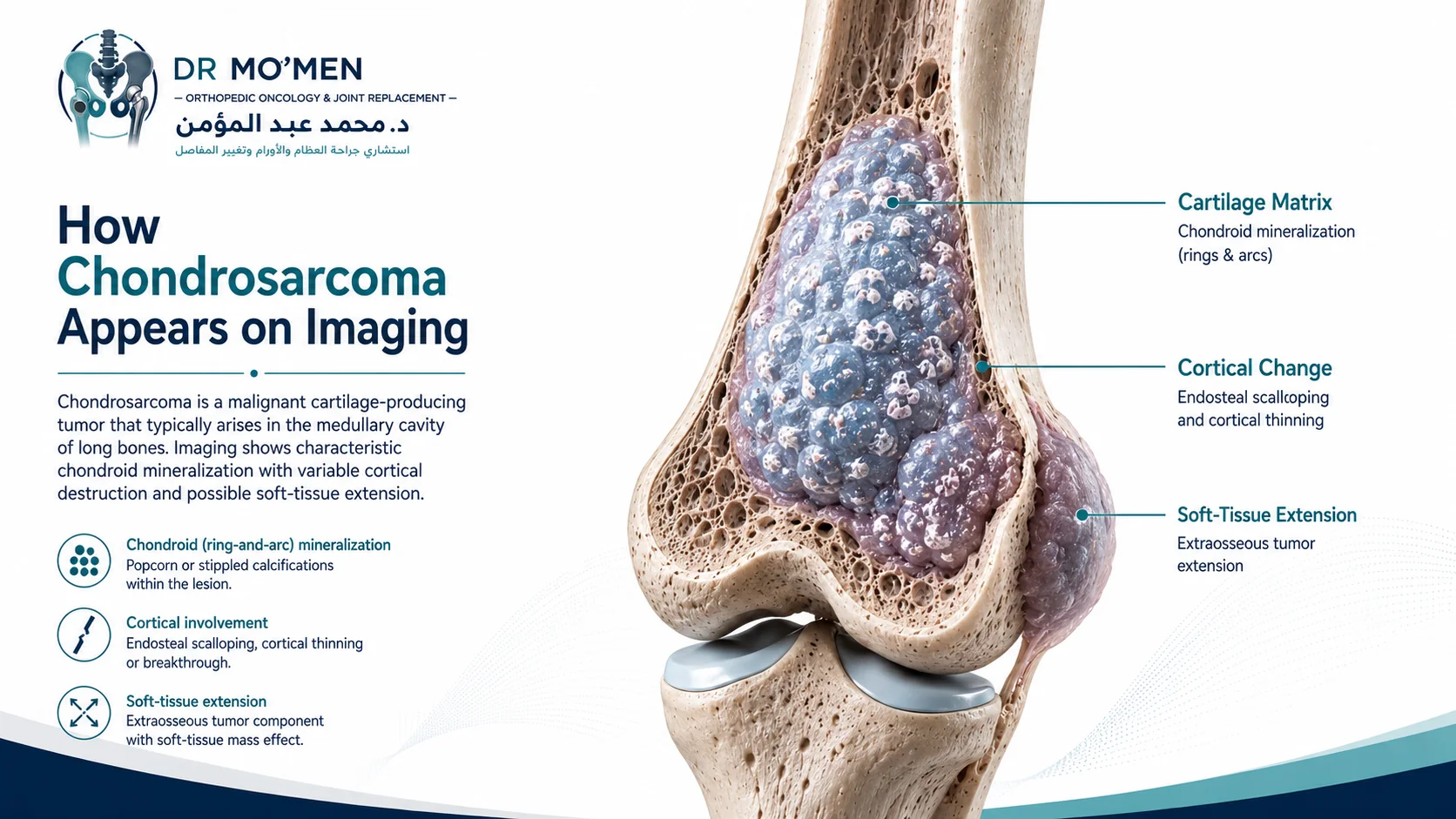
What Does Chondrosarcoma Look Like on Imaging?
X-ray
Plain radiographs may show a cartilage-producing bone lesion with bone destruction, expansion, cortical thinning, cortical breakthrough, calcified cartilage matrix or soft-tissue extension in more aggressive lesions.
CT scan
CT is useful for cortical destruction, calcified tumor matrix, subtle mineralization, complex pelvic anatomy and surgical anatomy. It may also form part of staging depending on the clinical situation.
MRI
MRI is usually important for defining local tumor extent, including intramedullary disease, soft-tissue extension, relationship to the joint, muscle involvement, major nerves and major blood vessels. MRI is particularly important before major limb-salvage surgery.
Why Biopsy Planning Matters
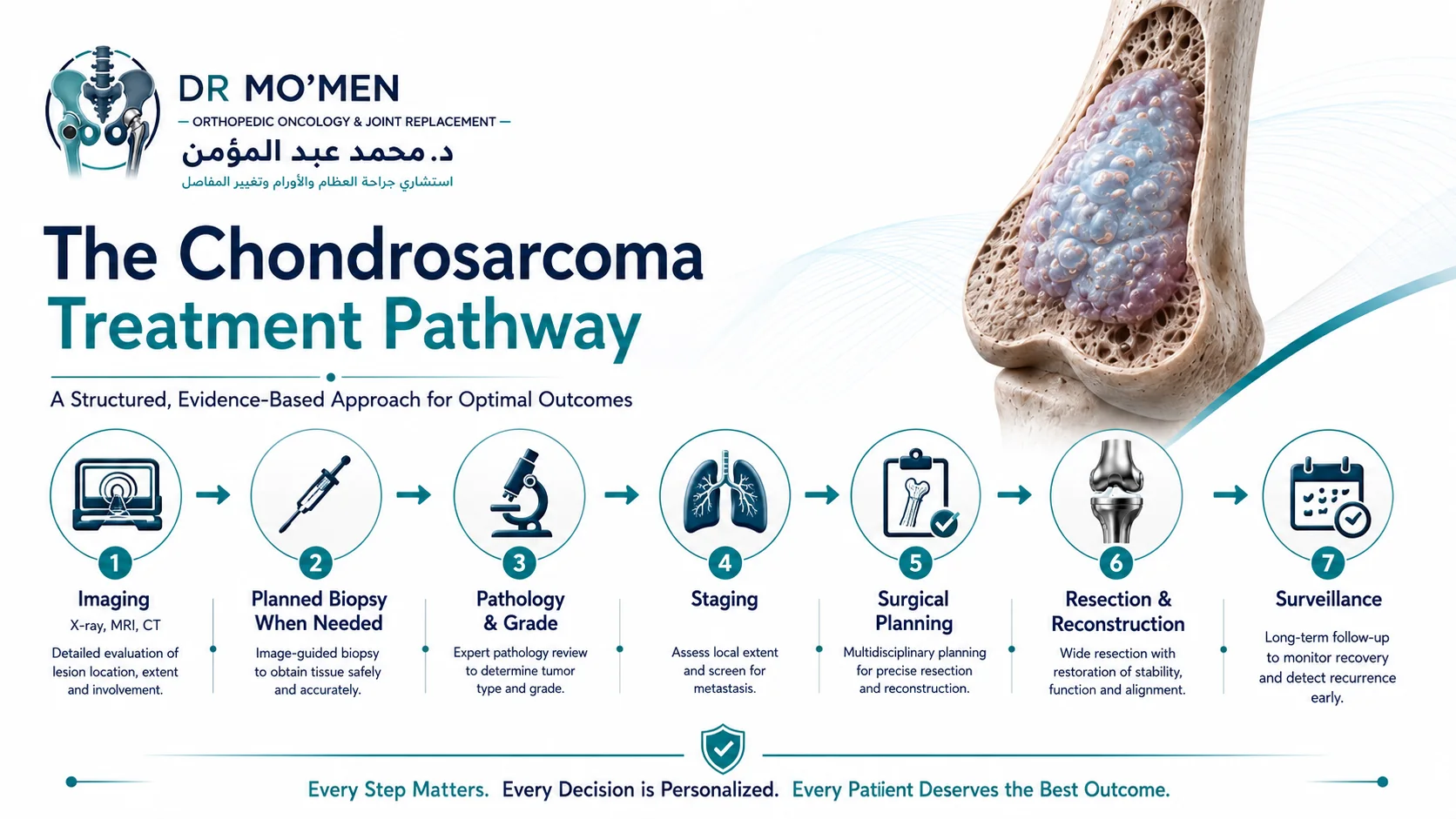
If imaging suggests a primary malignant bone tumor, biopsy should not be treated as an isolated diagnostic procedure. The biopsy tract may potentially become contaminated by tumor cells and should ideally be placed so it can be removed with the definitive surgical specimen.
Poorly planned biopsy can contaminate additional tissue planes and complicate later limb-salvage surgery. Whenever possible, biopsy should be coordinated with the orthopedic oncology team responsible for definitive tumor treatment. Read more about bone tumor biopsy planning.
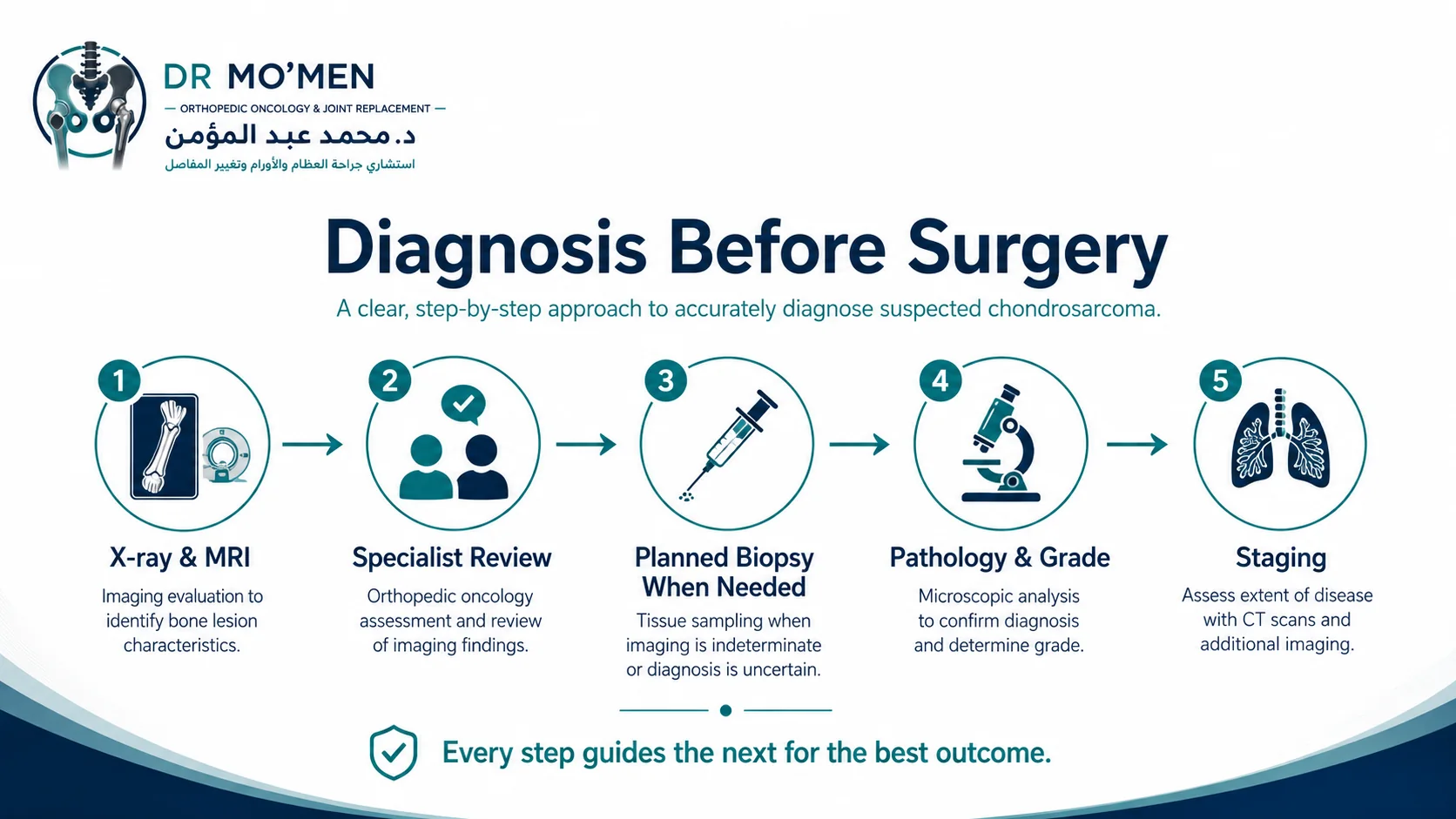
Does Every Suspected Chondrosarcoma Need a Biopsy?
Not necessarily. The decision depends on imaging characteristics, anatomical location, suspected grade, whether the biopsy result will alter management, whether the lesion appears clearly benign or malignant, and multidisciplinary assessment.
Chondrosarcoma Grade: Why It Matters
Histological grade provides information about how aggressive a conventional chondrosarcoma appears under the microscope. In simplified terms, conventional chondrosarcoma may be low grade, intermediate grade or high grade. Exact terminology should be taken from the specialist pathology report.
Grade affects expected biological behavior, local recurrence risk, metastatic risk, surgical strategy and surveillance intensity.
Chondrosarcoma Is Not One Disease
Conventional chondrosarcoma
For localized conventional chondrosarcoma, complete surgical removal is generally central to treatment when feasible. The extent of surgery depends on grade and location.
Clear cell chondrosarcoma
Clear cell chondrosarcoma is a distinct malignant subtype that often arises near the end of a long bone and requires appropriate oncological assessment.
Dedifferentiated chondrosarcoma
Dedifferentiated chondrosarcoma is more aggressive and requires specialist multidisciplinary assessment. Treatment may include major surgical resection when feasible and individualized oncology input.
Mesenchymal chondrosarcoma
Mesenchymal chondrosarcoma is biologically distinct, and systemic treatment may have a greater role than in many conventional chondrosarcomas. It should be discussed in a multidisciplinary sarcoma setting.
Why Surgery Is Central in Many Chondrosarcomas
For many localized conventional chondrosarcomas, surgery provides the main opportunity for local disease control. The operation should aim to remove the tumor according to oncological principles while preserving useful function when feasible.
What Does Wide Resection Mean?
Wide resection means removing the tumor together with an appropriate surrounding margin. This may require removal of part of a long bone, an adjacent joint, surrounding muscle, the previous biopsy tract and involved soft tissue.
Can Limb-Salvage Surgery Be Performed for Chondrosarcoma?
In many patients, yes. A chondrosarcoma affecting an arm or leg does not automatically require amputation. Limb-salvage surgery may be possible when adequate tumor removal, reconstruction and useful expected function can be achieved safely.
For the broader principles, read limb salvage surgery for bone tumors.
How Is the Bone Reconstructed After Chondrosarcoma Removal?
Reconstruction depends on the amount and location of bone removed. Options may include megaprosthesis, standard joint replacement, biological reconstruction, structural allograft in selected circumstances, autologous bone graft, internal fixation, or combined prosthetic-biological techniques.
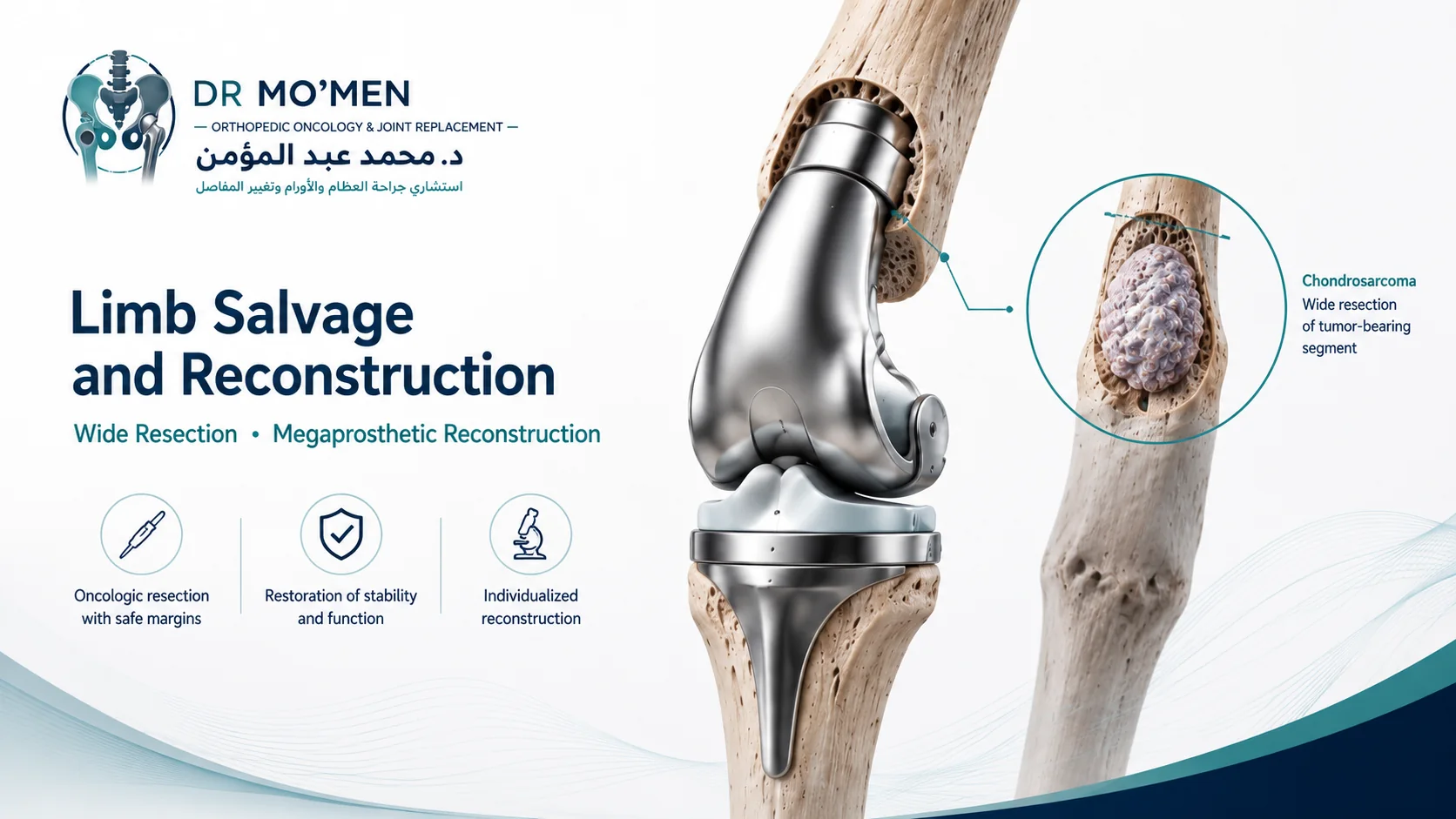
Megaprosthetic reconstruction
Large tumors near major joints may require removal of a bone segment and adjacent joint. A modular tumor prosthesis may be used to reconstruct the defect, but it is a major implant with potential complications such as infection, mechanical failure, loosening, instability, fracture, soft-tissue failure and need for revision surgery.
Chondrosarcoma Around the Knee or Femur
A chondrosarcoma affecting the distal or proximal femur may present with progressive pain, swelling, cortical destruction, a soft-tissue mass in advanced cases or pathological fracture. When wide resection requires removal of the distal femur and knee joint, reconstruction may be performed using a distal femoral megaprosthesis.
Pelvic Chondrosarcoma
Pelvic chondrosarcoma requires separate consideration. Pelvic tumors may be close to major blood vessels, nerves, pelvic organs, the hip joint, sacrum and abdominal structures, and surgical planning should be highly individualized.
Does Chondrosarcoma Need Chemotherapy?
It is not accurate to say that all chondrosarcomas are completely resistant to chemotherapy. For many conventional chondrosarcomas, chemotherapy has a limited routine role compared with osteosarcoma or Ewing sarcoma. However, systemic treatment may be considered differently in mesenchymal, dedifferentiated, metastatic or selected cases.
Does Chondrosarcoma Need Radiotherapy?
Radiotherapy may be considered in selected situations depending on tumor location, subtype, surgical margins, unresectable disease, residual disease, recurrence and available radiation techniques. The decision should be individualized through multidisciplinary assessment.
What If Chondrosarcoma Has Spread?
Metastatic disease changes treatment planning. The approach depends on subtype, grade, number and location of metastases, whether disease is resectable, previous treatment and general condition.
What Happens If Chondrosarcoma Recurs?
Local recurrence requires reassessment rather than immediate repeat surgery. Evaluation may include review of original pathology and margins, new MRI, restaging, specialist radiology review and multidisciplinary discussion. Read more about what to do if a bone tumor comes back.
Can Limb Salvage Still Be Possible After Recurrence?
Sometimes. A recurrent chondrosarcoma does not automatically mean amputation. Repeat limb salvage may be possible if the recurrence remains resectable, acceptable margins can be achieved, and the expected limb function is reasonable.
What If the First Surgery Was Performed Before the Correct Diagnosis?
If a presumed benign mass was removed without oncological planning and is later diagnosed as chondrosarcoma, the patient should not proceed directly to another unplanned operation. Further evaluation may include original pathology review, operative record review, MRI of the whole surgical field and staging.
Follow-Up After Chondrosarcoma Surgery
Surveillance is intended to detect local recurrence, distant disease, reconstruction complications and changes in function. The schedule depends on grade, subtype, location, treatment and time since surgery.
Possible Complications of Chondrosarcoma Surgery
- Infection, bleeding or wound problems
- Thrombosis
- Nerve or vascular injury
- Stiffness, weakness or instability
- Fracture
- Implant loosening or prosthetic failure
- Nonunion in biological reconstruction
- Local recurrence
- Need for additional surgery
When Should You Seek Specialist Orthopedic Oncology Assessment?
- Imaging shows a suspicious cartilage-producing bone lesion
- Chondrosarcoma has been diagnosed
- Biopsy has been recommended
- Major bone resection, limb salvage or amputation is being discussed
- Pathology grade is uncertain or opinions conflict
- The tumor has recurred or was previously operated on without tumor planning
- A megaprosthesis or pelvic tumor resection has been recommended
A second opinion may help clarify diagnosis, pathology, grade, surgical margins, limb-salvage feasibility, reconstruction options and multidisciplinary treatment. Request an orthopedic oncology second opinion.
International Patients: What Should You Send Before Travelling?
International patients can send X-rays, MRI, CT, staging scans, biopsy report, pathology report, pathology slides or blocks where appropriate, operative records, treatment summaries, medication list and relevant medical history for preliminary specialist review before arranging travel to Cairo.
Have You Been Diagnosed With Chondrosarcoma?
Specialist review may help clarify whether the diagnosis is secure, whether additional imaging is needed, whether biopsy has been appropriately planned, and whether limb salvage or reconstruction is feasible.
International contact: +20 102 1690693
Frequently Asked Questions
Is chondrosarcoma always aggressive?
No. Chondrosarcoma includes tumors of different grades and histological subtypes. Some behave relatively slowly, while others are more aggressive.
Does every chondrosarcoma require major surgery?
No. The operation depends on tumor grade, location, size, extent and subtype. Some selected low-grade appendicular cartilaginous tumors may be treated differently from high-grade or axial chondrosarcoma.
Can chondrosarcoma be treated without amputation?
Often, yes. Many extremity chondrosarcomas can be treated using limb-salvage principles when adequate margins and functional reconstruction can be achieved.
Does chondrosarcoma respond to chemotherapy?
The answer depends on the subtype. Chemotherapy generally has a limited routine role in many conventional chondrosarcomas, but systemic treatment may be considered in selected subtypes or metastatic disease.
Is radiotherapy used for chondrosarcoma?
It may be considered in selected cases depending on subtype, tumor location, resectability, margins, recurrence and available radiation techniques.
What happens if chondrosarcoma returns after surgery?
The case should be reassessed with current imaging, pathology review where appropriate, restaging and multidisciplinary evaluation. Repeat limb-salvage surgery may remain possible in selected cases.
Can I get a second opinion before travelling to Egypt?
Yes. Available imaging, pathology reports, previous operation records and staging studies can be reviewed preliminarily before travel. Remote review cannot replace final clinical examination or definitive multidisciplinary assessment.
How this article was reviewed
This patient-education article was reviewed for clinical accuracy, patient safety, and decision-making clarity by Dr. Mohammed Abdelmoemen Abuelhadid. It is intended to support, not replace, clinical examination, pathology review, staging, and review of the actual imaging and reports.
Author and medical reviewer
Dr. Mohammed Abdelmoemen Abuelhadid — Orthopedic Oncology & Joint Replacement Surgeon and Lecturer of Orthopedic Surgery at Ain Shams University.
Medical Disclaimer: This article is for patient education and does not replace clinical examination, review of imaging, pathology, staging investigations, or individualized multidisciplinary medical advice.