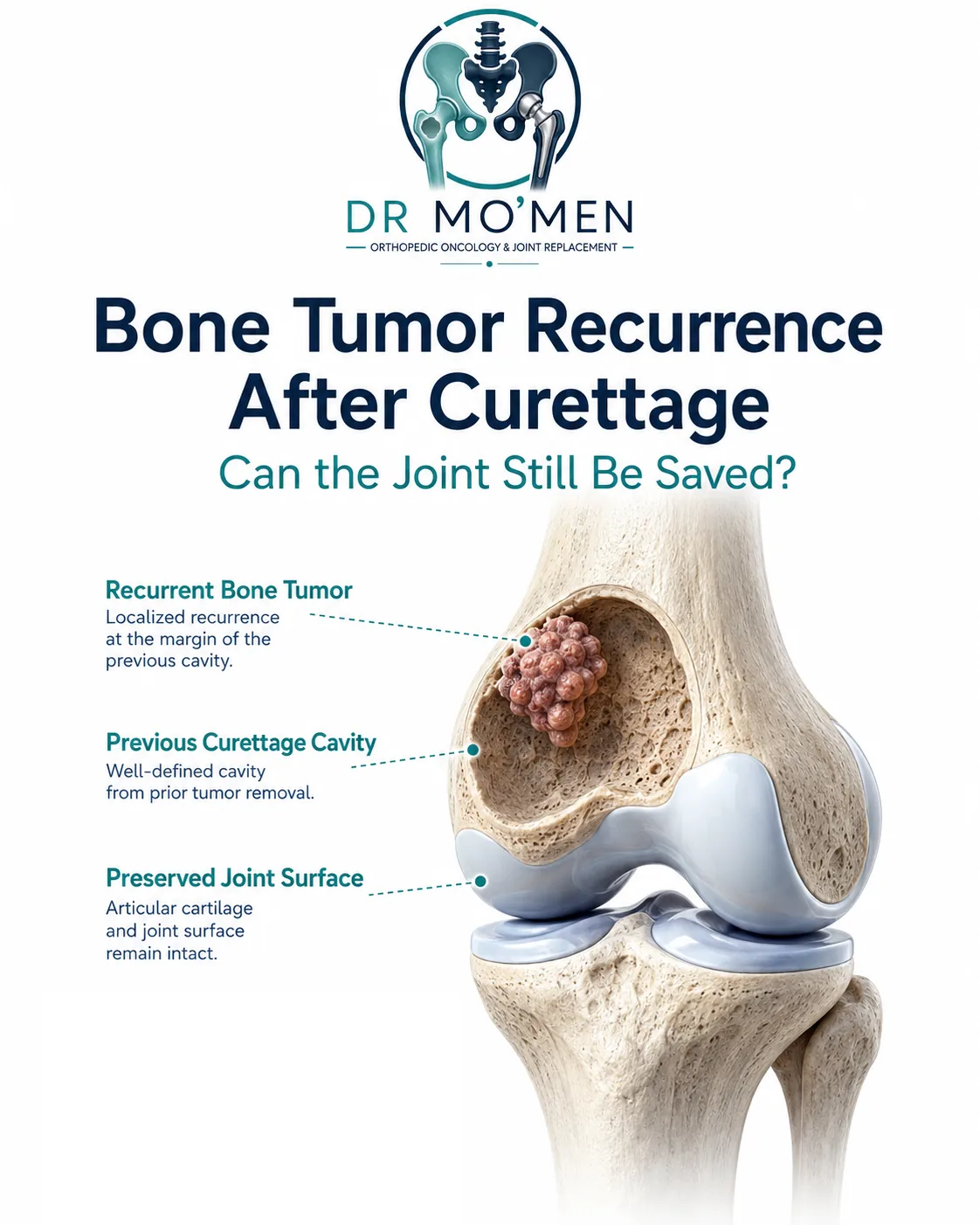
Bone Tumor Recurrence After Curettage: Can the Joint Still Be Saved?
When repeat extended curettage may still preserve the native joint, and when wider resection or reconstruction becomes necessary.
Read article →Patient-friendly articles on bone tumor symptoms, benign and malignant tumors, biopsy planning, metastatic bone disease, and limb-salvage decision-making.
Showing 3 of 19 articles
No articles match your search.
This page groups patient-education articles in this category only; the Case Library and Professional Education remain separate sections.

When repeat extended curettage may still preserve the native joint, and when wider resection or reconstruction becomes necessary.
Read article →
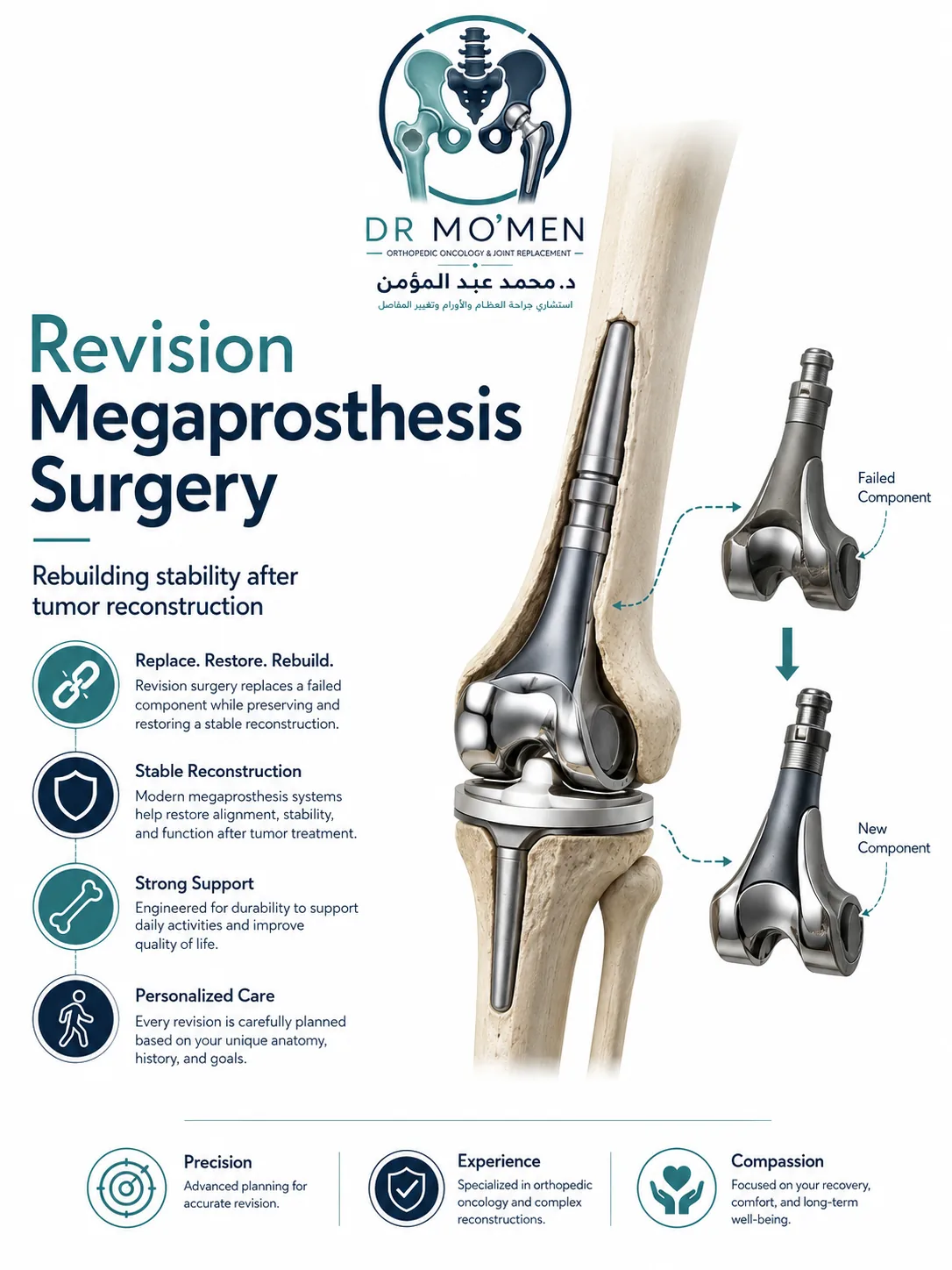
Why a tumor megaprosthesis may need revision, how failure is assessed, and how surgeons plan component preservation, bone stock and reconstruction.
Read article →
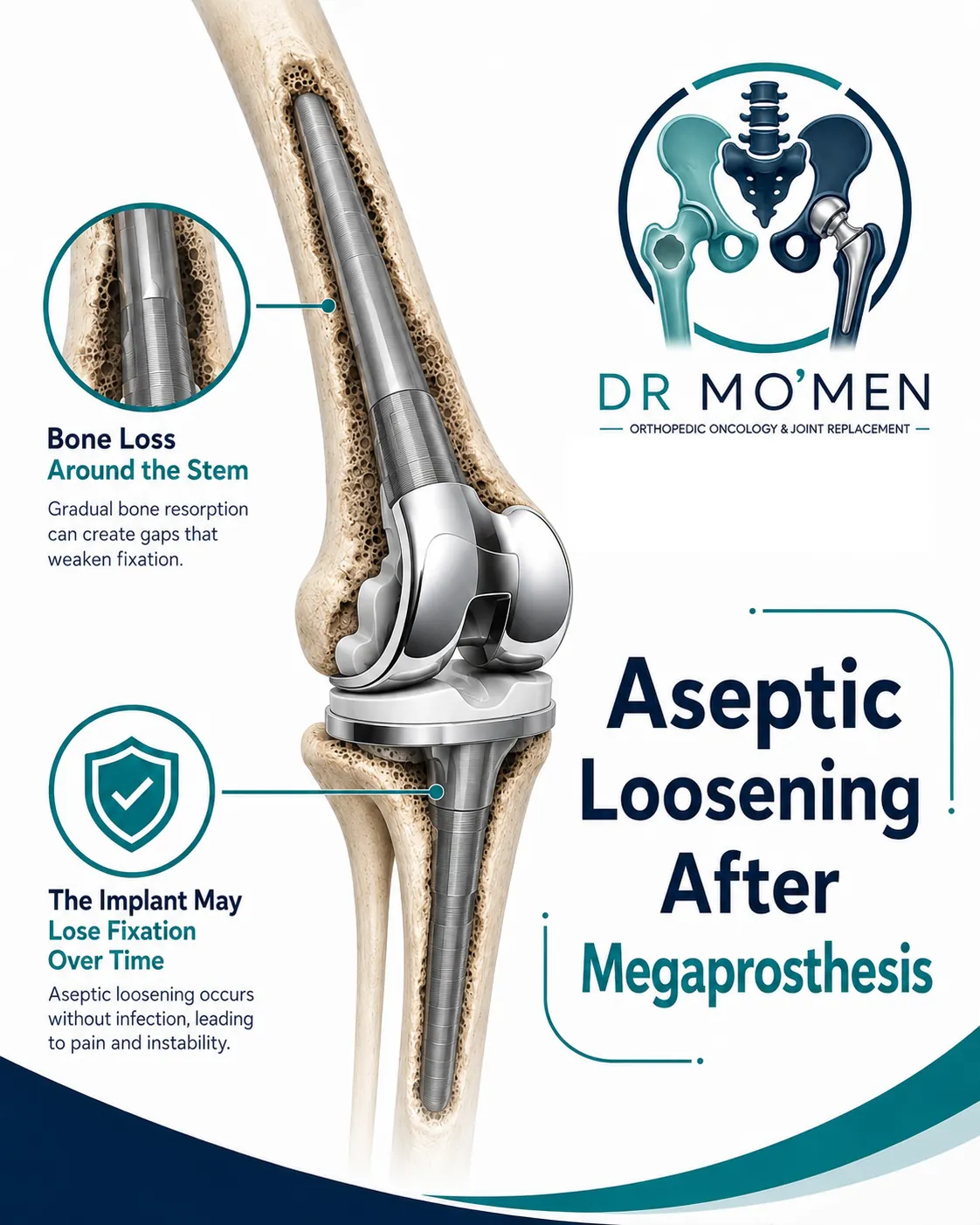
Why a tumor megaprosthesis may loosen without infection, how serial imaging helps, and when revision may be considered.
Read article →
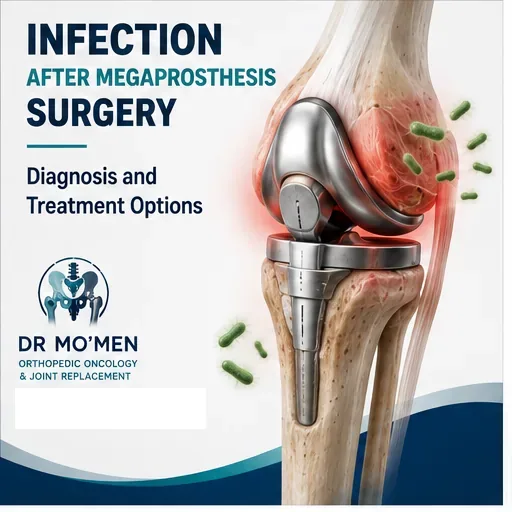
How infection around a tumor megaprosthesis is diagnosed and when DAIR, component exchange or staged revision may be considered.
Read article →
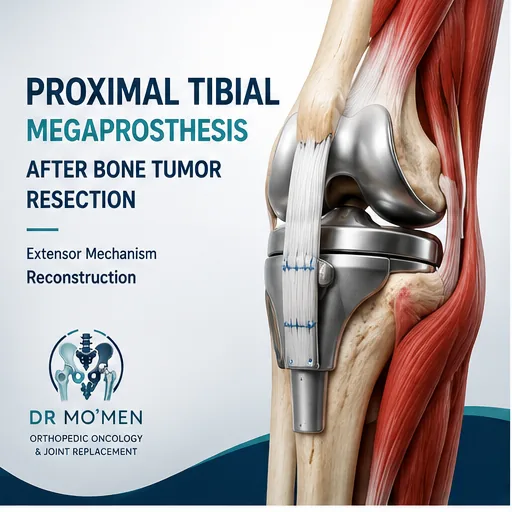
Why proximal tibial tumor reconstruction often requires patellar-tendon and extensor-mechanism repair, soft-tissue coverage and staged rehabilitation.
Read article →
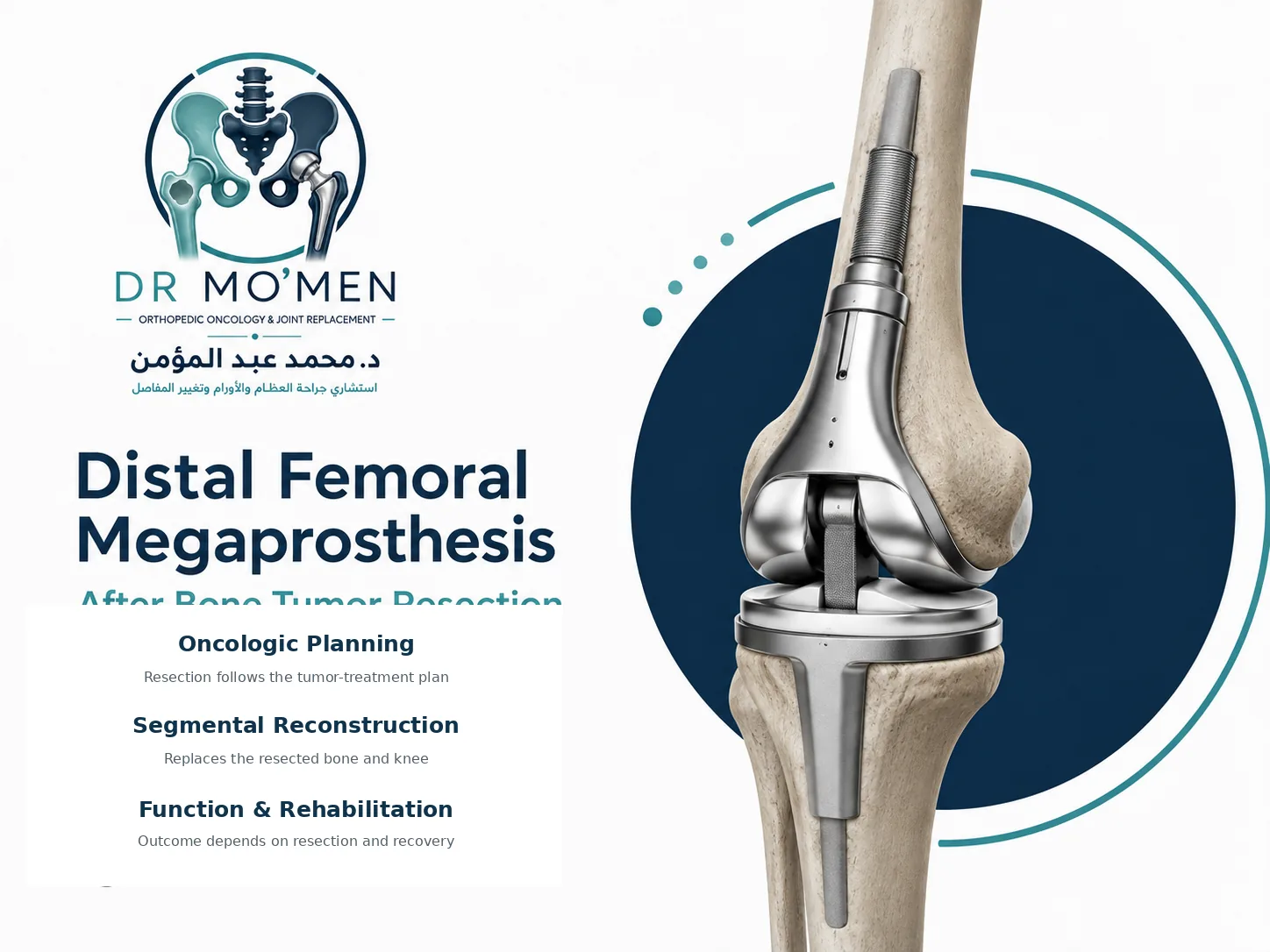
When distal femoral replacement is used after bone tumor resection, how surgery and rehabilitation proceed, and which long-term risks need surveillance.
Read article →
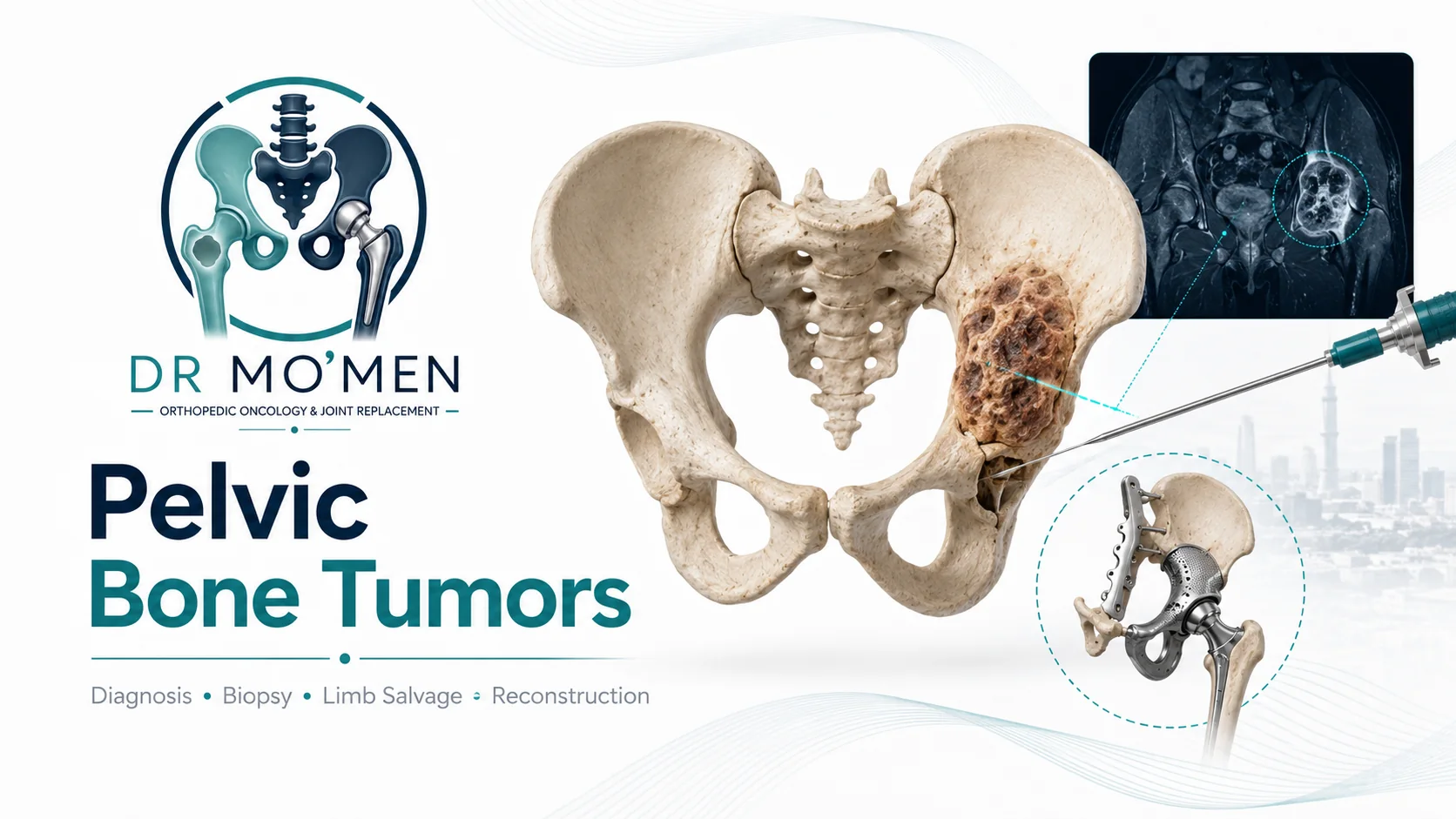
Diagnosis, MRI and CT, planned biopsy, internal hemipelvectomy, limb salvage and pelvic reconstruction options.
Read article →
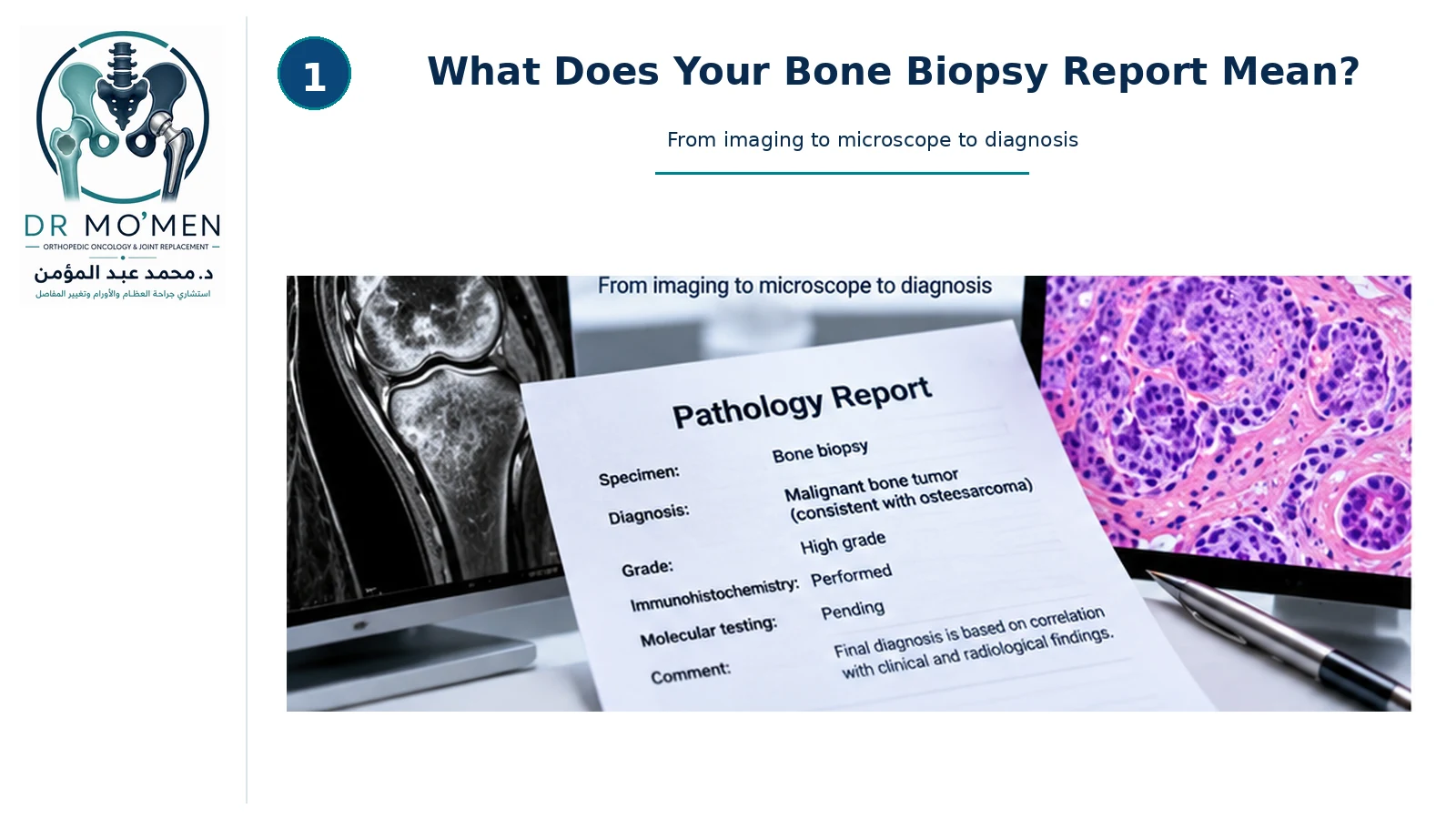
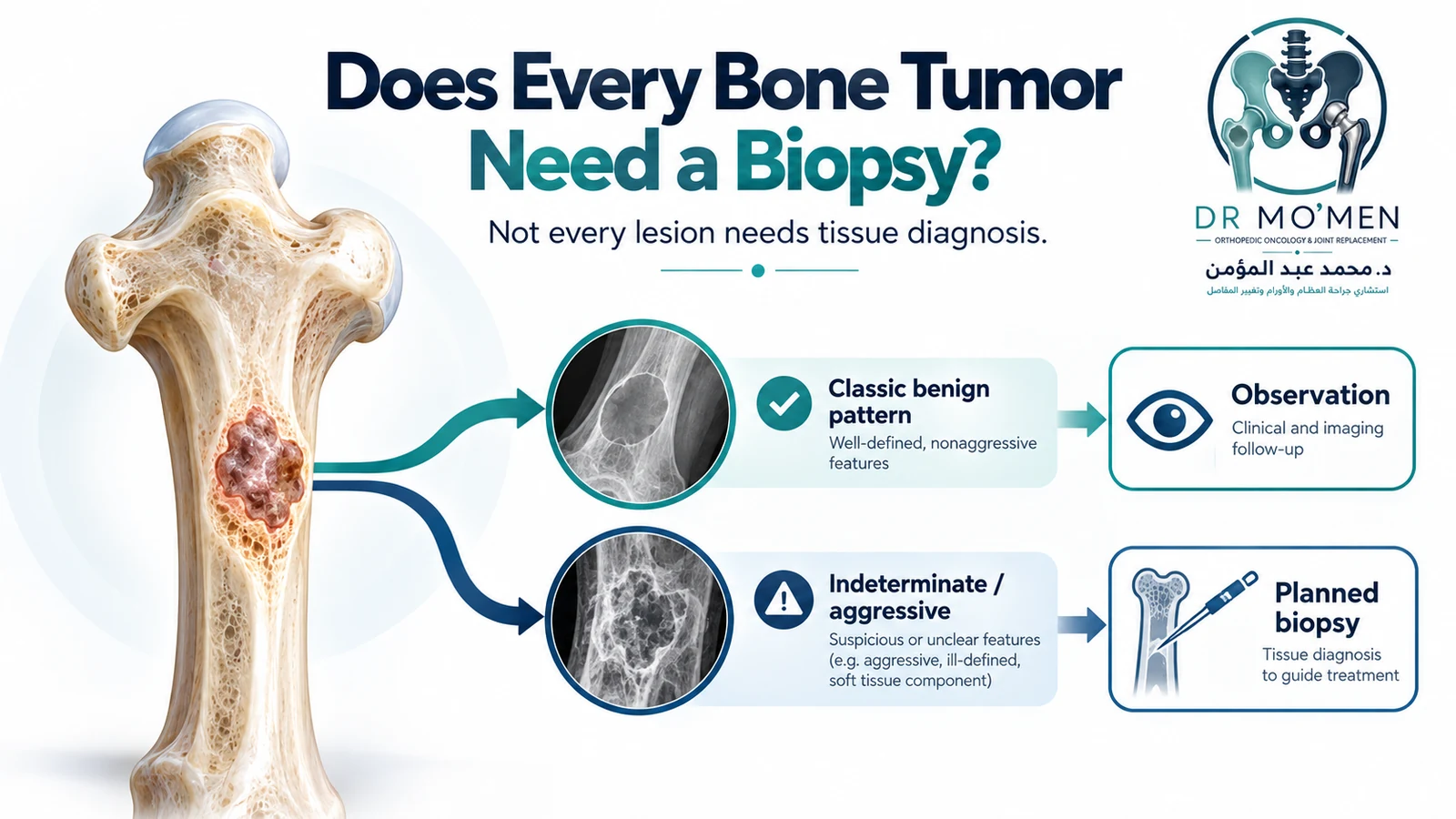
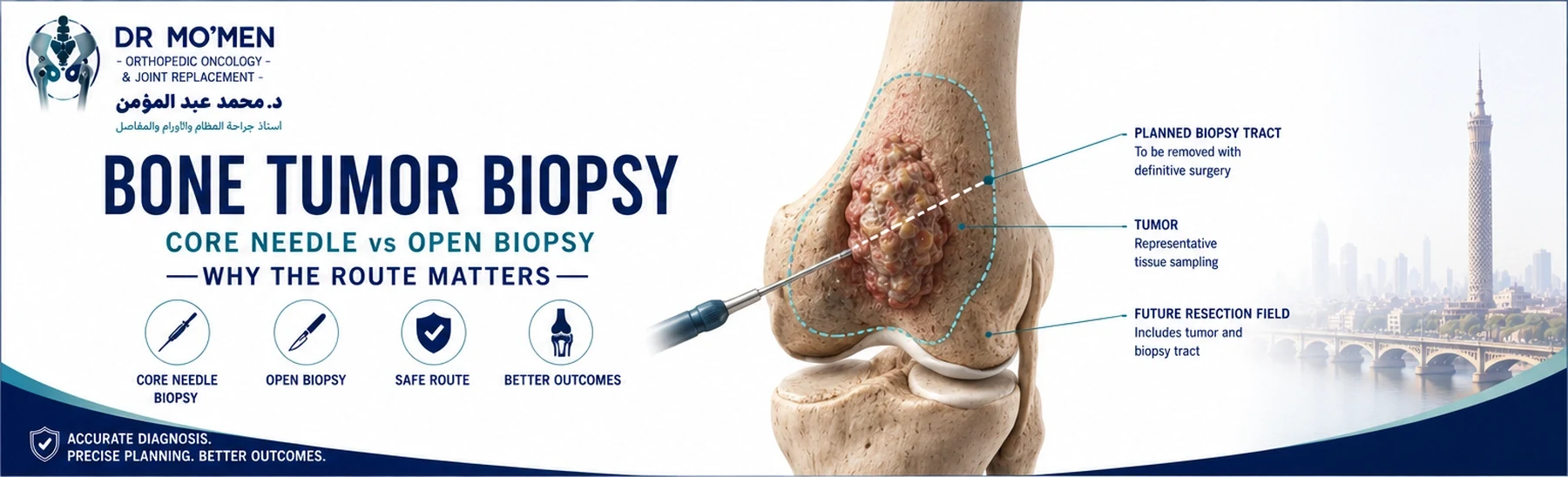
Core needle versus open biopsy, MRI-before-biopsy planning, safe tract selection, pathology correlation and common mistakes to avoid.
Read article →
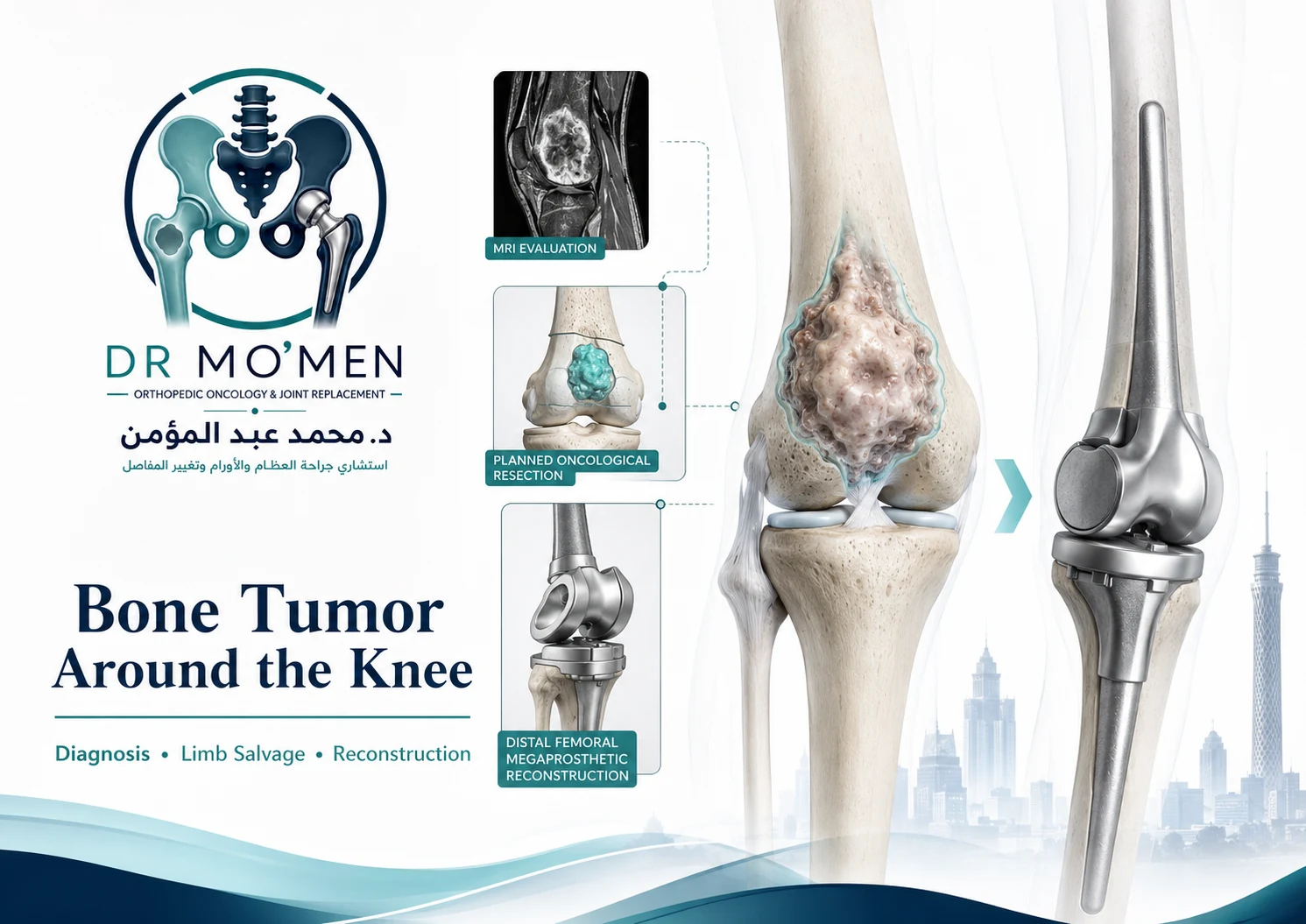
Diagnosis, MRI and biopsy planning, joint preservation, limb salvage and megaprosthetic reconstruction around the knee.
Read article →
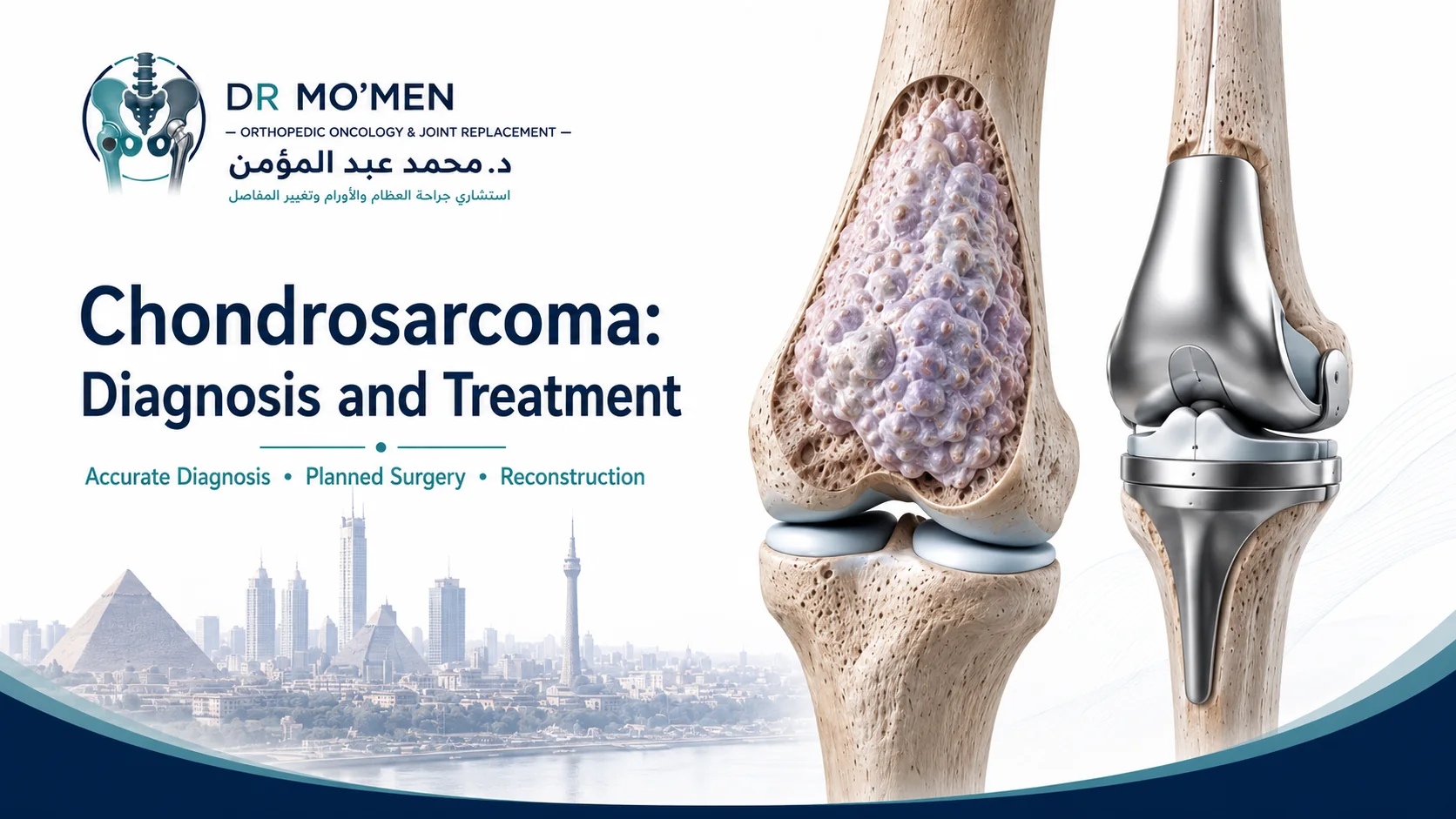
Warning signs, MRI-before-biopsy planning, pathology, staging, wide excision, limb salvage and multidisciplinary treatment.
Read article →
Core needle versus open biopsy, MRI-before-biopsy planning, safe tract selection, pathology correlation and common mistakes to avoid.
Read article →
Diagnosis, MRI and biopsy planning, joint preservation, limb salvage and megaprosthetic reconstruction around the knee.
Read article →
Warning signs, MRI-before-biopsy planning, pathology, staging, wide excision, limb salvage and multidisciplinary treatment.
Read article →
How Ewing sarcoma is diagnosed and staged, why chemotherapy is central, and how surgery or radiotherapy may be selected for local control.
Read article →
Diagnosis, biopsy planning, staging, chemotherapy, limb-salvage surgery, reconstruction and long-term follow-up.
Read article →
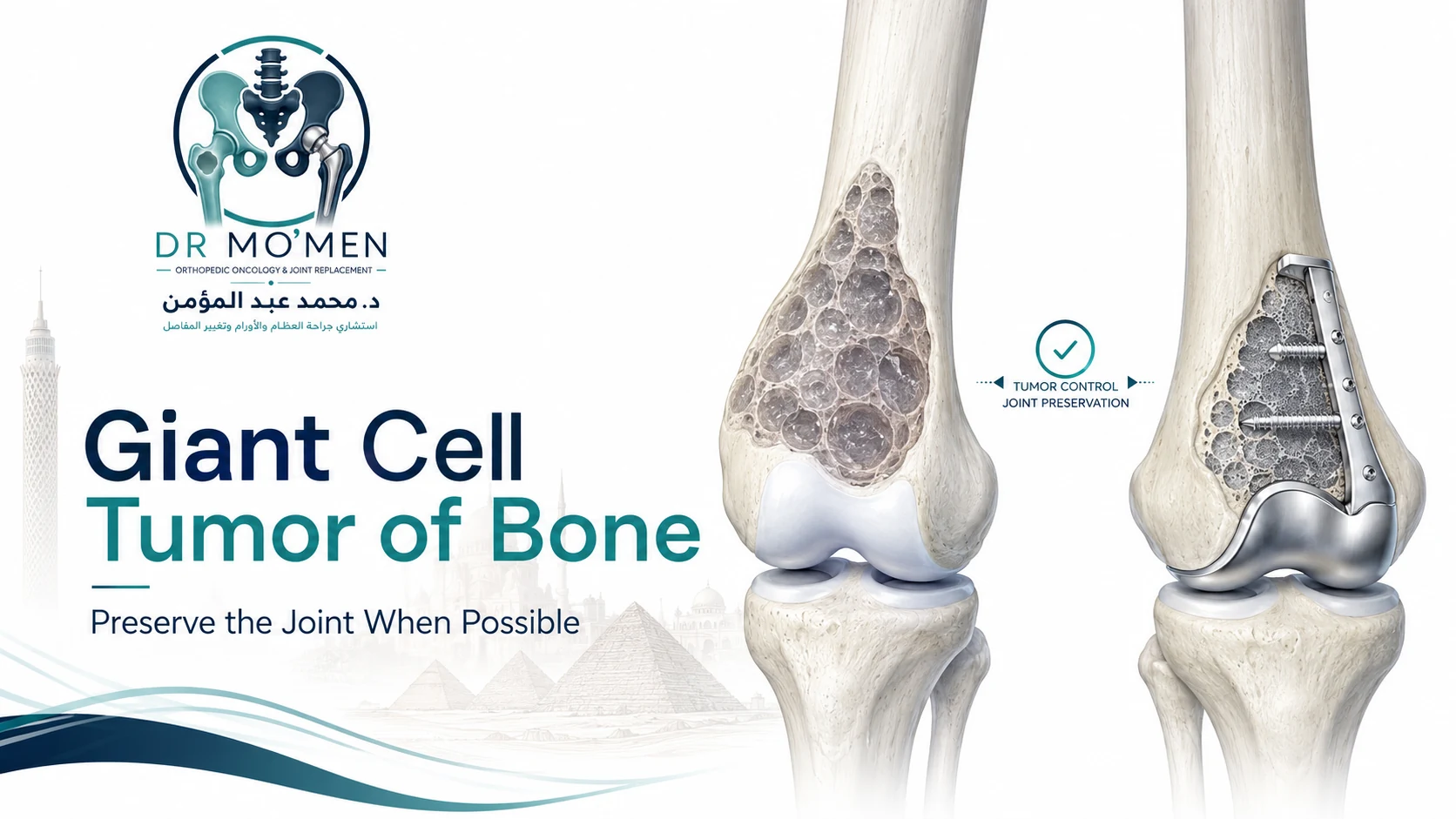
How GCTB is diagnosed, when extended curettage may preserve the native joint, why recurrence occurs, and when wider resection is considered.
Read article →
What should happen after a mass is removed and pathology unexpectedly reports soft-tissue sarcoma: reassessment, MRI, staging and planned definitive treatment.
Read article →
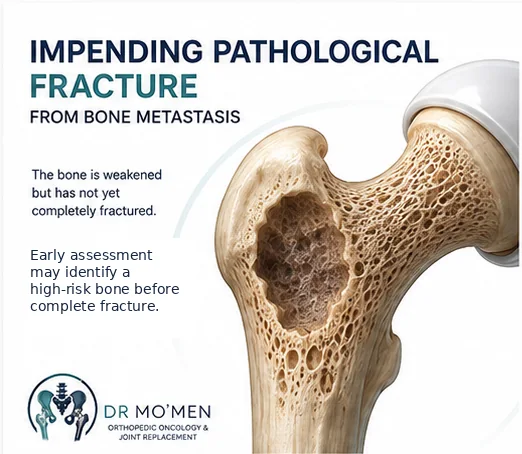
How fracture risk is assessed, why Mirels is only one part of the decision, and when preventive stabilization may be considered.
Read article →
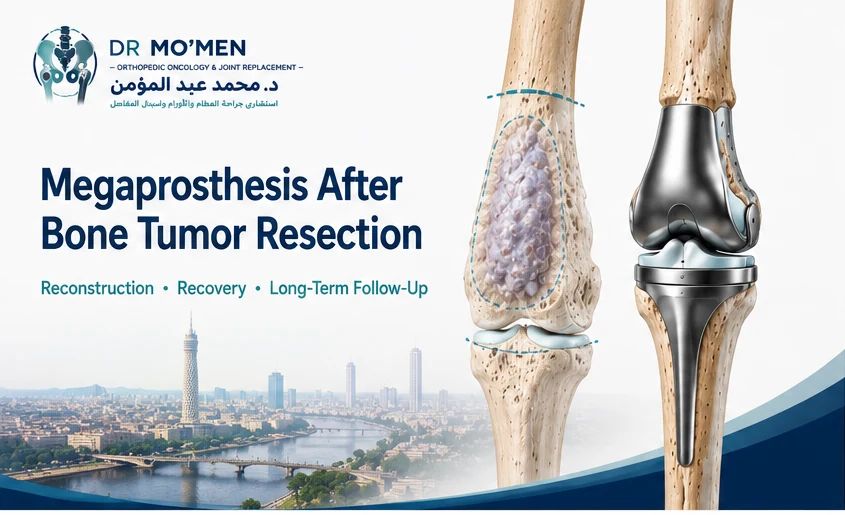
How megaprostheses reconstruct the limb after major bone tumor resection, including recovery, function, complications, revision surgery, and long-term surveillance.
Read article →
What recurrence means, how it is confirmed, why restaging matters, and when repeat limb salvage or second opinion may be appropriate.
Read article →
Symptoms, imaging, biopsy planning, tumor grade, surgery, limb salvage, recurrence, and when specialist review is needed.
Read article →
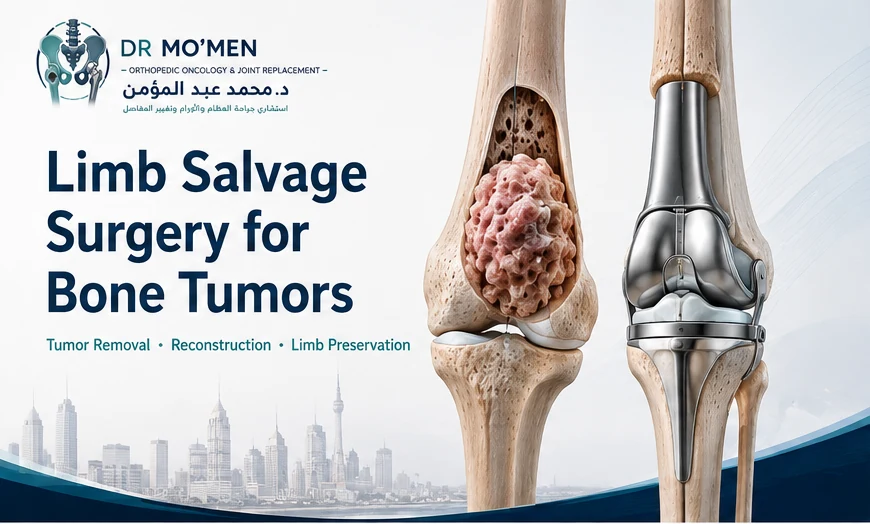
How bone tumors may be removed while preserving the arm or leg, including biopsy planning, wide resection, reconstruction, risks and second opinion timing.
Read article →
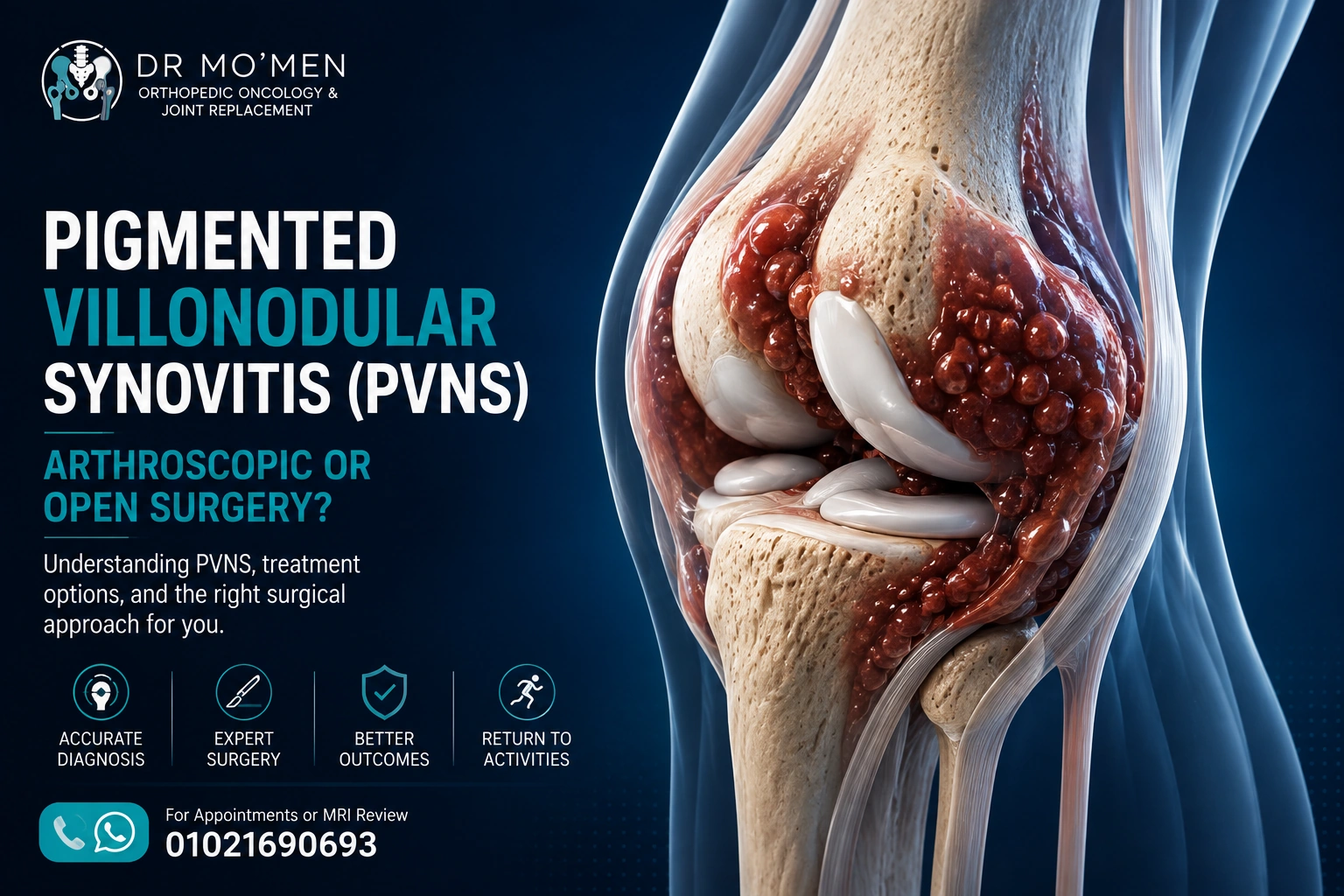
Symptoms, MRI mapping and how disease distribution guides arthroscopic, open or combined synovectomy.
Read article →
How a deep infrascapular lump can cause pain or clicking, how MRI supports diagnosis, and when treatment may be needed.
Read article →
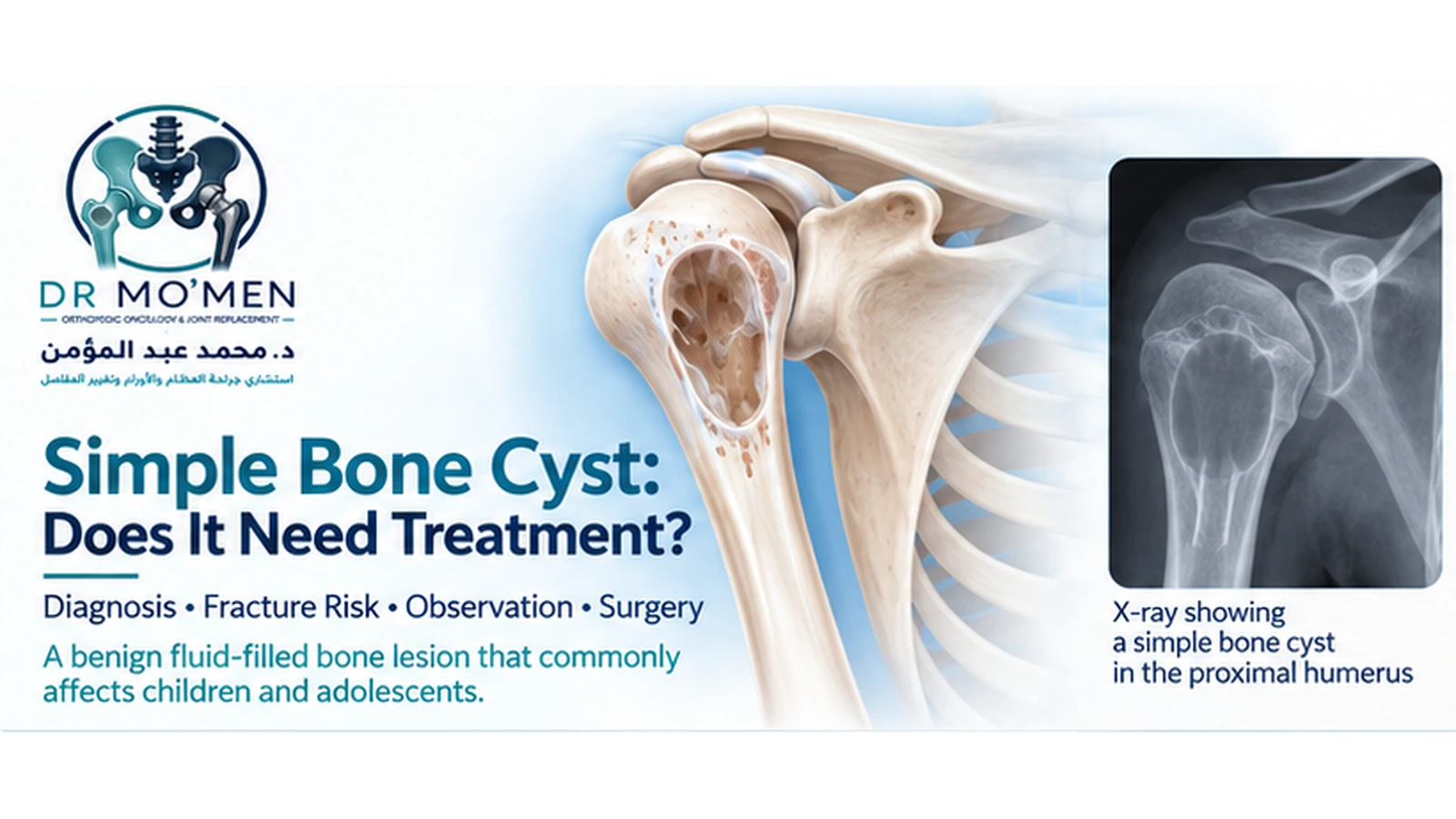
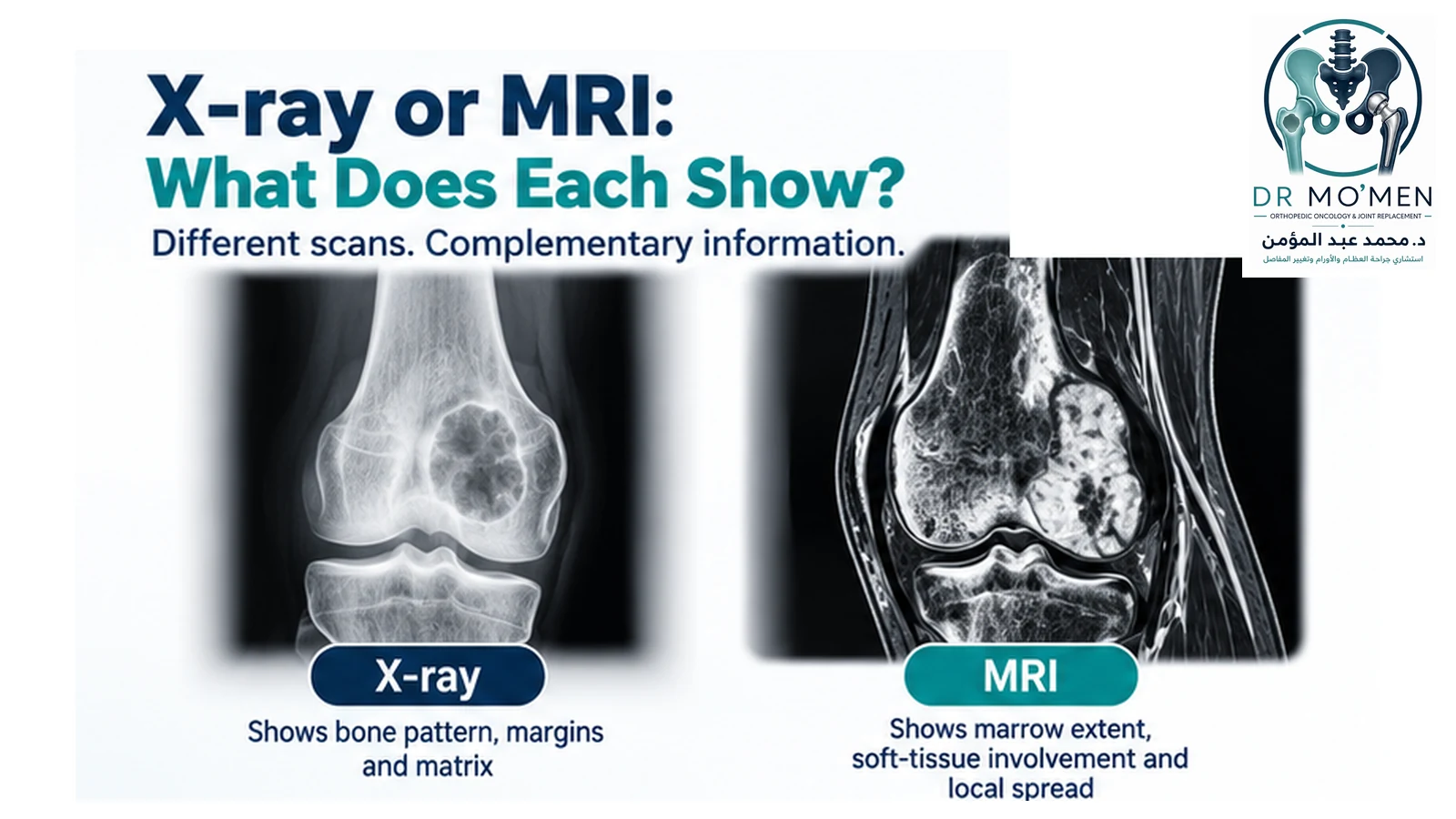
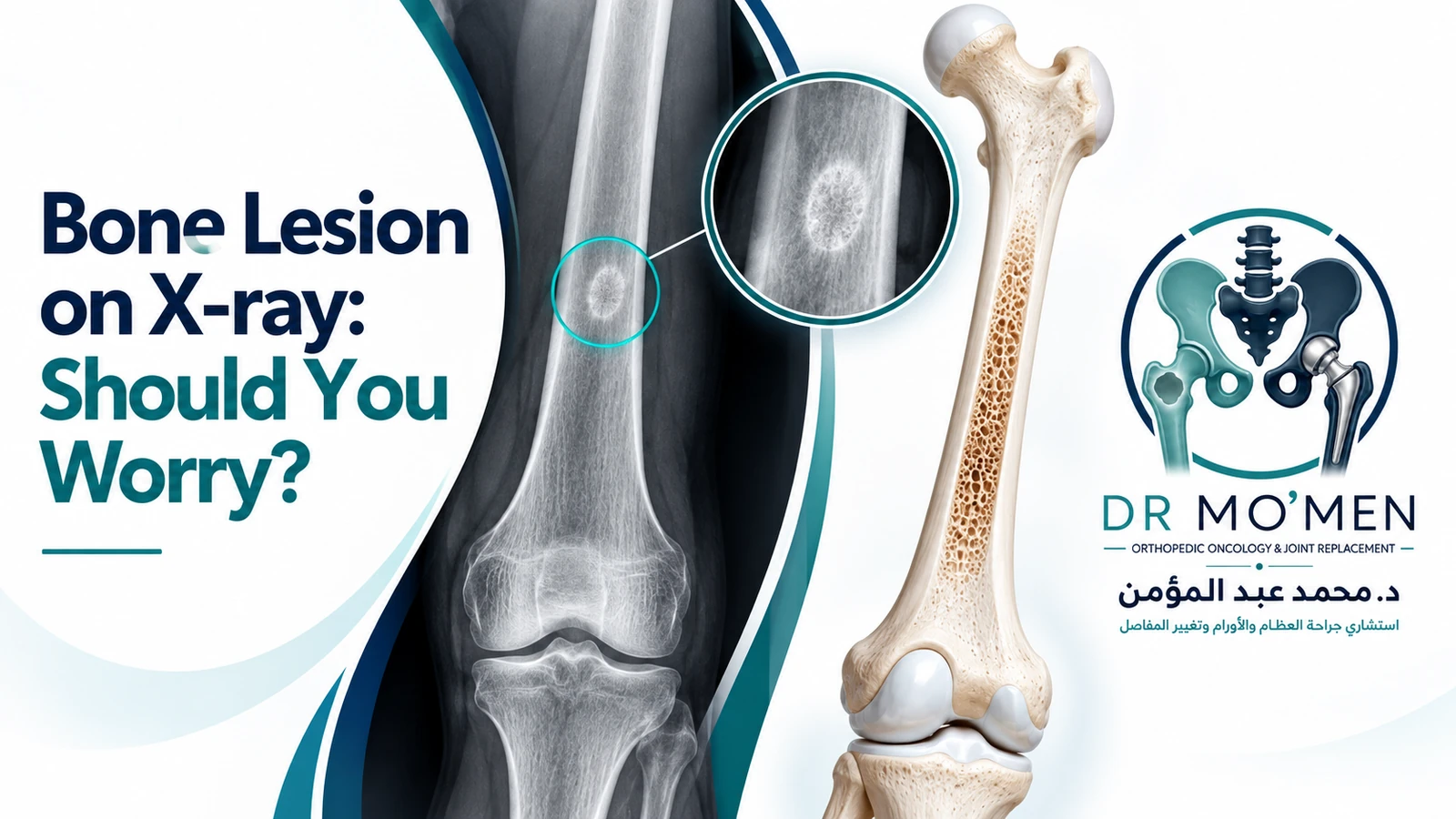
When night bone pain needs assessment, what warning signs matter, and how X-rays or MRI may guide diagnosis.
Read article →
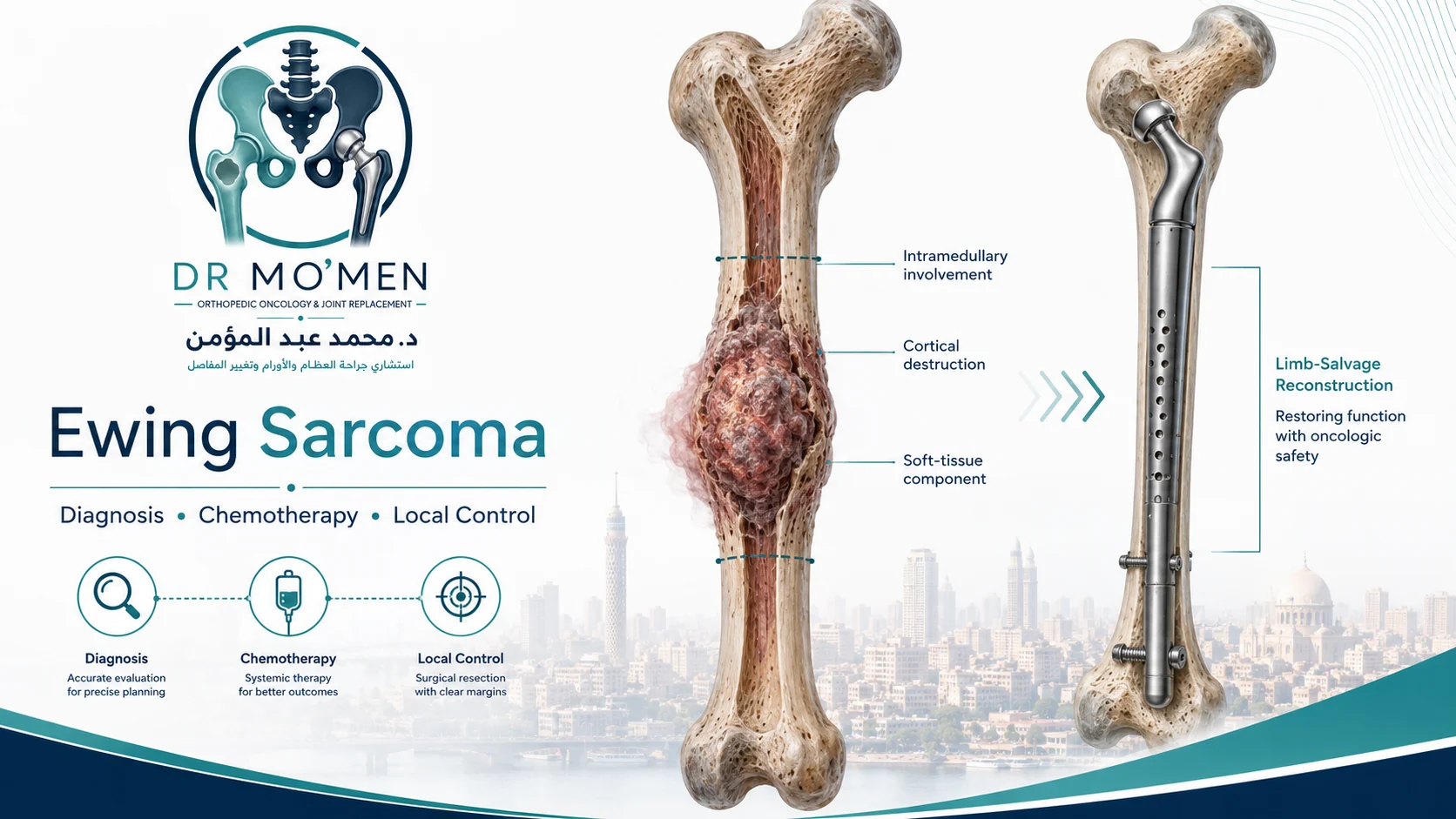
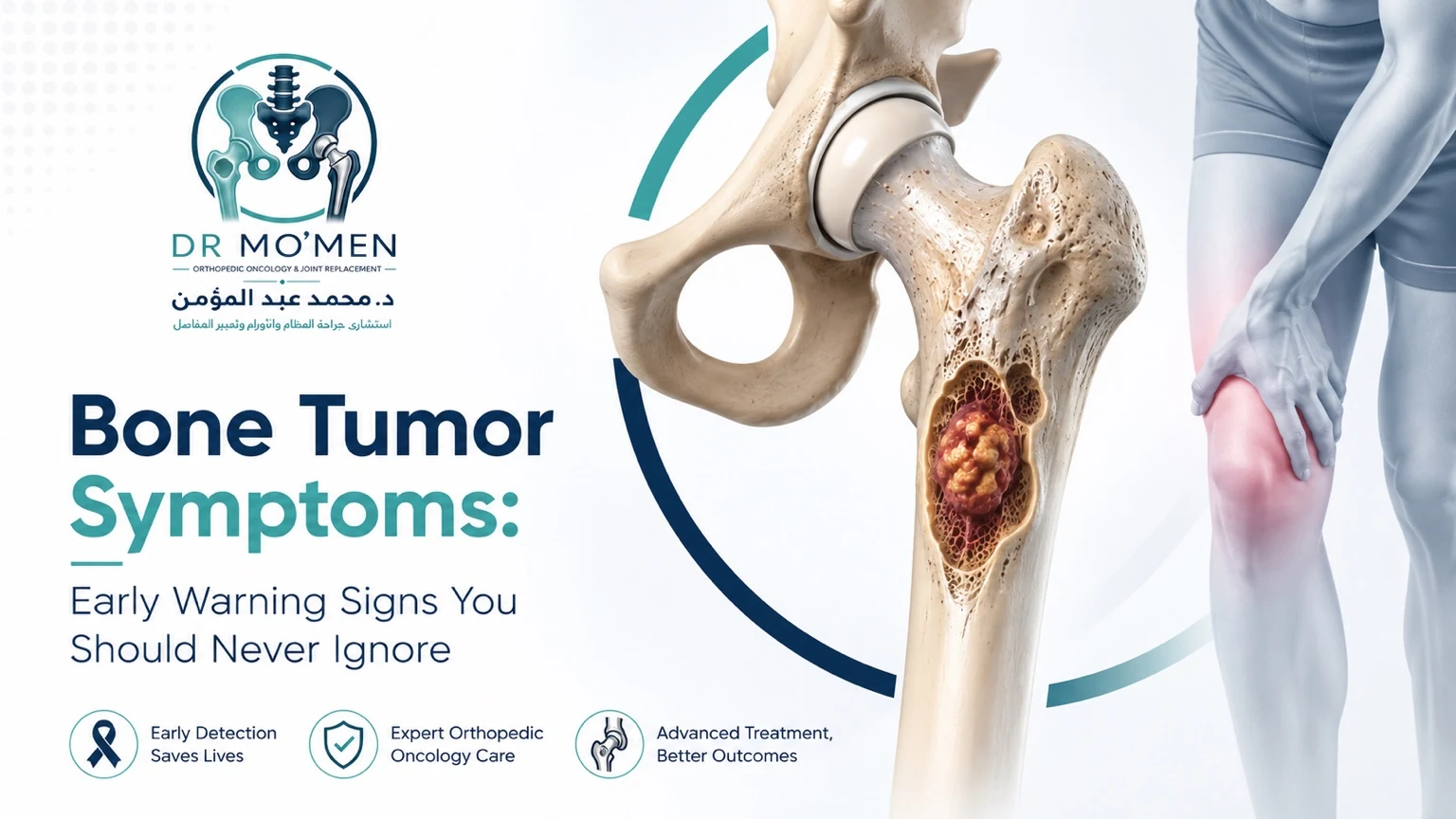
Persistent or progressive bone pain, night pain, swelling, reduced movement, or a fracture after minor trauma may need orthopedic oncology assessment.
Read article →
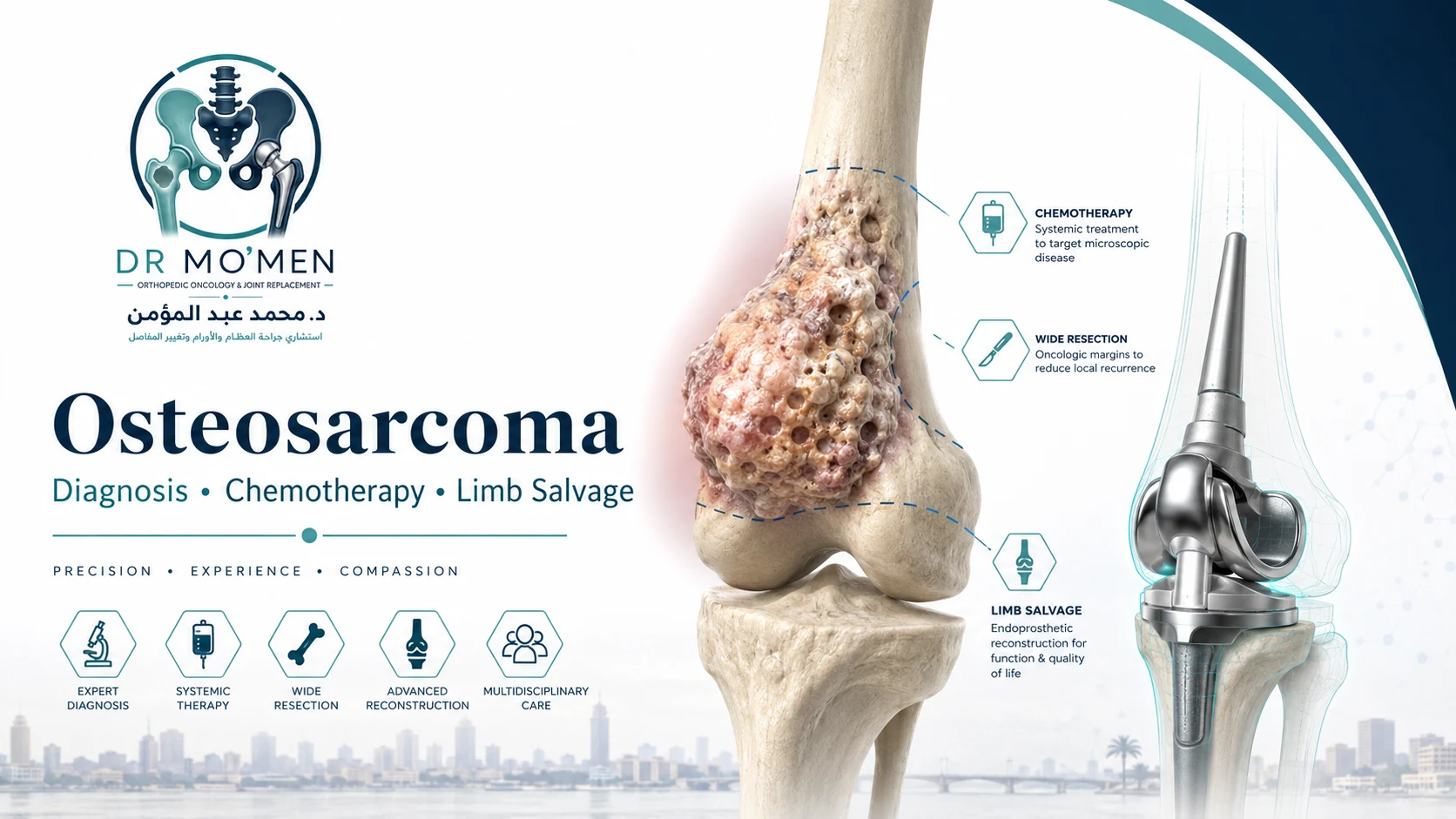
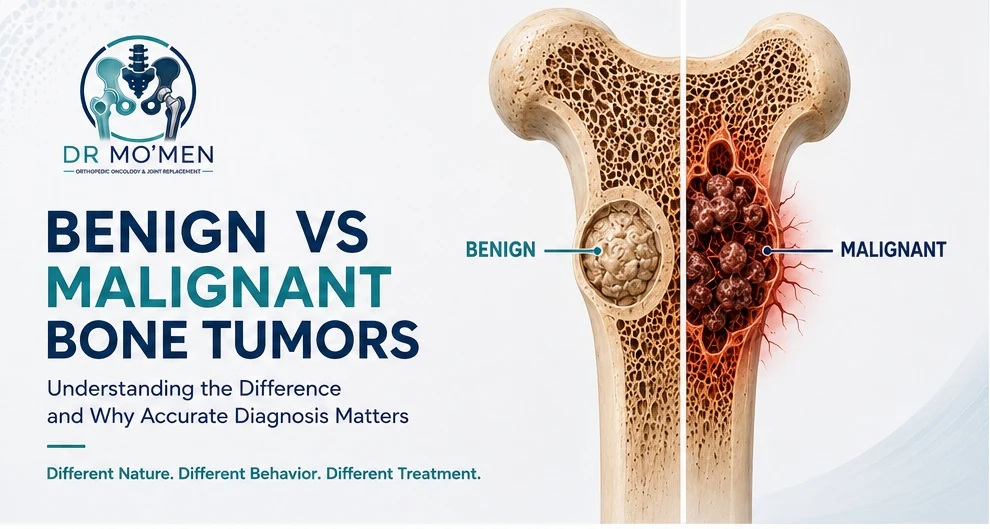
Benign and malignant bone tumors differ in behavior, imaging features, spread, and treatment; accurate diagnosis may require a planned biopsy.
Read article →
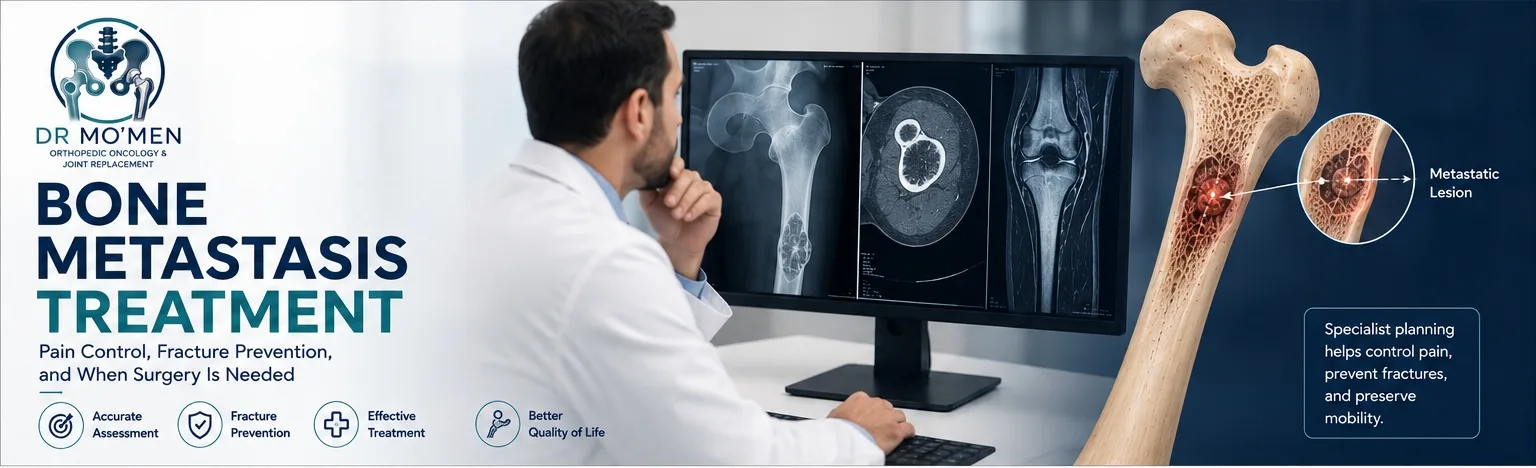
Understand how pain, fracture risk, radiotherapy, systemic treatment, and surgery are coordinated in metastatic bone disease.
Read article →Editorial approach: Articles are written for patient education, medically reviewed, and kept separate from the anonymized Case Library. They do not replace individual clinical assessment.