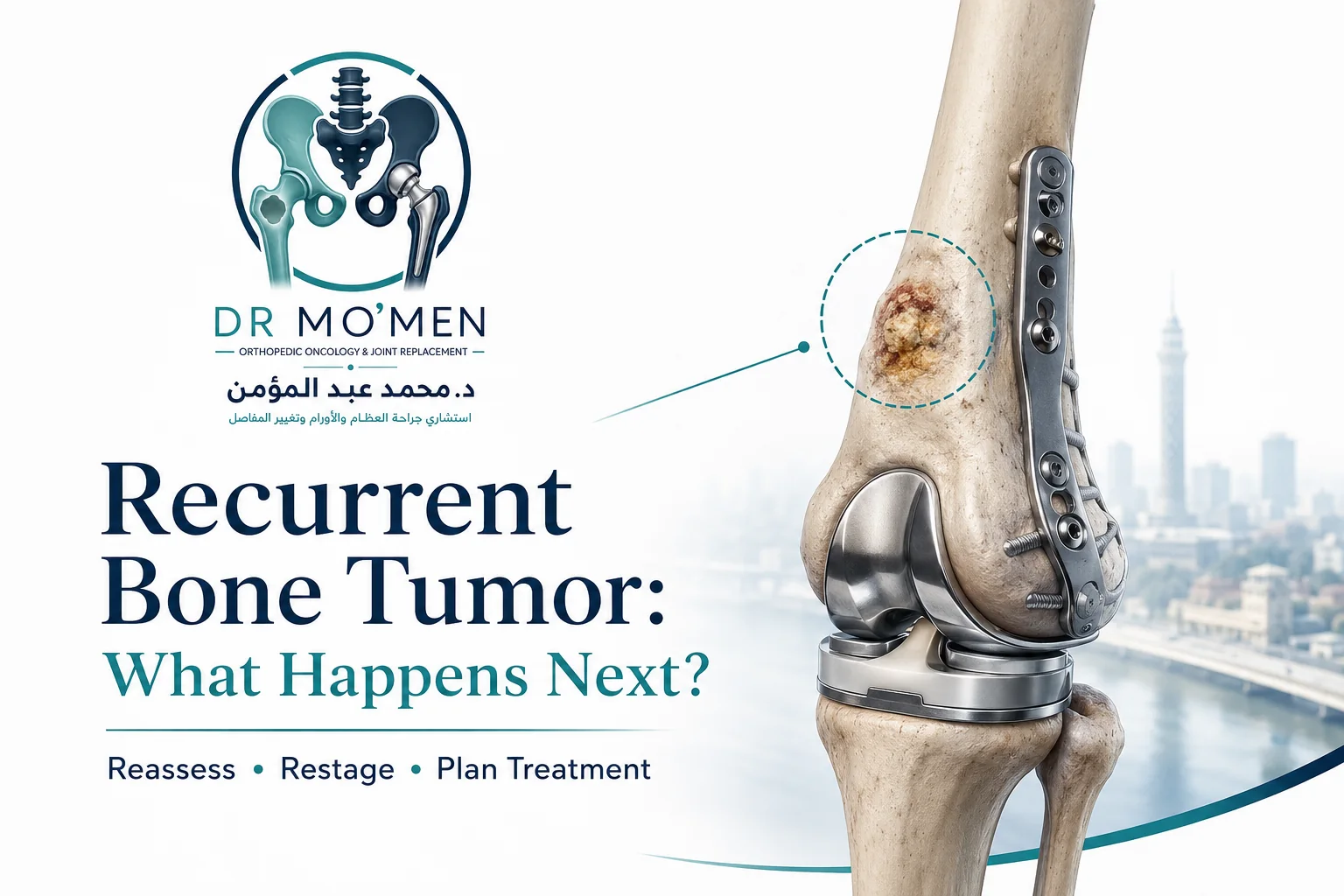
A suspected recurrent bone tumor should be reassessed carefully before another operation is planned. The next step usually involves reviewing the original diagnosis, pathology, previous surgery, surgical margins, current imaging and overall disease status.
What Does Bone Tumor Recurrence Mean?
A recurrence means that tumor has appeared again after previous treatment. It may be local, at or close to the original site, or metastatic/distant, where disease appears away from the original location.
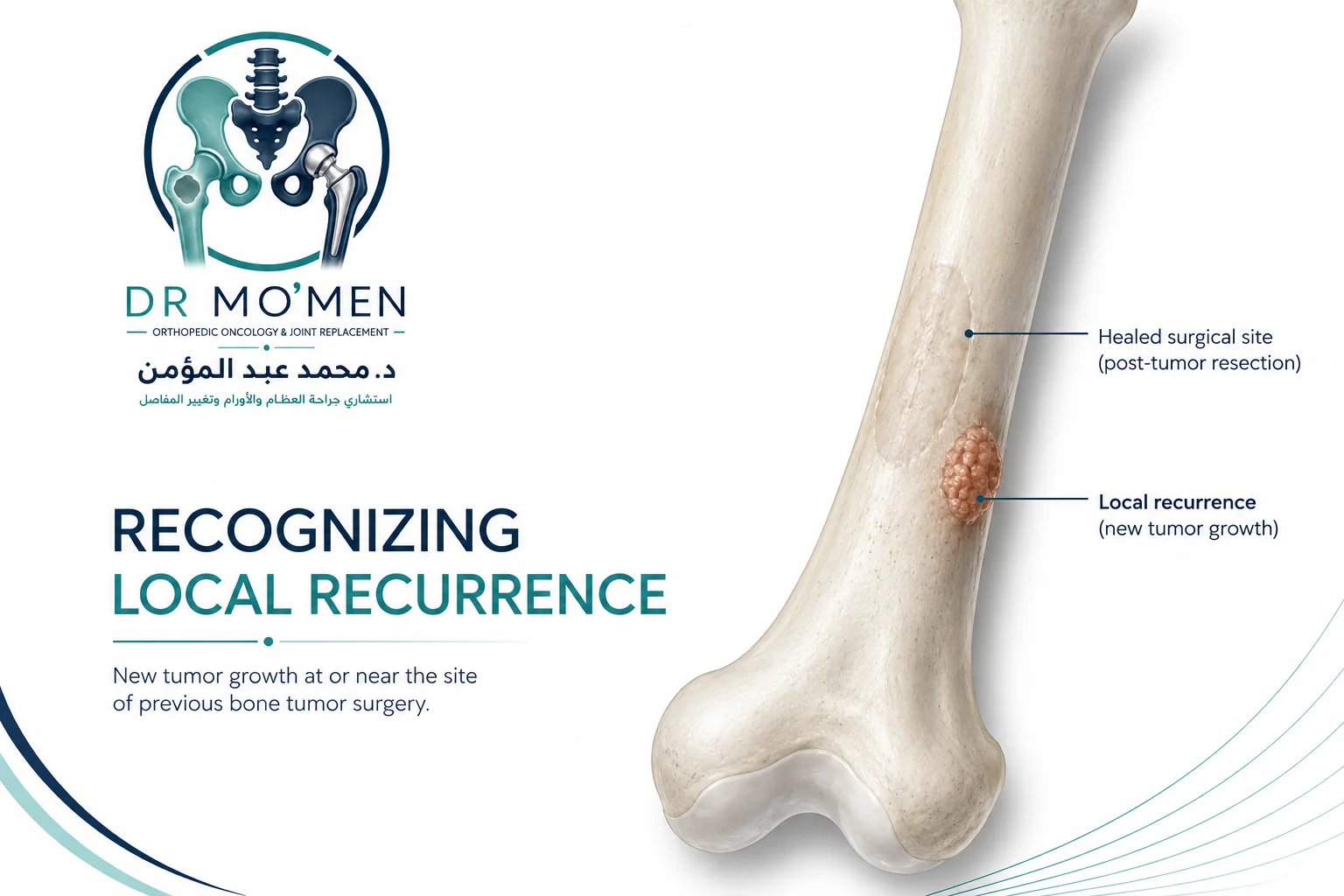
Local recurrence
A local recurrence develops at or close to the original tumor site. It may occur in bone, surrounding soft tissues, the previous surgical field, or tissues around a reconstruction or prosthesis.
Metastatic or distant recurrence
A tumor may also appear at a distant location such as the lungs, other bones or other sites depending on the tumor type. This distinction significantly changes treatment planning.
Does Recurrence Mean the First Treatment Was Wrong?
Not necessarily. Some tumors have a biological tendency to recur even after appropriate treatment. The important clinical question is why the tumor has recurred and what treatment is now appropriate.
Why Can a Bone Tumor Come Back?
Tumor biology
Some tumors are inherently more locally aggressive than others. Certain giant cell tumors may recur locally even though they are not conventional malignant bone cancers, while high-grade malignant tumors may have greater local and distant recurrence potential.
Surgical margins
For malignant bone tumors, the aim is generally to remove the tumor with an appropriate oncological margin. If tumor remains at or very close to the margin, recurrence risk may be higher, although recurrence can still occur despite appropriate treatment.
Previous unplanned surgery
When a mass is removed before its malignant nature is recognized, tissues outside the original tumor compartment may be contaminated and later treatment may become more complex.
How Is a Suspected Recurrent Bone Tumor Detected?
- A new lump or swelling
- Increasing pain or pain after a previously stable period
- Enlargement around a previous surgical site
- An unexplained fracture
- A change around a reconstruction
- New abnormalities on follow-up imaging
Symptoms after tumor surgery are not always caused by recurrence. Pain may also result from implant loosening, infection, fracture, weakness, scar tissue, joint degeneration or mechanical complications.
Why You Should Not Rush Into Another Operation
The case may first require review of previous pathology, operative notes, current MRI, restaging, multidisciplinary discussion and planned biopsy if tissue confirmation is required.
Review the Original Pathology
When a tumor recurs unexpectedly, confirming the original diagnosis can be important. This may involve review of pathology report, slides, paraffin blocks, and selected molecular or immunohistochemical testing where relevant.
MRI After Suspected Bone Tumor Recurrence
MRI is often central to evaluating local recurrence. It can help define size, relationship to the previous operative field, involvement of muscles, nearby nerves and vessels, joint involvement, bone involvement and relationship to a prosthesis or reconstruction.
Is a New Biopsy Always Needed?
Not always. The decision depends on the original diagnosis, imaging appearance, interval since previous treatment, whether infection or another condition is possible, and whether treatment would change based on histological confirmation. If biopsy is required, it should again be carefully planned. Read more about bone tumor biopsy planning.
Why Restaging Matters
A local recurrence should not be treated in isolation without understanding whether disease is present elsewhere. Depending on tumor type, restaging may include imaging of the chest, other bones, or additional sites.
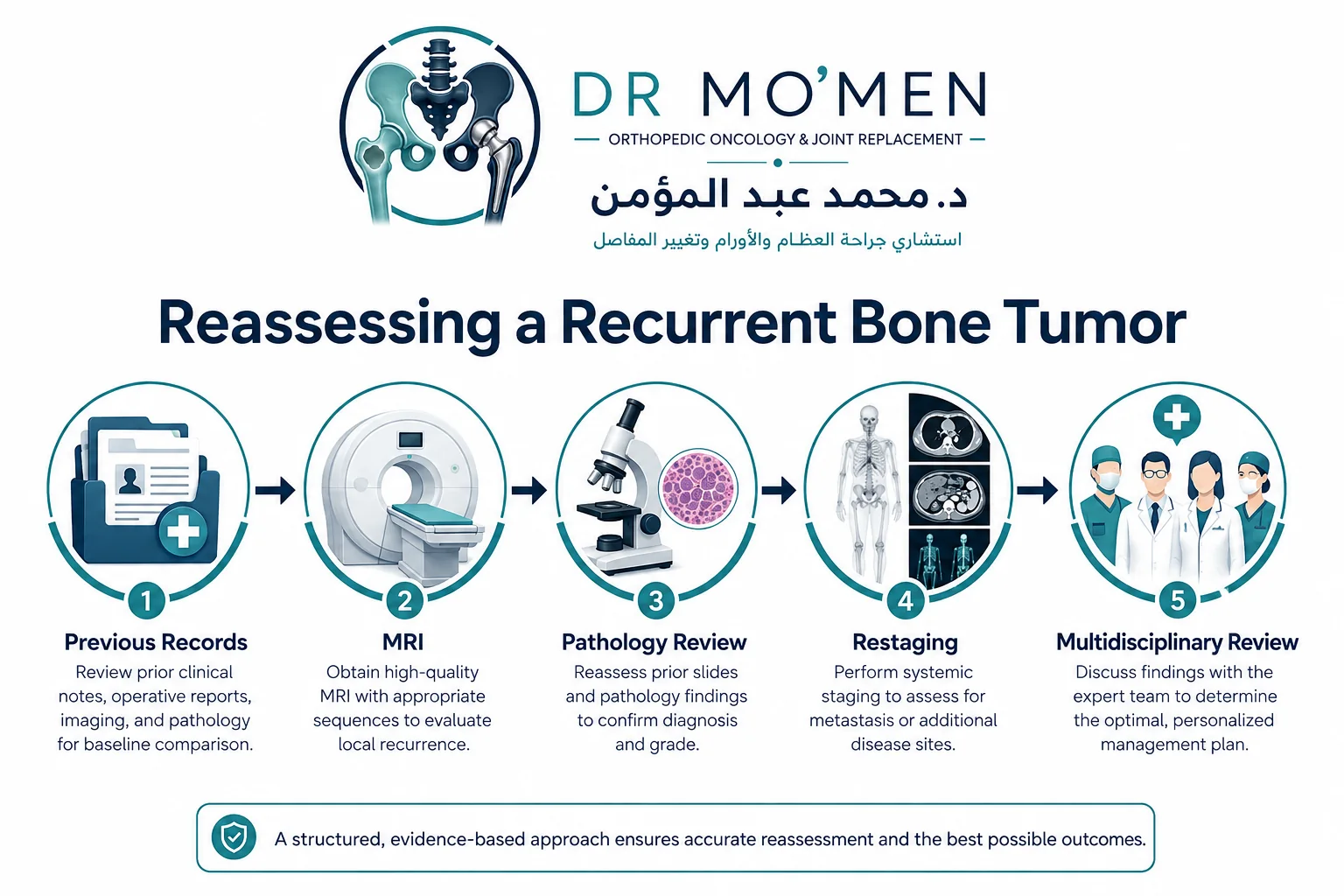
Multidisciplinary Reassessment
Complex recurrent tumors are often best reviewed in a multidisciplinary setting involving orthopedic oncology, radiology, pathology, medical oncology, radiation oncology and, when required, reconstructive or vascular surgery and rehabilitation specialists.
Treatment Options for a Recurrent Bone Tumor
Treatment depends primarily on the tumor diagnosis and extent. Options may include repeat surgery, repeat limb-salvage surgery, wider resection, revision reconstruction, megaprosthetic revision, biological reconstruction, systemic therapy, radiotherapy in selected tumor types, amputation in selected circumstances, or observation in carefully selected situations.
Can Limb Salvage Still Be Possible After Recurrence?
Yes, in selected cases. A recurrent bone tumor does not automatically mean amputation is required. Repeat limb salvage may be possible when adequate margins can still be achieved, the limb can be reconstructed, expected function is reasonable, and overall disease status supports major surgery.
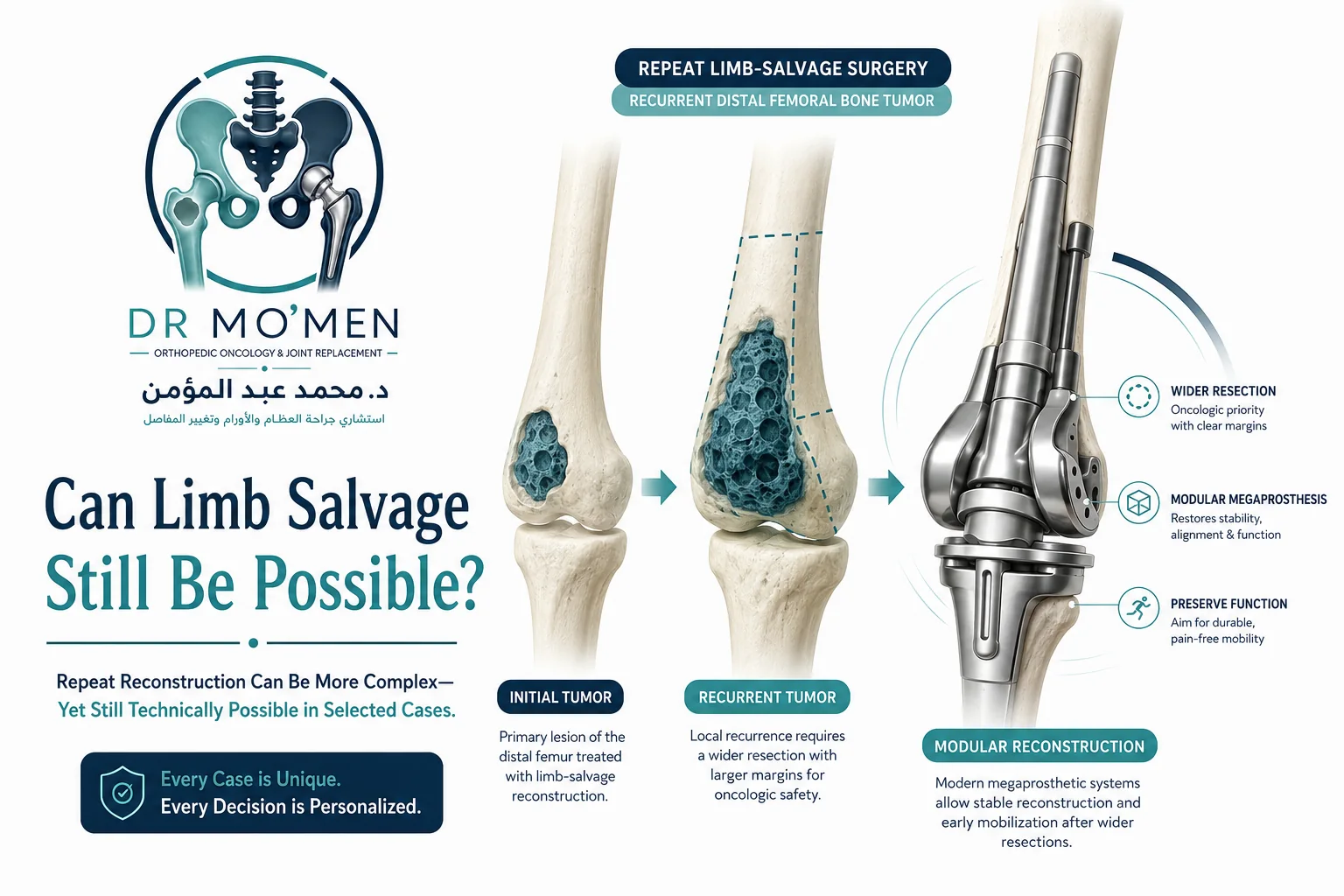
For broader surgical principles, see limb salvage surgery for bone tumors.
When Might Amputation Be Considered?
Amputation may be appropriate in selected situations when limb preservation would compromise oncological safety or result in a poorly functioning limb. This can include extensive neurovascular involvement, inability to achieve margins, severe contamination, uncontrolled infection, major soft-tissue loss, unreconstructable anatomy or severe pain with poor expected function.
Recurrent Giant Cell Tumor of Bone
Giant cell tumor of bone is usually classified as locally aggressive rather than a conventional bone sarcoma. Some recurrent giant cell tumors may still be treated with repeat curettage, while others require wider resection and reconstruction.
For a focused overview of GCTB treatment, joint preservation and recurrence, see Giant Cell Tumor of Bone: Curettage, Recurrence and When Resection Is Needed.
Recurrent Chondrosarcoma
For many conventional chondrosarcomas, surgery remains central to local disease control. Reassessment should focus on grade, current extent, previous margins, nearby structures, distant disease and feasibility of another wide resection. Chondrosarcoma should not be treated as one uniform biological entity. Read more about chondrosarcoma treatment.
Recurrent Osteosarcoma
Recurrent osteosarcoma requires reassessment by a multidisciplinary sarcoma team. Surgery may remain important in selected cases where recurrent or metastatic disease can be completely resected, and systemic therapy decisions should be made with medical oncology.
Recurrent Ewing Sarcoma
Recurrent Ewing sarcoma also requires specialist multidisciplinary evaluation. Treatment may involve systemic therapy, surgery and radiotherapy depending on the location and extent of recurrence and previous treatment.
What If the First Surgery Was Unplanned?
A mass removed before its malignant nature is recognized should not usually be followed by another immediate operation without reassessment. The preferred next step may include original pathology, operative notes, MRI of the full surgical field, staging and multidisciplinary review.
What If a Megaprosthesis Is Already Present?
Recurrence around a megaprosthesis can be technically challenging. The team must distinguish recurrence from infection, mechanical loosening, implant wear, fracture or soft-tissue failure. Confirmed recurrence may require removal of part or all of the prosthesis, wider resection, revision megaprosthetic reconstruction or other strategies.
Could Pain Around a Megaprosthesis Be Something Other Than Recurrence?
Yes. Pain may also result from infection, loosening, mechanical failure, instability, fracture or soft-tissue problems. Recurrence should not be diagnosed from pain alone.
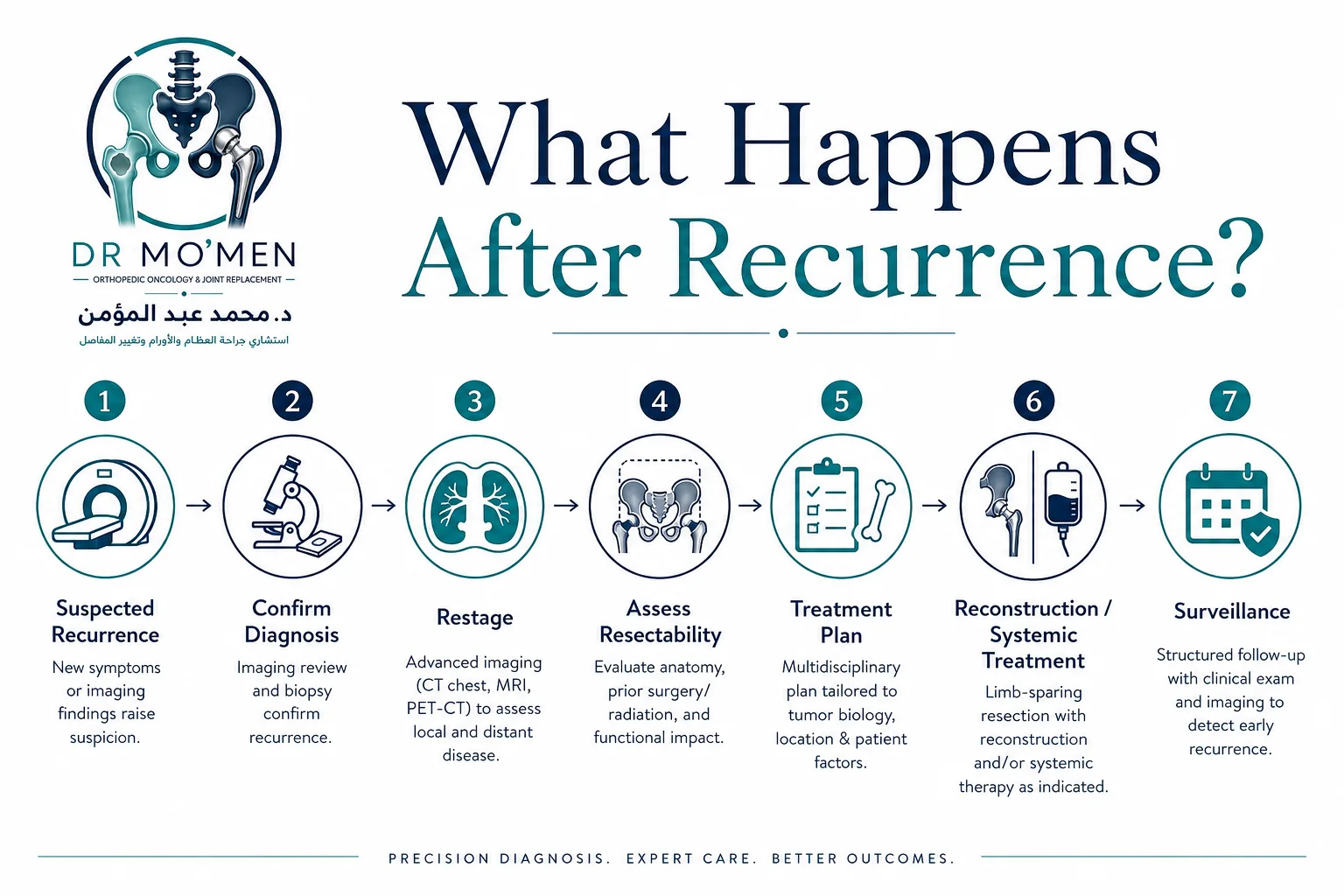
What Happens After Recurrence? A Practical Decision Pathway
The general principle is sequential: confirm what the new abnormality represents, define the local and systemic extent of disease, assess whether complete removal is feasible, and then choose the treatment and reconstruction strategy.
How Is Follow-Up Planned After Treatment of Recurrence?
Follow-up depends on tumor type and treatment. Surveillance may include clinical examination, local imaging, chest imaging where appropriate, reconstruction assessment, function monitoring and rehabilitation.
When Should You Seek an Orthopedic Oncology Second Opinion?
- A tumor has returned after previous surgery
- Repeat surgery or amputation has been recommended
- Previous surgery was unplanned
- Recurrence has developed around a megaprosthesis
- The original diagnosis is uncertain
- You want to understand whether repeat limb salvage is possible before an irreversible procedure
Request an orthopedic oncology second opinion.
International Patients: What Should You Send Before Travelling?
International patients with suspected or confirmed recurrence can send current X-rays, MRI, CT scans, staging scans if available, original imaging, original pathology report, pathology slides or blocks, operative reports, margin report, chemotherapy details, radiotherapy details, implant information and current medical reports.
Send Your Imaging Before You Travel
A preliminary remote review can help identify missing records, determine whether additional imaging or pathology review may be useful, and assess whether specialist evaluation in Cairo is reasonable. It does not replace examination, definitive pathology review, staging or multidisciplinary decision-making.
For appointments or medical-record review: +20 102 1690693
International Patients → Orthopedic Oncology Second Opinion →
About Dr. Mohammed Abdelmoemen Abuelhadid
Dr. Mohammed Abdelmoemen Abuelhadid is an Orthopedic Oncology & Joint Replacement Surgeon and Lecturer of Orthopedic Surgery at Ain Shams University. His clinical areas include bone and soft-tissue tumors, orthopedic oncology, limb-salvage surgery, recurrent bone-tumor surgery, tumor resection and reconstruction, megaprosthetic reconstruction, revision arthroplasty, complex orthopedic reconstruction, and second medical opinions for complex orthopedic cases.
If the recurrence follows a previous curettage and the main question is whether the native joint can still be preserved, see bone tumor recurrence after curettage.
Frequently Asked Questions
Does a recurrent bone tumor always mean cancer has spread?
No. A tumor may recur locally without evidence of distant metastatic disease. Restaging is important because treatment depends on whether recurrence is isolated or associated with disease elsewhere.
Can a recurrent bone tumor be removed again?
In many selected cases, repeat surgery is possible. Feasibility depends on tumor type, extent, previous surgery, margins, nearby nerves and vessels, overall disease status and available reconstruction options.
Can limb salvage still be performed after recurrence?
Sometimes. Repeat limb salvage may be feasible when adequate tumor resection and useful reconstruction can still be achieved without compromising oncological safety.
Does recurrent giant cell tumor always require wide resection?
No. Some recurrent giant cell tumors may still be treated with repeat curettage, whereas more extensive lesions may require resection and reconstruction.
Why might the original pathology be reviewed?
If recurrence is unusual or the diagnosis is uncertain, reviewing original pathology can help confirm that the current treatment plan is based on the correct tumor diagnosis.
Is pain around a tumor prosthesis always recurrence?
No. Pain can also result from infection, loosening, mechanical failure, fracture, instability or soft-tissue problems.
Can I get a second opinion before travelling to Egypt?
Yes. Available imaging, pathology reports, operative notes and current investigations can be reviewed preliminarily. Remote review does not replace examination or definitive multidisciplinary evaluation.
How this article was reviewed
This patient-education article was reviewed for clinical accuracy, patient safety, and decision-making clarity by Dr. Mohammed Abdelmoemen Abuelhadid. It is intended to support, not replace, clinical examination, pathology review, staging, and review of the actual imaging and reports.
Author and medical reviewer
Dr. Mohammed Abdelmoemen Abuelhadid — Orthopedic Oncology & Joint Replacement Surgeon and Lecturer of Orthopedic Surgery at Ain Shams University.
Medical Disclaimer: This article is for patient education and does not replace clinical examination, review of imaging, pathology, staging investigations, or individualized multidisciplinary medical advice.