Knee pain does not automatically mean that you need a knee replacement.
Many patients have significant arthritis on an X-ray but remain reasonably active with non-surgical treatment. Others have severe pain, stiffness, deformity, or loss of mobility that substantially affects everyday life despite appropriate treatment.
The decision to proceed with knee replacement therefore depends on the whole clinical picture: your symptoms, examination, X-rays, activity level, overall health, previous treatments, expectations, and the specific cause of the knee problem.
The purpose of knee replacement is not simply to treat an abnormal X-ray. It is to improve pain and function when the damaged knee is significantly limiting quality of life and reasonable non-operative options are no longer providing adequate control.
What Is the Problem That Leads to Knee Replacement?
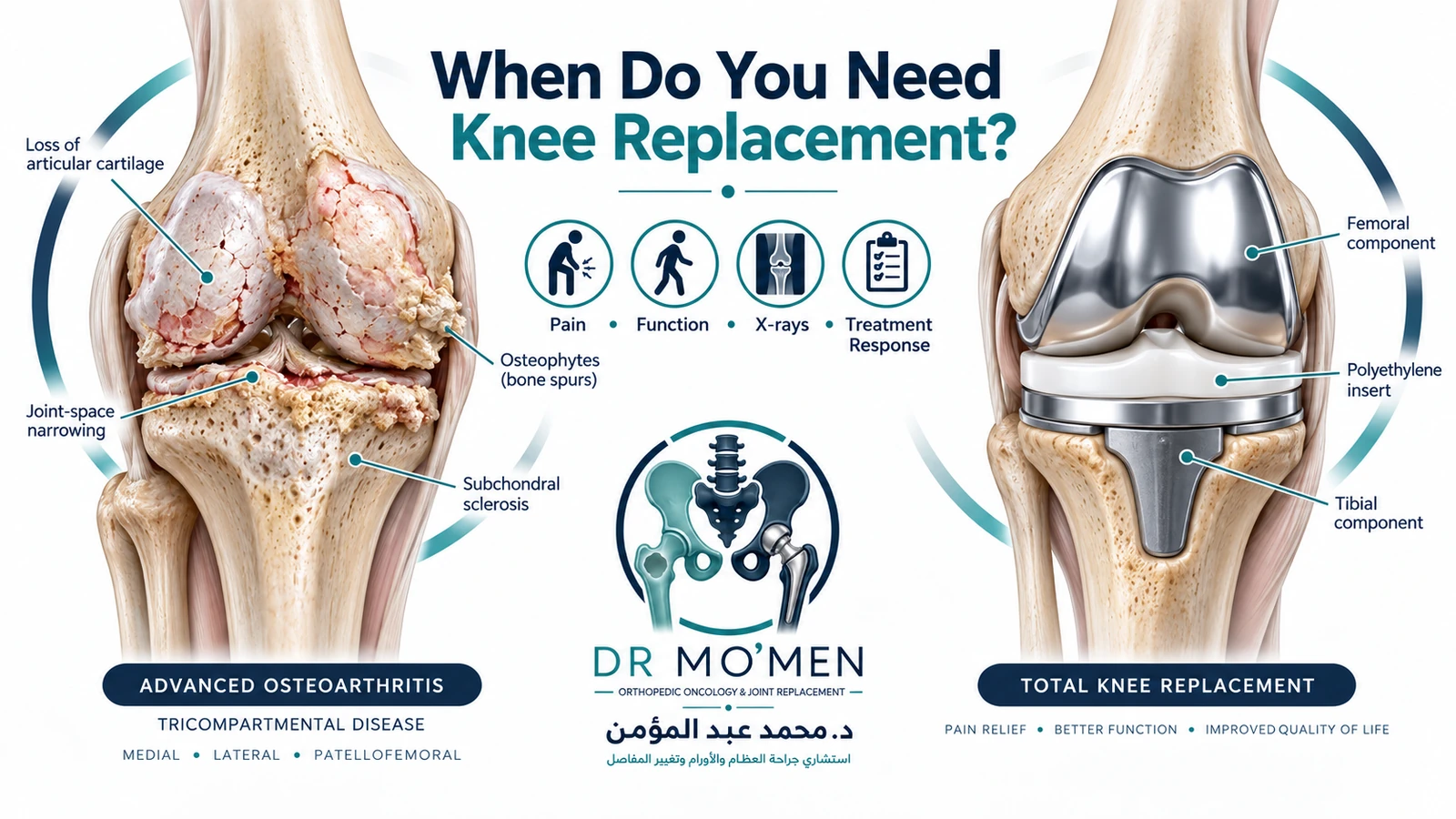
A healthy knee has smooth articular cartilage covering the ends of the femur and tibia. This allows the joint surfaces to move with relatively low friction.
In advanced arthritis, this cartilage becomes progressively damaged. The joint may develop:
- narrowing or loss of the joint space
- osteophytes or bone spurs
- subchondral sclerosis
- cystic changes
- deformity
- stiffness
- instability in some cases
The most common reason for total knee replacement is advanced osteoarthritis.
Other conditions may also lead to severe joint destruction, including inflammatory arthritis, post-traumatic arthritis after previous fractures or ligament injuries, osteonecrosis, or complex deformity.
However, the presence of arthritis does not by itself determine whether surgery is necessary.
What Are the Signs That Knee Replacement May Be Needed?
Several features may suggest that it is reasonable to discuss knee replacement with an orthopedic surgeon.
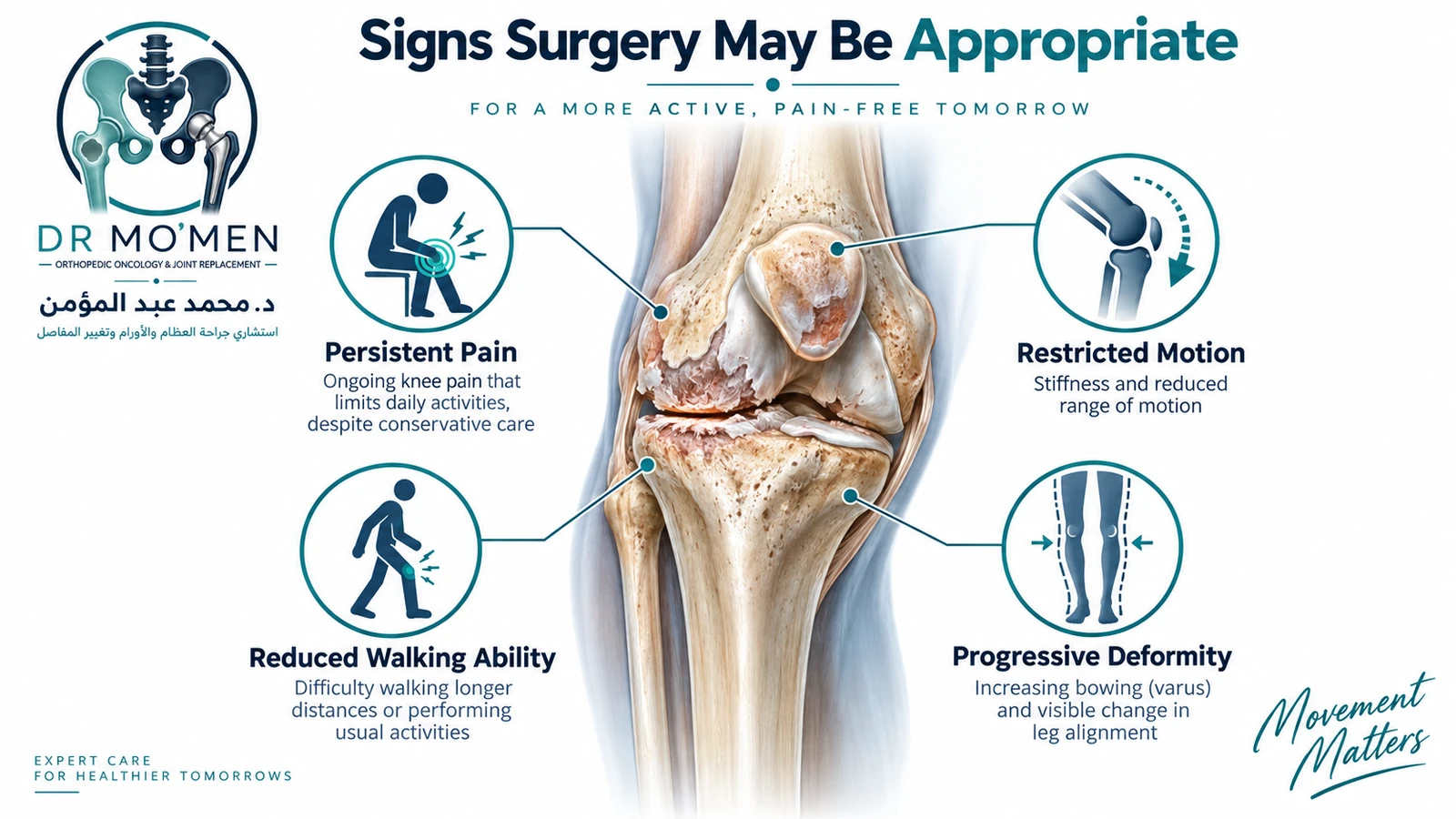
1. Knee pain is substantially affecting daily life
Pain may interfere with activities such as:
- walking reasonable distances
- climbing or descending stairs
- standing for prolonged periods
- working
- shopping
- exercise
- getting in and out of a car
- sleeping comfortably
The important question is not simply “How bad does the X-ray look?”
A more useful question is:
“How much is this knee affecting the way I live?”
2. Pain persists despite appropriate non-surgical treatment
Most patients with knee osteoarthritis should initially be treated without surgery when clinically appropriate.
Treatment may include:
- activity modification
- therapeutic exercise
- strengthening
- weight management when appropriate
- physiotherapy
- suitable pain medication
- topical anti-inflammatory treatment
- selected injections
- walking aids or braces in selected patients
If these measures no longer provide acceptable symptom control, joint replacement becomes more relevant.
Failure of one treatment does not necessarily mean that surgery must immediately follow. The treatment history should be reviewed as a whole.
3. Walking ability is becoming progressively limited
A patient who previously walked comfortably may gradually find that the distance becomes shorter because of pain.
Some patients begin avoiding:
- stairs
- family outings
- travel
- work activities
- prayer positions requiring knee flexion
- recreational activities
Progressive limitation can be more important clinically than the absolute pain score.
4. The knee has become increasingly stiff
Advanced arthritis may result in loss of knee movement.
You may notice difficulty:
- fully straightening the knee
- bending it enough to sit comfortably
- getting out of a chair
- using stairs
- entering a car
- performing everyday activities requiring flexion
Severe stiffness may make daily function difficult even when pain is not the patient's only complaint.
5. There is progressive bowing or deformity
Advanced knee arthritis can cause:
Varus deformity: the knee bows outward.
Valgus deformity: the knee collapses inward.
Progressive deformity may be associated with abnormal loading, instability, reduced walking efficiency, and increasing functional difficulty.
Severe deformity requires careful surgical planning because ligament balance, bone loss, implant constraint, and alignment may all affect the reconstruction.
6. Pain occurs at rest or at night
Advanced arthritis can sometimes cause pain even when the patient is not walking.
Night pain may interfere with sleep.
However, night pain is not specific to osteoarthritis. Persistent unexplained night pain, particularly when associated with swelling, constitutional symptoms, or unusual imaging findings, requires appropriate evaluation for other causes.
Does “Bone-on-Bone” Arthritis Mean I Automatically Need Surgery?
No.
The phrase “bone-on-bone” is commonly used to describe severe loss of joint space on an X-ray.
It may indicate advanced structural arthritis, but it does not automatically mean that knee replacement is required.
Some patients with severe radiographic arthritis remain functionally acceptable.
Conversely, some patients experience substantial disability even when their imaging does not initially appear dramatic.
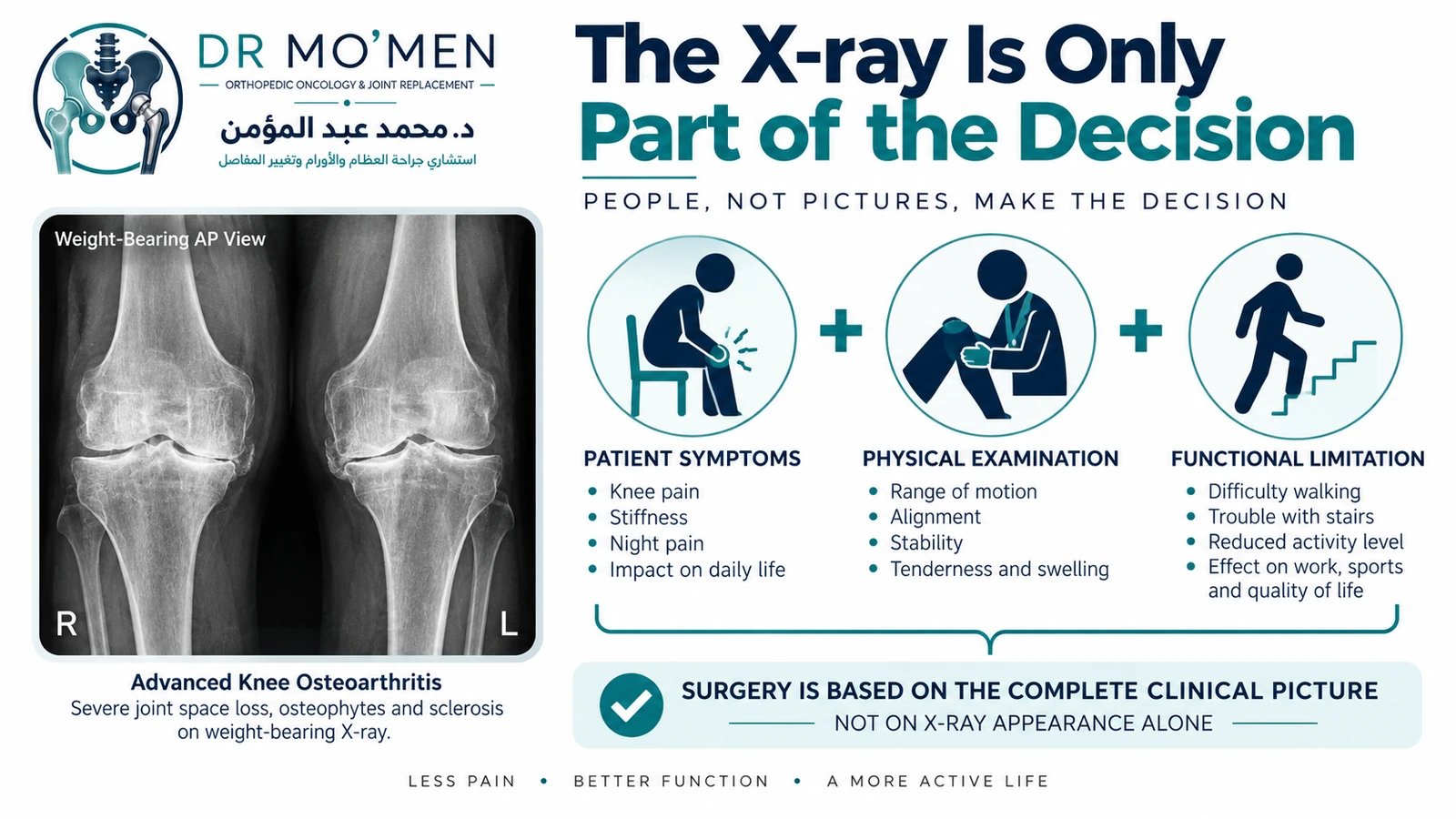
The decision should therefore combine:
symptoms + examination + appropriate imaging + response to previous treatment + patient goals.
An X-ray should support the clinical decision rather than make the decision by itself.
What Causes Severe Knee Arthritis?
Primary osteoarthritis
This is the most common pattern and develops gradually as cartilage and the entire joint undergo degenerative change.
Age is an important risk factor, but osteoarthritis should not simply be described as inevitable “wear and tear.”
Previous knee injury
Previous fractures, meniscal injuries, ligament injuries, or substantial cartilage damage may eventually lead to post-traumatic arthritis.
Previous surgery
Previous ligament reconstruction, meniscal surgery, fracture fixation, osteotomy, or other procedures can alter the surgical anatomy if joint replacement is eventually required.
Inflammatory arthritis
Conditions such as rheumatoid arthritis can damage the joint, although modern medical treatment has changed the pattern and severity of joint destruction in many patients.
Osteonecrosis or subchondral bone injury
Damage to the bone beneath the cartilage can sometimes progress to collapse and secondary arthritis.
How Do We Decide Whether Knee Replacement Is Appropriate?
A proper assessment usually includes several components.
Clinical history
The surgeon needs to understand:
- where the pain is located
- how long symptoms have been present
- walking tolerance
- stair function
- night pain
- stiffness
- instability
- previous injuries
- previous operations
- previous injections
- physiotherapy history
- medications
- medical conditions
- expectations after surgery
Physical examination
Examination may assess:
- range of motion
- deformity
- ligament stability
- tenderness
- swelling
- walking pattern
- hip function
- neurological findings
- vascular status when relevant
Not every pain around the knee actually originates from the knee joint.
Hip disease, lumbar spine pathology, neuropathy, vascular problems, or other conditions may occasionally produce symptoms that resemble knee arthritis.
Which X-Rays Are Usually Needed?
Weight-bearing knee X-rays are particularly useful when evaluating arthritis.
Depending on the case, imaging may include:
- standing anteroposterior view
- lateral view
- patellofemoral or skyline view
- long-leg alignment imaging in selected patients
These images help evaluate:
- joint-space loss
- deformity
- bone quality
- osteophytes
- previous implants
- alignment
- compartment involvement
Do you always need an MRI before knee replacement?
Usually not.
When standard clinical assessment and weight-bearing X-rays clearly demonstrate advanced osteoarthritis, MRI may add little to the decision.
MRI is more useful when the diagnosis is uncertain or another pathology is suspected.
A decision for major surgery should not be made simply because an MRI report contains terms such as meniscal tear, cartilage loss, or degeneration.
Should You Try Treatment Before Knee Replacement?
In most cases, yes.
Appropriate non-operative management should normally be considered before elective knee replacement unless it is unsuitable for the patient's condition.
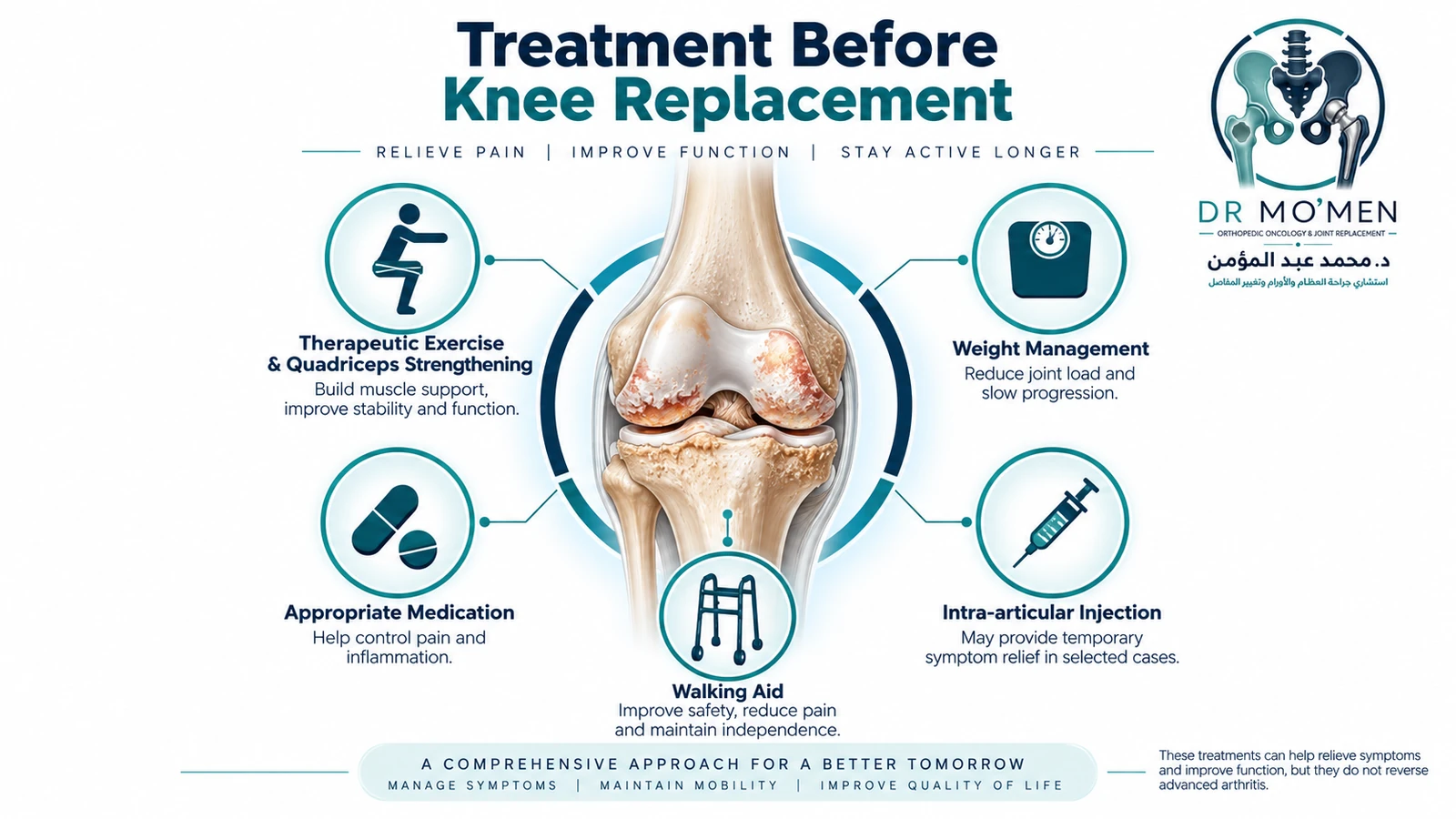
Exercise and physiotherapy
Strengthening the muscles around the knee may improve function and reduce symptoms.
Weight management
For patients living with overweight or obesity, weight management can reduce mechanical loading and may improve symptoms.
Body weight should be considered when discussing surgical risks, but it should not be the sole factor used to determine whether a patient deserves specialist assessment.
Medication
Medication choices depend on age, kidney function, gastrointestinal history, cardiovascular conditions, anticoagulant use, and other medical factors.
Long-term medication plans should therefore be individualized.
Injections
Intra-articular treatments may help selected patients, particularly when attempting to control symptoms while delaying surgery.
Their usefulness depends on the stage of arthritis and individual circumstances.
Walking aids and braces
A walking stick or selected brace can sometimes improve mobility and confidence.
When Is Total Knee Replacement Usually Considered?
Total knee replacement becomes a reasonable option when there is a combination of:
clinically significant knee arthritis
plus
persistent pain, stiffness, deformity, or loss of function
plus
substantial impact on quality of life
plus
inadequate response to appropriate conservative treatment or situations in which those treatments are unsuitable
plus
a patient who understands the benefits, limitations, risks, and rehabilitation requirements of surgery.
There is no single pain score, age, X-ray grade, or numerical questionnaire that should independently determine the decision.
Partial or Total Knee Replacement?
Not every patient needs a total knee replacement.
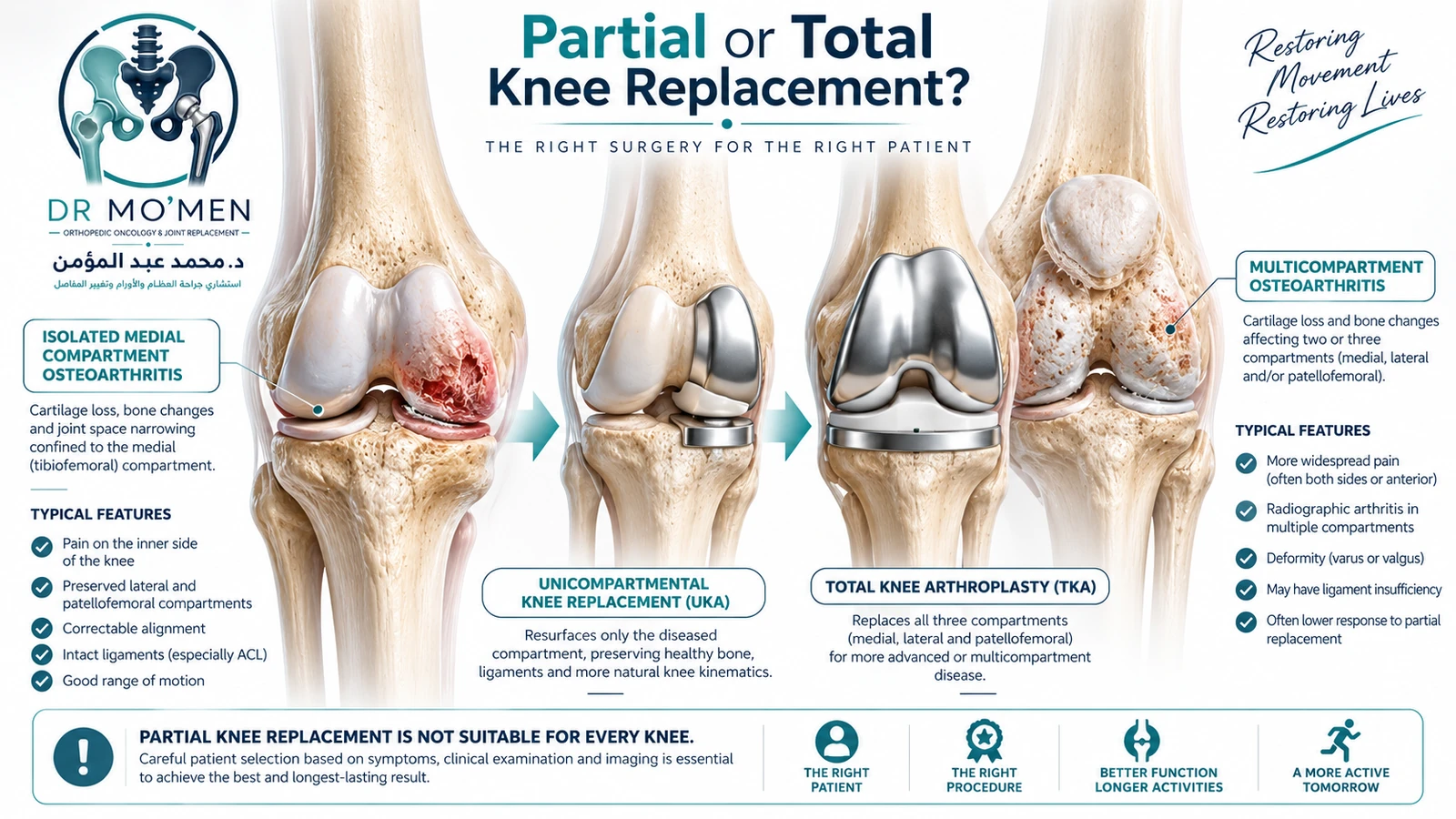
Partial knee replacement
A unicompartmental or partial knee replacement may be appropriate when arthritis is confined predominantly to one compartment and other clinical criteria are satisfied.
The decision depends on factors such as:
- distribution of arthritis
- ligament function
- deformity
- knee movement
- patient characteristics
Total knee replacement
Total knee replacement resurfaces the damaged femoral and tibial joint surfaces and usually includes a polyethylene bearing between the metallic components.
It is generally considered when arthritis involves multiple compartments or when the overall knee pathology makes partial replacement inappropriate.
The correct operation should be selected after examination and appropriate weight-bearing imaging.
Is There an Age at Which You Are “Too Young” or “Too Old”?
There is no universal age at which knee replacement automatically becomes appropriate or inappropriate.
Younger patients
In younger patients, the decision deserves careful consideration because they may live with the implant for many years and may have greater lifetime probability of eventually requiring revision surgery.
Joint-preserving strategies may therefore deserve particular consideration when appropriate.
Older patients
Chronological age alone does not determine eligibility.
General health, cardiovascular status, functional goals, frailty, bone quality, medical conditions, and anesthetic risk may be more relevant than age itself.
The decision should remain individualized.
What Are the Alternatives to Knee Replacement?
Depending on the diagnosis and stage of disease, alternatives may include:
- exercise and physiotherapy
- activity modification
- weight management
- medication
- injections
- braces
- walking aids
- osteotomy in carefully selected patients
- partial knee replacement
- continued observation if symptoms remain acceptable
Arthroscopic “cleaning” of an arthritic knee is generally not a substitute for knee replacement in established osteoarthritis.
The correct alternative depends on the underlying problem rather than simply the patient's age.
What Are the Risks of Knee Replacement?
Knee replacement is major surgery.
Potential complications include:
- infection
- blood clots
- bleeding
- stiffness
- persistent pain
- instability
- wound problems
- nerve or vascular injury
- fracture
- implant loosening or wear
- need for future revision surgery
- medical or anesthetic complications
The individual risk varies according to the patient's health, anatomy, previous surgery, medications, smoking status, weight, previous infection, and other factors.
A proper preoperative assessment aims to identify and optimize modifiable risks.
What Is Recovery Like After Knee Replacement?
Recovery varies considerably between patients.
Early priorities generally include:
- pain control
- swelling management
- mobilization
- knee movement
- muscle activation
- prevention of complications
- progressive walking
- rehabilitation
Patients should not compare recovery purely by the number of days since surgery.
Factors such as preoperative stiffness, muscle strength, deformity, age, medical conditions, previous operations, and the complexity of reconstruction can influence the recovery pathway.
When Should You Seek a Specialist Knee Replacement Assessment?
A specialist assessment is particularly reasonable when:
- knee pain is substantially affecting your daily life
- walking distance is becoming progressively limited
- non-operative treatment is no longer controlling symptoms
- the knee has severe stiffness
- bow-leg or knock-knee deformity is progressing
- the knee feels unstable
- you have been told that you need replacement but are uncertain
- you have had previous knee surgery
- you are relatively young and want to understand alternatives
- the X-ray and your symptoms do not seem to match
- another operation has already been recommended and you want a second opinion
Patients should not feel pressured into knee replacement simply because an X-ray shows advanced arthritis.
Equally, repeatedly postponing appropriate surgery despite major disability may not always be beneficial.
The correct timing is an individualized shared decision.
Complex Knee Replacement Cases
Some knee replacements are considerably more complex than routine primary arthroplasty.
Examples include:
- severe bow-leg or knock-knee deformity
- major bone loss
- ligament deficiency
- previous fracture fixation
- previous osteotomy
- previous ligament reconstruction
- stiff knee
- previous infection
- previous joint replacement
- instability after replacement
- failed or painful knee replacement
These cases may require different implant strategies and more detailed reconstruction planning.
Related reading:
- Severe Bow Legs or Knock Knees and Knee Replacement
- CCK vs Hinged Knee Replacement
- Pain After Knee Replacement
- Revision Knee Replacement: When Is It Needed?
The Role of Dr. Mo’men in Knee Replacement Assessment
Dr. Mohammed Abdelmoemen Abuelhadid evaluates primary and complex knee reconstruction cases with particular attention to determining whether surgery is actually necessary and, if so, what type of reconstruction is appropriate.
Assessment may include review of:
- symptoms and functional limitation
- weight-bearing X-rays
- limb alignment
- previous operative records
- existing implants
- ligament stability
- bone loss
- previous infection
- alternative non-operative or joint-preserving options
Complex cases such as severe deformity, revision arthroplasty, previous fracture fixation, instability, infection-related reconstruction, or substantial bone loss may require more detailed planning than routine primary knee replacement.
Patients outside Egypt can also request an initial online second opinion by sending relevant medical reports and imaging before deciding whether travel for in-person assessment is appropriate.
Joint Replacement Service:
/en/services/joint-replacement/
Second Opinion:
/en/second-opinion/
International Patients:
/en/international-patients/
For appointments or X-ray review:
01021690693