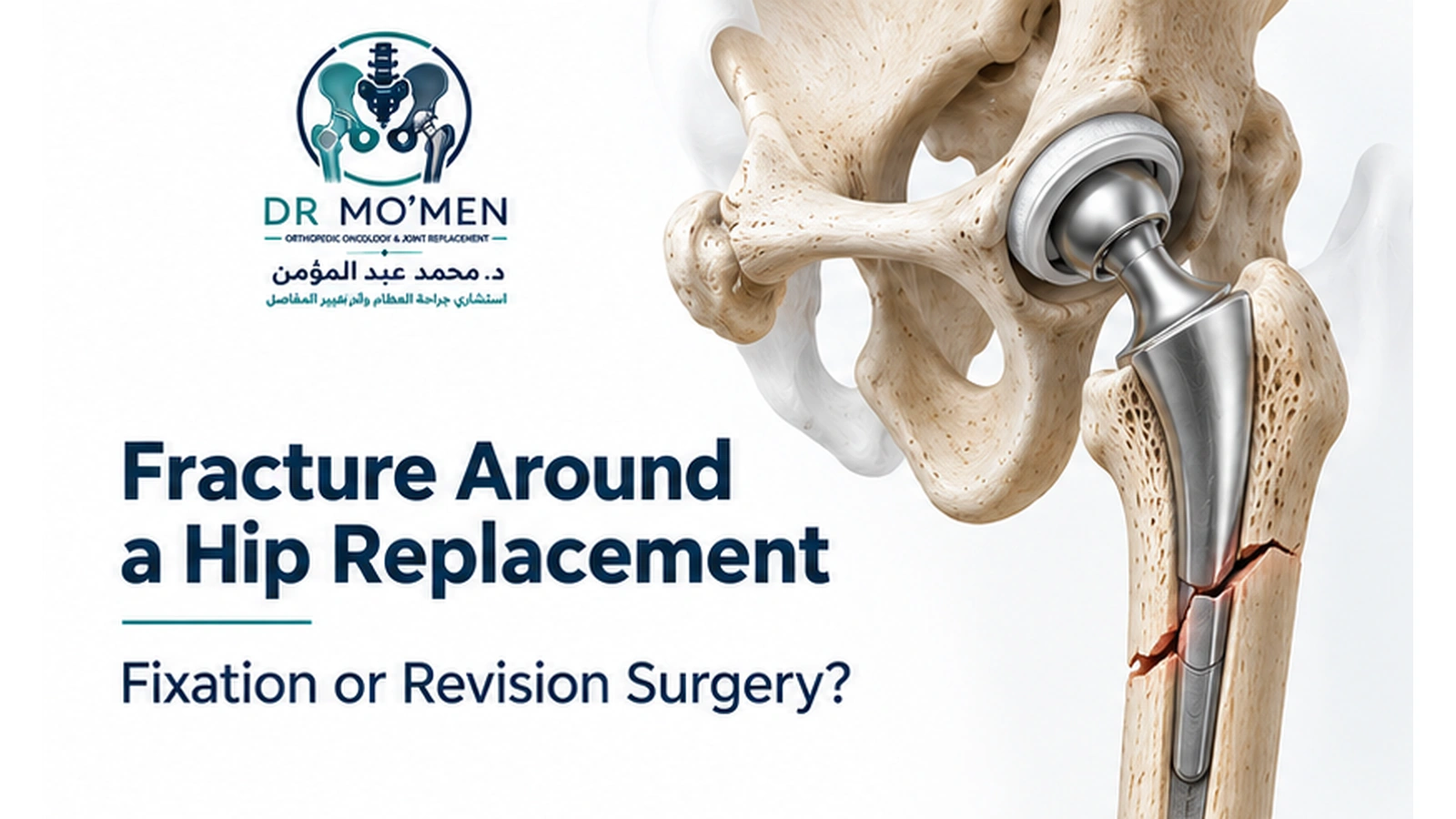
A fracture around a hip replacement is called a periprosthetic fracture. It commonly involves the femur around or below the existing femoral stem.
For the patient and family, the immediate question is often:
Can the broken bone simply be fixed with a plate, or does the hip replacement also need to be changed?
The answer depends on one of the most important questions in periprosthetic-fracture surgery:
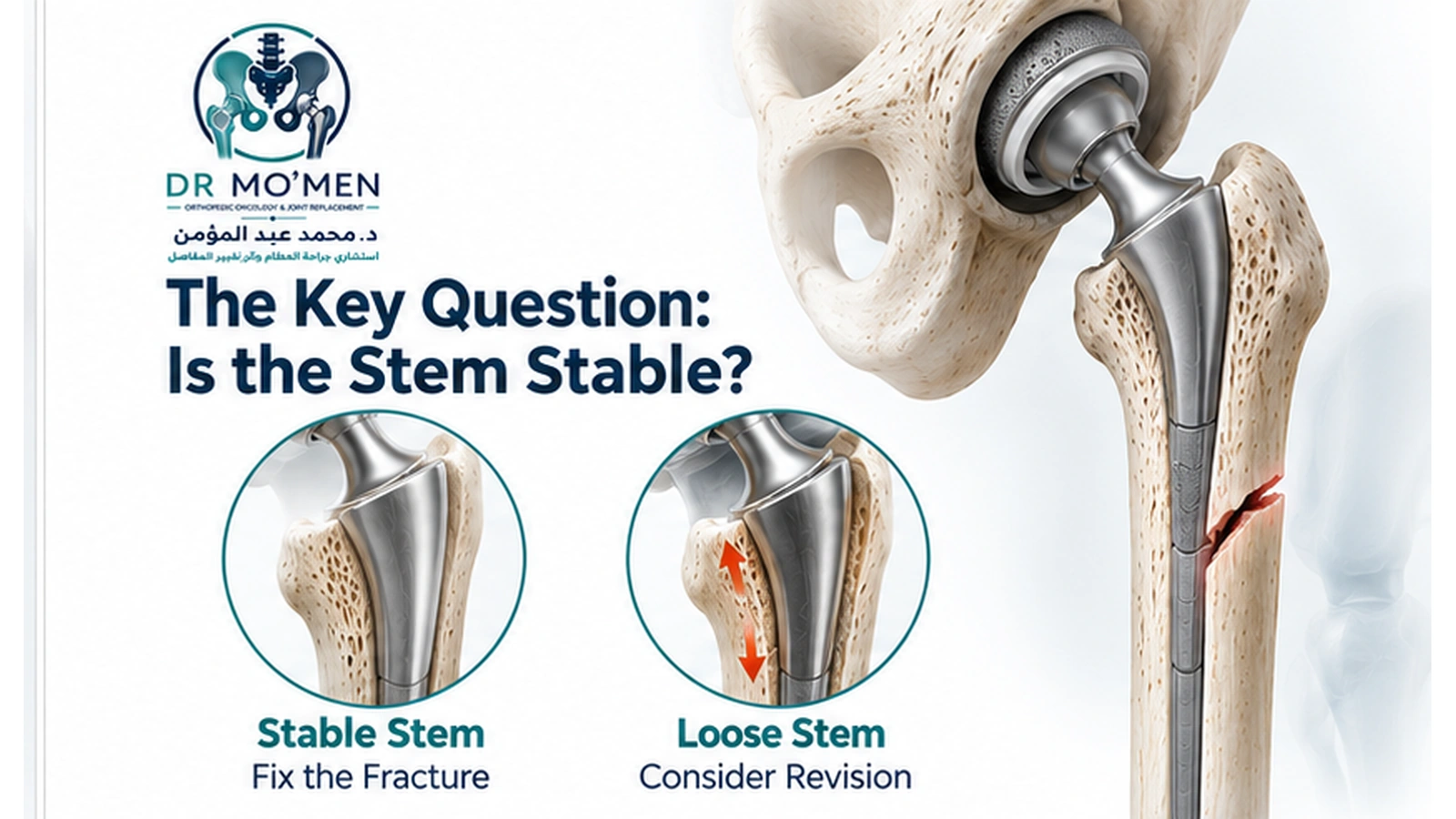
Is the femoral stem still securely fixed?
If the implant remains stable, fracture fixation may be appropriate. If the stem has become loose, simply putting a plate around the fracture may fail to address the underlying mechanical problem, and revision hip replacement may be required. Bone quality, fracture location, implant design, previous symptoms and the patient's overall condition also influence the decision.
What Is a Periprosthetic Femoral Fracture?
A periprosthetic femoral fracture is a break in the femur occurring in association with a hip prosthesis. It may happen around the proximal femur, directly beside the stem, around the tip of the stem, or below the prosthesis.
These fractures are challenging because the surgeon is not treating an ordinary femoral fracture. There is already an implant occupying part of the bone, so treatment has to consider two problems simultaneously:
the fracture + the existing hip replacement.
Symptoms and Red Flags
Typical symptoms after a fall or injury may include:
- sudden severe thigh or hip pain;
- inability to stand or bear weight;
- swelling or deformity;
- shortening or abnormal rotation of the leg;
- pain with any attempt to move the limb.
A suspected periprosthetic fracture needs urgent local medical assessment and imaging. The patient should not continue walking on the injured limb until the fracture has been assessed.
Why Do These Fractures Occur?
Contributing factors may include a fall or significant trauma, reduced bone quality, osteoporosis, osteolysis around an older prosthesis, previous revision surgery, stress concentration around the implant, stem loosening, previous fracture or surgery, and complex femoral anatomy.
The history before the fracture can be highly informative. A previously pain-free hip that fractures after a significant fall is different from a hip that had progressive thigh pain and declining function before a relatively minor injury.
The Most Important Question: Is the Stem Stable?
Consider two patients with similar-looking fractures.
Patient A: the hip replacement was pain-free before the fall and the femoral stem remains securely fixed.
Patient B: the patient had increasing thigh pain before the fall and imaging suggests that the stem is loose.
Although the fractures may look similar, the operations may be very different. Patient A may be treated predominantly as a fracture fixation problem. Patient B may require treatment as a fracture around a failed hip replacement.
This distinction is central to modern management and to the Vancouver classification. [1]
Vancouver Classification: Why B1, B2 and B3 Matter
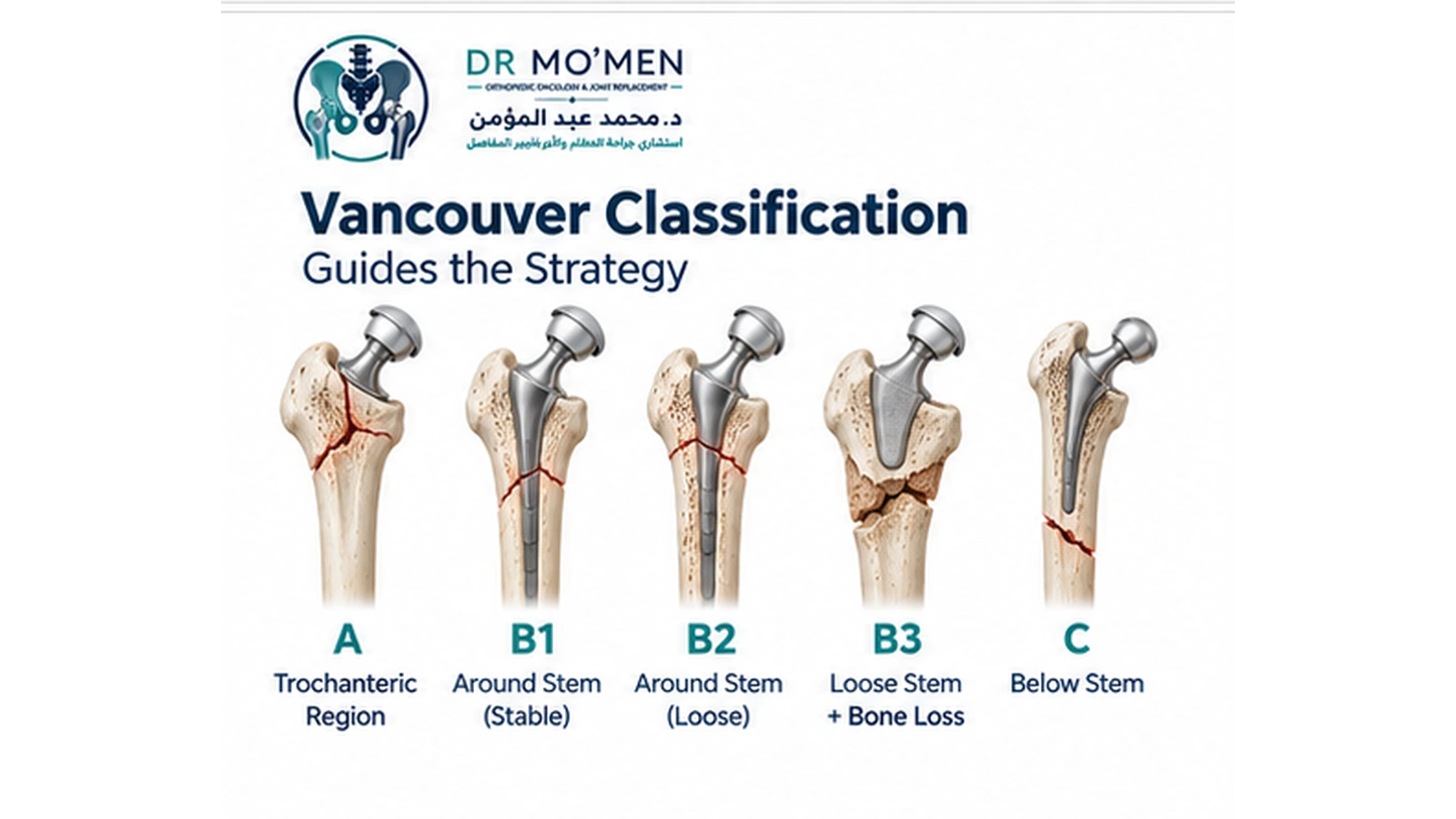
The Vancouver classification combines fracture location, stem stability and remaining bone stock.
Type A
Type A fractures involve the trochanteric region. AG refers to the greater trochanter and AL to the lesser trochanter. Management depends on displacement, abductor function, implant stability and symptoms.
Type B
Type B fractures occur around or close to the femoral stem.
Vancouver B1 — Stable Stem
The stem is well fixed. This is primarily a fracture-fixation problem when the fracture pattern can be reconstructed reliably.
Vancouver B2 — Loose Stem, Relatively Preserved Bone Stock
The stem is loose, but there is still useful proximal femoral bone. Stem revision remains an important treatment strategy, but modern evidence supports more nuanced implant-specific selection in some patients, particularly with certain cemented polished taper-slip stems. [1-4]
Vancouver B3 — Loose Stem + Poor Bone Stock
The stem is loose and substantial proximal bone loss or poor bone quality is present. These fractures often require complex revision reconstruction. [5]
Type C
The fracture lies well below the femoral stem. If the implant remains stable, treatment is generally directed toward fracture fixation rather than routine revision of the prosthesis.
Why Is the Difference Between B1 and B2 So Important?
Treating a B2 fracture as if it were B1 can leave a loose prosthesis inside the femur. A plate may stabilize the broken bone but does not necessarily solve a failed femoral component.
Stem stability should therefore be assessed using the full clinical picture rather than one radiograph alone.
How Do We Assess Whether the Stem Is Loose?
Previous symptoms
Increasing thigh pain, declining walking ability or progressive symptoms before the fracture may suggest pre-existing loosening.
Current and previous X-rays
The surgeon looks for migration, subsidence, radiolucent lines, osteolysis, cement-mantle disruption, fracture morphology and changes compared with older films. Previous postoperative X-rays can be particularly valuable.
CT in selected cases
CT may help clarify fracture morphology, bone stock, osteolysis, implant position and complex anatomy. Metal artefact may limit some detail.
Implant design
Interpretation depends on whether the stem is cemented or cementless and on the stem's fixation philosophy. A finding that implies loosening in one implant design may not have the same significance in another.
Intraoperative assessment
In uncertain cases, definitive stem stability may only become clear during surgery.
When Can the Fracture Be Treated With Fixation?
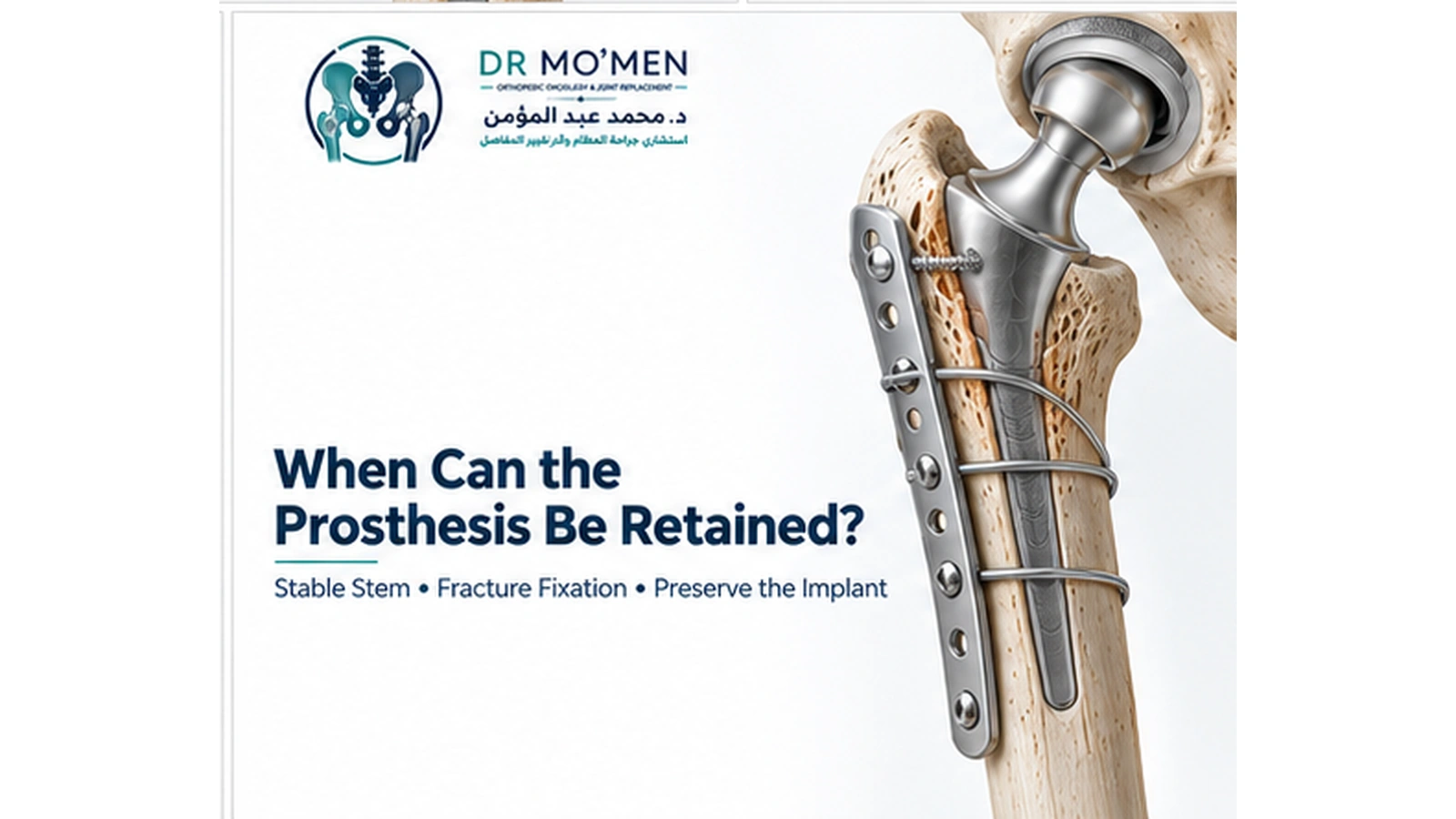
Open reduction and internal fixation (ORIF) may be appropriate when the femoral stem remains stable and the fracture can be reconstructed effectively. This commonly applies to many Vancouver B1 and type C fractures.
Fixation may use specialized plates, locking screws, cables, cerclage systems or other implant-specific techniques. The goal is to provide enough mechanical stability for the fracture to heal while preserving a well-fixed prosthesis.
Why Are Periprosthetic Plates Different From Ordinary Fracture Plates?
The femoral stem occupies the medullary canal, so ordinary bicortical screw placement may not be possible at every level. Periprosthetic fixation may therefore use combinations of locking screws, cables, offset trajectories and specialized attachment options.
The construct has to respect both fracture biology and prosthetic mechanics.
When Is Revision Hip Replacement More Appropriate?
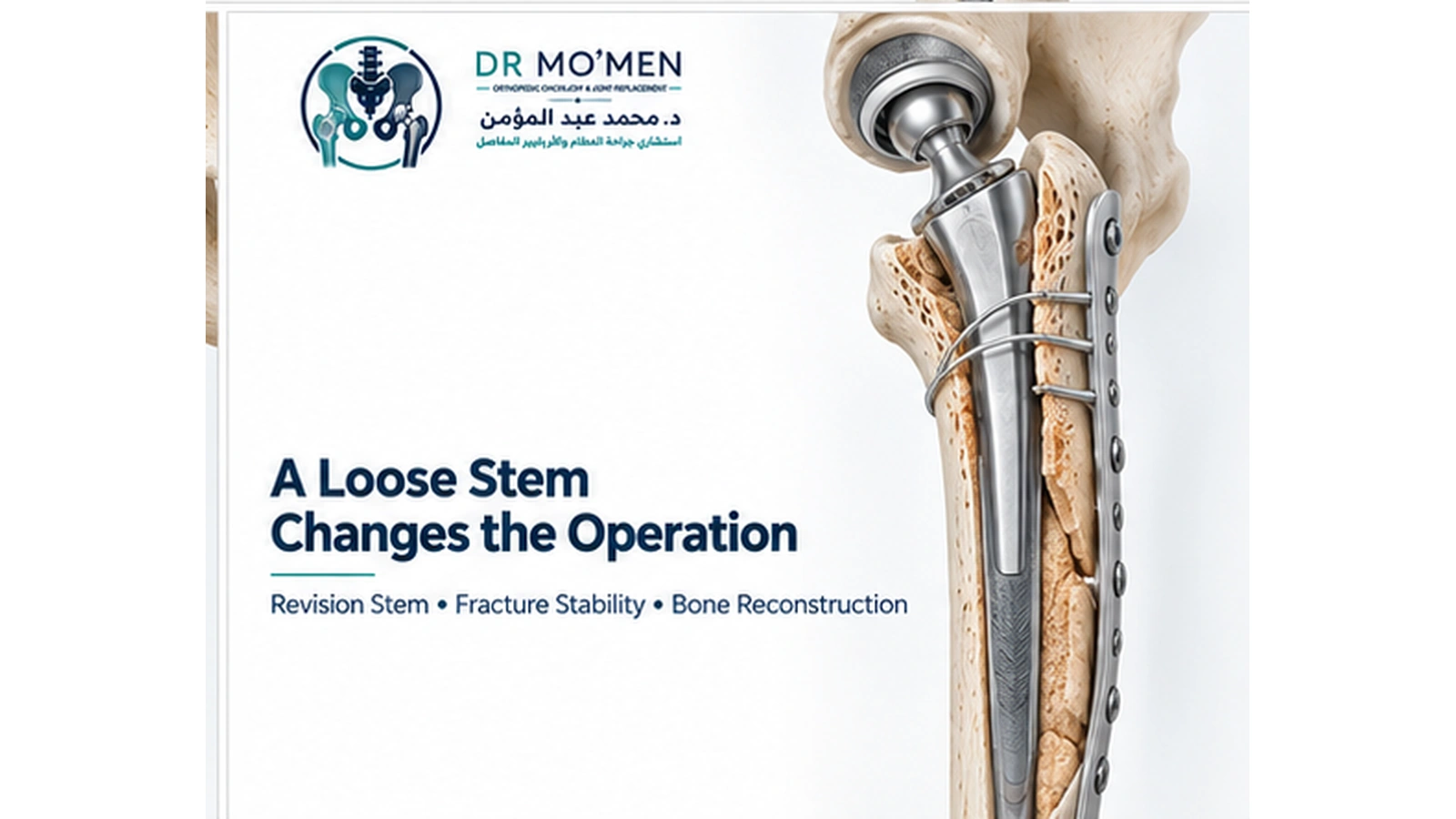
Revision becomes more relevant when the femoral stem is loose, particularly in Vancouver B2 and B3 patterns. The surgeon may need to remove the existing stem and obtain stable fixation in healthier bone beyond the compromised proximal femur.
A longer revision stem may be required, but the operation is more than simply inserting a longer implant. The new stem must achieve reliable fixation in usable bone, while the fracture itself may also require reduction, cables, plate fixation or other reconstruction.
Many B2/B3 operations therefore combine:
revision arthroplasty + fracture stabilization.
What Is a Long-Stem Revision?
When the existing stem cannot provide reliable fixation, revision options may include tapered fluted stems, modular or monoblock revision stems, selected cemented revision techniques, or other reconstructive solutions according to fracture morphology, available bone and implant design.
The objective is to obtain stable fixation beyond compromised bone while preserving as much remaining femur as possible.
What Happens in Vancouver B3 Fractures?
B3 fractures combine a loose implant with deficient proximal femoral bone. They are among the most demanding periprosthetic fractures and may require distal fixation, fracture reconstruction, cables or plates, grafting, or more extensive reconstruction depending on the defect. There is no single implant suitable for every B3 fracture. [5]
Does Every Vancouver B2 Fracture Need Stem Revision?
No single rule covers every B2 fracture.
Traditionally, B1 → fixation, B2 → stem revision, B3 → complex revision remains a useful conceptual framework. However, systematic reviews and meta-analyses increasingly support a role for ORIF in selected Vancouver B2 fractures, particularly in specific implant configurations and patients for whom a larger revision operation carries substantial physiological burden. [1-4]
This evidence should not be interpreted as meaning that ORIF is preferable for all B2 fractures. The available literature is mainly observational and treatment selection varies by patient frailty, stem design, cement interface, fracture pattern, bone quality and surgeon judgment.
The better question is:
What is the actual implant–bone–cement–fracture situation in this patient?
When Might Fixation Be Considered in Selected B2 Patients?
Potential considerations can include substantial anesthetic risk, certain cemented polished taper-slip stem configurations, an intact bone-cement interface, favorable fracture morphology, ability to achieve stable reduction, and overall patient function and surgical tolerance. [3,4]
This is a specialist decision, not a general patient-facing rule.
What Is Cement-in-Cement Revision?
In selected cemented stems, the existing cement mantle may remain well fixed to bone even though the stem construct has failed. A surgeon may sometimes remove the old stem and implant a new stem within the retained cement mantle. This technique is only appropriate when implant design, cement integrity, fracture configuration and surgical planning make it suitable.
When Might Fixation Alone Fail?
Failure is more likely if the operation fixes the fracture but leaves an important mechanical problem untreated. Examples include an unrecognized loose stem, inadequate fixation, severe bone deficiency, fracture nonunion, progressive stem subsidence or incorrect classification.
The key principle remains:
Fix the fracture — and confirm that the prosthesis itself is stable.
Could Infection Be Present?
A fracture does not automatically imply infection. However, infection should be considered when there was previous wound trouble, unexplained chronic pain, loosening before the fracture, previous periprosthetic joint infection, multiple revisions or other concerning clinical findings.
When infection is a concern, see Infection After Hip Replacement: DAIR, One-Stage or Two-Stage Revision? for the dedicated diagnostic and treatment pathway.
What If the Hip Was Painful Before the Fracture?
Progressive thigh pain and declining function before a relatively minor injury can suggest pre-existing implant loosening or osteolysis. A previously pain-free, well-functioning replacement that fractures after a major fall suggests a different mechanical problem.
That history can change the operative plan.
What About Fractures Below the Stem?
A Vancouver C fracture lies below the prosthesis. If the stem is well fixed, the primary problem is usually fracture stabilization. Plate length and overlap must be planned carefully to avoid creating a new stress concentration near the prosthesis.
What About Greater Trochanter Fractures?
Greater trochanteric fractures can affect abductor function, gait and hip stability. Treatment depends on displacement, symptoms, abductor function and implant stability. Some can be treated without surgery; others require fixation.
Does Every Periprosthetic Fracture Require Surgery?
No. Non-operative treatment may occasionally be appropriate in carefully selected stable fractures or in patients whose medical condition makes surgery disproportionately hazardous. However, many clinically significant fractures around a hip replacement require operative treatment.
Patient Health Matters in the Fixation-versus-Revision Decision
Revision arthroplasty can be longer and more physiologically demanding than fracture fixation alone. Cardiovascular and pulmonary disease, renal function, anticoagulation, frailty, baseline mobility, cognition, nutrition and anesthetic risk may influence the final plan.
This is one reason contemporary evidence should be applied through individualized clinical judgment, rather than a rigid classification-only rule. [1-4]
Surgical Risks
Potential complications include infection, blood loss, venous thromboembolism, nonunion, implant loosening, stem subsidence, fixation failure, dislocation, nerve or vascular injury, repeat fracture and the need for further revision surgery.
If recurrent instability is part of the failure pattern, see Hip Replacement Dislocation: When Is Revision Surgery Needed?.
The individual risk depends on fracture type, bone quality, implant stability, medical condition and the complexity of reconstruction.
When Can the Patient Walk Again?
There is no universal weight-bearing protocol. Some stable reconstructions may permit early weight bearing, whereas others require partial or protected weight bearing for a period of time.
The plan depends on fracture stability, quality of fixation, revision-stem stability, bone quality and the surgeon's intraoperative assessment.
Rehabilitation and Bone Health
Recovery may include physiotherapy, gait training, fall prevention, muscle strengthening, thrombosis prevention, serial radiographs and osteoporosis assessment when appropriate.
The goal is not only fracture union but restoration of safe function.
When Is This an Emergency?
Seek urgent medical care after hip replacement if there is a fall followed by severe hip or thigh pain, inability to stand or bear weight, obvious deformity, sudden shortening of the leg, new numbness or weakness, an open wound or significant systemic illness.
Do not delay emergency assessment to arrange international travel.
Getting a Second Opinion Before Complex Reconstruction
A specialist second opinion can be useful when stem stability is unclear, teams disagree over B1 versus B2 classification, fixation alone is proposed despite possible loosening, revision surgery has been recommended, there is major bone loss, multiple previous operations have been performed, previous fixation has failed, or a complex long-stem reconstruction is planned.
A useful review should address:
- Where is the fracture?
- Is the existing stem truly stable?
- What is the remaining bone stock?
- Can the fracture be reliably fixed?
- Does the stem need revision?
- What reconstruction can the patient safely tolerate?
For International Patients
An acute displaced fracture after a fall is an emergency and should first be assessed and stabilized locally.
For a medically stable patient seeking review of a proposed complex reconstruction, useful records include current X-rays, pre-fracture X-rays, CT if obtained, the original hip-replacement operative report, implant details, previous revision reports and relevant medical information.
A preliminary specialist review may help clarify whether the strategy is likely to involve fracture fixation, revision stem, combined fixation and revision, or additional diagnostic assessment. This does not replace an in-person examination.
For patients considering complex reconstruction in Egypt, see the International Patients pathway for pre-travel records review.
Role of Dr. Mohammed Abdelmoemen Abuelhadid in Complex Periprosthetic Fractures
Assessment focuses on fracture pattern, stem stability, implant design, remaining bone stock, previous symptoms, previous operations and the patient's fitness for reconstruction.
The objective is to determine whether the case is predominantly:
a fracture needing fixation
or
a fracture around a failed prosthesis requiring revision reconstruction.
For stable complex cases, available imaging and operative reports may also be reviewed before travel.
For appointments or X-ray/report review: 01021690693
Medical Disclaimer
This article is for patient education and does not replace clinical examination, review of imaging, laboratory investigations or individualized medical advice.
Scientific References
- Di Martino A, Brunello M, Villari E, et al. Arch Orthop Trauma Surg. 2024. https://pubmed.ncbi.nlm.nih.gov/39105834/
- Tan F, Qiao Y, Zhou Y, et al. BMC Musculoskelet Disord. 2025. https://pubmed.ncbi.nlm.nih.gov/40975766/
- Choudhary Z, Singal S, Selim A, et al. JBJS Reviews. 2025. https://pubmed.ncbi.nlm.nih.gov/41452959/
- Schapira B, Madanipour S, Subramanian P. Orthop Traumatol Surg Res. 2025. https://pubmed.ncbi.nlm.nih.gov/39675558/
- Fink B, Hoyka M. Arch Orthop Trauma Surg. 2026. https://link.springer.com/article/10.1007/s00402-026-06219-1