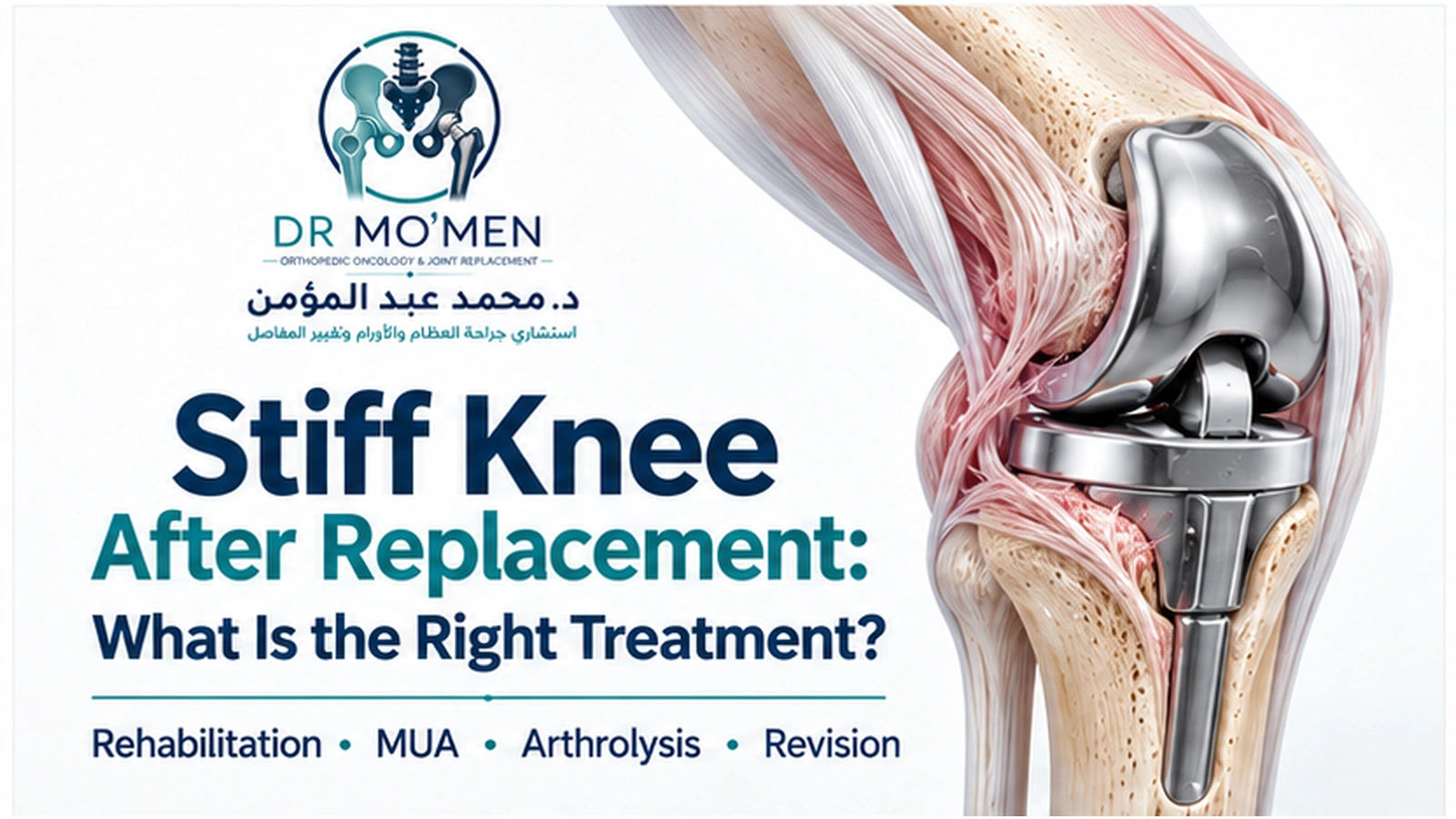
Limited motion is common during early recovery after total knee replacement. Persistent stiffness, however, can significantly affect walking, stairs, sitting and daily activities.
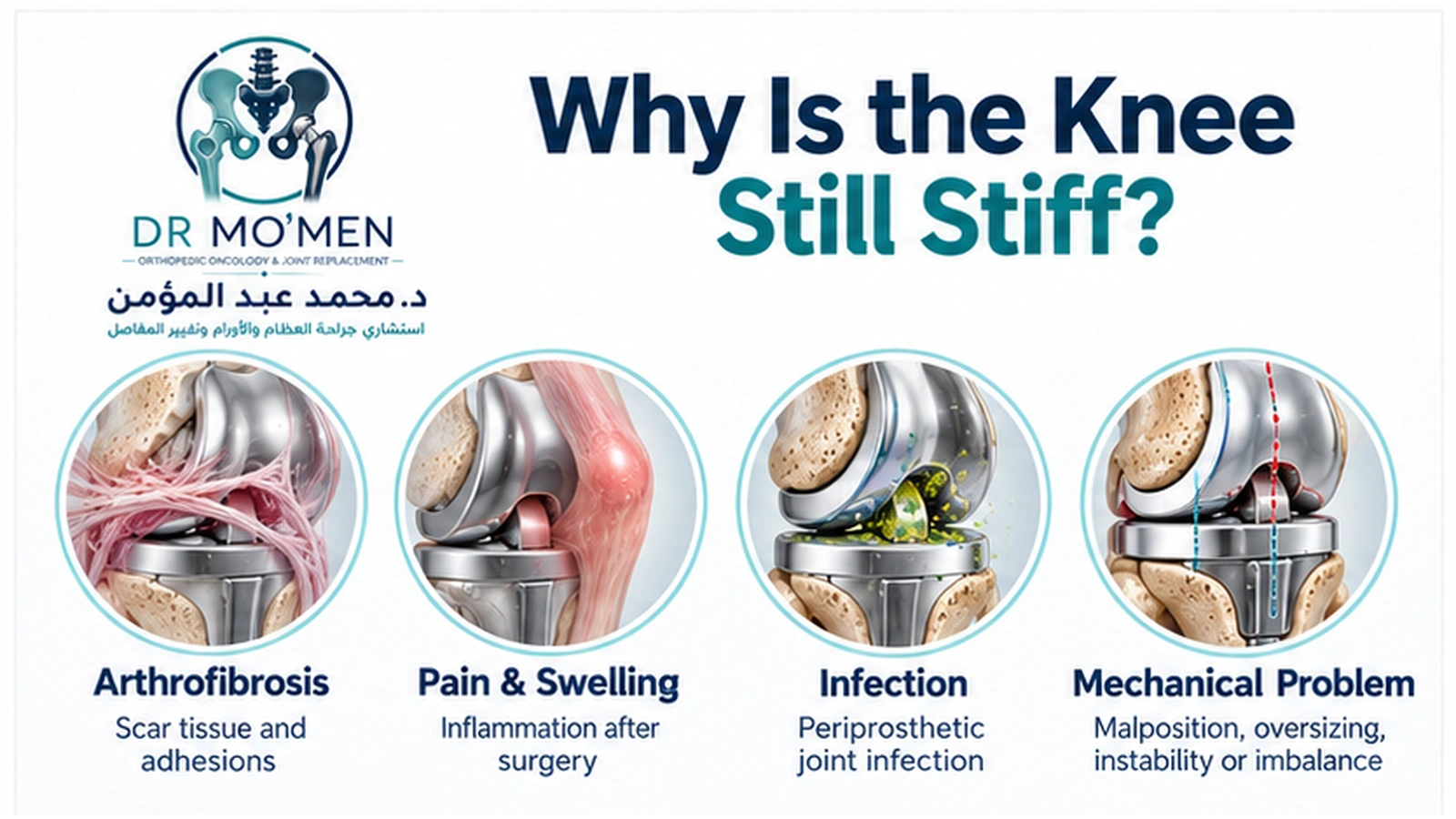
The key issue is that stiffness is a symptom, not a diagnosis. Possible causes include postoperative pain and swelling, delayed rehabilitation, arthrofibrosis, periprosthetic joint infection, instability, component malposition or malrotation, component oversizing, joint-line or gap-balance problems, and severe pre-existing stiffness.
Treatment should therefore begin by determining why the knee is stiff.
MUA, Arthrolysis or Revision — What Changes the Choice?
| Clinical situation | Main question | Possible treatment direction |
|---|---|---|
| Early stiffness, no infection or major mechanical problem | Is progress limited mainly by pain, swelling or developing scar restriction? | Structured rehabilitation; MUA may be considered in selected cases |
| Persistent scar-related restriction with acceptable components | Is arthrofibrosis the dominant problem after other causes are excluded? | Arthroscopic or open arthrolysis in selected cases |
| Malposition, oversizing, instability or mechanical failure | Can motion improve without correcting the reconstruction? | Revision knee assessment |
| Possible periprosthetic joint infection | Could infection explain pain and stiffness? | PJI work-up before routine manipulation or scar-release surgery |
What Counts as a Stiff Knee?
There is no universally accepted numerical definition. Published definitions use different combinations of flexion contracture, maximum flexion and total range of motion. More practically, stiffness becomes clinically important when the available motion is insufficient for the patient's functional needs or expected recovery has plateaued.
Why Does Stiffness Occur?
Preoperative stiffness
Patients with severe limitation before TKA may have a more difficult postoperative recovery.
Pain and swelling
Pain and effusion may inhibit movement and muscle activation. Appropriate pain control, swelling management and safe early motion are important.
Arthrofibrosis
Excessive scar tissue may mechanically restrict knee motion, but arthrofibrosis should not be used as a catch-all diagnosis before other causes are excluded.
Infection
Periprosthetic joint infection can present with pain and stiffness even without dramatic systemic symptoms.
Related guide: Infected Knee Replacement: DAIR vs One-Stage vs Two-Stage Revision
Mechanical problems
Component malposition, malrotation, oversizing, instability or abnormal gap balance may prevent restoration of motion. In these cases, manipulation alone may not correct the underlying problem.
Assessment Before Treatment
A structured assessment may include preoperative and postoperative range of motion, the timing and progression of stiffness, pain and swelling, wound history, clinical stability, patellar tracking, radiographs, CT when rotational assessment is required, and infection investigation when clinically indicated.
Rehabilitation
When early stiffness is driven mainly by postoperative inflammation, weakness and delayed recovery, management may include progressive range-of-motion exercises, quadriceps strengthening, swelling control, pain management and gait rehabilitation.
More aggressive therapy is not automatically better. Excessive pain and inflammation can interfere with rehabilitation. The goal is an individualized, consistent program.
What Is Manipulation Under Anesthesia?
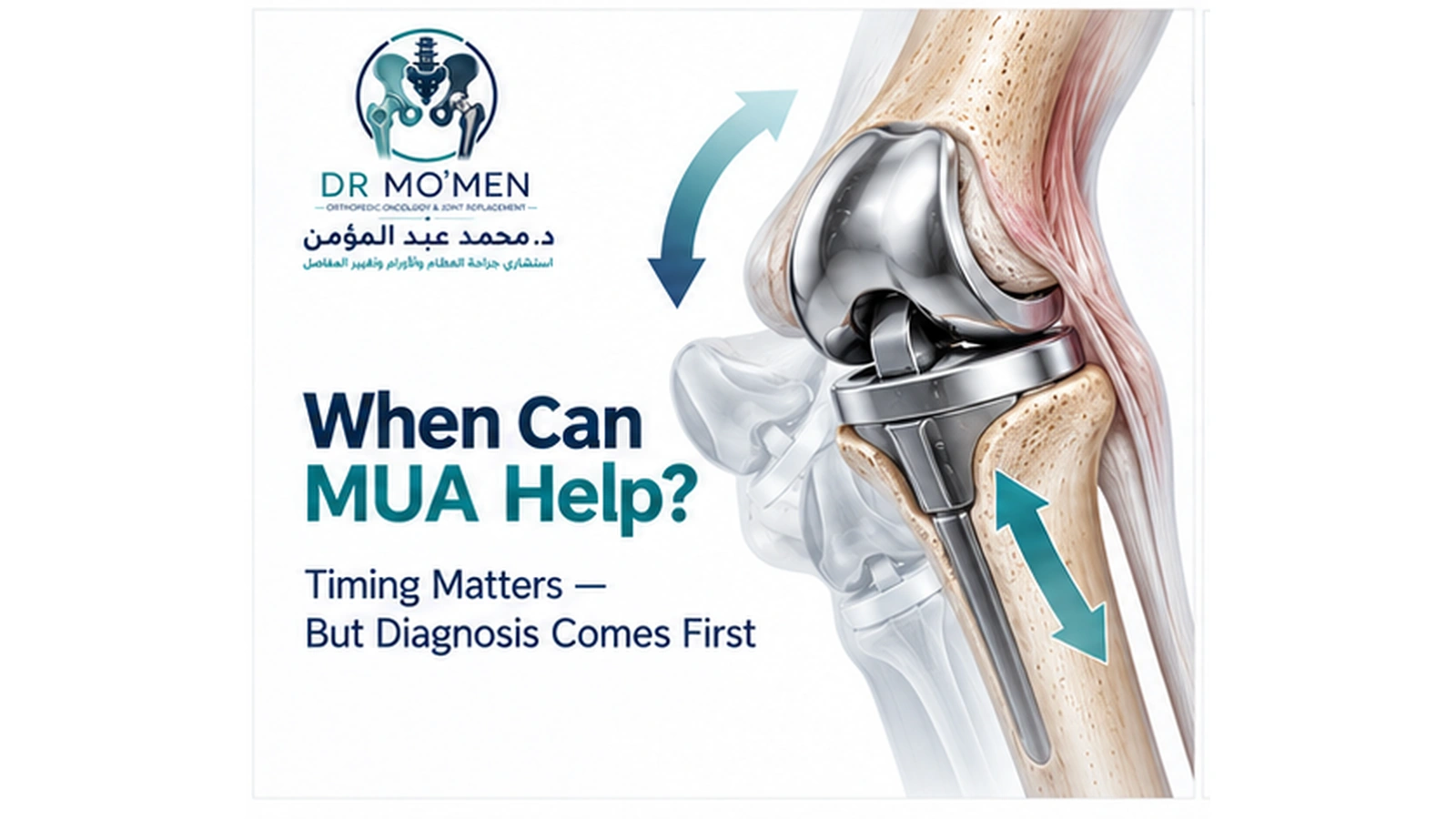
MUA allows the surgeon to move the knee through a controlled arc under anesthesia to disrupt adhesions without performing a conventional open operation.
It may be considered when meaningful stiffness persists, progress has plateaued despite appropriate rehabilitation, infection has been reasonably excluded, and there is no major mechanical problem requiring revision.
Does Timing Matter?
Yes. Recent evidence generally favors earlier intervention in appropriately selected patients, with larger flexion gains reported when MUA is performed in the first few months. This should not be interpreted as an absolute three-month cutoff. Treatment remains individualized according to the mechanism of stiffness, current motion, duration, bone quality, previous procedures and implant status.
Risks of MUA
Potential complications include fracture, extensor mechanism injury, wound problems, bleeding, persistent stiffness and the need for additional surgery. These complications are uncommon but relevant to patient selection and consent.
What Happens After MUA?
Post-procedure rehabilitation is essential. Pain control, early restoration of motion, swelling reduction and a structured physiotherapy program help preserve the gain achieved during manipulation.
What If MUA Does Not Work?
Options may include continued rehabilitation, repeat MUA in selected patients, arthroscopic lysis of adhesions, open arthrolysis or revision total knee arthroplasty. The underlying cause should be reassessed before proceeding to another intervention.
Arthroscopic Lysis of Adhesions
Arthroscopic arthrolysis can release intra-articular scar tissue while retaining well-positioned components. It is more suitable when arthrofibrosis is the primary problem, implant position is acceptable, infection is not present and no major mechanical reconstruction is required.
Open Arthrolysis
Open surgery may permit broader releases, access to areas difficult to reach arthroscopically, direct assessment of the implant and selected component or polyethylene modifications. It is used selectively according to the underlying problem.
When Is Revision Knee Replacement Needed?
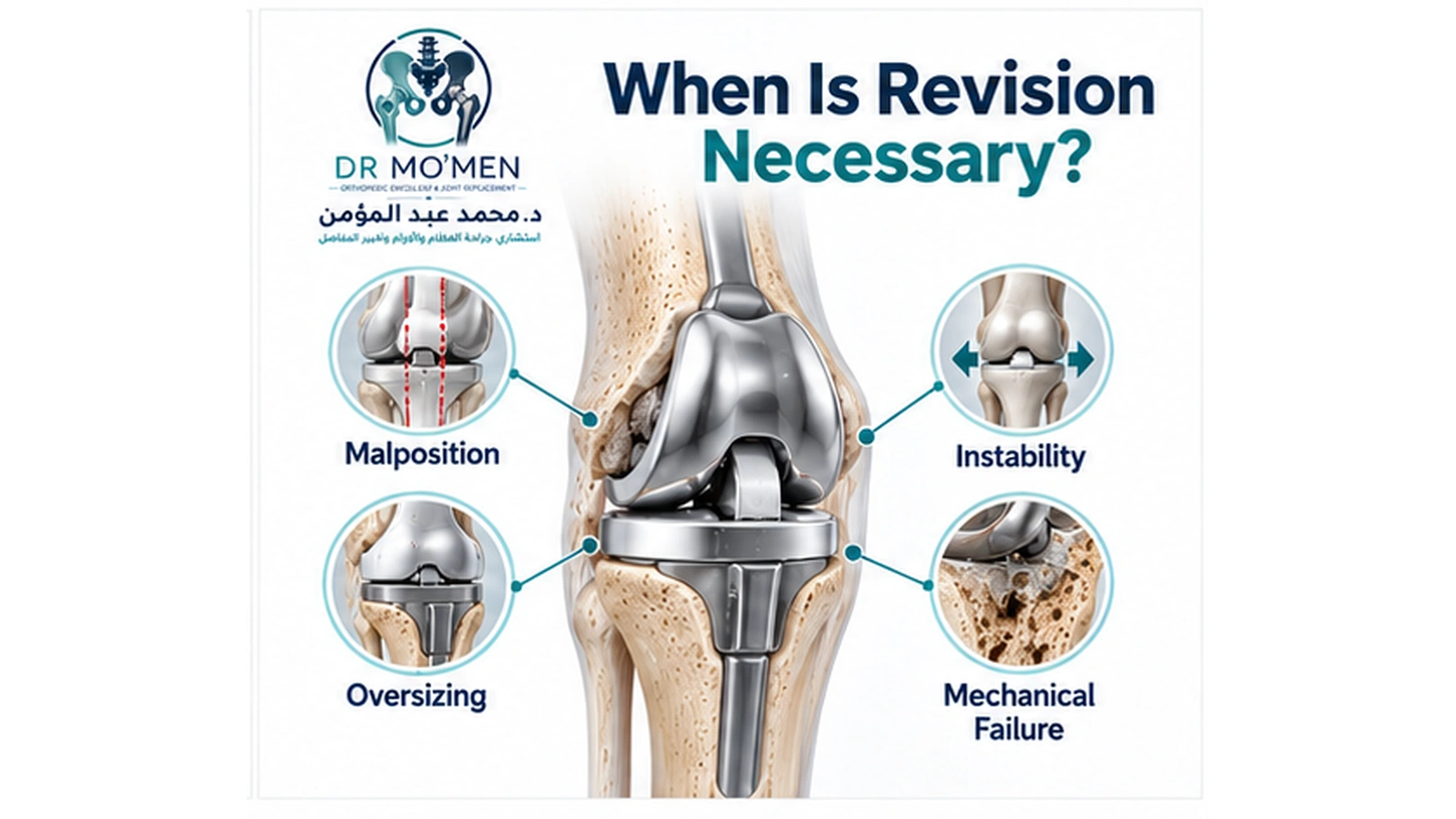
Revision is most appropriate when stiffness results from a mechanical problem that cannot be corrected by MUA or arthrolysis. Examples include significant malposition, malrotation, oversizing, severe gap imbalance, instability, component failure or selected persistent cases after appropriate previous treatment.
Related guide: When Is Revision Knee Replacement Necessary?
Does Revision Guarantee Normal Motion?
No. Revision for stiffness is challenging, and residual limitation may remain despite appropriate correction of mechanical problems. Patients may require prolonged rehabilitation, and expectations should be realistic.
Does Stiffness Mean a CCK or Hinged Knee Is Needed?
Not by itself. Implant constraint is selected according to ligament competence, bone loss, the stability achieved during reconstruction and the reason for revision.
Related guide: CCK vs Hinged Knee in Revision Knee Replacement
Treatment Framework
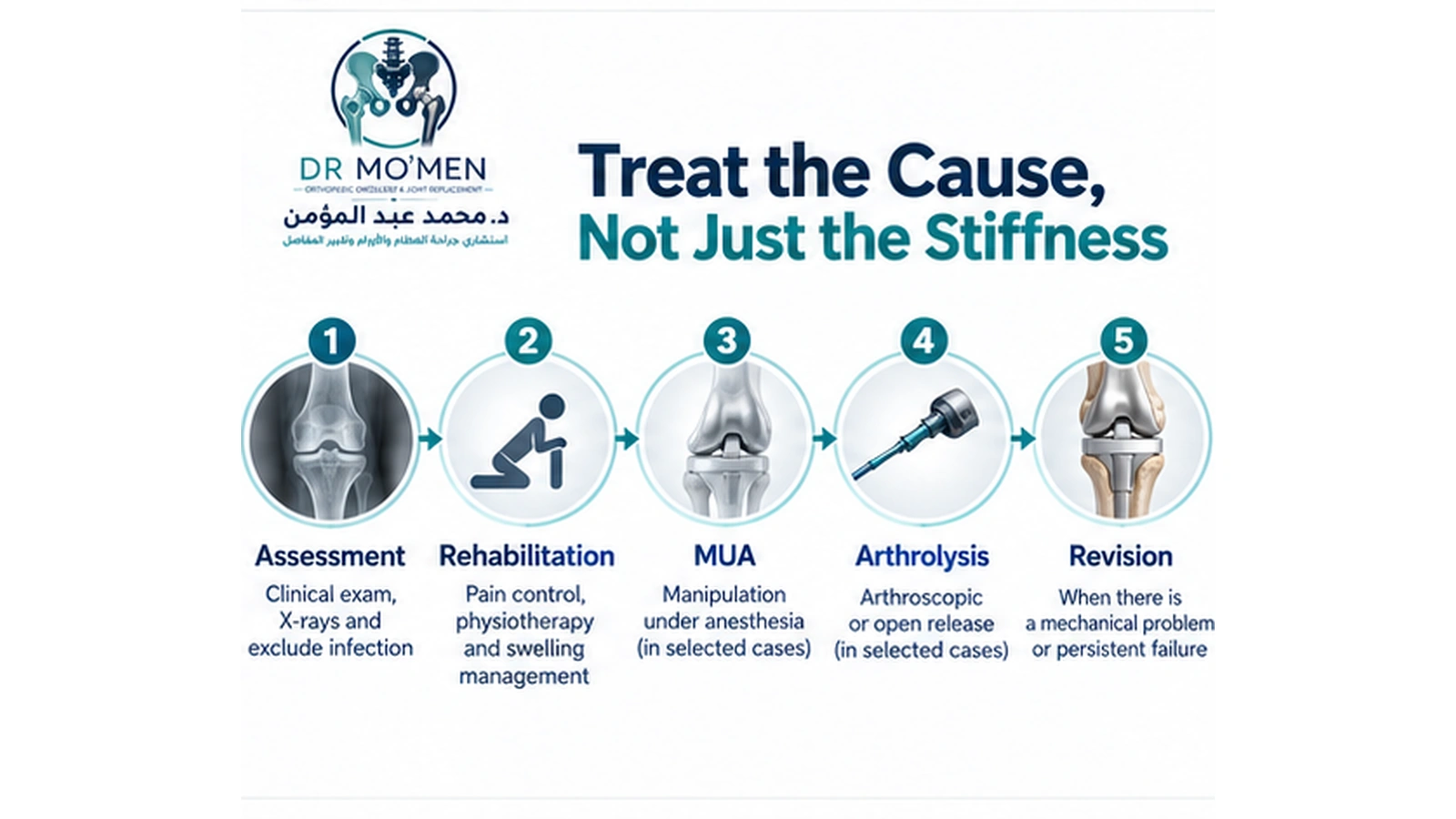
- Early stiffness without infection or a major mechanical problem: Rehabilitation ± MUA in selected cases.
- Persistent scar-related stiffness with acceptable components: Arthroscopic or open arthrolysis in selected cases.
- Malposition / oversizing / instability / mechanical failure: Revision assessment.
- Suspected infection: PJI workup first rather than routine MUA.
When Should You Seek Specialist Assessment?
Specialist review is reasonable when motion has stopped improving, the knee cannot fully straighten, flexion limits daily activity, physiotherapy is no longer producing progress, MUA has been recommended and the cause is unclear, a previous MUA failed, stiffness is accompanied by significant pain or swelling, or revision surgery has been proposed.
Urgent assessment
Seek urgent evaluation for fever with a painful swollen replaced knee, wound drainage, sudden loss of motion after trauma, new deformity or inability to bear weight.
Dr. Mo'men's Role in Complex Stiff Knee Cases
The objective is not simply to increase the flexion number but to establish why the knee has failed to regain motion. Assessment may involve reviewing preoperative motion, previous radiographs, implant size and position, stability, possible infection, whether the problem is arthrofibrosis or mechanical stiffness, suitability for MUA, possible arthrolysis, and whether revision is genuinely required.
International patients may send previous X-rays, operative reports and relevant investigations for an initial orthopedic second opinion before travel.
Appointments / X-ray review: +20 102 1690693
If pain is the dominant symptom with or without stiffness, also see: Pain After Knee Replacement: causes and diagnostic work-up
Medical References
- Putman S, André PA, Pasquier G, Dartus J. Revision for stiff knee after knee replacement. Orthop Traumatol Surg Res. 2025;111(1S):104060. PMID 39579970. PubMed
- Akhtar M, et al. Outcomes of Early Versus Delayed Manipulation Under Anesthesia for Stiffness Following Total Knee Arthroplasty: A Systematic Review and Meta-Analysis. J Arthroplasty. 2024;39(11):2872-2879. PMID 38797451. PubMed
- Roullet CA, et al. Manipulation under anesthesia for stiffness after total knee arthroplasty: A French multicenter study with 5 years' follow-up including 344 cases. Orthop Traumatol Surg Res. 2026;112(2):104432. PMID 40972952. PubMed