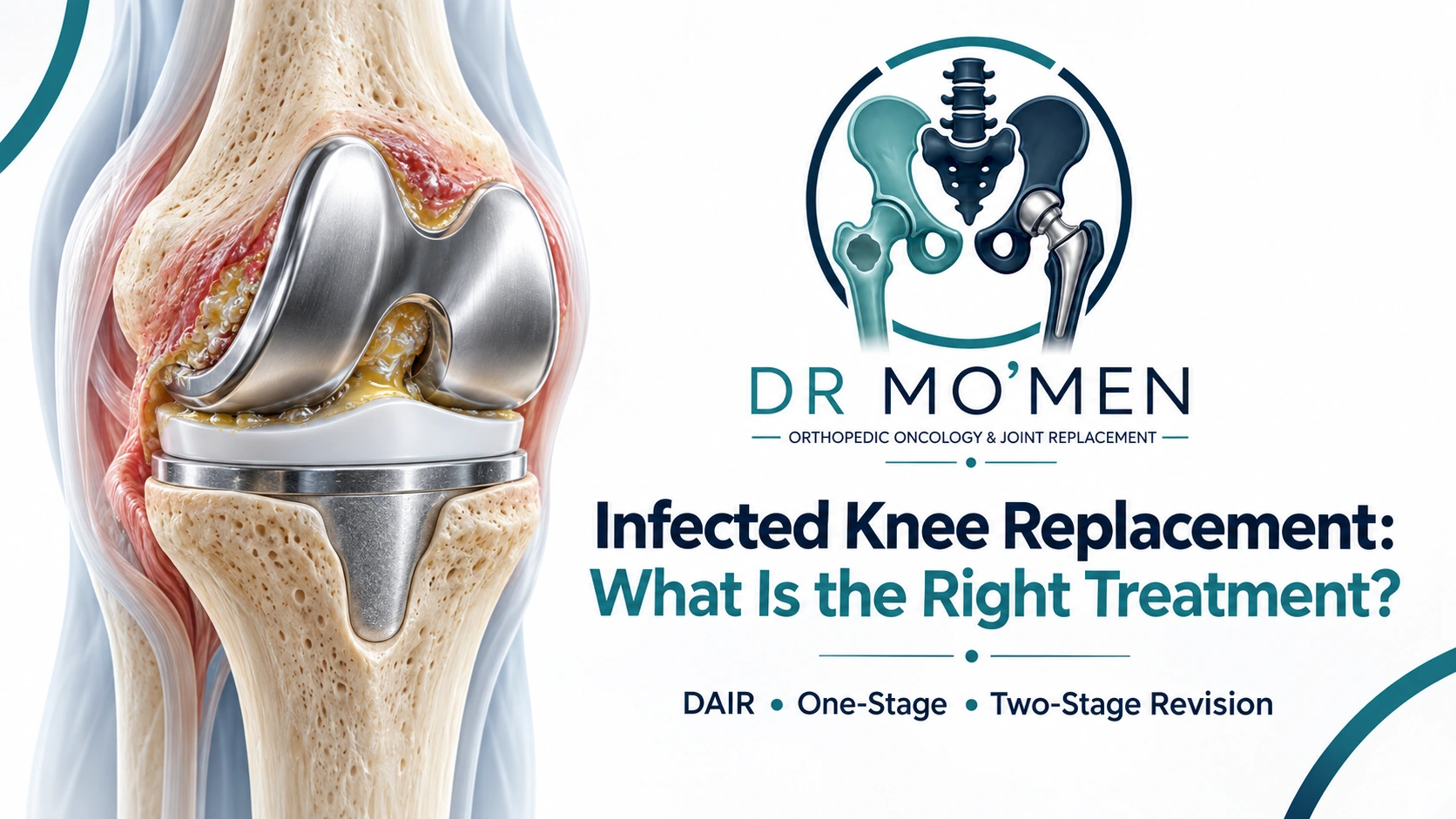
A suspected periprosthetic joint infection (PJI) needs a structured diagnostic assessment before choosing treatment. Clinicians consider the duration of symptoms, implant fixation, microbiology, bone and soft-tissue conditions, previous procedures and general health. An urgent evaluation is necessary if fever, wound drainage or a painful swollen knee is accompanied by significant illness.
The key question is not only whether infection is present, but whether the implants can safely be retained or an exchange is needed. The comparison below summarizes possible strategies; it does not replace individual surgical and infectious-disease assessment.
DAIR vs One-Stage vs Two-Stage Revision — Quick Comparison
| Strategy | When it may enter the discussion | Core objective |
|---|---|---|
| DAIR | Selected acute infection with a short symptom duration, stable implants and suitable soft tissues | Thorough debridement and antimicrobial treatment while retaining well-fixed components when appropriate |
| One-stage exchange | Selected cases where implant removal, complete debridement, reconstruction and antimicrobial planning can reasonably be completed in one operation | Remove infected components and perform definitive reconstruction during the same procedure |
| Two-stage exchange | Many chronic or more complex infections when staged infection management and reconstruction are judged more appropriate | Remove implants and debride first, then consider later reimplantation after interval reassessment |
What Is a Periprosthetic Joint Infection?
PJI is infection involving the tissues surrounding an artificial joint. Bacteria can adhere to implant surfaces and form a biofilm, which can make eradication with antibiotics alone difficult.
Infection may develop shortly after surgery or months to years later. Some late infections may reach the prosthesis through the bloodstream from another infection elsewhere in the body.
Symptoms of an Infected Knee Replacement
Possible symptoms include:
- increasing or new pain;
- swelling, warmth or redness;
- reduced knee function or motion;
- persistent wound drainage;
- a sinus tract in some chronic cases;
- fever or chills in some patients.
Chronic PJI can be much less obvious. A patient may mainly develop progressive pain after an initially successful knee replacement. Absence of fever or drainage does not exclude infection.
Related guide: Pain After Knee Replacement: Causes and Diagnostic Work-up
How Is Knee PJI Diagnosed?
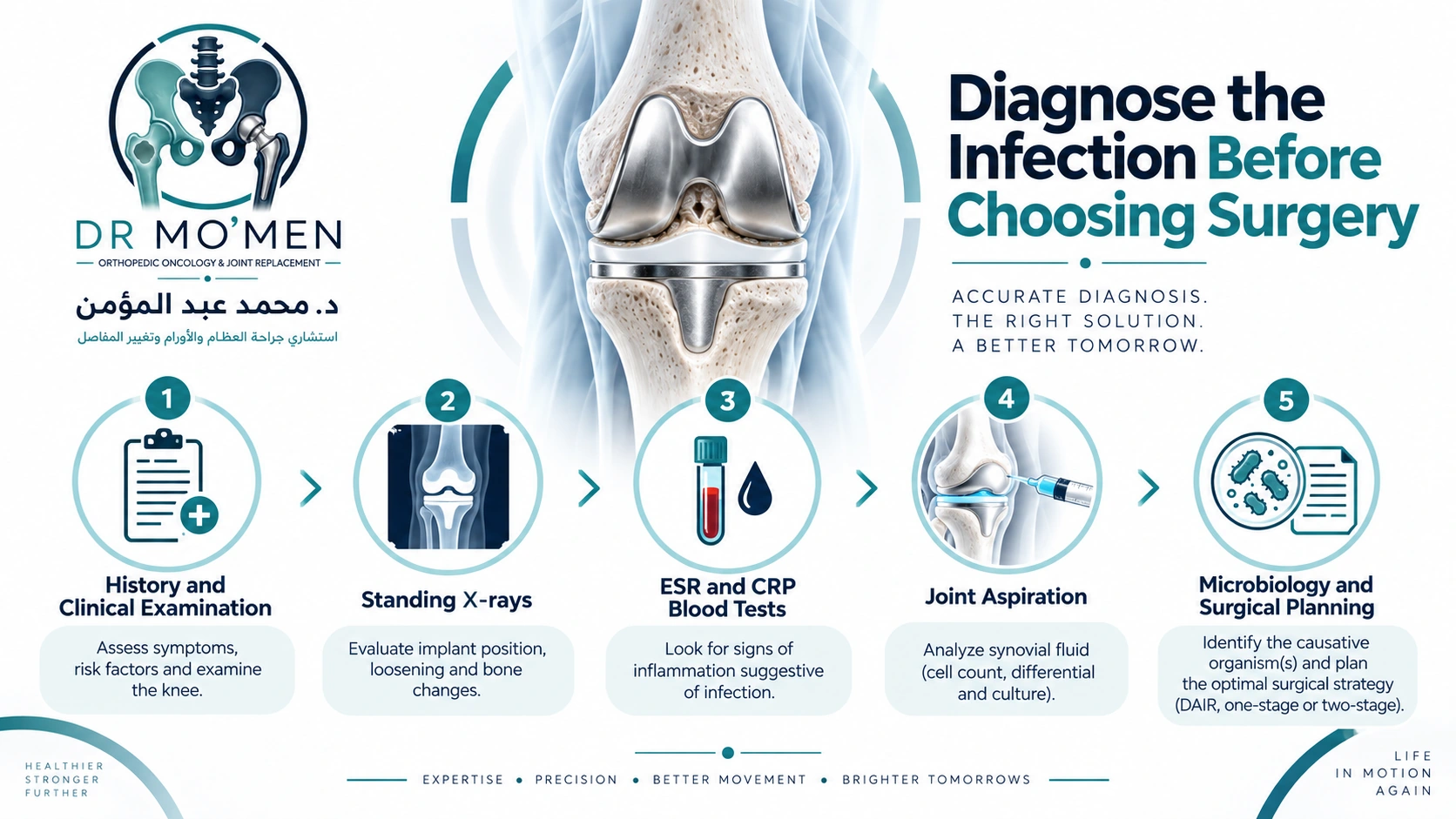
Diagnosis usually integrates several findings rather than relying on a single test.[1]
Clinical assessment
Timing of surgery and symptoms, wound history, previous procedures, prior antibiotics and recent infections are important. Examination assesses the wound, swelling, range of motion and stability.
Radiographs
X-rays help assess implant fixation and position, osteolysis, bone loss and fracture. Normal radiographs do not exclude infection.
ESR and CRP
Inflammatory markers can contribute to the assessment but should not usually be interpreted in isolation.
Joint aspiration
When PJI is suspected, synovial fluid may be obtained for cell analysis, cultures and other appropriate testing.
In a medically stable patient, antibiotic timing and specimen collection should be coordinated with the treating team to reduce the risk of compromising microbiological yield. Suspected sepsis or clinical instability requires urgent treatment and should not be delayed for routine testing.
Intraoperative specimens
During surgery, multiple deep specimens may be collected for microbiological and other appropriate analysis to help identify the causative organism and guide antimicrobial treatment.
What Is DAIR?
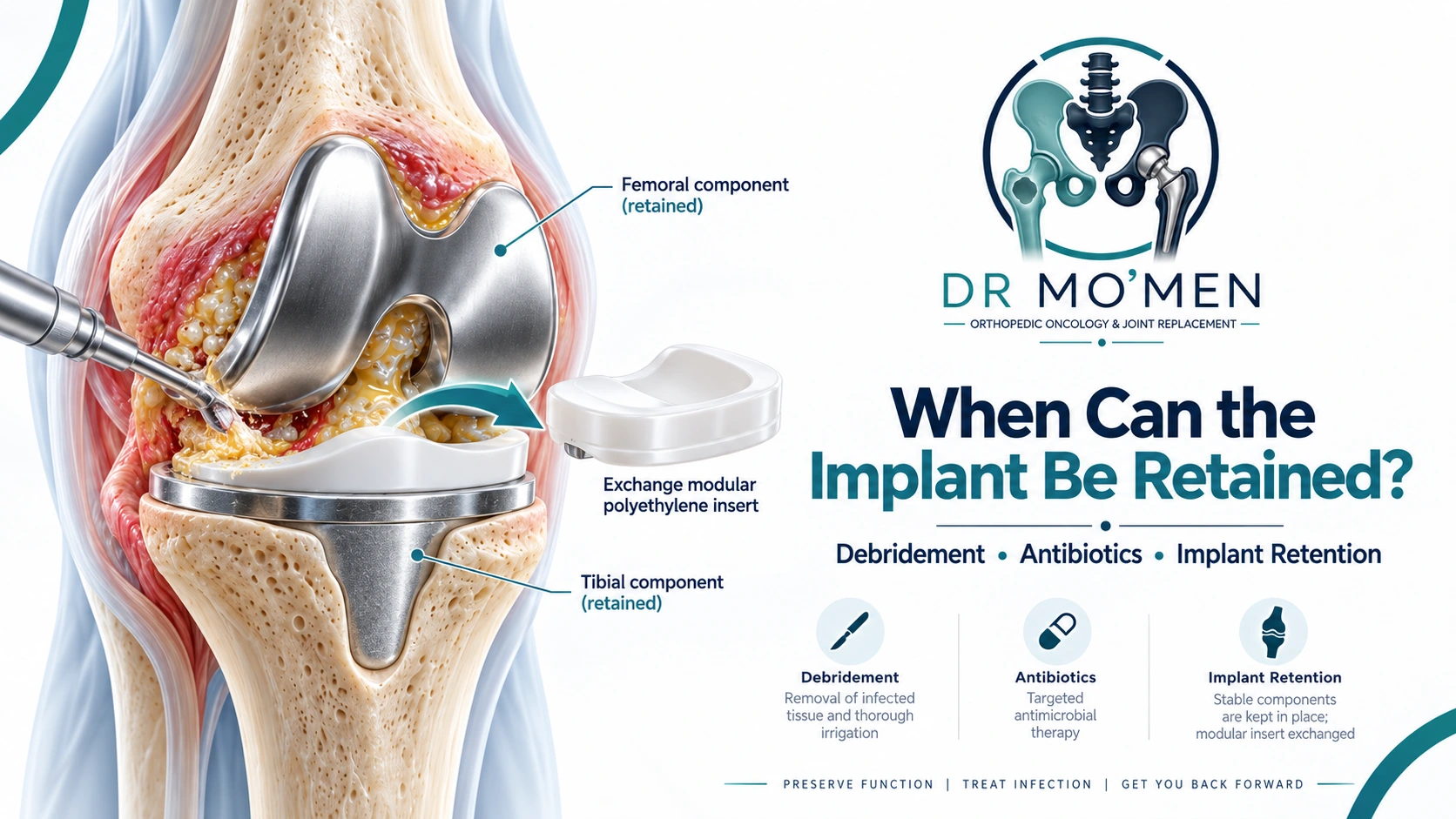
DAIR stands for Debridement, Antibiotics and Implant Retention.
It should not be considered simply a joint washout. The operation may include:
- extensive surgical debridement;
- collection of appropriate specimens;
- irrigation;
- exchange of accessible modular components such as the polyethylene insert when appropriate;
- retention of well-fixed components when clinically suitable;
- antimicrobial treatment directed by the clinical and microbiological findings.
Who May Be Suitable for DAIR?
DAIR is generally considered in selected acute infections involving stable implants, particularly when symptom duration is short, the surrounding tissues are suitable and thorough debridement can be achieved.
Chronic infection, major implant loosening, or some established sinus-tract presentations generally make implant retention less attractive when the goal is eradication of infection.
Why Is DAIR Not Used for Every Infection?
In chronic infection, biofilm may be established on prosthetic surfaces. Debridement alone may therefore be insufficient if infected components remain in place. DAIR also does not correct a loose prosthesis, major mechanical failure or severe bone loss requiring reconstruction.
What Is One-Stage Revision?
During one-stage exchange revision:
- the infected prosthesis is removed;
- extensive debridement is performed;
- appropriate specimens are obtained;
- the operative field is re-prepared as required;
- a new revision prosthesis is implanted during the same operation.
This can be an appropriate option in selected patients when satisfactory debridement, reconstruction, wound closure and antimicrobial planning can be achieved in one procedure.
What Is Two-Stage Revision?
First stage
The infected components are removed, extensive debridement is performed, samples are obtained, and a temporary spacer is commonly used when appropriate. Antimicrobial treatment is then given according to the clinical plan.
Interval
The wound, symptoms, investigations and response to treatment are reviewed. No single laboratory result alone can confirm eradication of infection in every patient.
Second stage
When reimplantation is considered appropriate, the spacer is removed, the knee is reassessed and revision reconstruction is performed according to bone and soft-tissue requirements.
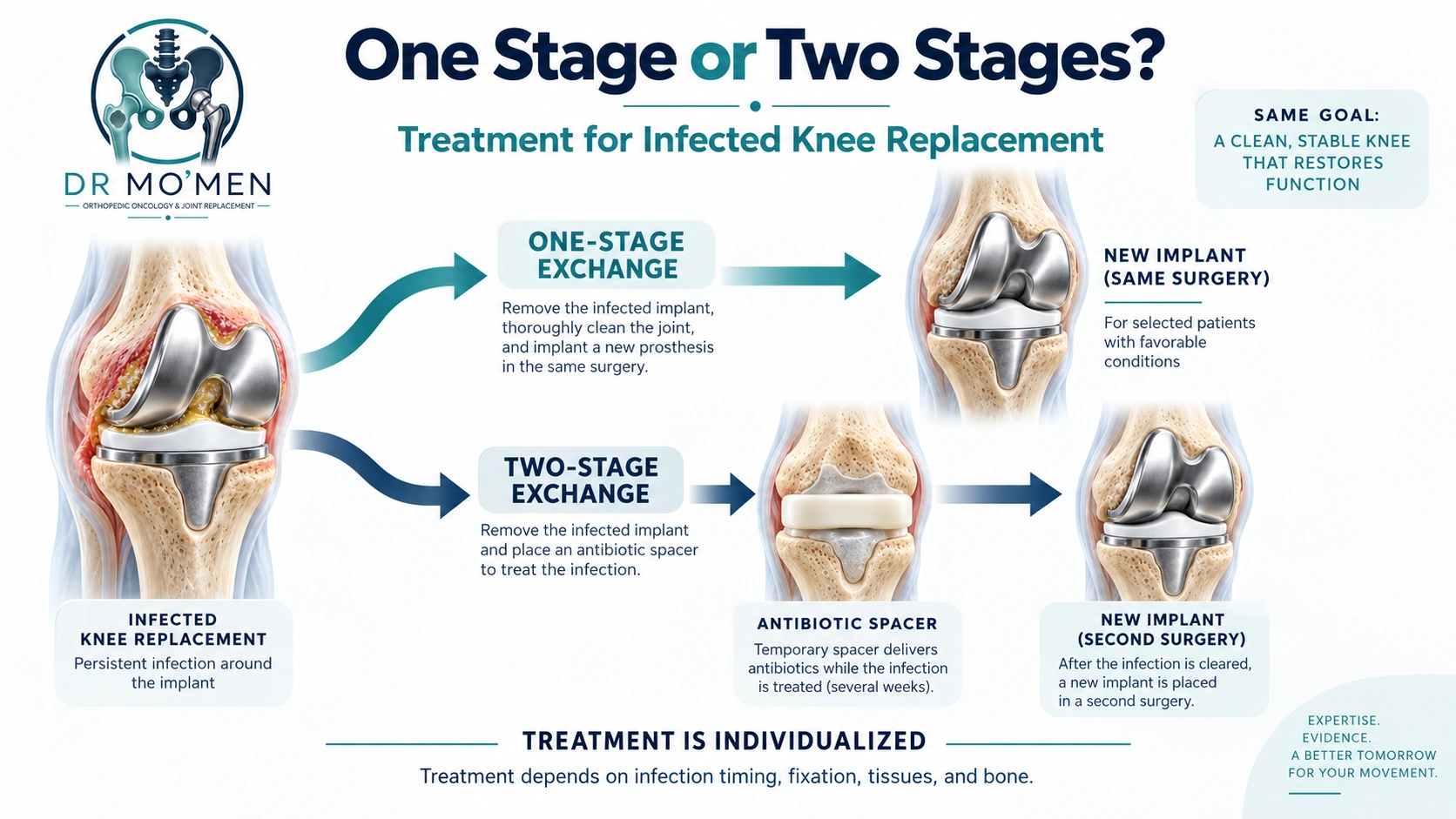
DAIR vs One-Stage vs Two-Stage Revision
There is no single operation that is correct for every patient.[2][3]
- DAIR: may be appropriate for selected acute infections with stable components and a short duration of symptoms.
- One-stage revision: may be considered in selected patients when the infection, tissues, bone and reconstructive conditions allow removal, debridement and definitive reconstruction in the same operation.
- Two-stage revision: remains an important strategy for many chronic or more complex infections where staged infection management and reconstruction are considered more appropriate.
This is an educational overview rather than a treatment algorithm. The final decision requires full specialist assessment.
For the broader decision on when revision is necessary and how reconstruction is planned, read: When Is Revision Knee Replacement Necessary?
Are Antibiotics Alone Enough?
For many confirmed PJIs treated with curative intent, adequate surgical source control is an important component of management. Long-term suppressive antibiotic therapy may have a role in selected patients who cannot undergo definitive surgery or when treatment goals differ, but this is a different strategy from surgical eradication.
Antibiotic choice and duration depend on microbiology, susceptibility testing, the operation performed, renal and hepatic function, drug interactions and the treating team's assessment.
What If Cultures Are Negative?
Culture-negative results do not automatically exclude infection. Prior antibiotics, difficult-to-grow organisms and specimen timing or technique may affect microbiological yield. These cases require review of the full diagnostic picture.
Bone Loss During Infected Revision Knee Surgery
Removing an infected or loose prosthesis may reveal significant bone defects. Revision reconstruction may require stems, metal augments, cones, sleeves or increased implant constraint, depending on the defect and ligament function. When loosening or joint destruction accompanies infection, complex revision reconstruction may require a higher level of constraint based on the final ligament and bone situation.
Bone loss in revision knee surgery may require stems, augments, cones or sleeves depending on the defect and reconstruction needs.
CCK or Hinged Knee?
Infection itself does not determine implant constraint. Reconstruction depends on ligament integrity, bone loss, stability after component removal, extensor-mechanism function and the degree of constraint required.
Related guide: CCK vs Hinged Knee in Revision Knee Replacement
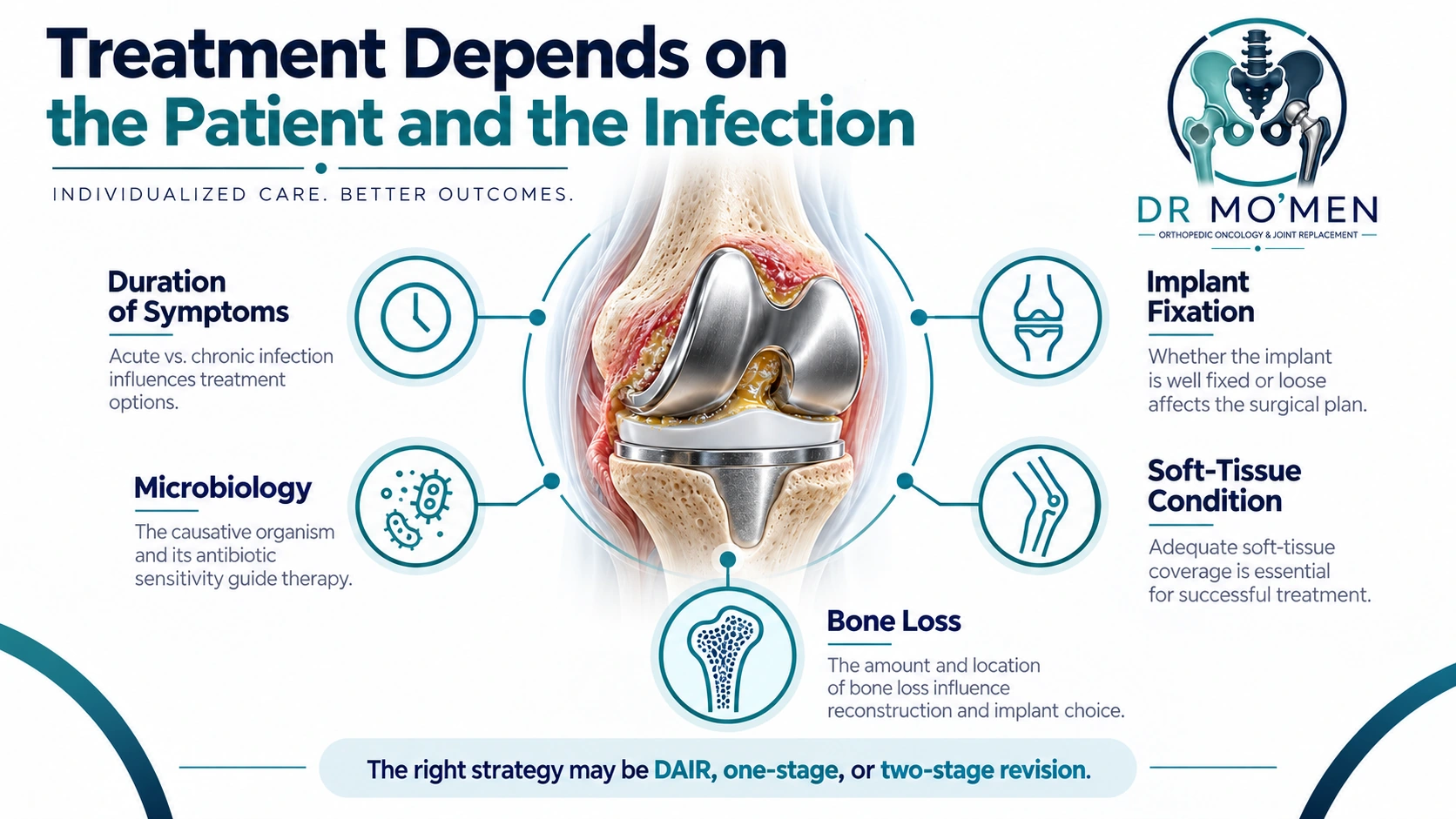
Potential Risks
Possible complications include:
- persistent or recurrent infection;
- further surgery;
- additional bone loss;
- stiffness or instability;
- wound problems;
- fracture;
- thrombosis;
- bleeding or transfusion;
- complications related to antimicrobial therapy.
No treatment strategy can guarantee eradication of infection in every patient.
When Is Urgent Assessment Needed?
Urgent medical assessment is appropriate with:
- fever or chills with a painful, swollen replaced knee;
- purulent wound drainage;
- rapidly spreading redness;
- rapid clinical deterioration;
- dizziness, low blood pressure or other systemic features concerning for sepsis;
- sudden severe pain with inability to bear weight.
Dr. Mo’men's Role in Complex Knee PJI
Complex PJI assessment should begin by defining the infection and the extent of the problem rather than selecting DAIR, a spacer or a new implant before diagnosis is complete.
Assessment may include review of previous surgery and imaging, implant fixation, ESR and CRP, planning joint aspiration where appropriate, reviewing previous cultures and antibiotics, evaluating bone and soft tissues, distinguishing acute from chronic infection, and selecting between DAIR, one-stage and two-stage strategies.
International patients may send available X-rays, operative reports, laboratory results and microbiology reports for an initial orthopedic second opinion before travel. A definitive surgical plan still depends on complete clinical assessment, imaging and investigations.
Knee PJI may sometimes present with pain and stiffness; for the broader differential, see: Stiff Knee After Replacement: causes and treatment options
Medical References
- American Academy of Orthopaedic Surgeons (AAOS). Diagnosis and Prevention of Periprosthetic Joint Infections: Evidence-Based Clinical Practice Guideline. 2019. https://www.aaos.org/quality/quality-programs/diagnosis-and-prevention-of-periprosthetic-joint-infections/
- Zhao Y, et al. Systematic review and meta-analysis of single-stage vs two-stage revision for periprosthetic joint infection: a call for a prospective randomized trial. BMC Musculoskelet Disord. 2024;25:153. PMID 38373976. https://pubmed.ncbi.nlm.nih.gov/38373976/
- International Consensus Meeting on Orthopaedic Infection: Differences Between ICM 2018 and ICM 2025. J Arthroplasty. 2025. PMID 41192529. https://pubmed.ncbi.nlm.nih.gov/41192529/