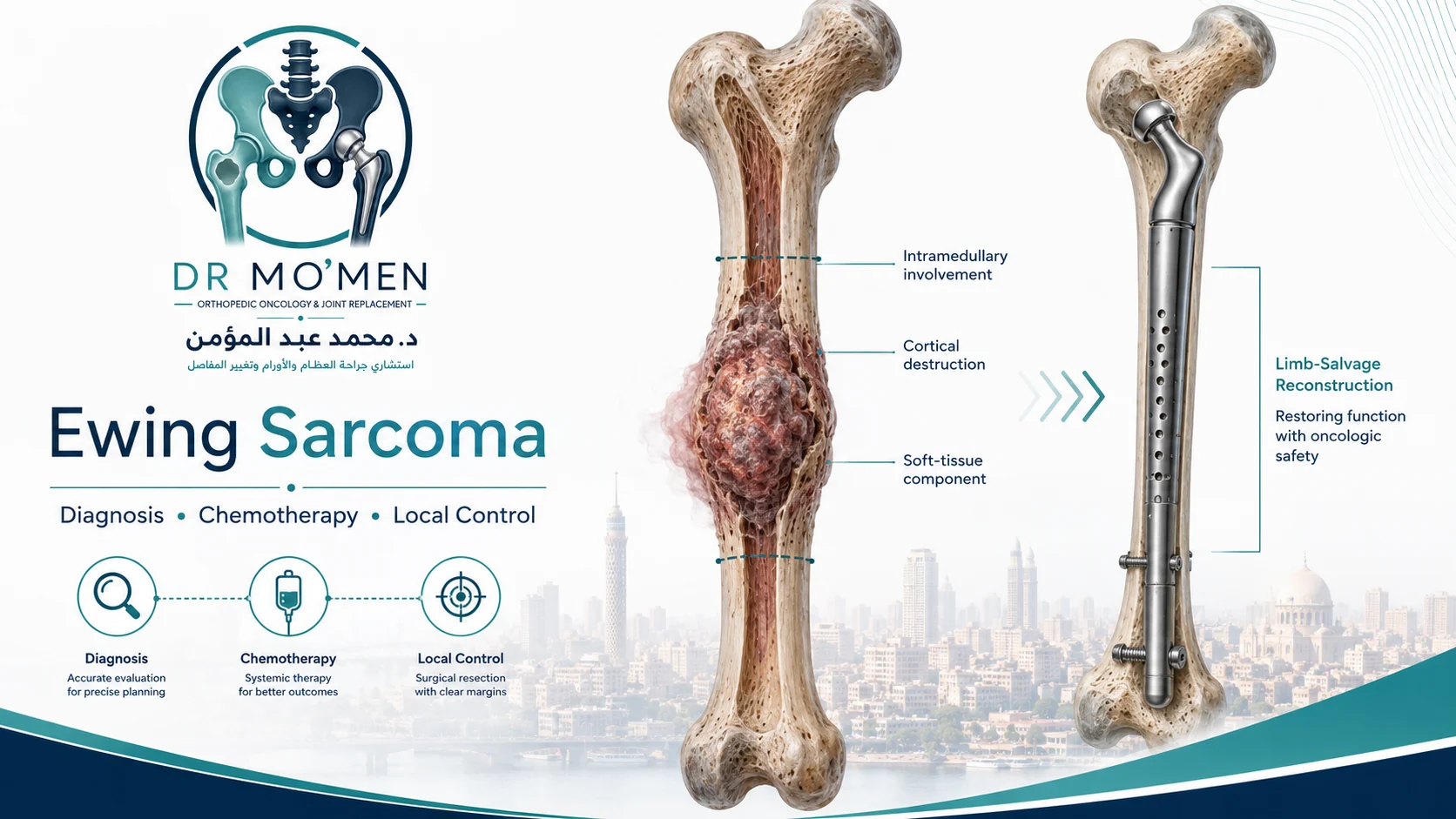
A diagnosis of Ewing sarcoma can be particularly difficult for patients and families because it often affects children, adolescents and young adults. Early symptoms may initially resemble a sports injury, infection or ordinary musculoskeletal pain.
Patients commonly ask: Is Ewing sarcoma a bone cancer? Is chemotherapy always needed? Will surgery be necessary? Can the limb be preserved? When is radiotherapy used?
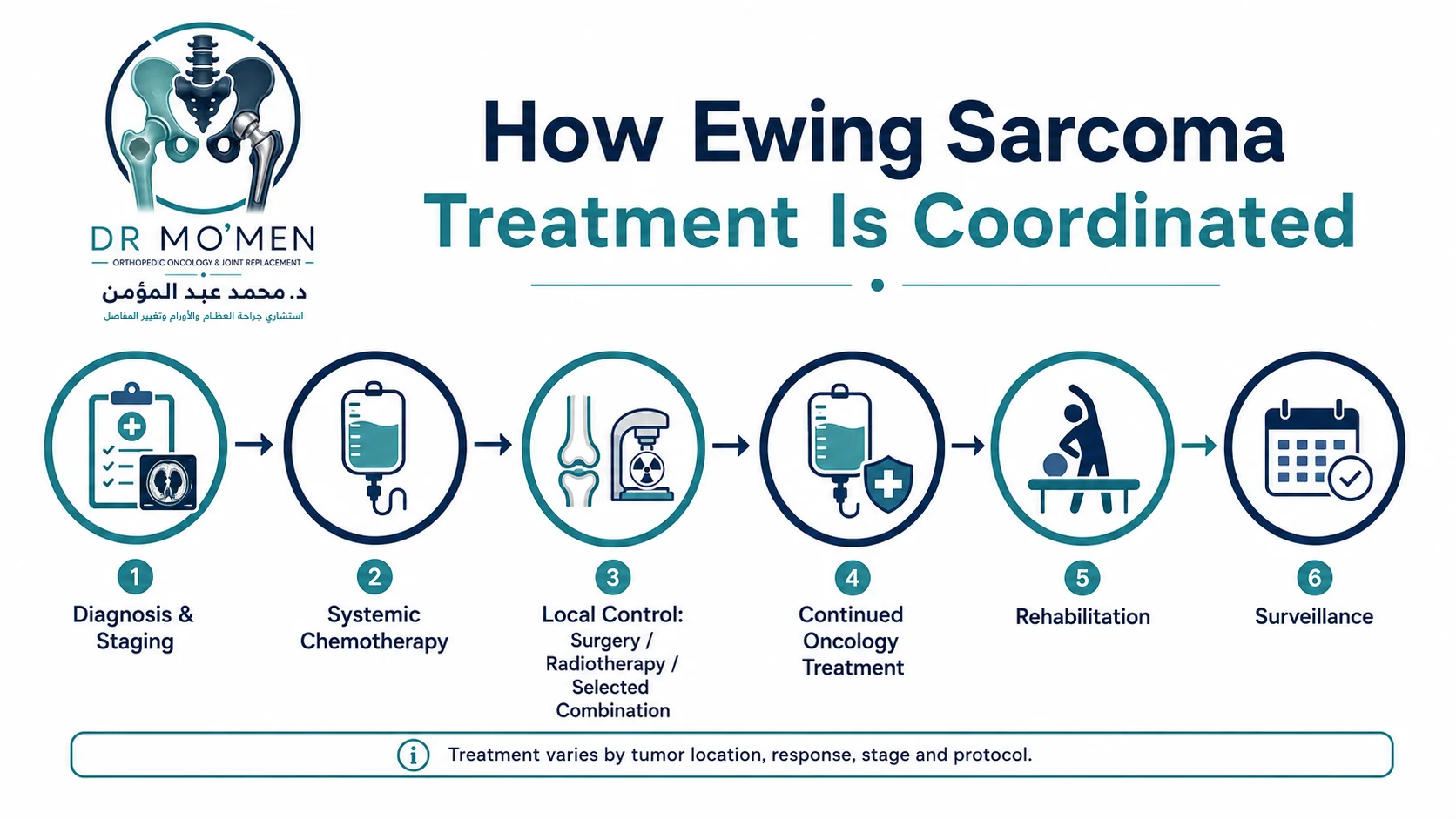
Ewing sarcoma is a malignant tumor that most commonly arises in bone, although related tumors can also arise in soft tissue. Its treatment differs from many other bone tumors because systemic therapy is a central component of care, while local treatment may involve surgery, radiotherapy, or a carefully selected combination of both.
The exact strategy depends on tumor location, size and anatomical extent, response to systemic treatment, relationship to nerves and blood vessels, whether adequate surgical margins are achievable, metastatic disease, and expected function after local treatment.
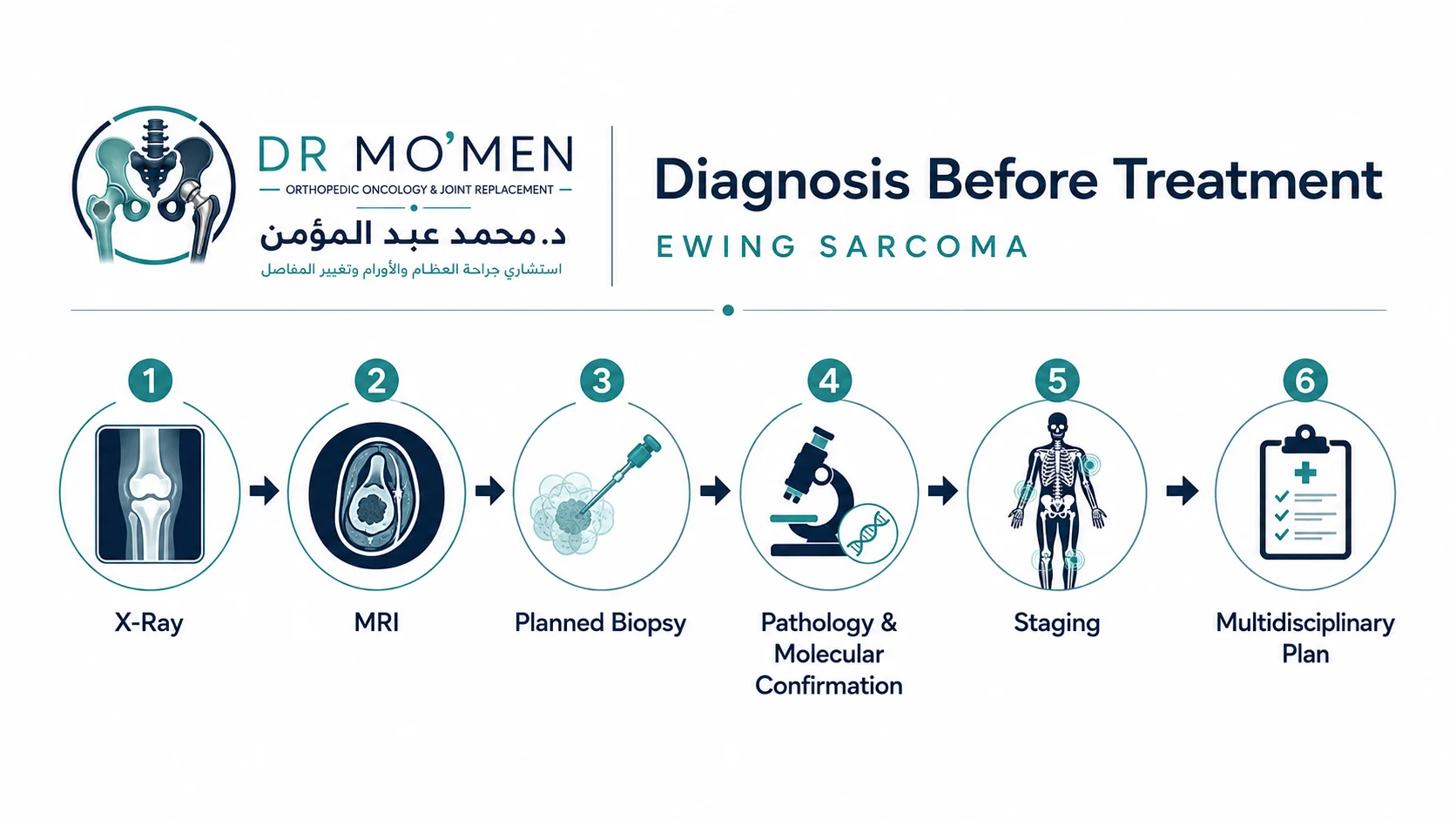
The first priority is therefore not simply removing the visible tumor. It is establishing the correct diagnosis, completing staging and coordinating treatment through a multidisciplinary sarcoma team.
What Is Ewing Sarcoma?
Ewing sarcoma is a malignant small-round-cell tumor belonging to the Ewing sarcoma family of tumors.
It most commonly affects children, adolescents and young adults, although it can occur outside these age groups.
It may arise in long bones, the pelvis, ribs, shoulder girdle, other skeletal sites, and soft tissues in selected cases.
The biological behavior and treatment pathway differ from benign bone lesions and from several other primary bone cancers.
Is Ewing Sarcoma a Bone Cancer?
Yes. When it arises in bone, Ewing sarcoma is considered a primary malignant bone tumor.
However, the term “bone cancer” alone does not determine treatment. Ewing sarcoma has a distinctive biological and molecular profile, and management usually requires systemic chemotherapy, local tumor control and structured follow-up.
Local control may be achieved by surgery, radiotherapy, or selected combinations of both depending on the individual case.
Where Does Ewing Sarcoma Commonly Occur?
Ewing sarcoma can occur in several anatomical regions, including the pelvis, femur, tibia, humerus, ribs, scapula and other flat or long bones.
Tumor location matters because it affects symptoms, biopsy access, surgical margins, reconstruction, radiotherapy planning and expected postoperative function.
What Symptoms Can Ewing Sarcoma Cause?
Possible symptoms include persistent localized pain, progressive pain, swelling, tenderness, a palpable mass, reduced limb function, limping, pain at night, fever or systemic symptoms in selected patients, and pathological fracture in some cases.
The symptoms may initially resemble a sports injury, muscle strain, infection or inflammatory pain. Persistent or progressive symptoms therefore deserve appropriate imaging.
Can Ewing Sarcoma Be Mistaken for Infection?
Sometimes the clinical and imaging picture can overlap with infection. Both conditions may cause pain, swelling, systemic symptoms, abnormal inflammatory markers and aggressive changes on imaging.
For this reason, treatment should not begin on the basis of one symptom or one scan alone. Accurate tissue diagnosis is essential when malignancy is suspected.
What Does Ewing Sarcoma Look Like on X-Ray?
X-rays may show an aggressive bone lesion with permeative or destructive change, cortical involvement, periosteal reaction, a soft-tissue mass or a pathological fracture in selected cases.
The exact pattern varies. No single X-ray feature confirms Ewing sarcoma.
Why MRI Is Important
MRI is central to defining the local extent of disease. It can help assess intramedullary tumor extent, soft-tissue mass, relationship to joints, muscle involvement, major nerves, blood vessels, anatomical compartments and local surgical planning.
MRI should ideally be obtained before biopsy when a primary malignant bone tumor is suspected.
Why Biopsy Planning Matters
Biopsy planning is critically important in Ewing sarcoma. The biopsy route should be chosen with definitive local treatment in mind.
An unplanned biopsy can cross unnecessary tissue planes, contaminate additional compartments, interfere with future limb-salvage surgery and increase the amount of tissue that may need to be removed.
The biopsy tract may need to be included within the definitive surgical resection.
Read more about bone tumor biopsy planning before definitive tumor surgery.
What Type of Biopsy Is Used?
The exact biopsy technique depends on tumor location and local expertise. A core needle biopsy is commonly used in many sarcoma pathways when technically appropriate.
The key objectives are representative tissue, a safe route, adequate material for pathology and proper coordination with the definitive treatment team. Biopsy should not be viewed as an isolated procedure.
Why Specialist Pathology Matters
Ewing sarcoma can resemble other small-round-cell tumors. Diagnosis may therefore require histology, immunohistochemistry and molecular testing.
The final diagnostic label should be based on specialist pathological assessment and appropriate molecular confirmation where required. This is particularly important before major treatment begins.
How Is Ewing Sarcoma Staged?
Staging evaluates whether disease appears limited to the primary tumor or is present elsewhere. Depending on the treatment pathway, staging may include imaging of the primary tumor, chest imaging, whole-body or skeletal assessment, and other investigations based on protocol and clinical context.
The exact staging workup should follow the specialist sarcoma pathway.
Where Can Ewing Sarcoma Spread?
Metastatic disease may involve the lungs, other bones and, in selected circumstances, bone marrow.
The presence and pattern of metastatic disease can significantly influence treatment planning. This is why complete staging should be performed before the definitive local treatment strategy is finalized.
Is Chemotherapy Used for Ewing Sarcoma?
Yes. Systemic multi-agent chemotherapy is a central component of treatment for Ewing sarcoma.
The exact drugs, sequence, dose intensity and duration depend on age, treatment protocol, country or institution, organ function, stage, response and clinical-trial availability.
A patient education article cannot substitute for an individualized medical oncology treatment protocol.
Why Is Chemotherapy Started Early?
Ewing sarcoma is treated as a systemic disease even when imaging shows only one primary lesion. Early chemotherapy aims to treat both the visible primary tumor and microscopic disease that may not be detectable on scans.
It also allows the multidisciplinary team to plan definitive local control during systemic treatment.
Does the Tumor Always Shrink With Chemotherapy?
Not necessarily in a simple or dramatic way. Treatment response may be assessed using imaging, clinical changes and pathological findings after surgery.
A tumor can respond biologically even when external size does not change dramatically. Surgical planning should therefore be based on complete reassessment rather than size alone.
Is Surgery Always Needed?
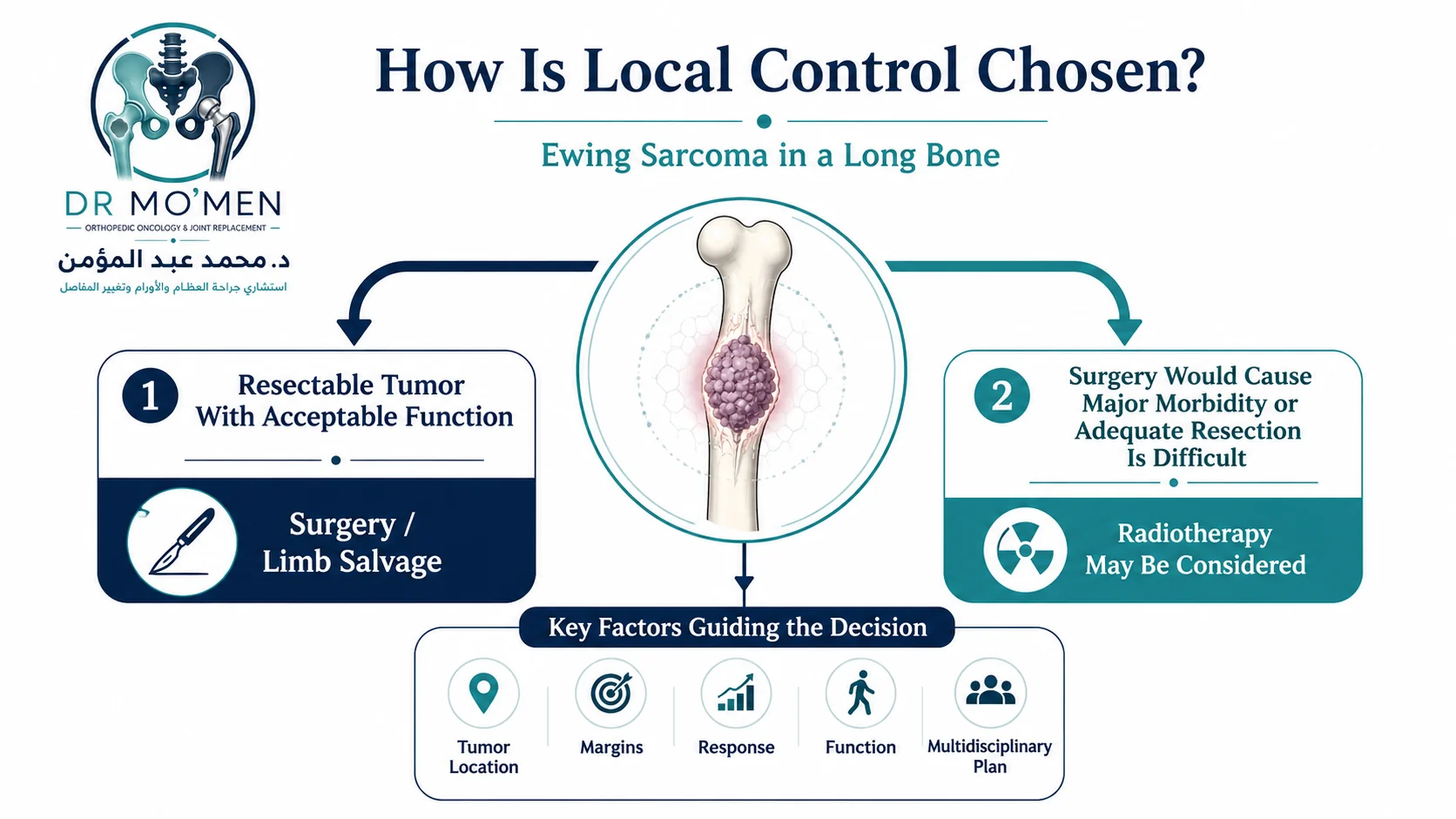
No. Unlike some other primary bone tumors, local control in Ewing sarcoma may be achieved by surgery, radiotherapy or a combination.
The choice depends on tumor location, surgical resectability, expected margins, expected functional loss, response to treatment, age, radiotherapy considerations and multidisciplinary assessment.
When Is Surgery Preferred?
Surgery may be considered when the tumor can be removed with an appropriate margin and the resulting reconstruction offers acceptable function.
Potential advantages include complete pathological assessment of the resected tumor and direct assessment of surgical margins.
However, surgery should not be performed simply because the tumor is technically removable. Expected morbidity and functional consequences matter.
What Is Wide Resection?
Wide resection means removing the tumor with a planned margin of surrounding uninvolved tissue.
Depending on location, this may require removal of bone, muscle, a joint, the biopsy tract and other involved soft tissues. The required resection is determined by pre-treatment MRI, post-treatment reassessment, anatomy, response, pathology and oncological principles.
Can the Limb Be Saved?
In many extremity cases, limb-salvage surgery may be possible. However, it should only be performed when adequate tumor removal is achievable, the limb can be reconstructed, meaningful function is expected and oncological safety is not compromised.
Limb preservation is not the only goal. The objective is appropriate tumor control together with useful function.
Related guide: limb salvage surgery for bone tumors.
How Is the Limb Reconstructed After Resection?
Reconstruction depends on location, amount of bone removed, joint involvement, age, remaining soft tissues and expected function.
Options may include megaprosthesis, biological reconstruction, structural graft, internal fixation or combined reconstructive techniques. There is no single reconstruction appropriate for every patient.
When Is a Megaprosthesis Used?
If a tumor involves a major segment of bone close to a joint, wide resection may create a large defect. Examples include tumors involving the distal femur, proximal tibia, proximal femur or proximal humerus.
A megaprosthesis can replace the removed bone segment and joint when appropriate.
Read more about megaprosthesis after bone tumor resection.
What Is the Role of Radiotherapy?
Radiotherapy has an important role in Ewing sarcoma. It may be used as definitive local treatment when surgery is not appropriate, when surgery would cause unacceptable morbidity, in selected cases after surgery depending on margins, response and treatment protocol, and in specific metastatic or recurrent circumstances.
The decision requires coordination between orthopedic oncology, medical oncology and radiation oncology.
Why Not Use Surgery Alone?
Ewing sarcoma is not simply a localized structural problem. Because systemic microscopic disease is an important consideration, surgery alone is generally not an adequate treatment strategy for standard Ewing sarcoma.
Systemic therapy is a fundamental component of management.
Pelvic Ewing Sarcoma
Pelvic tumors are particularly complex because they may be close to major nerves, major vessels, pelvic organs, the hip joint or sacrum.
Surgery may involve significant morbidity. In some pelvic cases, radiotherapy may have an important role in local control.
The correct approach depends on tumor location, size, response, surgical morbidity and reconstruction options.
Ewing Sarcoma Around the Knee
Ewing sarcoma can affect the femur or tibia near the knee. Surgical planning should evaluate joint involvement, soft-tissue extension, neurovascular structures, required resection length and reconstructive options.
If wide resection requires removal of the joint, reconstruction may involve a tumor megaprosthesis.
What If a Pathological Fracture Occurs?
A pathological fracture may complicate treatment but does not automatically mean amputation.
The team assesses fracture pattern, local tumor extent, contamination, response to chemotherapy and reconstructability. Definitive fixation should not be performed as routine trauma surgery before diagnosis and oncological planning.
Why Unplanned Surgery Should Be Avoided
An unexplained destructive bone lesion should not undergo routine fixation or excision before diagnosis.
Unplanned surgery can contaminate additional tissues, alter future surgical margins, complicate limb salvage and affect radiotherapy planning.
The preferred sequence is diagnosis → staging → systemic treatment → planned local control whenever clinically appropriate.
What If Surgery Was Already Done Without Tumor Planning?
The case should be reassessed. Evaluation may include pathology review, operative notes, current MRI, staging and multidisciplinary discussion.
Further local treatment may need to account for the previous surgical field.
How Is Response to Treatment Evaluated?
Response can be assessed through symptoms, imaging, pathological tumor response if surgery is performed and overall staging.
No single test should be interpreted in isolation. The multidisciplinary team integrates all available information.
Rehabilitation After Surgery
Rehabilitation depends on the operation. Goals may include wound protection, pain control, safe mobility, joint movement, muscle strengthening, gait training, protection of reconstructed tissues and return to school or daily life.
Chemotherapy can affect fatigue, strength, appetite and rehabilitation tolerance, so recovery should be individualized.
When Can the Patient Walk?
There is no universal timeline. Weight-bearing depends on reconstruction, soft-tissue repair, implant stability, biological healing, fracture status and the surgeon’s protocol.
Some megaprosthetic reconstructions may permit relatively early loading. Other reconstructions require a more protected period.
Can Ewing Sarcoma Come Back?
Yes. Recurrence can occur locally, in the lungs, in other bones or at multiple sites.
The pattern and timing of recurrence can influence treatment options. Structured surveillance is therefore important.
What Happens If Ewing Sarcoma Recurs?
Recurrent disease requires specialist multidisciplinary reassessment. Treatment may involve combinations of systemic therapy, surgery, radiotherapy, local treatment of metastatic disease and supportive treatment.
The exact strategy depends on site of recurrence, timing, previous therapy, disease burden, resectability and general condition.
For a broader recurrence framework, see recurrent bone tumor assessment.
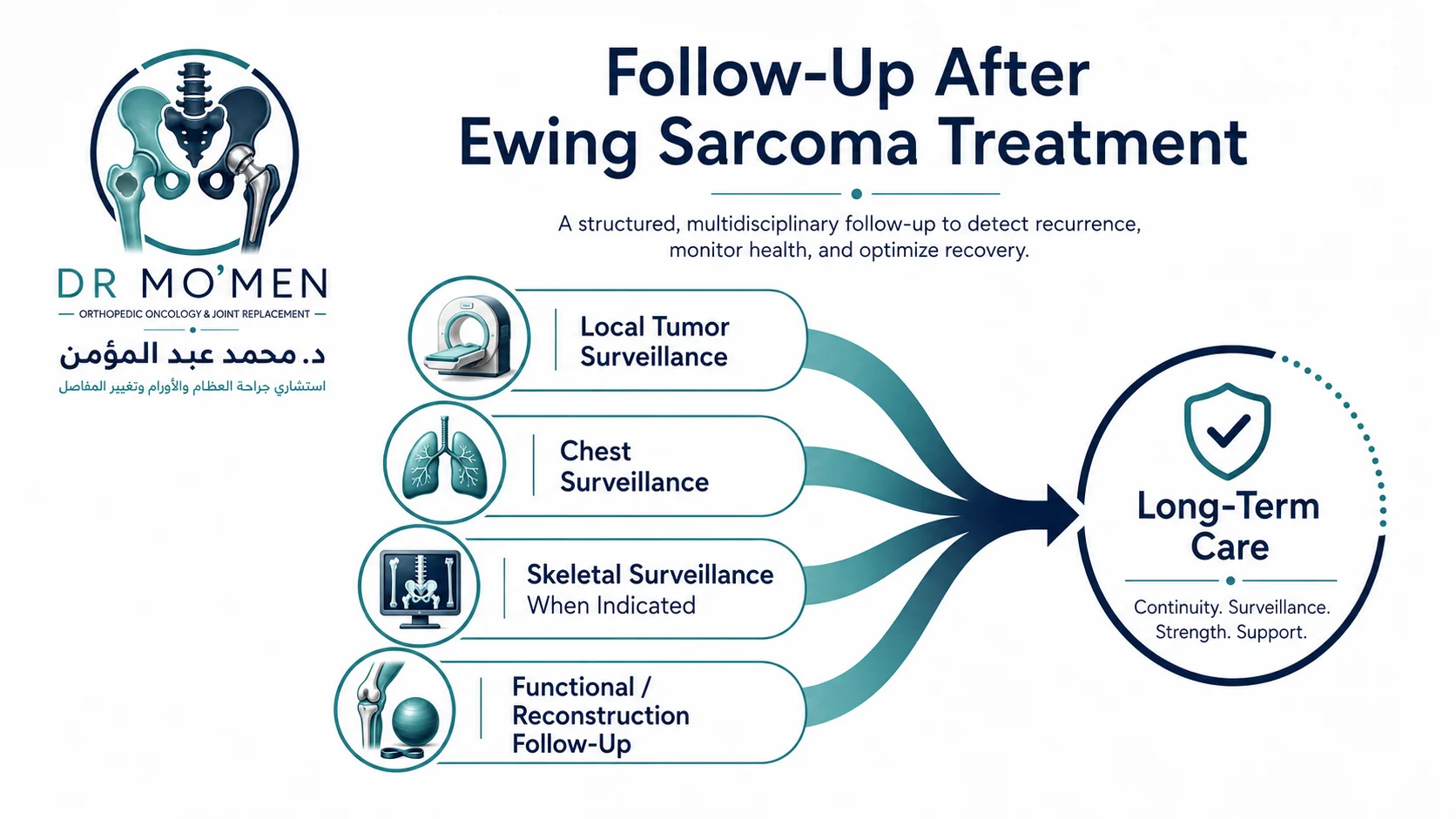
Long-Term Follow-Up
Follow-up generally addresses three areas: oncological surveillance for local, pulmonary and skeletal recurrence; reconstruction surveillance for surgically reconstructed patients; and functional or treatment-related follow-up.
The exact schedule should follow the treating oncology protocol.
When Should You Seek Specialist Review?
Consider orthopedic oncology or sarcoma review if Ewing sarcoma is suspected, biopsy has been proposed, pathology has confirmed Ewing sarcoma, major surgery has been recommended, amputation is being discussed, limb salvage is being considered, radiotherapy versus surgery is unclear, pathology or imaging is uncertain, previous surgery occurred before diagnosis, or disease has recurred.
International Patients: What Should You Send Before Travelling?
Useful records include X-rays, MRI, CT, chest imaging, staging studies, biopsy report, pathology report, molecular pathology results if available, chemotherapy summary, previous operative records, radiotherapy details and the current multidisciplinary treatment plan.
If biopsy has not yet been performed, review before biopsy may be particularly valuable.
Send Your Imaging Before You Travel
Preliminary specialist review can help clarify whether imaging is adequate, whether biopsy planning needs review, whether pathology confirmation is complete, whether staging is sufficient, whether surgery appears technically feasible, whether limb-salvage reconstruction should be assessed and whether travel to Cairo is reasonable.
Remote review does not replace examination, definitive biopsy, pathology, oncology assessment or multidisciplinary treatment planning.
Related primary bone-tumor guide: osteosarcoma diagnosis, chemotherapy and limb salvage.
About Dr. Mohammed Abdelmoemen Abuelhadid
Dr. Mohammed Abdelmoemen Abuelhadid is an Orthopedic Oncology & Joint Replacement Surgeon and Lecturer of Orthopedic Surgery at Ain Shams University.
His clinical areas include orthopedic oncology, bone and soft-tissue tumors, limb-salvage surgery, wide tumor resection, megaprosthetic reconstruction, complex reconstruction, metastatic bone disease and second medical opinions for complex orthopedic cases.
For Ewing sarcoma, local surgery is only one component of care. Treatment should be coordinated within a multidisciplinary sarcoma pathway.
For appointments or medical-record review: +20 102 1690693
International Patients | Orthopedic Oncology Second Opinion
Has Ewing Sarcoma Been Suspected or Diagnosed?
Specialist review may help clarify whether imaging is complete, whether biopsy was properly planned, whether pathology and molecular confirmation are adequate, whether staging is complete, whether surgery is appropriate for local control, whether limb salvage is technically feasible, and how surgery and radiotherapy options should be discussed within the multidisciplinary plan.
For appointments or medical-record review: +20 102 1690693
Frequently Asked Questions
Is Ewing sarcoma treated with chemotherapy?
Yes. Systemic chemotherapy is a central part of standard Ewing sarcoma treatment. The exact regimen depends on age, protocol, stage, organ function and oncology assessment.
Is surgery always required?
No. Local control may involve surgery, radiotherapy or both. The decision depends on tumor location, margins, expected function and multidisciplinary assessment.
Can the limb be preserved?
In selected extremity tumors, limb-salvage surgery may be possible if adequate tumor removal and a functional reconstruction can be achieved.
Why is biopsy planning important?
The biopsy tract can influence definitive surgery. Poorly planned biopsy may contaminate tissues that otherwise would not need to be removed.
Is radiotherapy used in Ewing sarcoma?
Radiotherapy has an established role in local control in selected circumstances. Its use depends on surgical feasibility, margins, location, response and treatment protocol.
Can Ewing sarcoma spread to the lungs?
Yes. Pulmonary metastases can occur, which is why chest assessment forms part of staging and follow-up.
Can I get a second opinion before biopsy?
Yes. For suspected primary bone malignancy, reviewing imaging before biopsy can be particularly useful because biopsy planning may affect later surgery.
How this article was reviewed
This patient-education article was reviewed for clinical accuracy, patient safety and decision-making clarity by Dr. Mohammed Abdelmoemen Abuelhadid. It is intended to support, not replace, specialist pathology and molecular review, staging, medical oncology assessment, radiation oncology assessment and multidisciplinary sarcoma treatment planning.
Author and medical reviewer
Dr. Mohammed Abdelmoemen Abuelhadid — Orthopedic Oncology & Joint Replacement Surgeon and Lecturer of Orthopedic Surgery at Ain Shams University.
Medical Disclaimer: This article is for patient education and does not replace clinical examination, specialist pathology and molecular review, staging investigations, medical oncology assessment, radiation oncology assessment, or individualized multidisciplinary sarcoma treatment planning.