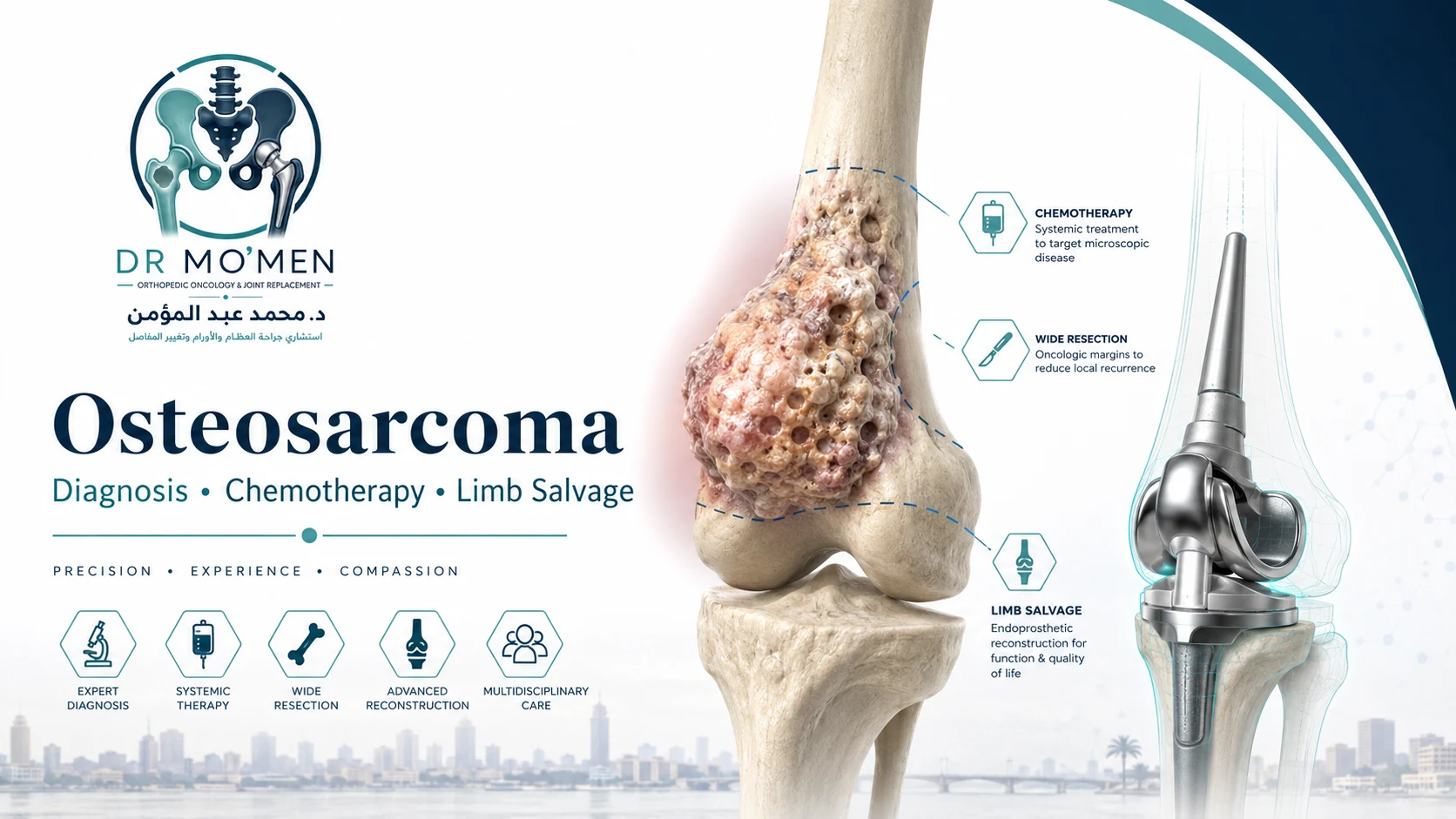
A diagnosis of osteosarcoma can be overwhelming for patients and families.
The first questions are often: Is this definitely bone cancer? Will chemotherapy be needed? Can the limb be saved? Will the joint have to be replaced?
Osteosarcoma is a malignant primary bone tumor that most commonly affects adolescents and young adults, although it can occur at other ages.
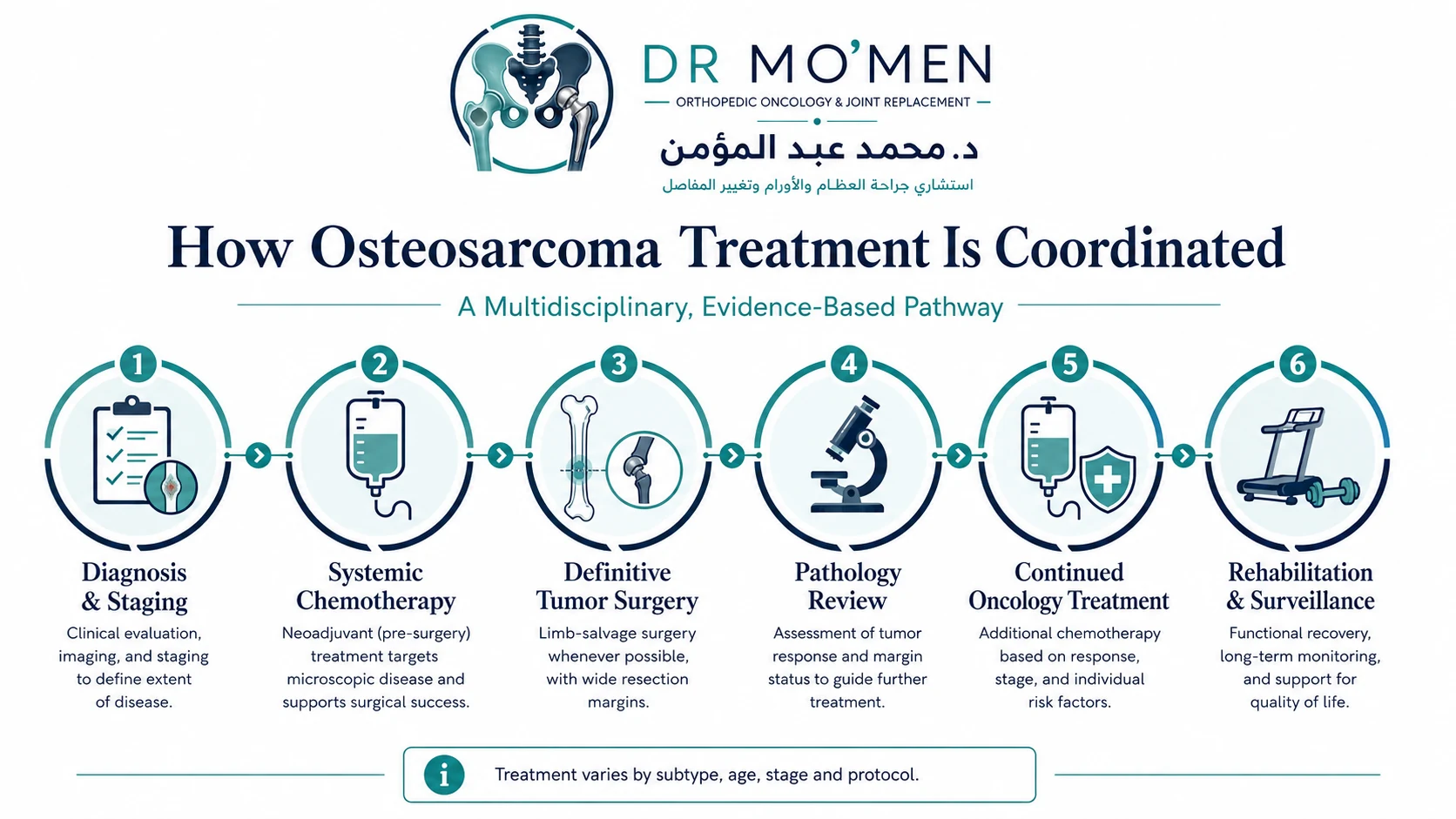
Treatment usually requires a coordinated multidisciplinary approach involving orthopedic oncology, medical oncology, musculoskeletal radiology, pathology, rehabilitation, and other specialists when required.
For many patients with localized high-grade osteosarcoma of an extremity, treatment commonly combines systemic chemotherapy and surgical removal of the primary tumor. However, the exact plan depends on age, histological subtype, tumor location, stage, response to treatment, relationship to nerves and blood vessels, metastatic disease, and whether the tumor can be removed with an appropriate margin.
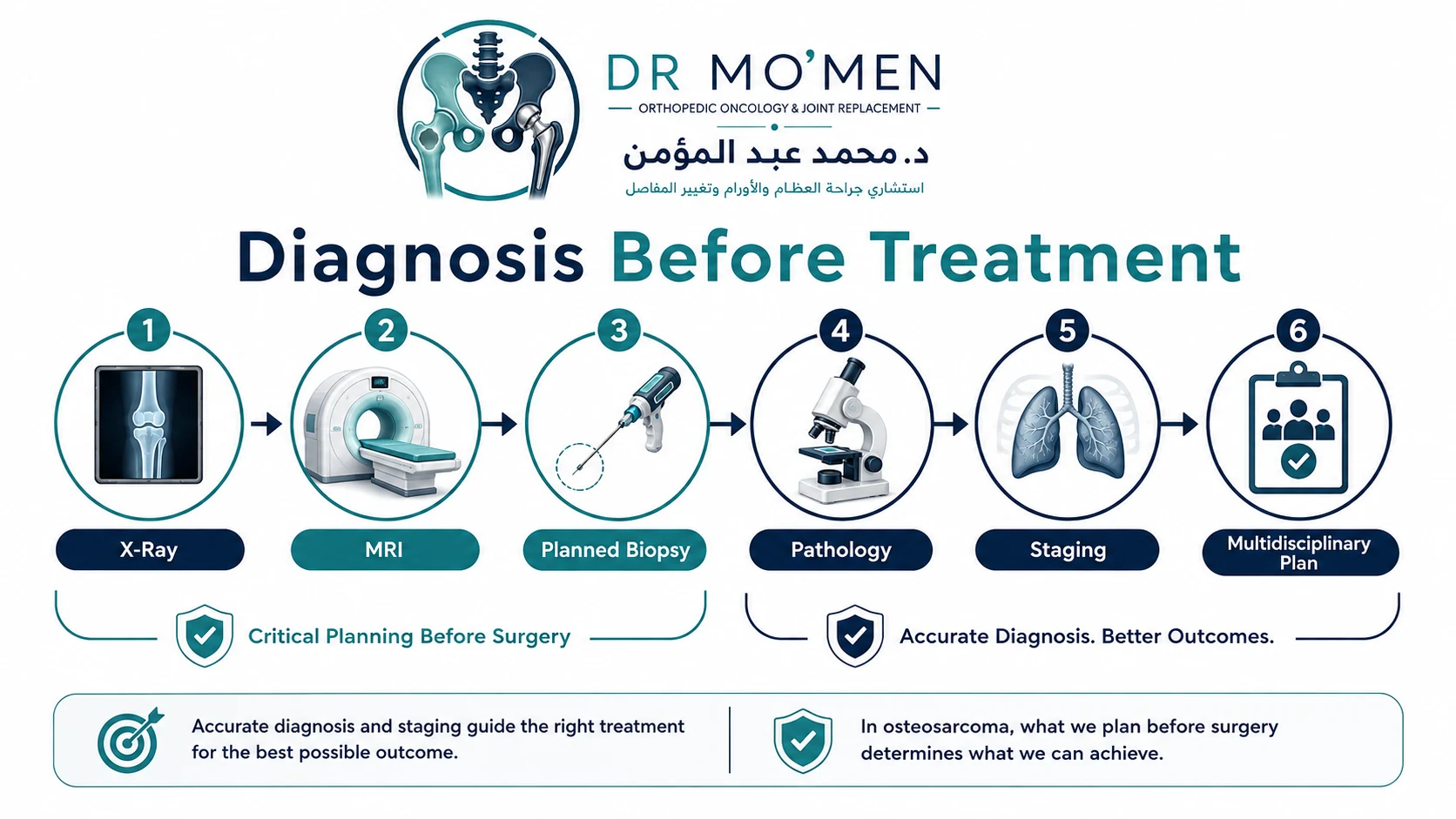
The most important early step is not rushing into surgery. It is obtaining an accurate diagnosis through properly planned imaging, staging and biopsy.
Osteosarcoma Treatment at a Glance
| Clinical question | General principle |
|---|---|
| Is biopsy required? | Diagnosis normally requires appropriately planned tissue sampling when osteosarcoma is suspected. |
| Should MRI be done first? | Local MRI is ideally obtained before biopsy when possible so the untreated tumor and biopsy route can be planned accurately. |
| Is chemotherapy needed? | Systemic chemotherapy is commonly part of treatment for conventional high-grade osteosarcoma, but treatment varies by grade and subtype. |
| Is surgery still needed after chemotherapy? | Usually yes for a resectable primary high-grade tumor; complete local control still depends on definitive tumor removal. |
| Can the limb be saved? | Often possible when adequate oncological margins and a useful reconstruction can be achieved safely. |
| Does pathological fracture mean amputation? | No. It requires individualized orthopedic-oncology assessment rather than an automatic amputation decision. |
| Is a megaprosthesis always necessary? | No. Reconstruction depends on the resection, anatomy, remaining bone and expected function. |
Evidence basis: These general principles are consistent with the NCI Osteosarcoma PDQ and the 2024 UK bone-sarcoma guidelines. Individual treatment still depends on specialist pathology, staging and multidisciplinary assessment.
What Is Osteosarcoma?
Osteosarcoma is a malignant bone tumor in which the tumor cells produce abnormal osteoid or bone matrix.
It is one of the important primary malignant tumors of bone. Osteosarcoma most frequently develops near the ends of long bones, particularly around the knee.
- distal femur
- proximal tibia
- proximal humerus
Who Can Develop Osteosarcoma?
Osteosarcoma is commonly associated with adolescence and early adulthood, particularly during periods of rapid skeletal growth. However, it is not exclusively a disease of teenagers.
Older adults can also develop osteosarcoma, sometimes in different clinical contexts. Age therefore contributes to the diagnostic picture but does not establish the diagnosis by itself.
Where Does Osteosarcoma Commonly Occur?
The region around the knee is especially important. Distal femoral tumors may involve metaphyseal bone, cortex, surrounding soft tissue and structures close to the knee joint.
Proximal tibial osteosarcoma can create additional reconstructive challenges because of proximity to the knee, extensor mechanism and soft-tissue coverage.
Tumors in the proximal humerus can affect shoulder function and may require different reconstructive strategies.
What Symptoms Can Osteosarcoma Cause?
Symptoms can initially be relatively non-specific.
- persistent bone pain
- progressive pain over weeks or months
- swelling or a palpable mass
- reduced joint movement
- limping or worsening pain during activity
- night pain
- pathological fracture in selected cases
Does Every Painful Bone Lesion Mean Osteosarcoma?
No. Many benign and non-tumor conditions can cause bone pain. Even an aggressive-looking bone lesion may have several possible diagnoses.
The final diagnosis should integrate clinical history, X-rays, MRI, staging studies, planned biopsy and expert pathology. Treatment should not be based on imaging alone.
What Does Osteosarcoma Look Like on X-Ray?
X-rays may show an aggressive bone-forming lesion. Possible features include destructive bone change, abnormal mineralized tumor matrix, cortical destruction, aggressive periosteal reaction, soft-tissue mass and pathological fracture.
The appearance can vary. Radiographic pattern helps determine how suspicious the lesion is but does not replace biopsy.
Why MRI Is Important
MRI is central to local surgical planning. It helps define intramedullary tumor extent, soft-tissue extension, relationship to the joint, major vessels and nerves, surrounding muscle involvement, possible skip lesions when relevant, and the level at which bone may need to be resected.
MRI should ideally be obtained before biopsy when a primary malignant bone tumor is suspected. This preserves the best possible information about the untreated tumor.
Why Biopsy Planning Is Critical
This is one of the most important principles in osteosarcoma treatment.
A biopsy should not simply be performed through the easiest or shortest route. The biopsy tract may potentially be contaminated by tumor cells and may need to be removed during definitive surgery.
Poorly planned biopsy can contaminate uninvolved tissue, cross unnecessary muscle compartments, complicate future limb-salvage surgery and increase the amount of tissue that has to be removed.
Whenever possible, biopsy should be coordinated with the team responsible for definitive tumor surgery.
Read more about bone tumor biopsy planning.
What Type of Biopsy Is Used?
Biopsy strategy depends on tumor location, imaging, local anatomy, suspected diagnosis and institutional practice.
A core needle biopsy is commonly used in many musculoskeletal tumor pathways when appropriate. The important issue is not only the instrument used: it is where the biopsy is performed, how the tract is positioned and whether adequate representative tissue is obtained.
Why Pathology Review Matters
Osteosarcoma contains several pathological subtypes. Treatment decisions depend on the exact diagnosis.
Specialist musculoskeletal pathology review may be particularly useful when the pathology is unusual, the sample is limited, imaging and pathology do not match, the tumor subtype is uncertain, or the patient is seeking a second opinion before major surgery.
Diagnosis should be finalized before definitive treatment planning whenever possible.
How Is Osteosarcoma Staged?
Staging determines whether disease appears limited to the primary site or is present elsewhere. The exact staging pathway depends on the patient and institutional protocol.
Assessment may include imaging of the primary tumor, chest imaging and whole-body or skeletal imaging according to the clinical pathway.
The lungs are an important site of metastatic evaluation in osteosarcoma. Staging should be completed before the definitive treatment plan is finalized.
Why Chest Imaging Matters
Osteosarcoma can spread to the lungs. This does not mean every patient will have lung metastases.
Chest evaluation is an important part of staging because metastatic status can influence prognosis, systemic treatment planning, surgical strategy and multidisciplinary discussion.
Does Every Type of Osteosarcoma Receive the Same Treatment?
No. Osteosarcoma is not a single uniform disease. The familiar chemotherapy-plus-surgery pathway mainly describes conventional high-grade osteosarcoma. Histological grade and subtype, anatomical site, age, stage and resectability can alter treatment.
For example, some low-grade central or parosteal osteosarcomas may be treated with complete wide surgical resection without the same chemotherapy pathway used for high-grade conventional disease. If higher-grade areas are present, treatment may change. This is why specialist pathology classification should be established before assuming that every osteosarcoma requires identical systemic treatment.
See the NCI treatment overview and UK bone-sarcoma guidance for the grade- and subtype-dependent treatment framework.
Is Osteosarcoma Treated With Chemotherapy?
For many patients with high-grade conventional osteosarcoma, systemic chemotherapy forms an important part of treatment.
The exact regimen is determined by the medical oncology team and varies according to age, treatment protocol, organ function, tumor subtype, national or institutional practice and clinical-trial availability.
It is not appropriate to prescribe or individualize chemotherapy through a general educational article.
Why Is Chemotherapy Often Given Before Surgery?
Preoperative chemotherapy may be used as part of a multidisciplinary treatment pathway. Potential goals include treating microscopic disease throughout the body, beginning systemic therapy early, allowing definitive surgery to be planned during treatment, and providing pathological information about tumor response after resection.
The local tumor may not always become dramatically smaller. Surgical planning should not depend solely on visible tumor shrinkage.
Is Chemotherapy Also Given After Surgery?
In many standard treatment pathways for high-grade osteosarcoma, systemic treatment continues after surgery.
Postoperative treatment depends on the treatment protocol, pathological findings, patient tolerance, organ function and multidisciplinary oncology assessment. The exact regimen should be managed by the medical oncology team.
What Does “Response to Chemotherapy” Mean?
After tumor resection, pathology can assess the surgical specimen for the degree of tumor necrosis or response to preoperative treatment.
This information can contribute to the overall assessment of the disease. Patients should avoid interpreting a single pathology term without discussing it with the treating oncology team.
Is Surgery Still Necessary If Chemotherapy Works?
For localized resectable osteosarcoma, surgery generally remains essential for control of the primary tumor.
Chemotherapy does not usually replace definitive local surgical treatment of a resectable primary extremity osteosarcoma. The surgical goal is to remove the tumor with an appropriate oncological margin.
What Is Wide Resection?
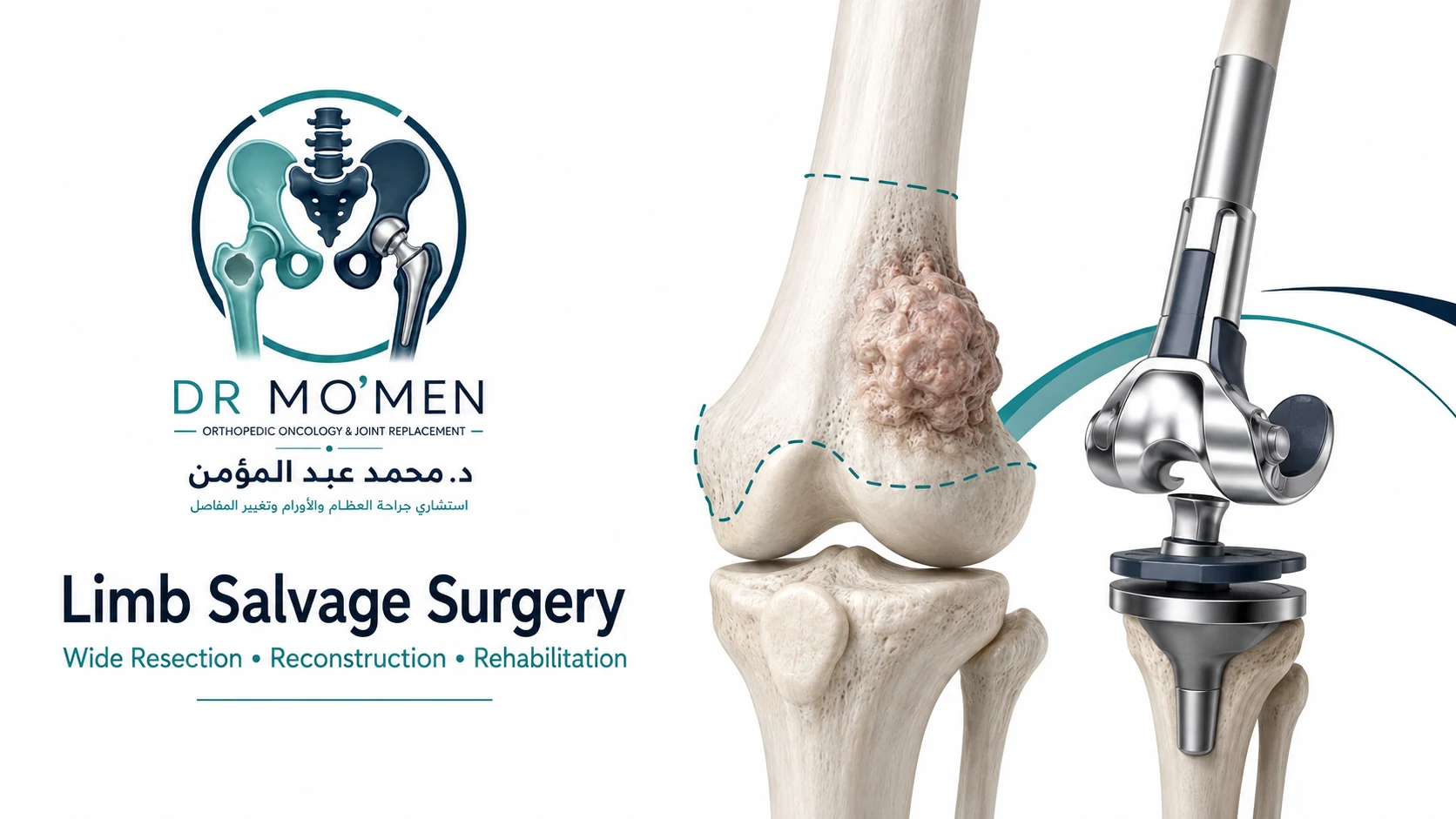
Wide resection means removing the tumor together with a planned margin of surrounding uninvolved tissue.
The operation may require removal of a segment of bone, part of an adjacent joint, muscle, the biopsy tract and other involved soft tissues.
The surgical margin should be planned according to MRI, anatomy, pathology, treatment response and relationship to vital structures.
Can the Limb Be Saved?
In many patients with extremity osteosarcoma, limb-salvage surgery may be feasible.
Limb salvage means removing the tumor while preserving a functional arm or leg. However, limb preservation should not compromise appropriate tumor resection.
The decision depends on tumor extent, neurovascular involvement, joint involvement, soft-tissue involvement, previous biopsy or surgery, infection, available reconstruction options and expected postoperative function.
Read more about limb salvage surgery for bone tumors.
Does Limb Salvage Mean the Whole Bone Is Preserved?
No. Limb salvage may still require removal of a large segment of bone and sometimes the adjacent joint.
The limb is preserved, but the removed skeletal segment must be reconstructed. Options may include megaprosthetic reconstruction, biological reconstruction, structural grafts in selected cases, combined techniques and other specialized strategies.
Osteosarcoma Around the Knee
Tumors involving the distal femur or proximal tibia are among the most important scenarios in limb-salvage surgery.
The surgeon assesses tumor distance from the joint, intra-articular involvement, soft-tissue extent, neurovascular structures, remaining bone, extensor mechanism and expected reconstruction.
A large resection may require replacement of the joint with a tumor prosthesis.
What Is a Distal Femoral Megaprosthesis?
After removal of the tumor-bearing distal femur, a modular distal femoral megaprosthesis can replace the removed distal femur, the knee articulation and the skeletal defect.
The reconstruction is designed to restore limb length, stability, alignment and functional mobility. It is a major implant and requires long-term surveillance.
Read more about megaprosthesis after bone tumor resection.
What About Proximal Tibial Osteosarcoma?
Proximal tibial reconstruction has additional challenges because the patellar tendon and extensor mechanism are closely related to the resected area.
The operation may require megaprosthetic reconstruction, extensor-mechanism reconstruction and careful soft-tissue coverage. Rehabilitation may need to protect repaired soft tissues during the early postoperative period.
Can Biological Reconstruction Be Used?
In selected patients, biological reconstruction may be considered. Potential approaches include autograft, allograft, vascularized bone graft and other reconstructive strategies.
Biological reconstruction has potential advantages but can also involve delayed union, nonunion, fracture, infection and prolonged protection from full loading.
No reconstruction method is best for every patient.
When Might Amputation Be Considered?
Amputation may still be appropriate in selected situations, including extensive major neurovascular involvement, inability to achieve adequate oncological margins with limb salvage, uncontrollable infection, severely compromised soft tissue, a reconstruction expected to leave a poorly functioning limb, or certain complex recurrent situations.
The decision should be individualized. The aim is not limb preservation at any cost.
Is Amputation Oncologically Better Than Limb Salvage?
The correct question is whether the tumor can be removed with an adequate oncological margin while preserving acceptable function.
When limb salvage can achieve the required tumor resection safely, it may be appropriate. Amputation remains an important option when limb preservation would compromise oncological or functional goals.
What If a Pathological Fracture Occurs?
Osteosarcoma can weaken bone enough to cause pathological fracture. A pathological fracture does not automatically mean amputation is required.
However, it may complicate local anatomy, increase soft-tissue contamination and affect reconstruction planning. The patient should be evaluated within an orthopedic oncology pathway rather than treated as a routine traumatic fracture.
When urgent local assessment is appropriate
Sudden severe pain, inability to use or bear weight on the limb, a new deformity, or acute neurological or vascular symptoms require prompt local medical assessment rather than waiting for an online review.
Why You Should Avoid Unplanned Fixation
If a young patient has an unexplained aggressive bone lesion, placing a plate or intramedullary nail before the diagnosis is established may contaminate a much larger area of the limb.
This can compromise future limb-salvage options. The principle is diagnosis and oncological planning before definitive fixation whenever clinically possible.
What If Surgery Has Already Been Performed Before Diagnosis?
An unplanned operation does not automatically make definitive treatment impossible.
However, the case may need reassessment including review of pathology, operative notes, MRI, staging and the previous surgical field. Definitive resection may need to include contaminated tissue from the previous operation.
What Are the Main Risks of Osteosarcoma Surgery?
Potential surgical complications depend on the operation performed.
- infection
- wound problems
- bleeding
- thrombosis
- nerve injury
- vascular injury
- stiffness
- weakness
- prosthetic complications
- fracture
- implant loosening
- soft-tissue failure
- need for future revision surgery
- local tumor recurrence
Rehabilitation After Limb-Salvage Surgery
Rehabilitation is a major part of treatment. Early goals may include wound protection, pain control, safe transfers, walking with appropriate support, prevention of stiffness and protection of reconstructed muscles and tendons.
Later rehabilitation may focus on gait training, strength, range of motion, balance, endurance, return to school or work and daily activity.
Chemotherapy may influence energy levels and rehabilitation tolerance. The plan should therefore be individualized.
When Can the Patient Walk?
There is no universal answer. Weight-bearing depends on reconstruction type, implant fixation, soft-tissue repair, wound condition, biological reconstruction, fracture status and the surgeon’s protocol.
Some megaprosthetic reconstructions provide immediate structural stability. Biological reconstructions may require more protection.
What Function Can Be Expected?
Functional outcome varies. Important factors include tumor location, muscles removed, nerve preservation, joint reconstruction, complications, chemotherapy, rehabilitation, age and general health.
Many patients can regain meaningful mobility and independence after limb-salvage surgery. Normal limb function cannot be guaranteed.
Can Osteosarcoma Come Back Locally?
Yes. Local recurrence is a recognized risk. This is one reason why adequate surgical margins and structured surveillance are important.
Possible warning signs include new pain, swelling, a new mass or changes on follow-up imaging. Not every pain after reconstruction represents tumor recurrence.
What If Osteosarcoma Recurs?
Recurrence should be reassessed carefully. Evaluation may include current imaging, chest staging, review of previous treatment, pathology where appropriate and multidisciplinary discussion.
Treatment depends on local versus metastatic recurrence, timing, resectability, previous chemotherapy, reconstruction and overall disease status.
For a broader recurrence pathway, see what to do if a bone tumor comes back.
What If Osteosarcoma Spreads to the Lungs?
Pulmonary metastatic disease requires specialist multidisciplinary review.
In selected patients, surgery to remove lung metastases may be considered depending on number and location of lesions, ability to remove all visible disease, disease elsewhere, previous treatment and general condition.
Systemic treatment strategy is determined by oncology specialists.
Is Radiotherapy Used for Osteosarcoma?
Osteosarcoma management is usually centered around surgery and systemic therapy when the tumor is resectable.
Radiotherapy has a more selective role than in some other malignancies and may be considered in particular circumstances depending on tumor location, resectability, margins, recurrence and available radiation techniques.
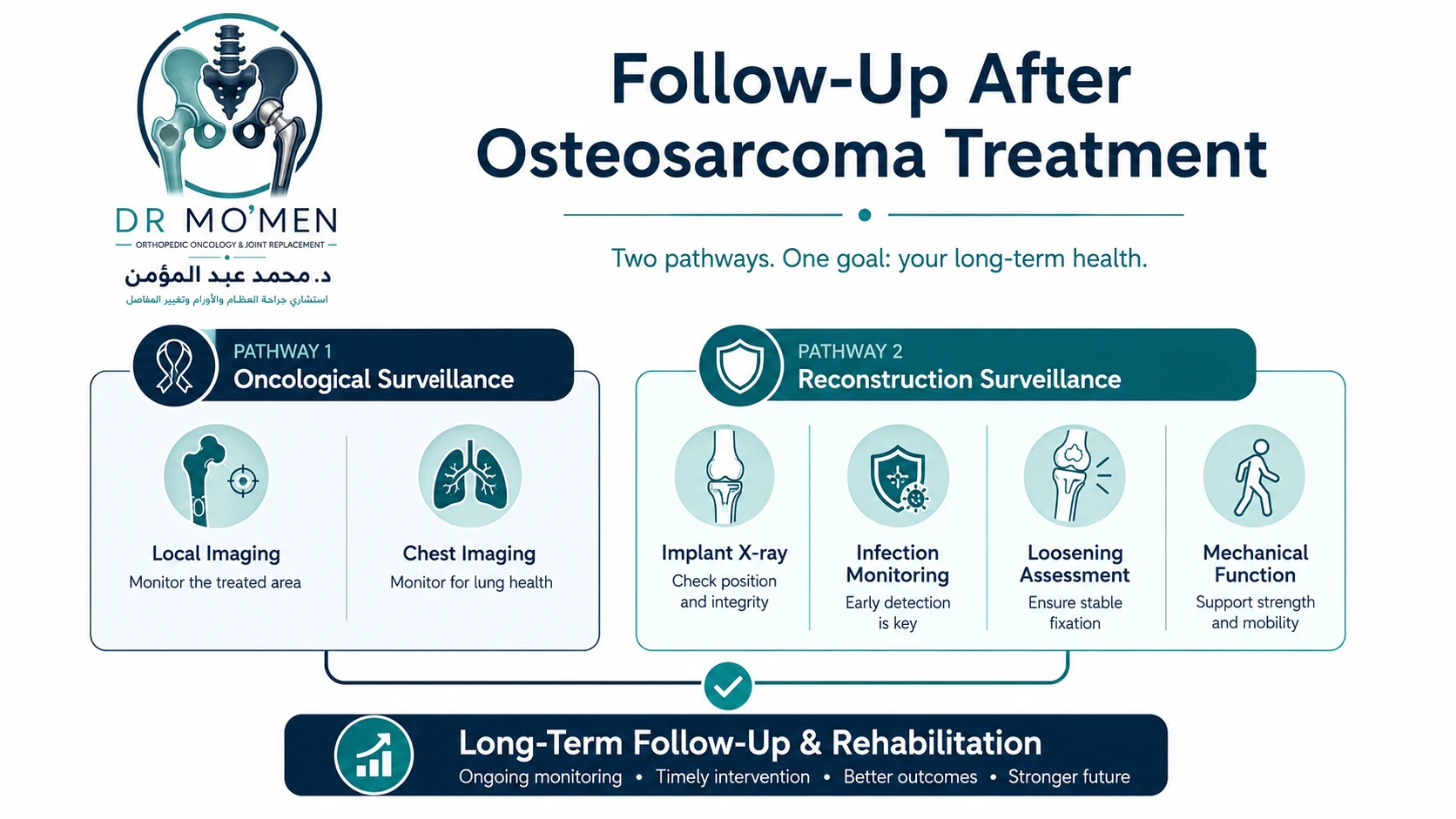
Long-Term Follow-Up After Osteosarcoma
Follow-up has several goals: oncological surveillance for local recurrence and metastatic disease; reconstruction surveillance for implant loosening, infection, mechanical failure, fracture, instability and soft-tissue problems; and functional assessment of mobility, strength and rehabilitation progress.
The follow-up schedule depends on the treatment protocol and time since treatment.
What If a Megaprosthesis Becomes Painful Years Later?
Pain can result from infection, aseptic loosening, mechanical failure, fracture, soft-tissue problems, instability or local recurrence.
Evaluation may include examination, X-rays, laboratory tests where appropriate, additional imaging and infection workup when indicated. Pain should not automatically be assumed to represent tumor recurrence.
When Should You Seek an Orthopedic Oncology Second Opinion?
A specialist second opinion may be particularly valuable when osteosarcoma has just been diagnosed, biopsy has been recommended but not yet performed, amputation has been proposed, limb-salvage surgery or megaprosthesis is being considered, imaging and pathology appear inconsistent, previous surgery was performed before diagnosis, recurrence has developed, major revision surgery is being considered, or treatment recommendations differ between centers.
A second opinion does not automatically mean the original plan is incorrect. It can help clarify the diagnosis, resection strategy, reconstruction options and sequencing of treatment.
You can also request an orthopedic oncology second opinion.
International Patients: What Should You Send Before Travelling?
Useful records include X-rays, MRI, CT, chest imaging, staging studies, biopsy report, pathology report, pathology slides or blocks if available, chemotherapy treatment summary, previous operative records and the current treatment plan.
For patients who have not yet had biopsy, specialist review before biopsy can be particularly important.
Send Your Imaging Before You Travel
A preliminary specialist review may help determine whether imaging is adequate, biopsy planning needs review, staging is complete, limb salvage appears technically worth assessing, what reconstruction may be required, whether a second pathology opinion may be useful, and whether travel to Cairo is appropriate.
Remote review does not replace physical examination, definitive biopsy, pathology, staging or multidisciplinary oncological planning.
About Dr. Mohammed Abdelmoemen Abuelhadid
Dr. Mohammed Abdelmoemen Abuelhadid is an Orthopedic Oncology & Joint Replacement Surgeon and Lecturer of Orthopedic Surgery at Ain Shams University.
His clinical areas include orthopedic oncology, osteosarcoma surgery, bone and soft-tissue tumors, limb-salvage surgery, tumor resection and reconstruction, megaprosthetic reconstruction, metastatic bone disease, revision arthroplasty, complex orthopedic reconstruction and second medical opinions for complex orthopedic cases.
For osteosarcoma, the priority is coordinated multidisciplinary treatment based on accurate diagnosis, proper staging and appropriately planned surgery.
Frequently Asked Questions
Is osteosarcoma always treated with chemotherapy?
Many patients with high-grade conventional osteosarcoma receive systemic chemotherapy as part of treatment, but the exact approach depends on tumor subtype, age, stage and multidisciplinary oncology assessment.
Can osteosarcoma be treated without amputation?
In many patients with extremity osteosarcoma, limb-salvage surgery may be feasible if the tumor can be removed with an appropriate margin and the limb can be reconstructed with useful expected function.
Why does biopsy need to be planned?
The biopsy tract may need to be removed during definitive surgery. A poorly positioned biopsy can contaminate additional tissues and make limb-salvage surgery more difficult.
Does chemotherapy remove the need for surgery?
For localized resectable conventional high-grade osteosarcoma, surgery generally remains necessary for control of the primary tumor even when chemotherapy is effective.
What is a megaprosthesis?
A megaprosthesis is a large modular implant used to replace a major segment of bone and often an adjacent joint after tumor resection.
Can osteosarcoma come back after treatment?
Yes, recurrence can occur locally or at distant sites. This is why structured oncological surveillance is required after treatment.
Can I get a second opinion before biopsy or surgery?
Yes. Reviewing imaging before biopsy can be particularly valuable because the biopsy route should ideally be planned with definitive tumor surgery in mind.
Have You or a Family Member Been Diagnosed With Osteosarcoma?
Before major surgery, specialist review may help clarify whether imaging is complete, biopsy has been properly planned, pathology review is appropriate, staging is complete, limb salvage appears feasible, what type of reconstruction may be required, and whether a second opinion is useful before irreversible surgery.
International contact: +20 102 1690693
How this article was reviewed
This patient-education article was reviewed for clinical accuracy, patient safety and decision-making clarity by Dr. Mohammed Abdelmoemen Abuelhadid. It is intended to support, not replace, clinical examination, specialist pathology review, staging and multidisciplinary oncology assessment.
Author and medical reviewer
Dr. Mohammed Abdelmoemen Abuelhadid — Orthopedic Oncology & Joint Replacement Surgeon and Lecturer of Orthopedic Surgery at Ain Shams University.
Medical Disclaimer: This article is for patient education and does not replace clinical examination, specialist pathology review, staging investigations, medical oncology assessment or individualized multidisciplinary treatment planning.