Is the Pain Really Coming From the Bone?
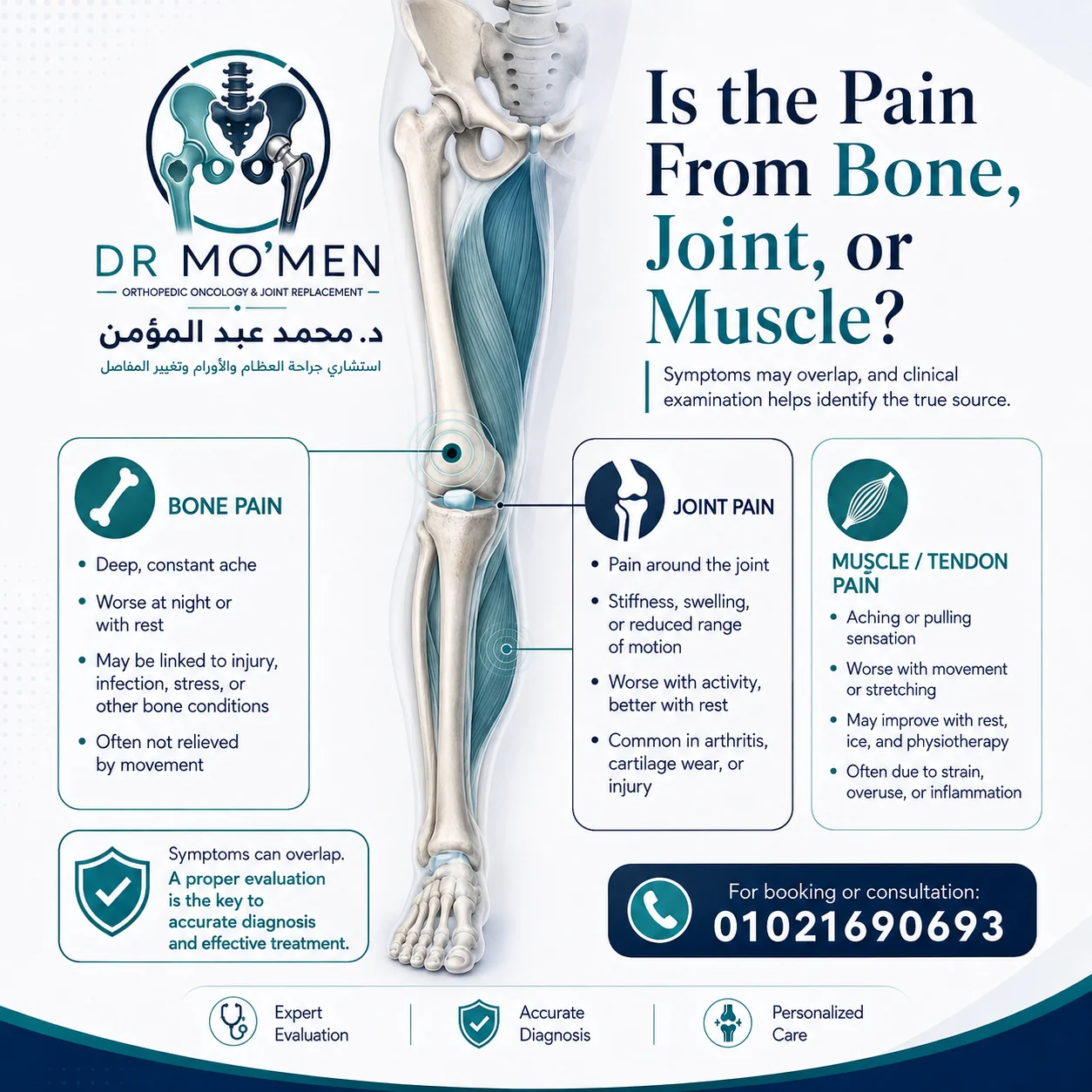
People commonly use the term “bone pain” for discomfort anywhere in a limb. The source may be the bone, a nearby joint, muscle or tendon tissue, ligaments, a nerve or spinal condition, or surrounding soft tissues.
Descriptions overlap, so it is not always possible to identify the source from the sensation alone. Clinical examination helps localise the pain and determine whether imaging is required.
Does Pain That Is Worse at Night Mean Cancer?
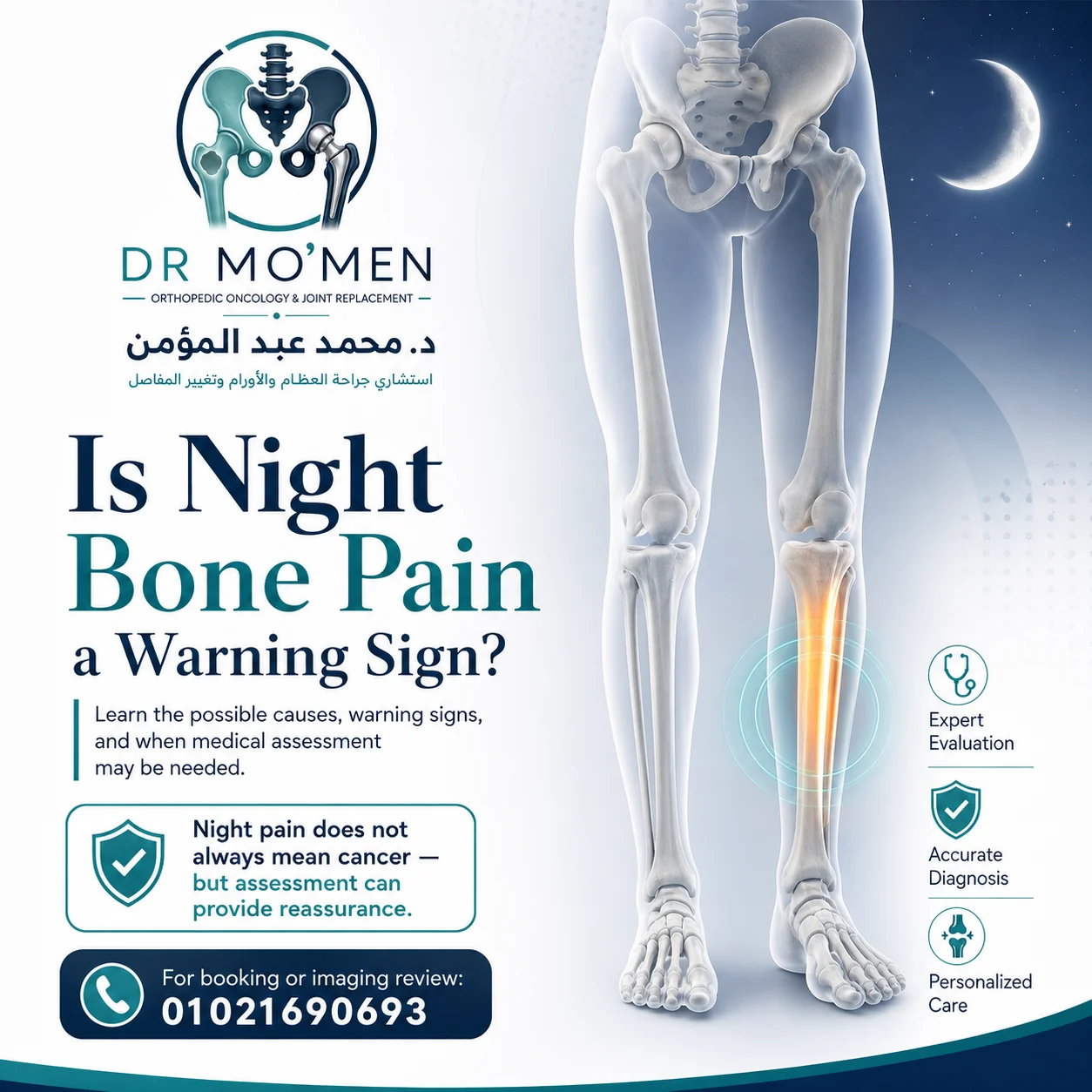
No. Night pain alone is not sufficient to diagnose a tumour.
Primary bone cancers can cause local pain that initially comes and goes and may become worse at night or during activity. Over time, it may become more persistent. A lump, swelling, reduced joint movement, limping, or an unexplained fracture may also occur.
For a symptom-focused overview, read Bone Tumor Symptoms: Warning Signs Patients Should Not Ignore.
Possible Causes of Night Bone Pain
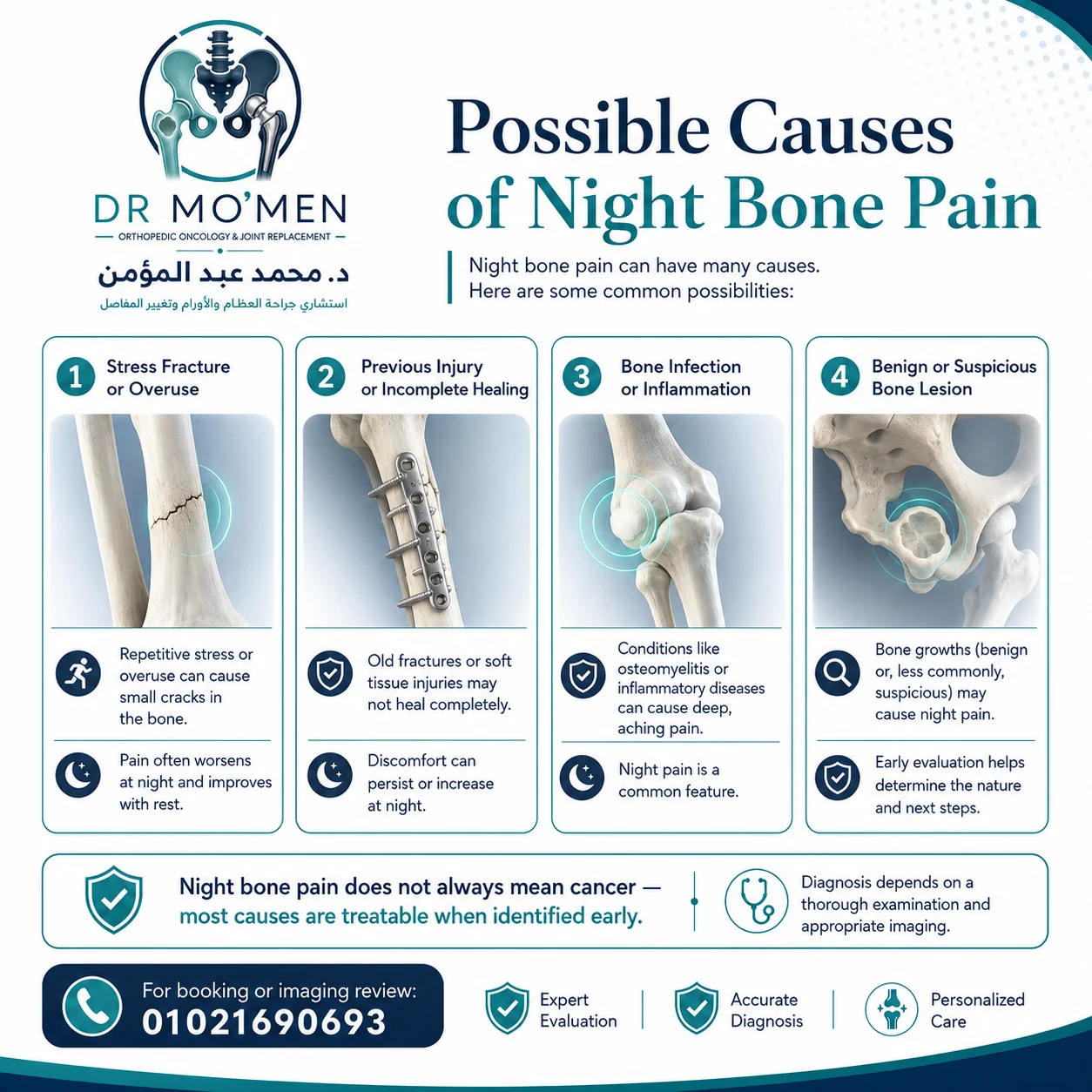
- Stress injury or stress fracture: pain often develops gradually and is initially worse during exercise or weight bearing. With progression, discomfort may occur during routine activities or while lying in bed at night.
- Previous trauma or incomplete fracture healing: pain that becomes worse after initial improvement, recurrent swelling, or renewed difficulty bearing weight should be reassessed.
- Bone infection: osteomyelitis may cause focal bone pain with swelling, redness, warmth, fever, chills, or general illness, especially after open fractures, surgery, implants, wounds, diabetes, or impaired immunity.
- Joint, muscle, or tendon pain: hip, knee, shoulder, tendon, or muscle conditions may be perceived as pain “inside the bone.”
- Benign bone lesions: many are incidental, while others cause pain, swelling, or bone weakening. See also Benign vs Malignant Bone Tumors.
- Primary bone tumour: may present with localised pain, swelling, a mass, reduced movement, or a limp, but symptoms alone cannot diagnose cancer.
- Metastatic bone disease: new focal bone pain deserves attention in someone with a previous cancer diagnosis. Read more about bone metastasis symptoms and treatment options.
Red Flags That Should Be Assessed
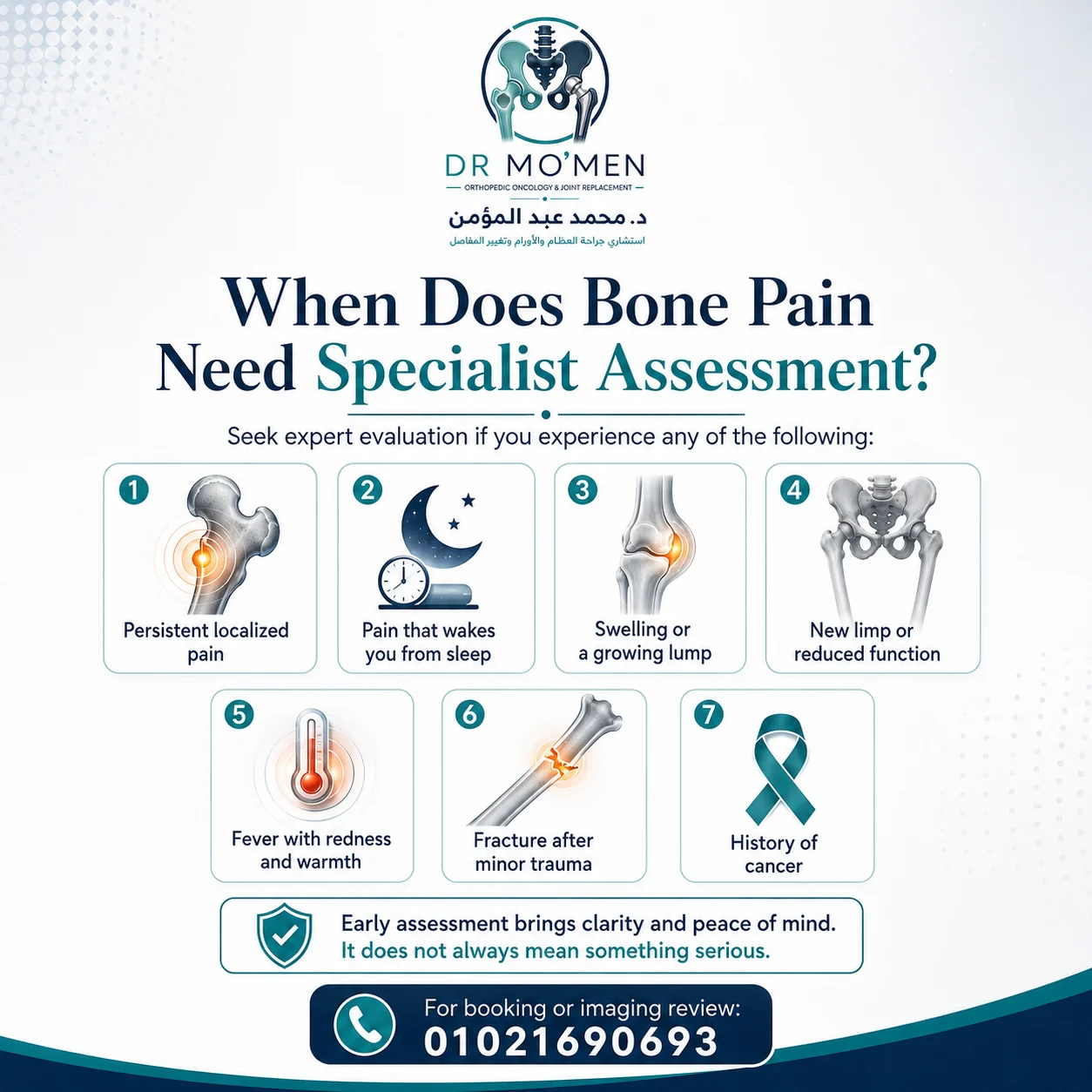
Arrange an orthopedic or medical assessment when pain is persistent or progressively worsening, regularly wakes you from sleep, is localised to one precise area of bone, or is associated with swelling or a growing lump.
Assessment is also important when pain causes a new limp, loss of function, reduced movement of a nearby joint, occurs after minimal trauma, is associated with previous cancer, or fails to improve with reasonable rest and initial treatment.
When Is Urgent Care Needed?
- Fever, redness, warmth, and swelling.
- Sudden severe pain with inability to use the limb.
- Visible deformity or suspected fracture.
- A fracture following minor trauma.
- Rapidly increasing swelling.
- New weakness or numbness.
- Severe progressive pain in a patient with known cancer.
How Is Night Bone Pain Investigated?
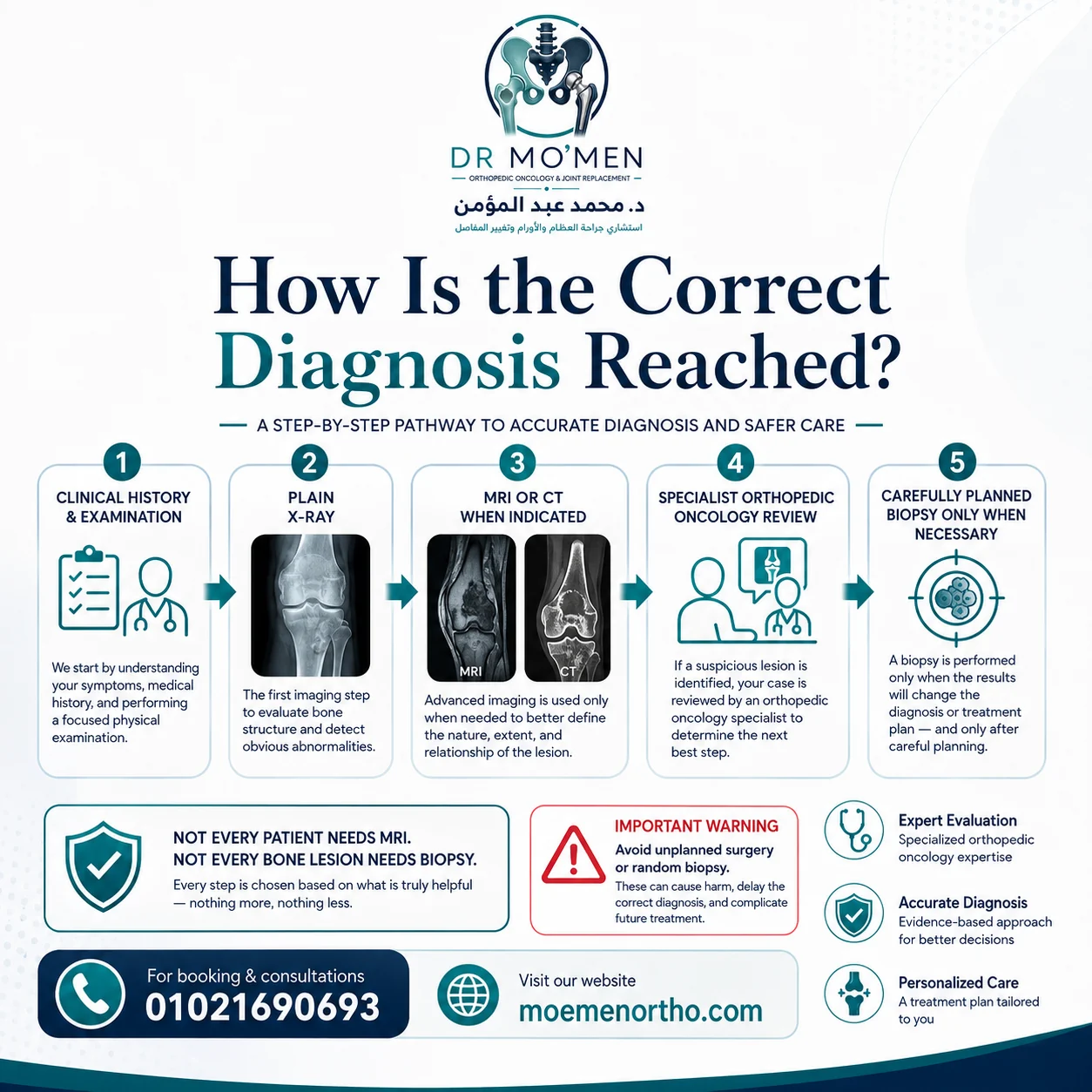
Medical history: the clinician asks about the exact site and duration of pain, activity or rest relationship, night-time symptoms, previous injuries or operations, exercise changes, swelling, fever, and previous cancer diagnoses.
Clinical examination: assessment may include focal tenderness, swelling or a mass, skin changes, nearby joint movement, strength, sensation, circulation, walking, and weight bearing.
X-rays: plain radiographs are generally the initial imaging examination when a problem within bone is suspected.
MRI: may be appropriate when symptoms persist despite inconclusive X-rays, a stress fracture is suspected, a lesion requires local assessment, or bone marrow and soft tissue need evaluation.
CT and blood tests: CT can define cortical bone, calcification, complex fractures, or selected lesions. Blood tests may help when infection, inflammation, anaemia, or a metabolic condition is suspected.
Does Everyone With Night Pain Need an MRI?
No. MRI is not automatically required for every patient whose pain occurs at night. The decision depends on examination findings, symptom duration, focal tenderness, X-ray results, swelling, previous injury, and cancer history.
In many cases, the appropriate sequence is clinical assessment, plain X-rays when bone pathology is suspected, MRI or CT when justified, and specialist review if a suspicious lesion is identified.
What Happens If Imaging Shows a Bone Lesion?
A bone lesion on an X-ray does not automatically mean cancer. Some lesions have a clearly benign appearance and can be monitored. Others require MRI, CT, interval imaging, or biopsy.
When malignancy is possible, original images should be reviewed, appropriate imaging completed, the case discussed with an orthopedic oncology or sarcoma team, and the biopsy route coordinated with possible definitive surgery.
Read more about bone biopsy planning and why the first biopsy matters.
Treatment Depends on the Diagnosis
There is no single treatment for night bone pain. Stress injuries may require activity modification or protection, fractures are treated according to alignment and stability through fracture and trauma care, and infection requires urgent antimicrobial treatment and sometimes surgery.
Benign lesions may be observed or treated according to symptoms and fracture risk. Primary bone tumours require tissue diagnosis and multidisciplinary planning. Bone metastases require assessment of pain, fracture risk, and the underlying cancer.
Treatment should not begin with unplanned surgery or injection into an undiagnosed bone lesion.
When Is a Second Opinion Useful?
A specialist second opinion may be valuable when imaging shows an unexplained bone lesion, biopsy or surgery has been recommended, interpretations differ, a fracture has occurred through abnormal bone, or new focal pain occurs in a patient with previous cancer.
Patients outside Egypt may send their imaging and reports for an initial online review before travelling, although final decisions may still require examination and further investigations.
For booking or imaging review: 01021690693
Selected external references
- NHS — Symptoms of bone cancer
- AAOS OrthoInfo — Stress Fractures of the Foot and Ankle
- NHS — Osteomyelitis
- American Cancer Society — Signs and Symptoms of Bone Cancer
- National Cancer Institute — Metastatic Cancer
- American College of Radiology — Suspected Primary Bone Tumors
- UK Guidelines for the Management of Bone Sarcomas