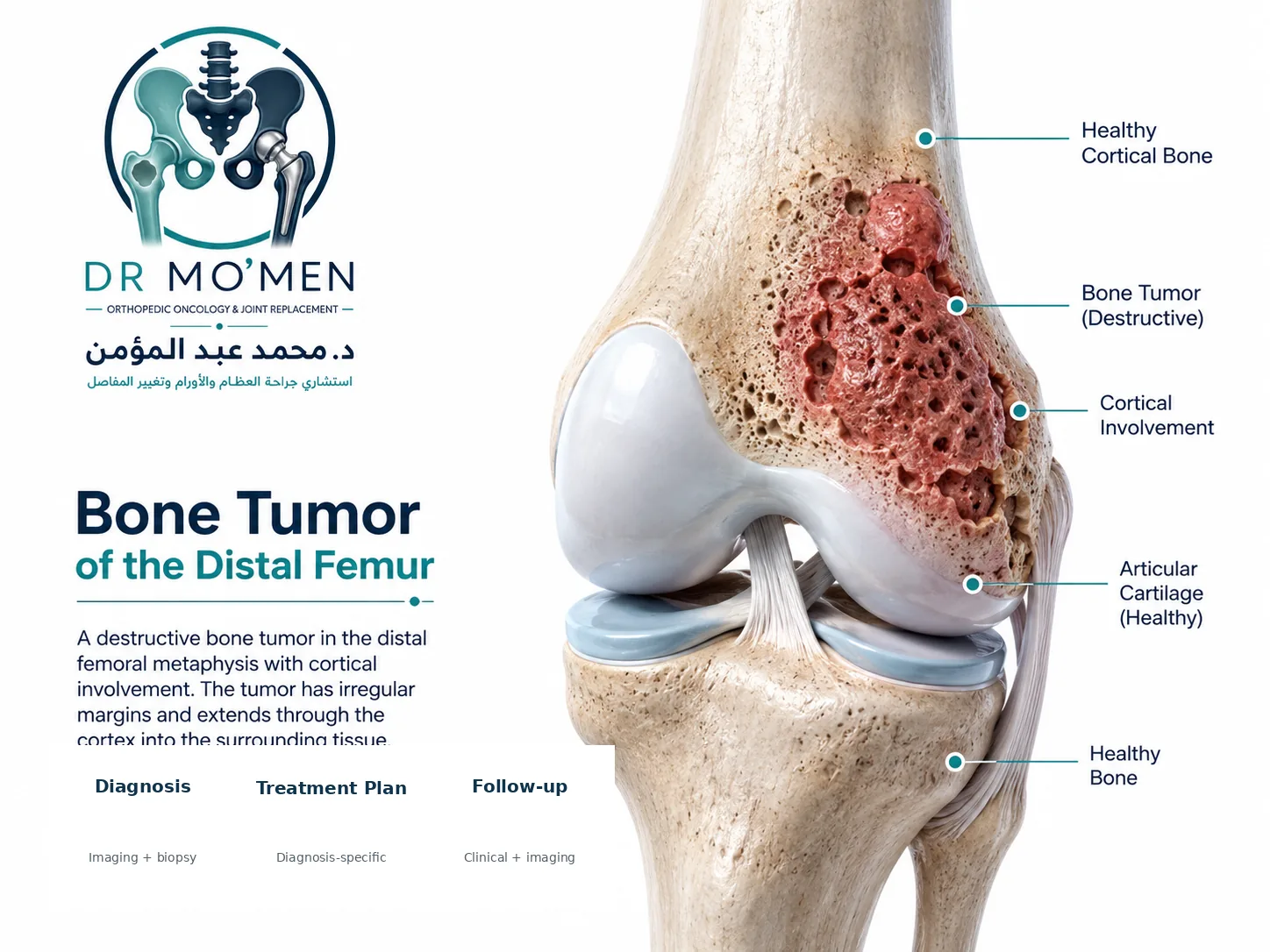
A bone tumor involving the lower end of the femur can create a difficult surgical problem because the tumor may involve a large part of the bone immediately above the knee.
When limb-salvage surgery is possible, treatment may require removal of the affected segment of the distal femur with an adequate oncological margin. This can leave a major defect involving both the bone and the knee joint.
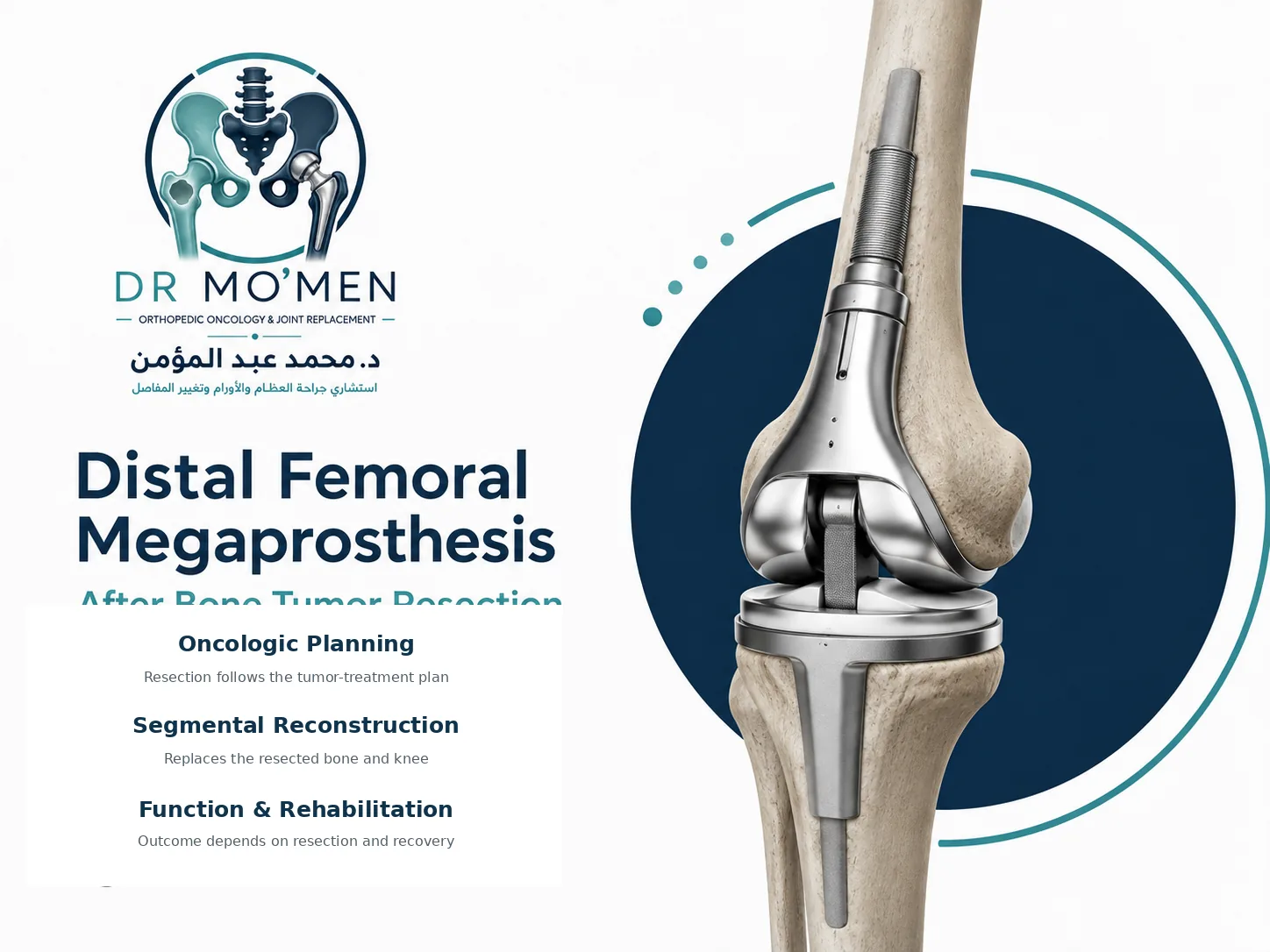
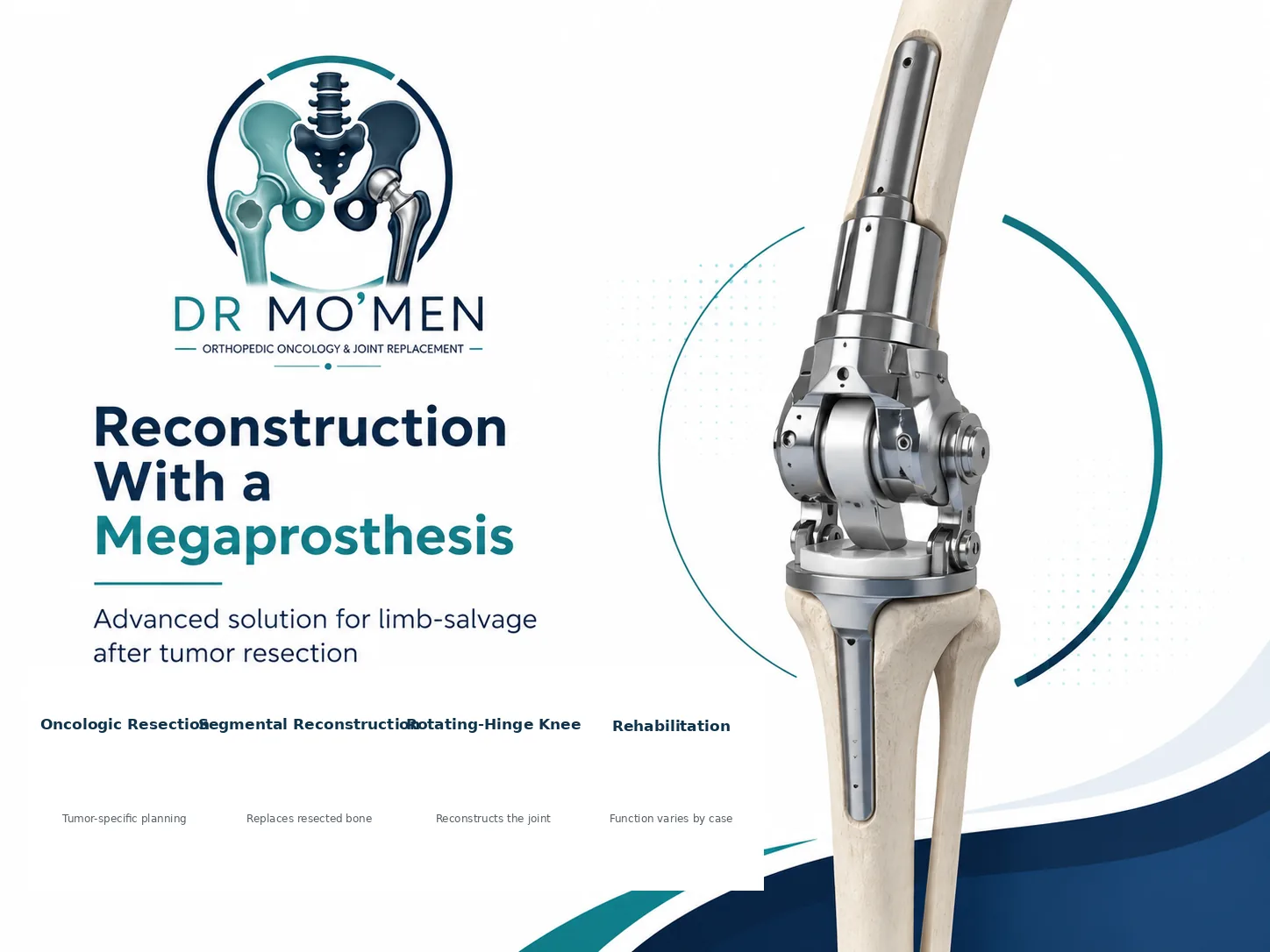
A distal femoral megaprosthesis is one method of reconstructing this defect. It replaces the resected part of the femur and reconstructs the knee, allowing the surgeon to restore limb length and provide immediate structural stability.
However, this is not the same as a routine knee replacement. It is a complex orthopedic oncology reconstruction requiring careful diagnosis, biopsy planning, tumor staging, surgical planning and long-term surveillance.
For a broader overview, see bone tumors around the knee and the general guide to megaprosthesis after bone tumor resection.
What is a distal femoral megaprosthesis?
A megaprosthesis is a large modular metallic implant designed to replace a substantial segment of bone together with the adjacent joint.
In a distal femoral reconstruction, the implant typically replaces:
- the removed lower segment of the femur;
- the knee joint surface;
- part of the upper tibial articulation through a hinged or rotating-hinge knee mechanism.
Different implants and fixation methods are available. Selection depends on factors such as the amount of bone removed, remaining bone quality, patient age, soft-tissue condition and the surgeon’s reconstructive plan.
Why is it different from a standard knee replacement?
A conventional total knee replacement resurfaces damaged joint surfaces while preserving most of the femur and tibia.
Tumor surgery may require removal of many centimetres of the femur together with surrounding soft tissues. The reconstruction must therefore replace both missing bone and the knee joint. This is one reason why recovery, complications and long-term follow-up differ from conventional knee arthroplasty.
Which bone tumors may require distal femoral replacement?
For the corresponding reconstruction below the knee, see proximal tibial megaprosthesis after bone tumor resection.
The distal femur is a common location for several primary bone tumors. A megaprosthetic reconstruction may be considered following wide resection of selected tumors such as:
- osteosarcoma;
- chondrosarcoma;
- other malignant primary bone tumors;
- selected aggressive or recurrent tumors when joint-preserving reconstruction is no longer appropriate;
- selected metastatic or destructive lesions requiring major reconstruction.
The presence of a tumor around the knee does not automatically mean that the patient needs a megaprosthesis. Some lesions can be treated using curettage, bone grafting, cement, internal fixation or other joint-preserving techniques.
The decision depends on the exact diagnosis, extent of the lesion and whether adequate tumor control can be achieved while preserving the joint.
Patients who have not yet reached a definitive diagnosis should first review the guide to bone tumor biopsy and biopsy planning, because biopsy strategy can directly affect subsequent limb-salvage surgery.
Diagnosis and planning before surgery
The reconstructive decision should not be made from an X-ray or MRI alone.
Imaging
Assessment may include:
- plain X-rays;
- MRI to define the local extent of the tumor;
- CT when needed for cortical or anatomical assessment;
- chest imaging and other staging investigations depending on the suspected tumor;
- occasionally PET/CT, bone scan or other staging studies when clinically appropriate.
Biopsy comes before definitive surgery
For a suspected primary malignant bone tumor, biopsy should be planned as part of the definitive oncological strategy. The biopsy tract should ideally be placed where it can later be removed during tumor resection.
An unplanned biopsy, inappropriate incision or fixation through an undiagnosed primary bone tumor can contaminate additional tissue planes and potentially make subsequent surgery more extensive.
Core orthopedic oncology principle
Patients with a suspicious primary bone lesion should ideally be assessed by an orthopedic oncology team before biopsy or fixation whenever possible.
Multidisciplinary planning
Treatment may involve coordination between:
- orthopedic oncology;
- musculoskeletal radiology;
- pathology;
- medical oncology;
- radiation oncology when indicated;
- rehabilitation specialists.
Chemotherapy or radiotherapy requirements depend primarily on the tumor type and stage rather than on the megaprosthesis itself. For example, patients with osteosarcoma usually follow a very different oncological pathway from patients with conventional chondrosarcoma.
What happens during distal femoral megaprosthesis surgery?
The exact procedure varies considerably between patients. In general, surgery includes several major steps.
1. Tumor resection
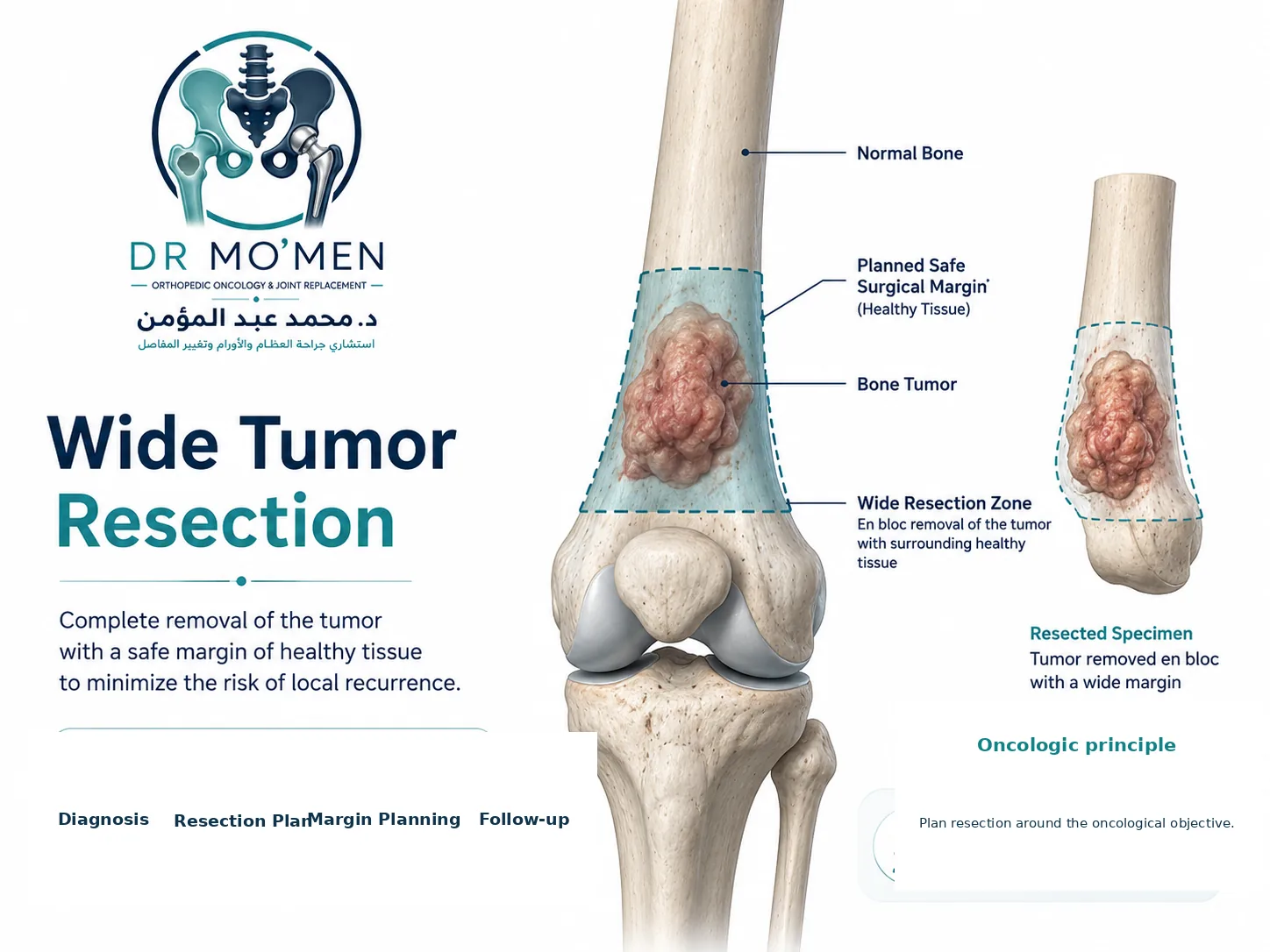
The tumor and the required surrounding tissue are removed according to the planned oncological margin. The priority is adequate tumor surgery. The reconstruction must be designed around the required oncological resection rather than compromising the resection simply to preserve bone.
2. Preservation of important structures
Major nerves, blood vessels, muscles and tendons are preserved when this can be done safely without compromising the oncological objective. The amount of remaining muscle and soft tissue strongly influences postoperative function.
3. Reconstruction of the femur and knee
A modular distal femoral prosthesis is selected to replace the removed bone. The stem is fixed within the remaining femur, while the knee is reconstructed using a compatible tibial component.
4. Restoration of limb length and alignment
The surgical team must restore appropriate limb length, rotation, knee alignment and soft-tissue tension.
5. Soft-tissue reconstruction
Muscle and soft-tissue coverage around the implant is important for function, wound healing and protection against infection. In difficult cases, reconstructive plastic surgery techniques may occasionally be required.
What are the potential advantages?
When appropriately indicated, distal femoral megaprosthetic reconstruction can provide:
- limb preservation after major bone resection;
- immediate structural reconstruction;
- restoration of continuity between the hip and knee;
- potential for relatively early mobilization;
- functional knee movement;
- avoidance of some prolonged bone-healing requirements associated with certain biological reconstructions.
These advantages do not guarantee a particular functional outcome. Function depends on the tumor, resection, muscle preservation, complications, rehabilitation and the patient’s overall health.
Recovery after surgery
Recovery should be individualized.
First days after surgery
Treatment usually focuses on:
- pain control;
- wound monitoring;
- prevention of venous thromboembolism when appropriate;
- early muscle activation;
- safe transfers;
- gradual knee movement according to surgical instructions.
Some specialized rehabilitation protocols use early standing and progressive weight-bearing, but the timing should be decided by the treating team.
Walking and weight-bearing
One important advantage of megaprosthetic reconstruction is that the implant may provide immediate mechanical stability. However, this does not mean that every patient should immediately walk with full weight-bearing.
Weight-bearing depends on implant fixation, soft-tissue reconstruction, muscle or tendon repair, wound condition, additional procedures and overall medical status. Crutches or a walker may initially be required.
Knee movement
Physiotherapy aims to restore knee range of motion while protecting the reconstruction. The final degree of knee bending varies. Large resections, muscle loss, previous operations, infection, scar formation and delayed rehabilitation may all affect movement.
Longer-term rehabilitation
Rehabilitation may continue for several months and may focus on:
- quadriceps strength;
- hip muscle strength;
- gait retraining;
- balance;
- knee range of motion;
- endurance;
- safe return to daily activities.
High-impact activity may not be advisable for some patients because of the large mechanical stresses transmitted through the reconstruction.
What are the long-term risks?
A megaprosthesis is designed to reconstruct a very large skeletal defect, so its long-term risk profile is different from that of a routine joint replacement.
Infection
For diagnosis and treatment options, see infection after megaprosthesis surgery.
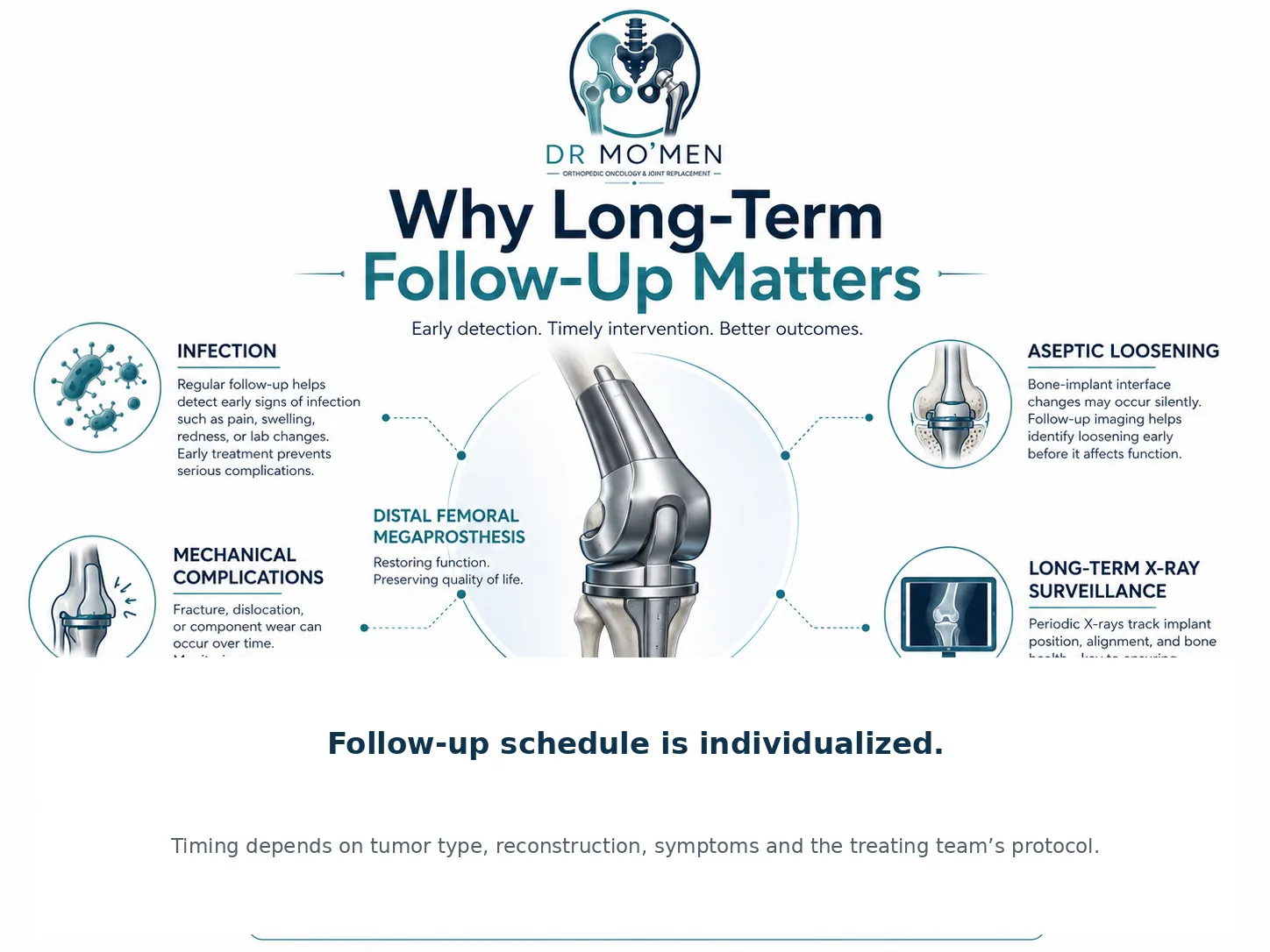
Deep infection is one of the most important complications after tumor megaprosthesis surgery. Possible symptoms include persistent wound drainage, increasing redness, fever, progressive pain, swelling or development of a sinus.
Treatment depends on the timing and severity of infection and may range from debridement and antibiotics to component exchange or staged revision. Severe uncontrolled infection can occasionally threaten limb salvage.
Aseptic loosening
The fixation between the implant and bone may gradually fail without infection. Patients may develop increasing pain during walking or activity. Diagnosis may require serial X-rays and further investigations to distinguish loosening from infection or other causes of pain.
Mechanical or structural failure
Long-term mechanical problems can include failure or wear of moving components, structural implant problems, periprosthetic fracture, instability and problems involving the knee mechanism. Modern modular systems allow some failures to be treated by exchanging selected components, but major revision surgery may still be required.
Soft-tissue problems
Weakness, wound problems, extensor dysfunction and instability can occur when substantial muscle or soft tissue has been removed.
Knee stiffness
Some patients develop limited knee motion despite rehabilitation.
Local tumor recurrence
The reconstruction does not eliminate the need for oncological follow-up. New pain, swelling or a new mass near the surgical site should be evaluated.
How long does a distal femoral megaprosthesis last?
There is no single lifespan that can be promised for a megaprosthesis. Implant durability varies considerably. Some reconstructions function for many years, while others require revision earlier because of infection, mechanical problems, loosening, recurrence or other complications.
This issue is particularly relevant in children and younger adults who may live with the reconstruction for several decades. Long-term survivors should therefore continue prosthetic surveillance even many years after cancer treatment has ended.
Is revision surgery possible?
Yes. A major advantage of modern modular tumor prostheses is that many complications can potentially be treated using revision reconstruction.
Depending on the problem, surgery may involve:
- exchange of worn components;
- revision of the stem;
- replacement of a major prosthetic segment;
- treatment of infection;
- repair or reconstruction of surrounding tissues.
However, revision megaprosthesis surgery is usually more complex than the original reconstruction.
Are there alternatives to a megaprosthesis?
Yes. A megaprosthesis is not automatically the best reconstruction for every patient. Possible alternatives in selected situations include:
- joint-preserving tumor resection;
- biological reconstruction;
- allograft reconstruction;
- allograft-prosthetic composite;
- arthrodesis;
- expandable reconstruction in selected growing children;
- amputation when limb salvage cannot provide safe oncological control or a functional limb.
The correct choice depends on the tumor, age, remaining bone, expected survival, infection risk, soft tissues and functional requirements.
When should you seek urgent specialist assessment?
Contact your treating team promptly if you develop:
- persistent wound leakage;
- increasing redness or swelling;
- fever associated with wound symptoms;
- sudden severe thigh or knee pain;
- sudden loss of the ability to bear weight;
- new instability or mechanical clicking associated with pain;
- a new or increasing mass;
- rapidly increasing pain after a previously stable period.
Not every episode of pain indicates prosthetic failure, but new or progressive symptoms should be investigated.
The role of specialist orthopedic oncology assessment
A distal femoral megaprosthesis should be considered as part of an overall tumor-treatment strategy rather than simply as a knee replacement. The important decisions include:
- establishing the exact pathological diagnosis;
- completing appropriate staging;
- planning the biopsy correctly;
- determining the required oncological margin;
- deciding whether the joint can safely be preserved;
- selecting the most appropriate reconstruction;
- planning rehabilitation and long-term surveillance.
Dr. Mohammed Abdelmoemen Abuelhadid evaluates complex bone tumors, limb-salvage reconstruction and megaprosthetic cases, including patients seeking a second opinion before major surgery or revision surgery.
Patients outside Egypt may also request an initial review of imaging and medical reports before travelling for specialist assessment.
Send Your Records Before You Travel
If you are outside Egypt, you can send existing X-rays, MRI or CT images, pathology reports, operative notes and implant information for an initial specialist review before arranging travel. This preliminary review can help clarify what additional evaluation may be needed and whether an in-person orthopedic oncology or complex-reconstruction consultation is appropriate.
Remote review does not replace physical examination, final diagnosis, infection work-up, pathology review or a definitive surgical plan when those are required.
How to send MRI, CT and X-ray files for review
International Patients Request a Specialist Second Opinion Send the file link by WhatsApp
Frequently Asked Questions
Can I walk after a distal femoral megaprosthesis?
Many patients regain useful walking ability after rehabilitation. The timing of weight-bearing and the final walking pattern depend on the resection, soft-tissue reconstruction, implant stability and overall health.
Will I be able to bend my knee?
The reconstruction is designed to provide knee movement, but the final range varies between patients. Rehabilitation, muscle preservation, scarring and complications can all affect motion.
Does everyone need chemotherapy after surgery?
No. Chemotherapy is determined by the tumor diagnosis and stage, not by the presence of the megaprosthesis. Osteosarcoma and some other tumors may require chemotherapy, while other tumor types follow different treatment pathways.
Can infection or loosening occur years later?
Yes. Some complications can develop long after the original surgery, which is why long-term clinical and radiographic follow-up is important.
If my megaprosthesis fails, will I lose my leg?
Not necessarily. Many mechanical and some infectious complications can be managed with revision surgery. The treatment depends on the cause, extent of the problem, soft tissues, tumor status and general health.
Appointments or imaging review
For specialist assessment or imaging review, call +20 102 1690693. Patients outside Egypt can also review the International Patients pathway or request a second opinion.
Medical Disclaimer
This article is for patient education and does not replace clinical examination, specialist medical advice, or review of imaging and investigations.